Uncategorised3 min(s) read
health4 min(s) read
It might be time to rethink your favorite sleeping position - because according to sleep specialists, your bedtime posture could be doing more damage than just leaving you sore in the morning.
From snoring and acid reflux to full-blown nerve pain, the way your body settles into bed each night might be setting you up for a host of health issues.
And while comfort plays a big role in how we naturally doze off, that doesn’t mean it’s doing your body any favors.
“What we care about is if someone is comfortable in their sleep position. Oftentimes we sleep in certain ways because of comfort,” said Shelby Harris, a clinical psychologist and behavioral sleep specialist, in an interview with Fox News Digital.
But as it turns out, that comfort might come at a cost.
When you sleep in awkward or contorted positions, your body remains locked in place for hours, putting extra strain on your muscles, ligaments, and nerves.
Over time, this can result in morning discomfort - or worse, symptoms that mimic nerve damage.
And while many people assume curling up in bed might reflect their emotional state, experts say that’s not the case.
How we sleep has a massive impact on our health. Credit: Maryna Terletska / Getty
“Someone’s sleep position means really nothing about their psychological state or tension or stress or trauma,” Harris explained.
One common culprit of nighttime numbness?
The so-called “T. rex position,” popularized on social media, is where sleepers bend or tuck their arms sharply. Experts say this can compress nerves and lead to that all-too-familiar pins-and-needles feeling when you wake up.
A 2023 review of cubital tunnel syndrome specifically cautioned against sleeping with the elbows bent or tucked under pillows. This posture can intensify pressure on the ulnar nerve, resulting in numbness and shooting pain down the forearm.
Back sleeping might seem like a neutral option - but it comes with its own set of trade-offs.
While it helps keep arms untucked and may reduce nerve compression, the Sleep Foundation warns it can also aggravate snoring and acid reflux.
On the opposite end, stomach sleeping is the least common posture.
Some people prefer sleeping on their back. Credit: Daniel de la Hoz / Getty
Though it may help reduce snoring, this position often throws the spine out of alignment, since it requires twisting the head to breathe. That twist can trigger or worsen pain in the back, shoulders, and neck.
Meanwhile, side sleeping continues to rank as the most popular - and for good reason. It’s generally better for spinal alignment and is widely recommended for people dealing with back problems.
Harvard Health points out that, according to Sleep Foundation data, side sleeping is the go-to position for most people. And Mayo Clinic experts add that the ideal setup includes bent knees and a pillow between the legs to help align the spine, hips, and pelvis.
Johns Hopkins Medicine also highlights side and back sleeping as especially important for older adults or anyone managing medical conditions.
How do you sleep? Credit: John Fedele/Getty
Transitioning to a new sleep position isn’t always easy - but it can be worth it.
Medical experts suggest slowly adjusting your posture over time, and making pillow swaps can also help. For stomach sleepers, thinner pillows - or none at all - can reduce strain on the neck and lower back.
Still struggling to feel rested? It might be time to get professional help.
“If you struggle to sleep regardless of position or feel like your sleep isn’t restorative,” said Harris, “seeing a sleep specialist” could be your next step.
health5 min(s) read
Experts have issued a warning against a common sleeping position that could pose health risks far beyond just a sore back.
While many people assume a preferred sleep posture is simply a matter of comfort, it has been argued that certain positions can trigger pain, acid reflux, snoring, and even nerve symptoms that show up the next morning.
“What we care about is if someone is comfortable in their sleep position. Oftentimes, we sleep in certain ways because of comfort,” clinical psychologist and behavioral sleep specialist Shelby Harris told Fox News Digital.
But she stressed that comfort doesn’t always equate to good health.
Experts have spoken out about sleeping positions. Credit: Vasil Dimitrov/Getty Images
Sleeping in awkward postures can leave the body motionless in potentially dangerous positions overnight, adding stress not only to nerves but also to muscles and ligaments.
Contrary to popular belief, experts also say that how someone sleeps doesn’t indicate their mental state, stress level, or emotional well-being.
“Someone’s sleep position means really nothing about their psychological state or tension or stress or trauma,” Harris said.
One posture garnering particular concern is sleeping with arms bent or tucked close to the body, a variation of side sleeping dubbed the “T. rex position” on social media.
This position, where arms are curled up toward the chest, is linked to nerve compression that can cause numbness or tingling, according to a 2023 review of cubital tunnel syndrome, a condition in which people feel numbness and shooting pain in their forearms.
Health professionals note that, alongside numbness, this position can contribute to shoulder strain and stiffness over time.
Dr Deborah Lee, a sleep expert at Dr Fox Online Pharmacy, added that the position - common among side sleepers - “gives us a sense of comfort and security,” but also increases the risk of nighttime paraesthesias, the tingling or prickling sensation often caused by nerve pressure, per Daily Mail.
Sleeping on one's side with bent arms curled close to the chest has been dubbed the 'T-Rex position' on social media. Credit: EmirMemedovski / Getty
While side sleeping is generally recommended for overall spinal alignment and pressure relief, not all variations are equal.
Dr Lee says the “pencil” version of side sleeping, with arms down by the body, is preferable, as it avoids bending at the elbow or wrist and helps keep pressure off joints. A side sleeper pillow can make this posture more comfortable, she noted.
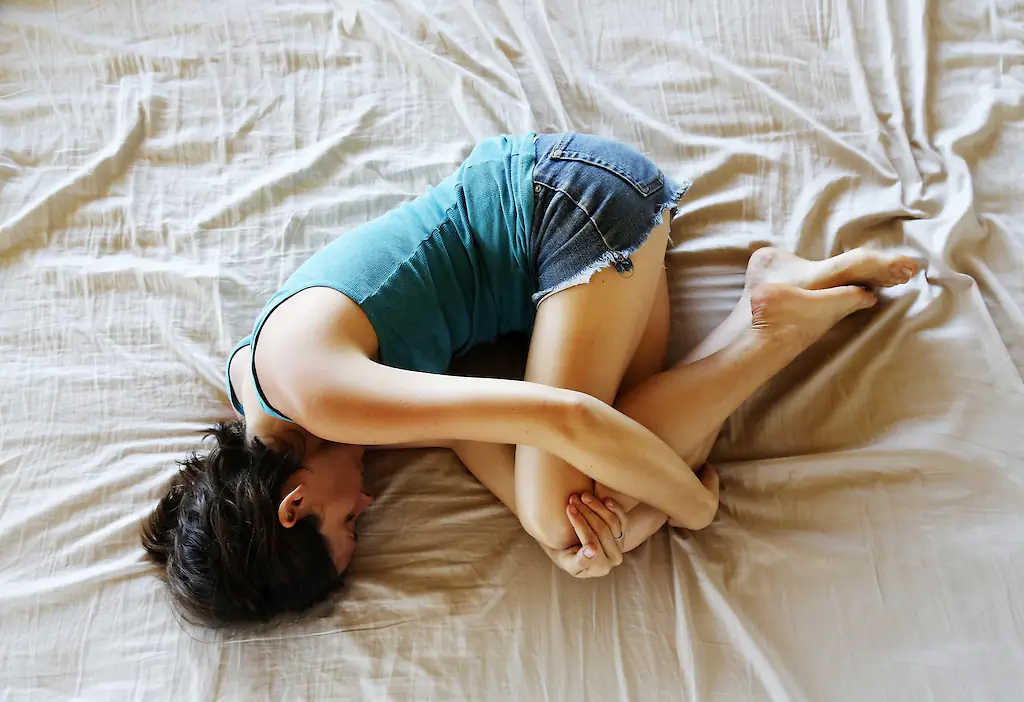
Another common variation is the foetal position, where the knees are curled up toward the chest.
It is believed that this posture is widespread and can be relaxing for many, potentially lowering snoring and providing comfort for back pain. However, curling too tightly may restrict deep breathing or cause joint stiffness.
A woman sleeping in a foetal position. Credit: Holly Wilmeth / Getty
Back sleeping also has its benefits and drawbacks, as Harris pointed out that sleeping on your back can help keep arms untucked, potentially reducing nerve compression issues. However, the position may contribute to snoring and acid reflux.
Sleeping on your stomach is the least common position yet also the most problematic, as the Sleep Foundation says lying face-down can misalign the spine and cause back, neck, and shoulder pain because the head must be twisted to one side for breathing.
Dr Lee also warns against “frontal” or stomach-related positions that twist the spine, including half-stomach sleeping, where one leg is higher than the other and one arm bent under a pillow.
These postures risk compressing the cervical spine, which can cause neck, arm, and shoulder pain the next day.
Experts warn against sleeping on the stomach. Credit: FreshSplash / Getty
Several medical centers and sleep resources recommend gradually transitioning to side or back sleeping.
Using thinner pillows, or none at all, can also help those who struggle to give up stomach sleeping reduce neck twist and lumbar arch.
Christian Moro, professor of science and medicine at Bond University in Australia, suggests letting the body move naturally during the night.
“In most cases, the body will move around during the night, which helps to avoid any pain sensations or uncomfortable sleeping positions,” he said.
Still, he advises that persistent pins and needles or dead-arm sensations are signals that it’s time to reconsider your sleeping position, as these signs often indicate restricted blood flow.
uncategorised4 min(s) read
lifestyle3 min(s) read
If you like to sleep naked I have some bad news for you - a doctor has revealed why that's actually a horrible idea.
Everyone's sleeping habits are different - from how you actually get to sleep, to how many pillows you need, and even what you wear to bed.
While some people have the blessing of being able to drift off as soon as their heads hit the pillow, others need their environment fine-tuned to their specific requirements if they are to get any rest.
And nightwear can play a big part in how comfortably you drift off - and some people find that wearing nothing at all is what works for them. However, you might want to rethink if you choose to sleep in the nude...
Dr Anthony Youn, who has built up a following on social media, has issued a warning against sleeping completely naked.
While there can be benefits, including not having the discomfort of getting tangled up in your pajamas, or even helping your body maintain a comfortable temperature, there's some pretty big downsides, too.
Taking to YouTube, he explained: "Here's the reason why you should never sleep in the nude.
"The average person passes gas 15-25 times a day and this can happen while you are sleeping, and a scientific study proved that every time you pass gas you are spraying a tiny amount of fecal material."
As if the thought of that isn't gross enough, the particles that are expelled are so tiny that you wouldn't even know they are there just by looking.
He added: "This is true even if it’s not a real sh*rt. The same study showed that your tighty whities will catch all of these particles."
Dr. Youn concluded: "So for the sake of your bed partner, please sleep with your underwear on."
So while the chance of any actual visible fecal matter on your bedsheets is slim (unless you're not wiping or washing right - which is a different topic of conversation altogether), there's still likely to be some poop particles in your bed if you're sleeping naked.
And you may not even be aware that you are breaking wind in your sleep if you happen to be a deep enough sleeper.
But, thankfully, a simple pair of underwear is enough to contain all those gross nasties - and, of course, these should be changed on a daily basis anyway.
And if you're dead set on sleeping naked even with this knowledge, you're probably best off changing your sheets a little more often just to be on the safe side.
uncategorised1 min(s) read
1. Trusting
2. You're on a different wavelength
3. You feel distant from each other
4. You need some space
5. You feel protective of your partner
6. You rely on your partner
7. You're feeling vulnerable
8. You're craving attention
9. You're super into each other
10. You can count on me
I think we've all learned something today. Maybe you'll notice something new about your relationship when you wind down tonight.