Uncategorised2 min(s) read
innovation3 min(s) read
Did you know that Jimmy Carter built an entire solar farm in his hometown and uses it to power half of the town?
That's right, after his four-year stint as president of the United States, the 98-year-old decided he was going to put his words into action in 2017 by leasing some land near his home in Plains, Georgia, and setting up his very own solar farm.
Stretching over 10 acres, the area now has 3,852 panels close to his own two-bedroom home that he shares with his wife. Though the project hasn't been up and running for a long time, it already powers half the town, generating 1.3 MW of power per year.
For reference, that's the equivalent of burning about 3,600 tonnes of coal!
Credit: Peter Adams Photography / AlamyIn a press release for SolAmerica, Carter encouraged people to get behind the movement, stating that it was "critical" that we find "clean energy" sources "to [meet] growing energy needs around the world while fighting the effects of climate change."
"I am encouraged by the tremendous progress that solar and other clean energy solutions have made in recent years and expect those trends to continue," he added.
SolAmerica's executive vice president George Mori also spoke of the incredible project, saying: "There remains a great deal of untapped potential in renewable energy in Georgia and elsewhere in the US We believe distributed solar projects like the Plains project will play a big role in fueling the energy needs of generations to come."
The former president was way ahead of his time when he first started discussing renewable energy sources. Back in 1979, he put 32 solar panels on the White House in order to heat water throughout the residence.
During a speech given at the time, he said: "In the year 2000, this solar water heater behind me, which is being dedicated today, will still be here supplying cheap, efficient energy...
"A generation from now, this solar heater can either be a curiosity, a museum piece, an example of a road not taken or it can be just a small part of one of the greatest and most exciting adventures ever undertaken by the American people."
Fred Morse, the director of Carter's solar energy initiative, told Scientific American that "President Carter saw [solar power] as a really valid energy resource, and he understood it. I mean, it is a domestic resource and it is huge."
However, despite Carter's push for the alternative energy source at the White House, after his term, Ronald Reagan removed the panels when he came into power just a few years later.
U.S. President Jimmy Carter speaking in front of Solar Panels placed on West Wing Roof of White House, announcing his solar energy policy in 1979. Credit: Glasshouse Images / AlamyRegardless, Jimmy Carter is really paving the way for green energy - it's about time other leaders take a page out of his book.
us3 min(s) read
Online users have made their same complaint after a $2.2 billion solar thermal plant in California is set to close after failing to meet its energy targets and not "serving its purpose".
The Ivanpah Solar Power Facility opened in 2014 and was hailed as a groundbreaking project that would position America as a leader in solar energy.
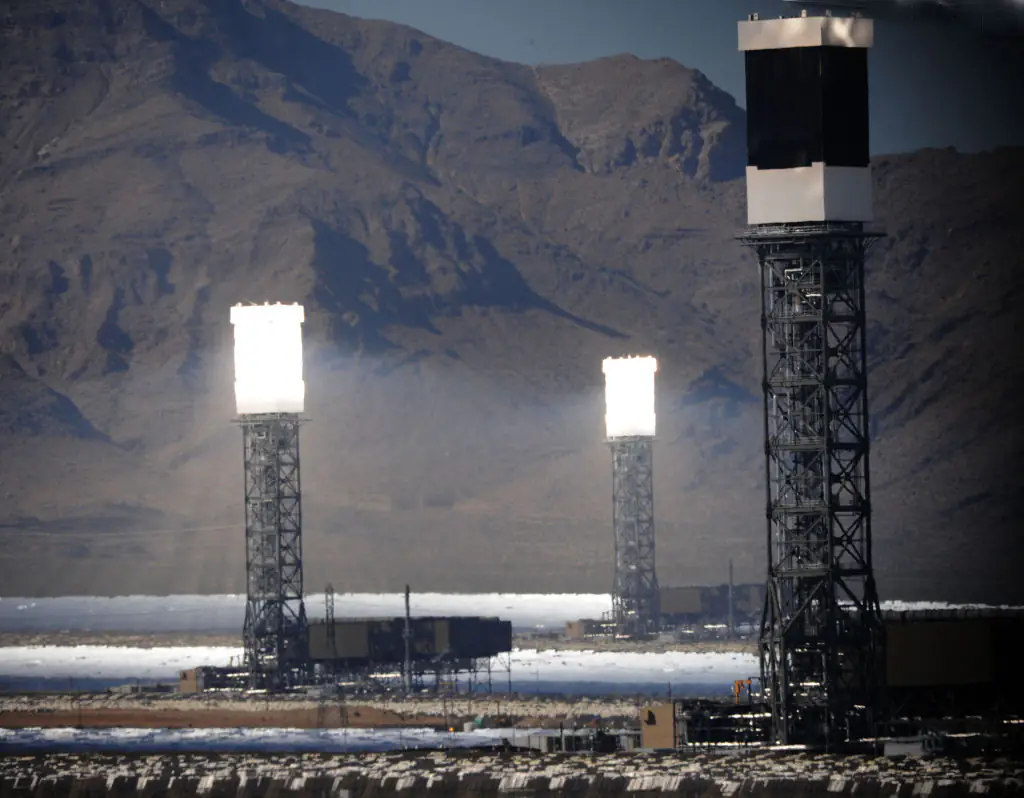
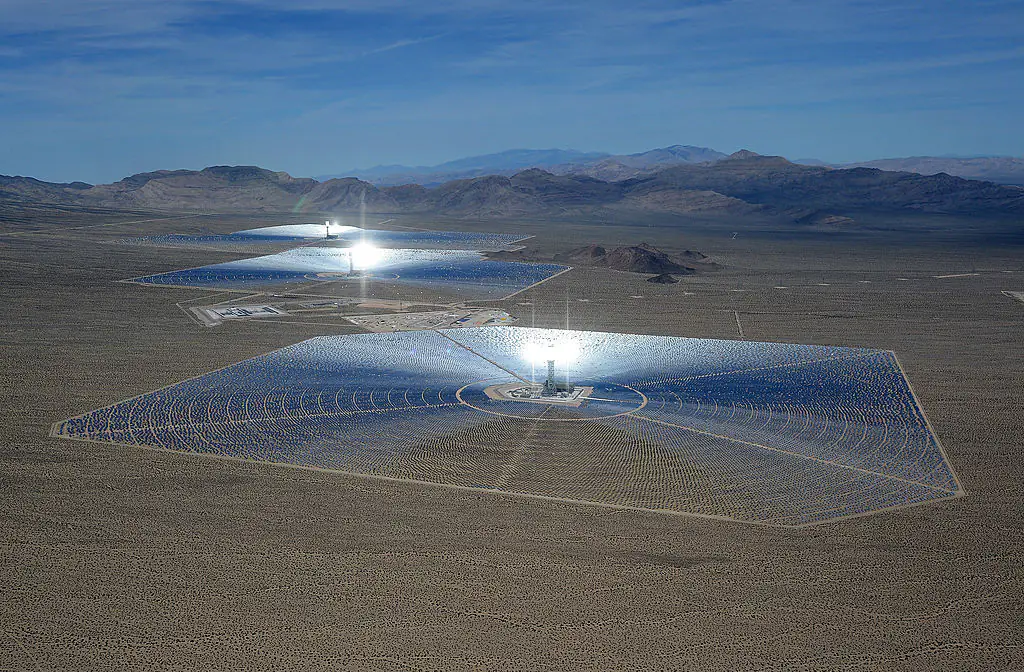
Now, a mere 12 years later, the facility, which features three 459-foot towers and 174,000 heliostats (computer-controlled mirrors), is closing more than a decade ahead of its expected lifespan.
According to The New York Post, the plant was initially funded through $1.6 billion in federal loan guarantees from the Department of Energy under former President Barack Obama, with high hopes for its success.
But the ambitious project has proven to be inefficient and costly, leaving many critics to argue that it was a waste of taxpayers' money.
As news of the facility’s early closure broke, many people voiced their frustrations on social media, calling the plant a “financial disaster".
One person slammed: “It failed to generate the power it was estimated to do. Over $2B was wasted on this and it relied on natural gas to stay operational." Another echoed similar sentiments, stating: “A SCAM paid for by US Taxpayers for NOTHING."
Julia Dowell of the Sierra Club, an environmental organization, also criticized the project, calling it a "financial boondoggle and environmental disaster" in an interview with AP.
She cited its destructive impact on the Mojave Desert’s habitat, including the deaths of thousands of birds and tortoises, and went on to acknowledge the urgent need for clean energy solutions but insisted that Ivanpah’s technology was not the right choice.
“Not all renewable technologies are created equal," she said.
When Ivanpah began operations in 2014, it was the world’s largest solar power plant, and its solar thermal technology was considered cutting-edge.
The facility used mirrors to concentrate sunlight and produce heat, which was then used to generate electricity through a conventional steam turbine.
However, as time passed, newer and more efficient solar technologies emerged, making Ivanpah’s approach increasingly obsolete.
Edward Smeloff, an alternative energy consultant, explained that Ivanpah's solar thermal technology could not compete with the more efficient and cost-effective solar photovoltaic (PV) technology, which uses semiconductor materials to directly convert sunlight into electricity.
“It simply did not scale up,” Smeloff said, per The New York Post. “It’s kind of an obsolete technology [that’s] been outpaced by solar photovoltaic technology.”
Meanwhile, solar PV technology, seen on residential rooftops and in large solar farms, has advanced rapidly and is now the preferred method for generating solar power.
NRG Energy, a major investor in Ivanpah, acknowledged the plant’s shortcomings.
The company stated that while the plant was competitive when power purchase agreements were signed in 2009, advancements in solar technology have since made Ivanpah less efficient.
“When the power purchase agreements were signed in 2009, the prices were competitive, but advancements over time… have led to more efficient, cost-effective, and flexible options for producing reliable clean energy,” NRG said.
Many critics, including Steven Milloy from the Energy & Environmental Legal Institute, argue that taxpayer-funded green energy projects like Ivanpah are a waste of public funds.
“No green project relying on taxpayer subsidies has ever made any economic or environmental sense,” Milloy said. "No green project relying on taxpayer subsidies has ever made any economic or environmental sense."
uplifting2 min(s) read
The Chinese government has announced that the Giant Panda is no longer endangered thanks to conservation efforts.
According to BBC News, the classification of the species was downgraded this week after the population of the bears living in the wild rose to 1,800.
Although the International Union for Conservation of Nature (IUCN) already removed the animal from its endangered species list and re-labeled it as "vulnerable" in 2016, Chinese officials had disputed this estimate.
Take a look at this incredible video of the world's only brown panda:Indeed, Chinese officials who disputed the reclassification claimed that it could mislead people into believing that conservation efforts could and should be relaxed.
However, as BBC News reports, zoologists claim that the success is due to Chinese efforts at replanting bamboo forests - which make up approximately 99% of the diet of panda bears
Per CNN, the director of the Department of Natural Ecological Protection of the Ministry of Ecology and Environment Cui Shuhong stated at a press conference on Wednesday, July 7: "China has established a relatively complete nature reserves system [...]
"Large areas of natural ecosystems have been systematically and completely protected, and wildlife habitats have been effectively improved."
Shuhong also had good news for a number of other critically endangered Chinese animals, adding: "The number of species such as Siberian tigers, Amur leopards, Asian elephants, and crested ibis has increased significantly."
Elsewhere, the populations of Giant Pandas living in captivity have also increased.
For instance, back in August of 2020, a Giant Panda by the name of Mei Xiang gave birth to an adorable cub at Washington's National Zoo.
Zookeepers revealed the amazing news with a post on social media, sharing a picture of Mei Xiang and writing: "Joyous news: a precious giant panda cub has arrived! Mei Xiang gave birth at 6:35 p.m. and is caring for her newborn attentively."
They then continued: "Keepers are watching Mei Xiang’s behavior and hope to see her nurse the cub and cradle it close to keep him/her warm. They’re also listening for loud squeals, which are signs of a healthy cub."
Let's hope the panda numbers only continue to increase.
lifestyle2 min(s) read
In the not-so-distant past, when people imagined the future, they envisaged a world dominated by technology - where cars zipped through the sky and robots cooked us breakfast - and let's face it, they weren't far off the mark.
Now, the average American spends 24 hours a week online, Technology Review reports. So, even if our use of technology plateaus (which, let's face it, is pretty unlikely), we'll still have spent around a seventh of our lives online.
And while it's no secret that the digital revolution has its downsides, it's also improved our lives for the better too.
Case in point, the Hexa robot, which will literally keep a houseplant alive for you.
Now, in case your memory of high school biology needs refreshing, for a plant to thrive, it must be able to photosynthesize, and this is a process which requires three things: light, water and carbon dioxide.
And two of these things must be given to our green friends by us.
So, to ensure that your houseplant gets as much sunlight as it needs, Hexa will chase the sun for you. Pretty neat, eh?
Hexa's inventor, Tianqi Sun, explained on his blog that while he initially designed the robot to be multipurpose, when he saw a withered and dead sunflower in his home, he decided to turn it into the ultimate plant caretaker.
This is the hilarious moment Will Smith tried (and failed) to flirt with Sophia the robot:
[[jwplayerwidget||https://content.jwplatform.com/videos/ugJfEx3S-Q0L14jDU.mp4||ugJfEx3S]]
"Plants are passive. No matter if they are being cut, burned or pulled from the earth, they hold still and take whatever is happening to them. They have the fewest degrees of freedom among all the creatures in nature," he wrote.
The Hexa robot also functions a little like a robot dog, so if you're not in a position to look after an actual pet, it will not only care for your plant but play with you - sort of.
Here's Hexa giving a person a double high five:
Don't worry if you're the kind of person who's likely to forget to water your plant, either. Hexa will make sure that your plant never goes without by doing a little dance to let you know the time to water it has come.
Hexa's legs are pretty agile too, and it has been designed to handle sudden drops and to basically move around anything.
The robot also has a built-in camera with night vision, so could double as a security guard if you hear a noise outside late at night and don't want to personally investigate. Oh, and it's got WiFi and USB ports. Obviously.
However, Hexa does come with a hefty price tag and currently retails for a minimum of $949.
stories1 min(s) read
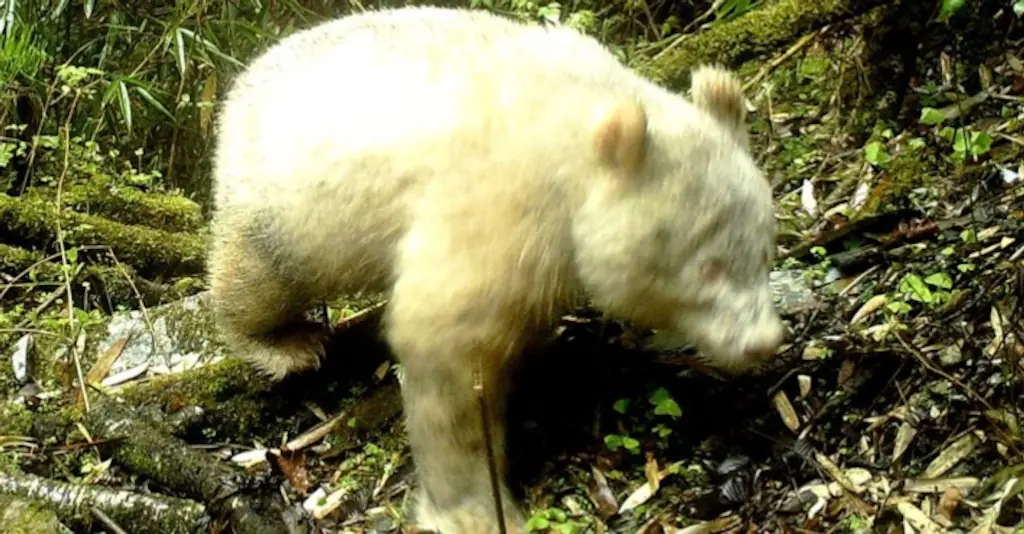
A giant all-white albino panda has been spotted in China for the very first time, the New York Times reports.
Li Sheng, from the Species Survival Commission of the International Union for Conservation of Nature, said that the animal was the first fully white giant panda to be documented in the country.
Indeed, there have been sightings of brown-and-white pandas in Qinling, a region in the northwestern Chinese province of Shaanxi.
Meet Qizai, one of the few brown pandas in the world:
[[jwplayerwidget||https://content.jwplatform.com/videos/uZHT2WFw-Q0L14jDU.mp4||uZHT2WFw]]
Wild pandas are not usually the simplest animals to study as they typically live by themselves in remote areas. In fact, a Chinese conservation center has developed a facial recognition app to aid in distinguishing between different pandas - in a bid to facilitate research conducted into the mammal. Since 2017, close to 10,000 photographs of pandas have been analyzed from the database.
According to a statement from local authorities, the panda - who is estimated as being one to two years of age - was photographed using an infrared camera at the Wolong National Nature Reserve in the southwestern province of Sichuan in April.
The panda's white fur can be attributed to albinism, a condition which causes partial or complete loss of pigmentation.
“I personally think it’s quite random for it to be discovered, since albinism manifests itself so infrequently,” Dr. Li commented in a telephone interview. “This was recorded just in time.”
While albinism can lead the individual with the condition to develop sensitivity to light, generally, its symptoms do not impact on their quality of life.
“Based on the photo, albinism has not affected the life of the white panda much,” said Dr. Li, a researcher at Peking University. “It looks quite well, quite strong.”
According to Duan Zhaogang, the Communist Party secretary of the Wolong district, the reserve will be increasing its use of infrared cameras. And, as a result, authorities plan to track the panda's progress and movements and any potential offspring it might have.