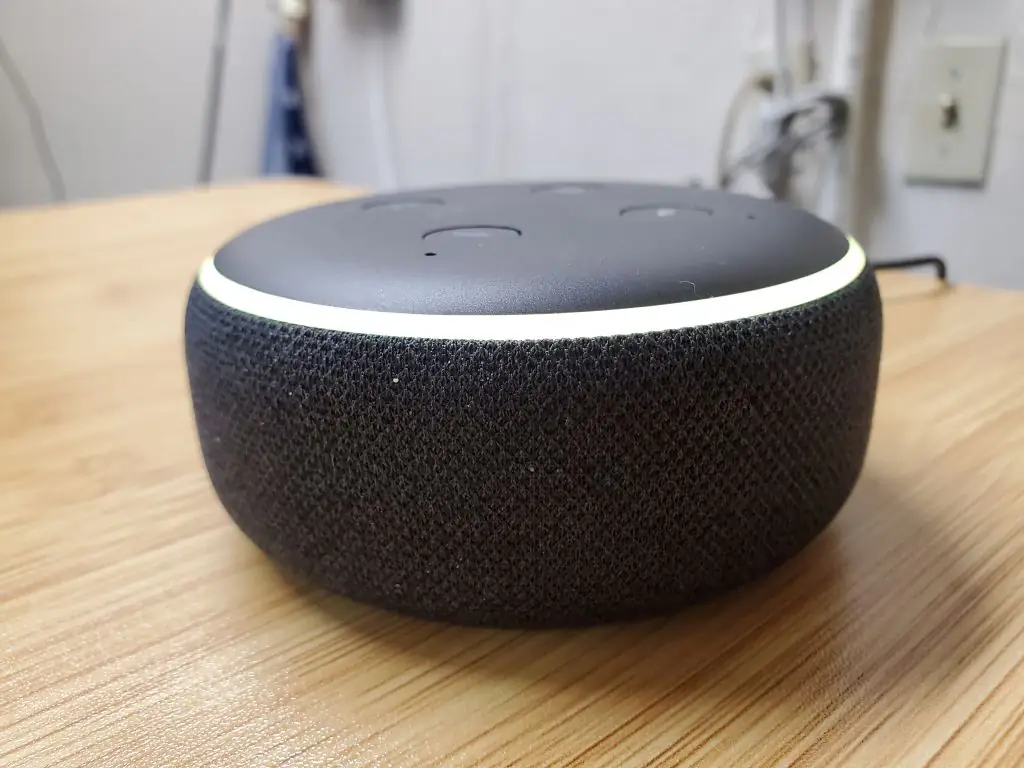
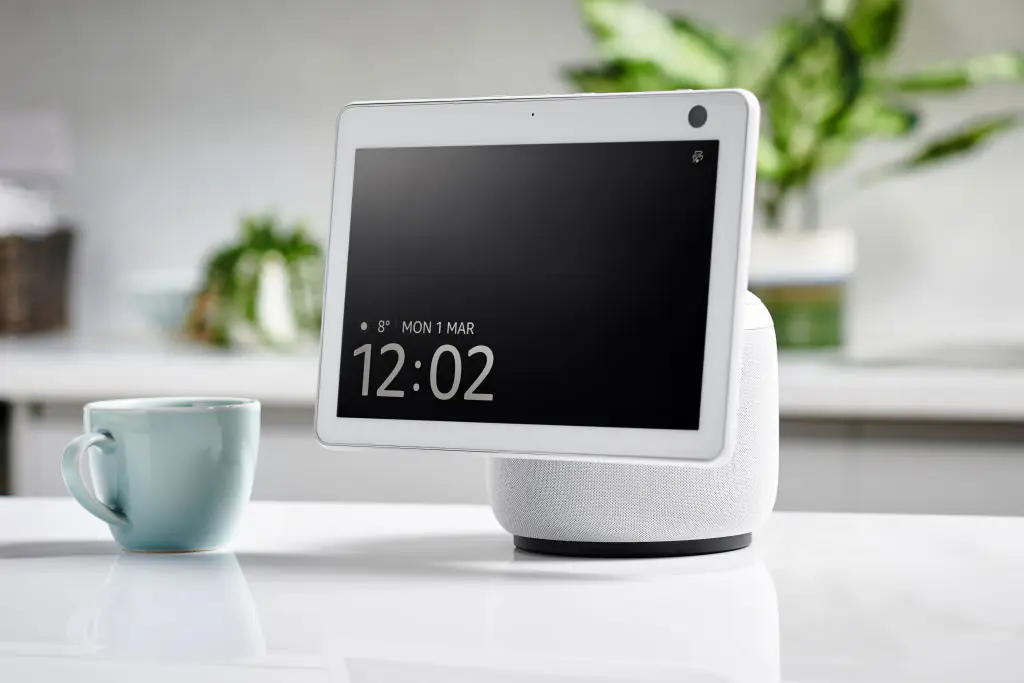
If you were lucky enough to get an Amazon Echo for Christmas, by now its leading lady, Alexa, will probably already have become a big part of your life. Want to switch the kettle on without getting out of bed? Alexa will do it for you. Want to belt out a duet with Usher without even leaving the comfort of your sofa? She's on it. Need to find out what the weather is like in rural Russia? She's probably already working on it.
But even Alexa, magical as she is, has her limits - as these people found out first hand. From the little bit freaky to the just plain absurd, here are some of the best creepy Alexa moments the internet has to offer:
[[twitterwidget||https://twitter.com/RachelElamMUA/status/946586143625236481]]
Love her or hate her, it's safe to say Alexa and her artificial intelligence friends have made their way into our lives and are probably here to stay, regardless of whether they're creeping us out with their sarcastic comments or listening to every word we say. Because after all, it would be such an effort to make those 10 steps to the light switch ourselves, right?
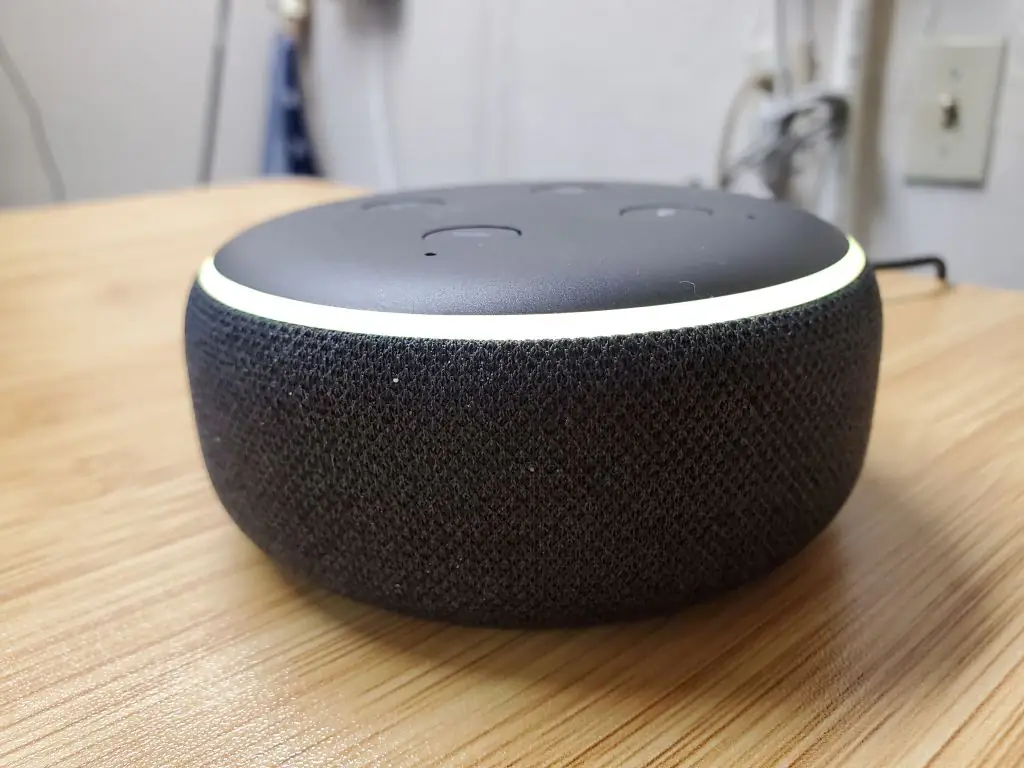
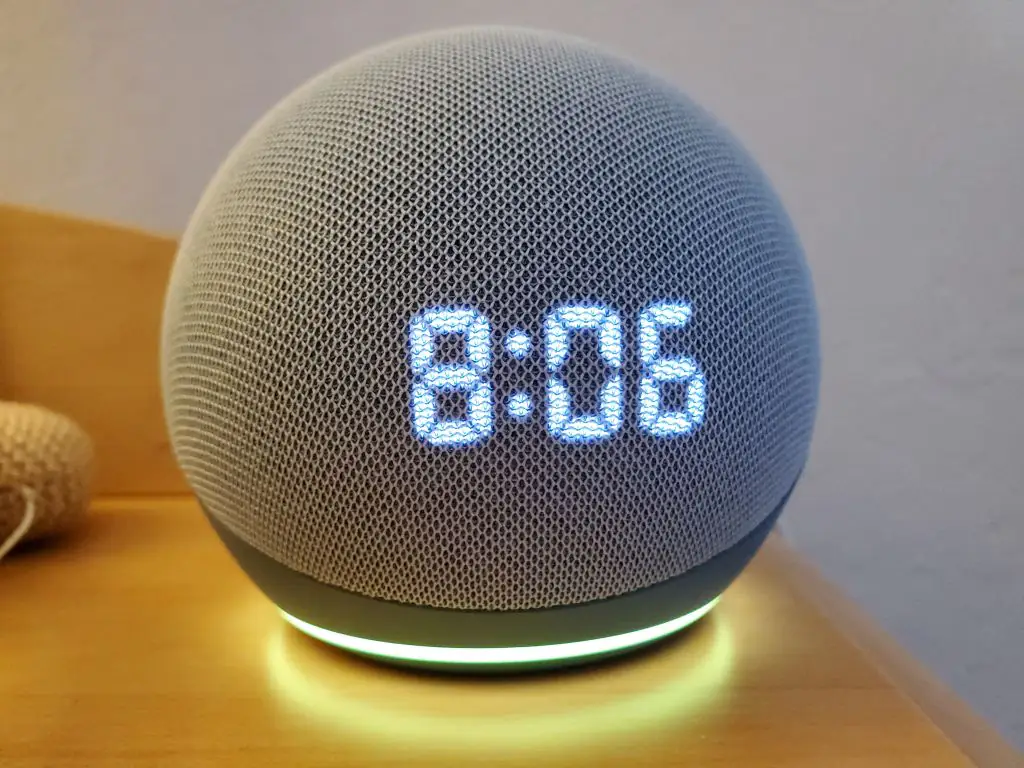
If you own an Amazon Echo Alexa device, you need to listen to this crucial warning from experts: refrain from setting it up in your bedroom or any other private areas of your home.
Featuring a voice-activated interface, these devices make life simpler, offering weather updates, alarms, music, and more. However, tech gurus suggest that your living room, dining room, or kitchen are better-suited environments for your Alexa.
The desire to place this system in the bedroom might be strong, but Dr. Hannah Fry, a mathematician, and expert on tech company algorithms at University College London, implores users to keep such devices at a considerable distance from their private spaces.
In the privacy of your home, your Alexa might be privy to your personal conversations without you realizing it.
Per Liverpool Echo, upon requesting her personal data from several tech titans, Dr. Fry was taken aback to find content from her private conversations. She also noted that high-ranking figures in the tech industry steer clear of taking their smartphones into the bedroom, alerting potential consumers to be wary of budget-friendly technology equipped with internet-connected microphones.
While Amazon has reportedly acknowledged that employees occasionally listen in on conversations picked up by Alexa to enhance the device's understanding of human speech, a Bloomberg report suggested that staff can potentially listen to up to 1,000 recordings daily.
Credit: Gado / Getty
Brad Thomas, from Prophecy International, has underlined the privacy implications.
According to Thomas, while these groundbreaking technologies serve as valuable time-savers and enhancers of daily life, they pose an unseen risk: inadvertently sharing your private information.
These ever-alert devices constantly gather data about you and your lifestyle, aiming to personalize their services - but their indiscriminate collection of data raises privacy concerns. The lack of a filter makes it all too simple to unintentionally hand over your private information to the tech giants.
An Amazon spokesperson stated, however, that Echo devices are designed to record only after detecting the chosen wake word, further signified by a blue light indicator on the device.
Aiming for transparent communication, the spokesperson confirmed that only a small fraction of one percent of Alexa's requests undergo a manual review as part of their effort to enhance performance.
Access to these instrumental review tools is limited to a handful of employees who use them to bolster the service quality. Putting any privacy concerns to rest, the spokesperson clarified that their review mechanism ensures no linkage between voice recordings and any identifiable customer data.
The spokesperson further explained that customers have the choice to opt out of recording options.
To safeguard privacy, users can navigate through the Alexa app to Settings > Alexa Privacy > Manage Your Alexa Data. From there, select Choose How Long to Save Recordings > Don't Save Recordings > Confirm. Following this, scroll down to Help Improve Alexa, and switch the Use of Voice Recordings setting to "off".
If you're one of the many people to have an Amazon Echo Alexa device set up in your home, have you ever thought about the best place to keep it?
Well, experts have warned you never to keep these devices in your bedroom or other private spaces in your house.
Experts have warned against placing Amazon Echo products in the bedroom. Credit: Smith Collection/Gado / Getty
That's right, the voice-activated devices - which provide a range of features including weather updates, alarms, and music - are apparently best kept in the living room, dining room, or kitchen.
While it may be tempting to set the voice-activated system up in the bedroom (maybe you want to listen to some Marvin Gaye and set the mood), experts have warned that's not a great place to keep your Alexa.
According to Dr. Hannah Fry, a mathematician and expert on tech company algorithms at University College London, the tech products should be kept far away from private spaces in the home.
The expert believes some areas need to remain private. Credit: Gado / Getty
She stated that many Amazon Echo owners are unaware that the AI assistant Alexa is recording some of their private conversations. "I think there are some spaces in your home, like the bedroom and bathroom, which should remain completely private," she said.
"This technology is activated by a trigger word but it keeps recording for a short period afterwards. People accept that, but we should all spend more time thinking about what it means for us," she added, per The Mirror.
She even revealed that she had sent out requests for her data from several major tech companies, and discovered that her data included some of the content from conversations she'd had in the privacy of her own home.
Dr. Fry subsequently stated that "very senior" people in the tech industry won't even take their smartphones in the bedroom, and that potential buyers should be well aware of low-priced technology with microphones linked to the internet.
Amazon has previously admitted that their staff listen to customers' conversations through Alexa, though they claimed this was only to improve the device's understanding of human speech, per the Liverpool Echo.
A 2019 report by Bloomberg, however, showed that staff are able to listen to up to 1,000 recordings a day.
You can prevent your recordings from being logged. Credit: Future Publishing / Getty
Brad Thomas, from Prophecy International said: "These technologies are great time-savers and make life easier, but they also make it easy to inadvertently share private information without thinking.
"These devices are always on, collecting data about you and your habits to better provide services - but there is no filter, and they simply collect it all. This makes it too easy to share private data with big tech that you did not intend to share."
But a spokesperson for Amazon has responded to concerns, saying: "Echo devices are designed to record audio only after the device detects your chosen wake word. [...]
"Customers will always know when Alexa is sending your request to the cloud because a blue light indicator will appear on your Echo device.
"We manually review only a small fraction of one percent of Alexa requests to help improve Alexa. Access to these review tools is only granted to a limited number of employees who require them to improve the service. Our review process does not associate voice recordings with any customer-identifiable information."
The same spokesperson told the Liverpool Echo that customers can opt-out of having their conversations recorded, and that "one percent of voice recordings" get reviewed.
To delete conversations, customers can open the Alexa app, and visit Settings > Alexa Privacy > Manage Your Alexa Data. From here, select Choose How Long to Save Recordings > Don't Save Recordings > Confirm. Next, scroll down to Help Improve Alexa, and switch the Use of Voice Recordings to "off".
There... now the only people listening to your bedroom antics are your neighbors.
Christmas is only a few more sleeps away, and now that Thanksgiving is over, it's almost time for us all to put up our trees, get the decorations down from the attic, and begin shopping for presents.
But if you've got kids at home, what's the best way to get them to feel a bit of that all-important Christmas spirit? Is it by watching festive movies? is it through music? Or is there another way to make your little ones believe in Santa Claus? Fear not! It seems as though Amazon has come up with a genius answer this year.
If you're feeling in a Christmassy mood, then check out Netflix's trailer for their selection of festive films for this year:
That's right: if you own an Amazon Echo device, then you can get your kids into the spirit of Christmas by asking her how many days are left until December 25. Alexa will then answer with: "Would you like to hear an update from my good friend Santa?" and play you a special message from Santa himself.
According to British tabloid newspaper The Daily Mail, 'Santa' has already been heard stating: "Ho ho ho, I'm so looking forward to Christmas. I will be starting my daily Christmas update very soon so make sure you come back if you love Christmas, come back tomorrow for another Christmas update." In another message, he was heard stating: "Ho ho ho, the elves are super excited about Christmas too, they have been singing the mince pie song and can't wait for Christmas ho, ho, ho."
[[imagecaption|| Credit: Pexels]]
Commenting on Alexa's new yuletide features, a spokesman for Amazon stated: "From November 17th, Alexa no longer reveals the names of items likely to be gifts when customers ask, 'Where's my stuff' or to read delivery notifications, to prevent spoiling surprises during the holiday season.
He added: "Customers that prefer to never hear or always hear item names can change their settings in the Alexa App. If an item is marked as a gift during checkout, Alexa will never reveal order details."
A woman has shared a terrifying recording she found on her sleep tracking app which appears to capture two unexplained voices having a creepy exchange in her bedroom.
The woman was terrified by what was recorded during her sleep. Credit: AleksandarGeorgiev/Getty Images
Sleep-tracking apps have exploded in popularity over recent years as many of us try and make sure we're getting enough shut-eye.
Some monitor your rest through metrics like body temperature or breathing and heart rate through devices such as smart watches, while others actually record the noises you make during your sleep.
One woman was left chilled to the bone after she listened back to a recording made in her sleep - and found there was an unidentified male and female voice captured at 3.26AM.
Taking to Reddit, the woman told other users: "I record myself at night and I was horrified when I woke up to this recording.
"I live alone in a second-floor apartment in a city. I have deadbolt locks on my door and there’s no other way to get into my apartment. The Voice is incredibly clear and seems to be talking to me and I’m responding."
She added that she "doesn't recognize" the man's voice and believes he may have an accent judging by the short clip.
In the recording, a man's voice can be heard saying unexplained words which sound like "'waka waka, baka baka", to which she can be heard replying "mmm" and "mmhm".
She added: "I put what he said into translator apps, but I couldn’t figure anything out.
"I don’t know if this is paranormal or ghost, to me it sounds like there was someone in my apartment, but I don’t know how that would be possible.
"The only thing I can think of is that some kind of technology in my apartment got hacked. I have an Alexa in my living room, but that wouldn’t be close enough to my phone to record the voice so clearly.
"Does anybody have an explanation for what this could be? I am really freaked out."
The woman was alone at the time of the recording. Credit: skynesher/Getty Images
Other users were just as perplexed by the sounds, writing: "Hilarious and terrifying at the same time," and: "Honestly, when it comes to how clear it is, I freaking hope all you have is a ghost…"
One wrote: "I think this could be a real person and not a ghost, because you can hear very clear the sound of his lips when vocalizing. I would buy a hidden camera. If it is a real person, it is worse than a ghost. The weird thing is that the voice seems very loud, wouldn't you wake up? Terrifying."
Another commented: "Buy a camera (ring cam or something similar) and position it where you sleep. Or buy multiple mounted throughout the place to try and catch a potential squatter. Have a friend come stay with you during this time. Maybe buy some mace and keep it close. I know it’s horrifying and also rare but it happens. I’d rule that out ASAP. Safety first, and mundane before magic."
The woman confirmed that she does have cameras within her apartment that have never captured an intruder and that it would be nigh on impossible for someone to access her home without her knowledge as she also has deadbolts inside.
She also responded to a poster that asked if she'd ever captured anything before, writing: "I have had a few other experiences which I will post when I have some time of the same voice, but less clear. I usually use sleep cycle app to record myself sleeping every night, so I’ve caught in a few times."
Others tried to decipher what the man was saying, writing: "Waka waka is a slang phrase from Cameroon that means 'do it'".
One user wrote: "Vacca (pronounced Waka) is Latin for cow. Maybe you got an old Roman ghost looking for his cow, named Baccha, which is a Latin female name."
Another commented: "I put it in a translator to detect the language. 'waka. waka waka baka baka' translated to 'song. you sing, you don't sing' in Hausa."
Yeah, I'd be moving out immediately.
Featured image credit: AleksandarGeorgiev/Getty Images
A woman has taken to social media to reveal how her two Amazon household devices kelp over 3,000 audio recordings of her.
Taking to social media to share her findings, data privacy TikTok star @my.data.not.yours told to her 57,000 followers in a post: "I requested all the data Amazon has on me and here’s what I found."
She clarified that she has two Amazon Echo Dots and one Amazon Echo in her home - adding that she also uses smart bulbs.
Sharing her computer screen, she explains that Amazon sent her a ZIP file containing 21 different folders - named things like 'Shopping', 'Location', 'Devices', and "Alerts'.
However, after checking out the 'Audio and Transcription' folder, the TikTiker was stunned to find a total of 3,534 voice recordings taken in her home by her smart devices.
Check out her eye-opening video below:
Describing the discovery as "so scary", the TikToker plays one of the recordings of her asking her device to turn on the light.
In the post, @my.data.not.yours then reveals that Amazon also had all of her phone contacts and her location. She ends the video by saying: "I'm not totally comfortable with everything they have."
Her video has since amassed over 2.6 million views, but people in the comments section were not as surprised by the results as @my.data.not.yours was. In fact, many of the comments were from people saying that this sort of thing is expected from smart devices and that people need to take more care when reading the "terms and conditions" that come with accounts and products:
Credit: TikTok
Credit: TikTok
Credit: TikTok
Credit: TikTok
Credit: TikTok
In a follow-up video, @my.data.not.yours revealed how people can request their data from Amazon relatively easily. All you have to do is sign into your Amazon account and go to their 'Request My Data' page. More information can be found in the TikToker's video below:
Per the New York Post, a spokesperson for Amazon said: "We give customers transparency and control over their Alexa experience.
"Customers can easily review and delete their voice recordings, or choose not to have them saved at all, at any time.
"Customers can import their mobile phone contacts to the Alexa app so they can use features like hands-free calling and messaging; this optional feature, which customers need to set up, can be disabled at any time.
"Finally, you can grant permissions for the Alexa app to use certain data, such as your mobile device’s geolocation, to provide relevant results (e.g., weather, traffic, restaurant recommendations), and you can manage these permissions in the app."
Featured image credit: Ivan Marc Sanchez / Alamy (Stock image)