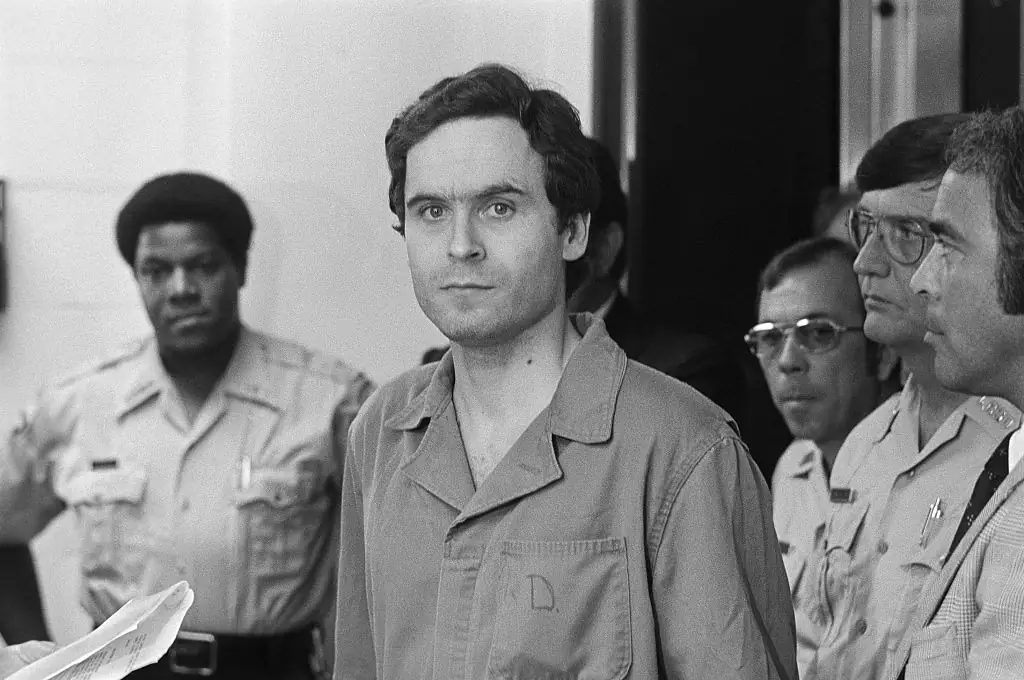
It's estimated that 1 percent of the world's population are psychopaths; people born without the ability to comprehend empathy, guilt, remorse, kindness or compassion. You don't have to be an axe-wielding maniac to be a psychopath either - serial killers usually constitute only a small proportion of psychopaths. Many hide in plain sight, looking just like regular people, interacting with neurotypical people with only a cursory regard. The camouflage of gesture and intonation that they cloak themselves in is difficult to penetrate, even to those who have associated with them for decades.
Psychopaths are incapable of feeling any genuine emotion except for a muted sense of hate, pride and self-disgust, but they substitute their inner vacuum for a meticulously-crafted disguise. Psychopaths mirror normal behaviour without understanding it, aping the routines and motions of ordinary people in a bid to fit in. However, psychologist Bob Hare's personal checklist has twenty tell-tale clues that someone you know might have an antisocial personality disorder.
1. Glibness and superficial charm
Psychopaths are superficially charming, capable of becoming charismatic and appealing to the opposite sex when it suits them. They have an almost clinical understanding of social interaction, and see conversations and communication as akin to a game they play for their own gratification. Psychopaths are only superficially charming: they don't care about making people happy and only seek attention from others. Psychopathic charm is not in the least shy, self-conscious, or afraid to say anything, and they will often pretend to have made a heartfelt admission in order to gain someone's trust.
2. A grandiose sense of self-worth
Psychopaths are fundamentally egocentric people, whose sense of self-importance is often out-of-control. Psychopaths believe that they are akin to gods, that they are the only 'real' people on earth. Other people are only peripheral entities or tools to be used and discarded. A psychopath might believe that they are capable of impossible feats, or are irresistible, flawless and perfect. They might believe that they are entitled to wealth and success without effort, that they have a special destiny or magical powers; that they have an inalienable right to do the horrible things they do.
3. They're easily bored
Because psychopaths are so unemotional, it takes a lot of stimulation to get them to enjoy anything. Psychopaths only exist in the here and now, and are unable to enjoy spending time with other people or other social activities. They have a poor imagination - unable to make their own fun or invest in other characters in fiction. They have short attention spans, and might be compulsive thrill-seekers. Activities that release high amounts of adrenaline, which would be overwhelming for normal people, have the same affect on psychopaths as a trip to the movies or a game of football.
4. Pathological lying
Psychopaths only believe in one worldview: theirs. Therefore, to them, there's absolutely no distinction between a complete fabrication and their version of the truth. Because of this psychopaths find lying extremely easy, and will continue to insist they are telling the truth even when they have been caught out. Furthermore, they might lie for no discernible reason. Psychopaths lie to others just so they can have power over them and assert themselves.
5. Manipulation
As stated earlier, psychopaths don't view other people as friends or acquaintances: everyone else is simply a useful tool, an instrument to be wielded for their own personal gratification. Because their amygdala is dysfunctional, psychopaths are unable to fathom the concept of others possessing autonomous agency - meaning that they are intimidated by or simply don't understand the fact that other people have their own free will. Thus, a psychopath will use emotional blackmail, coercion, threats and violence, gaslighting and lies to make other people do what they want, when they want.
6. Sexual promiscuity
This one is pretty-self evident, but don't worry too much. There's nothing inherently psychotic about any gender of person possessing a healthy sexual appetite, but it has been observed that psychopaths often exhibit a pronounced libido. Psychopaths seek constant sexual gratification and often suffer from an overwhelming drive, which can often make them rapists or predatory. For psychopaths, sex isn't a loving, caring experience, or a fun fling between strangers - it's another way of dominating and degrading victims and asserting power. Sex with a psychopath will aways be about taking, never giving, and will completely lack intimacy.
7. Shallow affect
When psychopaths feel anything, it's like the volume has been turned down to zero, and because they are so unemotional, they have difficulty expressing themselves verbally or physically. Their gestures are often forced and their facial expressions fake and language stilted. Psychopaths are incapable of spontaneity because for them every social interaction is something carefully rehearsed and studied.
8. Lack of long-term goals
Psychopaths are so bad at empathising that they are incapable of even empathising with themselves in the future! They never learn from their mistakes and are unable to fathom the idea of consequences. Thus, they never plan ahead for the future, living day-to-day or week-to-week. Their aspirations are absurdly limited, but they are able to easily leave their roots and start over when caught out. They also harbour unrealistic expectations regarding the future and lack any sense of direction.
9. Juvenile delinquency
Psychopaths often get in trouble with the police from an early age, and puberty hormones can often make their behaviour even more erratic. A recent study published in the official journal of the National Centre for Biotechnology Information concluded that that youths with high psychopathic traits start engaging in criminal activities earlier in life, come into contact with the justice system earlier in life, and have higher levels of conduct disorder, behavior problems, and delinquent behaviours. If someone has a significant criminal history from a young age, it's probably a red flag that they're psychopathic.
10. Lack of remorse
Psychopaths cannot feel guilt, and consequently, they will never feel sorry for the myriad miseries they inflict on others. They might try their best to convince you that they experience remorse, that they genuinely feel sorry for hurting you. They might beg for forgiveness and claim to want to reform, but it's a futile act. Psychopaths don't change, and they will never regret hurting you. To them, regret is something that only happens to other people: another weakness to be exploited.
11. Parasitic lifestyle
Loathe as they will be to admit it, but psychopaths really do need normal people in order to function. Psychopaths prefer to manipulate people into doing things for them and servicing their needs, rather than living independently. This trait usually manifests itself through financial dependence on others as reflected in a lack of motivation, low self-discipline, and inability to begin or complete responsibilities. If someone you know continues to depend on the aid of family and friends without regret and makes no effort to change their spending habits or provide for themselves, that's a big hint that they could be psychopathic.
12. Poor impulse control
Psychopaths have a very hard time suppressing their desires, and because they are so bad at long-term forward planning, they often make very rash or irresponsible decisions on the spur-of-the-moment. They can experience anger as a sudden explosion of violent rage, steal or shoplift based on a fleeting need, go on large spending sprees and splash out on extravagances. They may enjoying gambling or other risky pursuits, and even indulge in voyeurism or arson. Psychopaths might be motivated by a need to shock, and will quickly cave in to pressure when they want something.
13. Irresponsibility
Psychopaths don't care how their actions affect other people, and aren't bothered when they can't follow up on commitments - be they social, financial or career-related. Psychopaths will let people down, neglect to pay back loans, come late, sleep in, neglect to answer e-mails or texts, fail to keep promises, drop out of engagements or jilt dates and generally fail to follow through on things. If you know someone who appears to be intentionally, maliciously disorganised, then it could well be because they view you as being easy to take advantage of.
14. Difficulty sustaining relationships
Psychopaths are very bad at maintaining friendships or sustaining relationships because all interaction with a psychopath is ultimately a one-sided affair. Psychopaths are often cold, callous and emotionally absent, or otherwise closed-off, never opening up to their partner. Because psychopaths only want friends in order to satisfy a need or to get something, they're not particularly fussed who the associate with, and when their abusive behaviour or coercion gets to be too much, and the psychopath is called out, they will dismiss people and move on very easily, making no effort to alter their interaction with others. If someone seems to lose friends easily or has difficulty keeping in touch with others or needlessly antagonises people then be wary of them.
15. Failure to accept responsibility for their actions
Part of the narcissism of psychopathy is the fact that psychopaths will never take responsibility for themselves and will continually pass the blame on to external factors and bad luck rather than admit to their own foibles. They will often act surprised when admonished for something; acting as though they had no choice in a poor decision or that their actions were inevitable. They will often suffer from a persecution complex, imagining themselves to be unfairly put upon or disregarded. Finally psychopaths will never take any pains to modify their behaviour. They cannot be cured and any amount of self-reflection or neuroticism is wholly alien to their nature.
16. Revocation of condition release
This trait is only found in psychopaths who already have a known criminal record, but psychopaths on probation often have their conditional releases revoked due to purely technical violations, such as carelessness, low deliberation, or failing to appear in court. This is also linked to their irresponsibility, but in conjunction with their lack of remorse can be extremely telling.
17. Criminal versatility
Psychopaths are often habitual criminals able to turn their hand to any kind of trick or con and may have a lengthy criminal record of many varied misdemeanors. Similarly, psychopaths have no sense of distinction or proportion when it comes to illegality. Their warped and self-centred ethics mean that, to them, there is no clear difference between jaywalking, stealing a bag of peanuts, and stabbing someone in the neck. They know that all of these things are wrong, but fail to grasp why, or that certain things are more prohibited than others.
18. Early behavioural problems
Psychopaths often display very troubling, non-childish behaviour in their prepubescent years. They might drink, smoke, or engage in sexual activity earlier than normal, might disregard play or games and act solemn and unimaginative, make frightening statements, swear or threaten adults and peers alike. Psychopaths often wet the bed, start fires and torture animals from early infancy into adolescence. 10% of serial killers make their first kill before the age of ten.
19. Drug use/abuse
Psychopaths will often display addictive behaviours and seek the stimulation their shallow affect deprives them of by resorting to substance abuse. Most psychopaths, therefore, will also be drug addicts or alcoholics, and will often heavily self-medicate when in the midst of a serious depressive episode. They can often seek drugs and alcohol as a method of freeing themselves from their inhibitions.
20. Poor communicative skills
The body language and speech patterns of psychopaths are often stilted and inhuman, inducing an uncanny valley effect in those exposed to them. They are inexpressive, often blank-faced and vacuous, and their interactions with other people often appear to be forced and fake. Psychopaths often have an obsession with manners and etiquette, because these strict rules of social decorum allow them to blend in around other people and avoid suspicion. Psychopaths often speak in clichés or use hackneyed terms of phrase, have difficulty understanding metaphor and analogy, and are often humourless, laughing only at something/someone else's expense.
Psychopathy is considered almost untreatable by psychiatrists, as most psychopaths simply regard of their doctor as just another person to be manipulated; in many cases, the attempts at treatment actually make them even better at manipulating people and more likely to commit crimes. If you have to break up with a psychopath or end a friendship with them, don't worry about hurting their feelings. They don't have any feelings to hurt.
In other psychopathic news,
could taking too many selfies mean you have a psychopathic personality disorder?