Over the past couple of centuries, the human race has made leaps and bounds in the medical field. Our lifespans have increased thanks to better understanding of diet and exercise, new technology has allowed us to identify and cure illnesses that might formally have been fatal, and, in the more developed world, we've almost all but eliminated life-threatening diseases such as polio and cholera.
Unfortunately, there's a group of people out there whose beliefs are threatening to take us all the way back to the 1800s. They are, of course, anti-vaxxers.
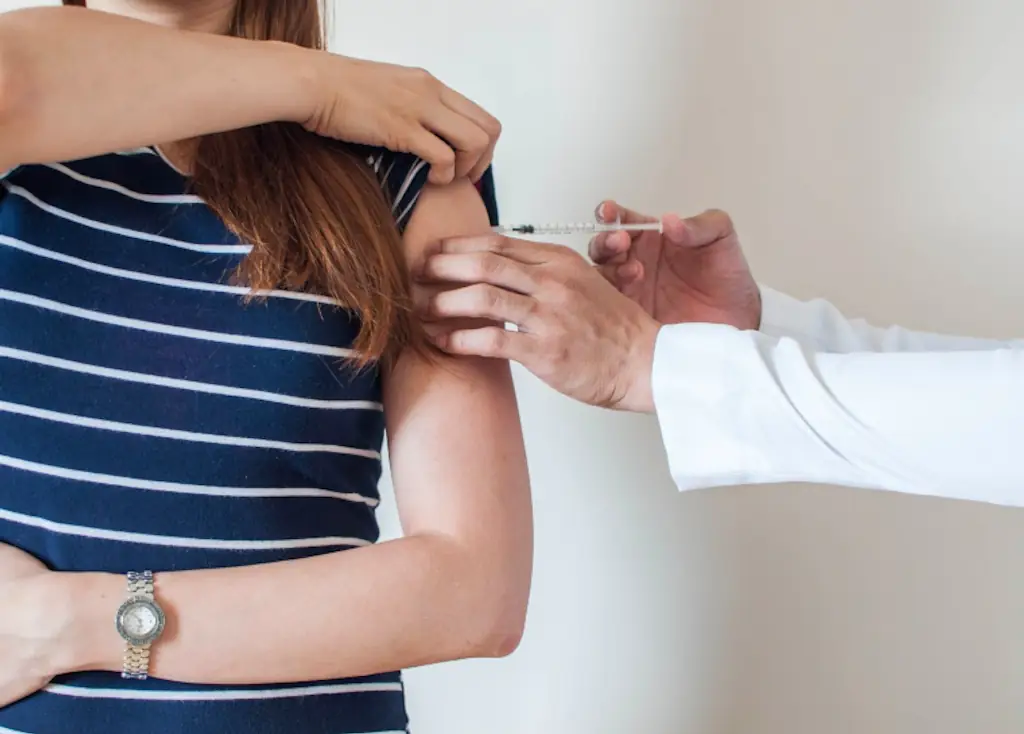
Ever since a factually incorrect paper linking the MMR vaccine to autism was published in 1998, more and more parents have been avoiding getting their children immunised. This inevitably leads to greater health risks - not just for the child, but for any immunocompromised people they might encounter.
Still, some people elect to avoid giving their kids the shots they need - and one mother has come forward to explain why.
Shanelle Cartwright, who is married to Australian rugby player Bryce Cartwright, says that she and her husband have chosen not to vaccinate their 13-month-old son, and will not be immunising the second baby they have on the way, either. Her main reason for this decision, she says, is that she feels that she is still "healing" from her own vaccinations.
"I remember [Bryce] was so defensive when I first brought it up and got angry at me for even suggesting that we shouldn't vaccinate," said 20-year-old Shanelle, who is expecting her second child any day now. "And then he read a package insert and few pages of one of Dr Suzanne Humphries' books and saw vaccines under a different light. And now we're here."
Shanelle and Bryce were both vaccinated when they were young, but claim that they suffer from "allergies and auto-immune disorders" which they believe they might not have developed had they gone unvaccinated. As a result, they are abstaining from any future inoculations.
"We now obviously don't vaccinate ourselves and are in the (slooooow) process of healing."
Shanelle has also revealed that she doesn't plan to give her newborn nappies, either, as she believes that the baby will stop messing itself thanks to "instinct".
"For this baby we are going to try no nappies and do elimination communication, especially if we have a girl," she said. "All mammals will instinctively NOT soil their nest and will eliminate where mum tells them to. You don't s**t your pants because you know it's uncomfortable and yucky.
"Just like you teach a kitten to go in a litter box or a puppy to only go outside - you teach a baby the same."
According to the World Health Organisation, anti-vaxxers are one of the top ten threats to global health in 2019.
"Vaccine hesitancy – the reluctance or refusal to vaccinate despite the availability of vaccines – threatens to reverse progress made in tackling vaccine-preventable diseases," they explain. "Vaccination is one of the most cost-effective ways of avoiding disease – it currently prevents 2-3 million deaths a year, and a further 1.5 million could be avoided if global coverage of vaccinations improved."
Like many others, though, Shanelle refuses to listen to the scientific evidence presented to her.
Over the past few decades, there has been a worrying trend in people opting out of vaccinating their children - despite overwhelming evidence to suggest that it's a terrible idea.
Study after study has proven that there is no link between vaccinations and autism (one of the main arguments put forward by anti-vaxxers), and that denying a person the necessary inoculations leads to a greater risk of certain health problems in later life.
Joshua Nerius, a 30-year-old software product manager, found this out the hard way three years ago when he was diagnosed with measles.
At first, a doctor prescribed him antibiotics to combat the rash and high fever, but they had no effect. This prompted the doctor to ask whether Nerius had been vaccinated against measles as a child, as anyone who had been immunised would have been safe from the illness as an adult.
When Nerius messaged his mother to check whether he had received the vaccine, she replied with a thumbs down emoji. He was furious.
[[imagecaption|| Credit: Getty]]
Because of the severity of the disease, Nerius had to be kept in an isolation room at Northwestern Memorial Hospital. He was in extreme discomfort, could hardly walk without assistance, and - over the course of his illness - lost 25lbs.
"I felt horrible," he said. "It took a serious toll."
As well as being annoyed about his own illness, though, Nerius feels for all the children who have had to experience the pain and discomfort because of their parents' ignorance.
"It makes me so angry," he said. "My parents thought they were doing the right thing. They were persuaded by the anti-vaxxers."
Nerius is actually very lucky, though, as measles can kill. Before the introduction of a vaccine in 1963, 400 to 500 people in the United States died each year as a result of the disease.
And yet, there is a worrying amount of advocacy for vaccinations to be banned or avoided.
[[imagecaption|| Credit: Pexels]]
Darla Shine, wife of the White House communications chief, Bill Shine, recently tweeted that she wished her children had caught measles as she did when she was young. "Bring back our #ChildhoodDiseases they keep you healthy," she wrote - much to the horror and dismay of medical professionals.
"When Darla Shine talks about how great it was that she had measles as a child, what she forgets to mention is that she gets to tell her story because she's alive. The ones who died - we don't hear from them," said Dr. Paul Offit, director of the Vaccine Education Center at the Children's Hospital of Philadelphia. He remembers the measles outbreak in 1991, during which nine children lost their lives.
Really, with the understanding we have now, there is no need to be so wilfully ignorant about the dangers of the anti-vaxxer stance.
"The science on this has been settled. It's been solved," Nerius said. "When I look at where we are today, with people who are wilfully deciding to ignore the facts, it really frustrates me. I just don't understand the mindset of people who want to spread fear."
In this case, Nerius was able to make a full recovery but tragically, others in his position have not been so lucky.
Back in 1796, Edward Jenner took blister material from someone infected with cowpox, and used that material to protect someone from getting the deadly disease smallpox.
Testing out his theory on several children including his own 11-month-old son (who survived), this was the first example of an arm-to-arm inoculation, and became the world's very first vaccine.
Now, more than 300 years since that incredible discovery, thousands of people across the world are turning out in their droves to defy Jenner's research, putting millions of people at risk in the process.
Anti-vaxxers, as they're sometimes known, don't have the best of reputations online, and one such woman came in for some heavy criticism for an ill-advised question on Facebook.
[[imagecaption|| Credit: Getty]]
For parents who decide to forego vaccinations in the modern age, the target of their ire is typically the MMR vaccine - a series of shots administered usually at around 12 to 15 months which is designed to inoculate children against measles, mumps and rubella.
There is a belief in some corners of the internet that the shots cause autism in young children (based on a now-debunked study), and rather than take the risk, some mothers are choosing to eschew the practice. But one Facebook mother is getting quite a lot of criticism for asking for help with managing an outbreak of measles in her home state.
[[imagecaption|| Credit: Facebook]]
"My 3 year old is not vaccinated," she began in her Facebook post, "and there is currently a measles outbreak in my state. Any suggestions for precautions I can take to protect her would be very much appreciated."
Now, for many people who have taken the vaccine or given the vaccine to their children, the answer here is apparent. But Facebook users took the time to roast the mother on her anti-vaxxing views, and some of the comments on her thread are hilarious.
Alyssa Adame opted for sarcasm - the lowest form of wit, to some people, but for me it's also the funniest: "If only they made some type of vaccination to prevent the child from getting it..."
[[imagecaption|| Credit: Facebook]]
Apart from being somewhat misguided, not vaccinating children can be dangerous, and one mother pointed this out emphatically.
"It's not about YOUR kids, it's about the immunocompromised children that your kids are going to KILL because they rely on literally NO ONE near them getting these viruses," Mia Marie Migliaccio Hernandez said.
[[imagecaption|| Credit: Facebook]]
All joking aside, the anti-vaxxer movement is thought to have played a part in reintroducing diseases that were thought eliminated back into communities. Measles, for example, is a disease that the Center for Disease Control and Prevention (CDC) thought we had eliminated back in 2000:
"Measles was declared eliminated (absence of continuous disease transmission for greater than 12 months) from the United States in 2000. This was thanks to a highly effective vaccination program in the United States, as well as better measles control in the Americas region."
[[imagecaption|| Credit: Getty]]
While the outbreak of previously eliminated diseases can bring with its own problems, let's take a moment to enjoy some schadenfreude and dark humour.
Over the past few decades, the anti-vax movement has become a worryingly prevalent one. Parents are refusing to vaccinate their kids against life-threatening illnesses due to spurious science reports saying that doing so could harm them.
Many of these rumours stem from one 1998 paper which claimed that the measles, mumps and rubella (MMR) vaccination caused autism. This was, as Healthline confirms, based on "faulty data" and the study's findings have never been replicated.
In fact, Healthline states, "no other medical research has shown a link between vaccines and mental disorders" in the last 21 years. Despite this, people still believe that inoculations carry the risk of causing autism or other neurological conditions.
With this in mind, one woman ran into something of an ethical dilemma when an anti-vaxxer asked if she could have some of her breastmilk for her newborn.
[[imagecaption|| Credit: Pexels]]
"I’m part of a breast milk donation group on FB as I make excess amounts of milk that would otherwise go to waste," the woman, who goes by the username 'sayyestodogs', explained on Reddit. "Often I’ll make a general post offering to donate anywhere from 60-100 oz to a baby in need."
She continued: "There is a woman who always messages me. The first time she told me of her story and her baby, I was prepared to give her that particular stash. Then I clicked on her profile - oh boy. Filled with anti-vax propaganda and just disgusting things.
"I can’t explain it, but I get this awful, icky feeling thinking about giving her my breast milk. So I tell her someone else already claimed it. This happens about three more times over the course of several weeks and I keep telling her, sorry someone else has claimed it."
After managing to avoid the anti-vaxxer for a short while, however, 'sayyestodogs' faced a direct challenge about her behaviour.
[[imagecaption|| Credit: Pexels]]
"I made a post two days ago and she literally messaged me asking for it mere seconds after posting. I replied with the same response. She called me out this time and says she feels like I always say that to her and that she thinks I have a problem with her," the mother said.
She continued: "So I tell her that I’m extremely uncomfortable donating my milk to someone who refuses to vaccinate her child (who is a sick baby, btw, and born very early as per her first message to me) as well as spreads misinformation about immunizations.
"Well as you can guess, she got very upset and basically called me an awful person. Kind of went on a tirade about how we don’t know what’s in vaccines and the ingredients we know about are poisoning our children.
"I almost asked her how she was okay with accepting everyone’s home-pumped milk for her kid when god knows what’s in it. Whatever. Not sure why I’m posting this but I felt super butt hurt about the whole exchange."
[[imagecaption|| Credit: Pexels]]
The woman worried that she was a "terrible person" for refusing to help out the mother, but other people in the comments backed up her decision.
"Not a terrible person. I would do the same," said one fellow mother. "If she wants BM for the 'antibodies', she should get her child vaccinated so they get the antibodies in the most effective way possible."
"You donate your milk and probably don't even take money for it. YOU have taken the time to pump so that those babies get breastmilk," added another. "That means that YOU are the one to decide who you give your milk to. She has no right to call you awful for not giving it to her. Don't feel guilty - trust your gut feeling. If you don't want to donate to her, she has to accept that. End of story."
Ultimately, most people agreed that it was the anti-vaxxer's responsibility to ensure her little one was vaccinated. After all, even if that child manages to avoid the deadly illnesses it ought to be immunised against, they will still grow up to be a danger to immunocompromised individuals (such as pregnant women or those with autoimmune diseases), meaning the mother is potentially harming many more people by ignoring science and refusing to vaccinate her baby.
Hopefully, posts like this will make more anti-vaxxers realise that the only way to take proper care of their kids is to get them the shots they need when they're young.
The anti-vaxx movement has captured the attention of the world. A number of unproven theories have linked certain infantile vaccinations with learning difficulties and autism. Preferring what they see as a more natural approach, anti-vaxxers therefore flout medical advice and choose not to vaccinate themselves or their children.
A growing movement, it has been popularised in part by social media. Often it mainly affects the children of an anti-vaxx family, whose parents received their immunisations against potentially deadly diseases when they too were too young to decide.
[[imagecaption|| Credit: Getty]]
As well as highlighting an interesting conundrum when it comes to who makes decisions about children’s healthcare, the movement has been vilified by other parents who accuse anti-vaxxers of being irresponsible not only with their own children’s health but with everyone’s. This is because an unvaccinated child could act as a carrier - and infect people who have been vaccinated.
A divisive issue, it has sparked endless debates online. One such debate followed a polite request for advice from an anti-vaxx mother who was concerned about a recent outbreak of measles in her state.
“My 3-year-old is not vaccinated and there is currently a measles outbreak in my state,” she wrote in an online post. “Any suggestions for precautions I can take to protect her would be very much appreciated.”
Written in the Facebook group Vaccine Education Network: Natural Health Anti-Vaxx Community, the woman perhaps thought she would be safe from the platform’s pro-vaccination contingent. However, they were quick to swarm to her post.
The woman received a lot of abuse and jokes about her apparent contradiction. However, while anti-vaxxers don’t believe that immunisations are best for children, they seek to protect them in other ways.
Conversation around alternatives to vaccination has blossomed into an entire community - including various groups, pages and personalities on Facebook. However, the social media giant has come under scrutiny for its libertarian attitude towards what many people believe is misleading and potentially dangerous content. Driving home some facts, other commenters on the mother’s post were keen to point to logic.
While some of these comments got incredibly personal, it highlights the level of emotional attachment to the topic. Pro-vaccination parents are especially keen to point out the perceived injustice in not vaccinating one’s child.
In fact, a 15-year-old boy identified only as “Danny” asked Reddit’s /r/legaladvice thread how he could get vaccinated despite having anti-vaxx parents. Suggesting that he is open to ideas of legal or even illegal ways around it, he posted the following.
“Hello r/legaladvice,
“I am writing because I am the 15 year old son of an anti-vaccine parent. I have spent the last 4 years trying to convince my mother that vaccines are safe. I haven't succeeded. So instead I am trying to research how to be vaccinated without my mother's consent.
“I live in Minnesota, and I have been reading the Minnesota Statutes 144-159 regarding Health, and more specifically 144.341 - 144.347 regarding Consent of Minors for Health Services. I also read the 121A.15 HEALTH STANDARDS; IMMUNIZATIONS; SCHOOL CHILDREN.
“Currently here is what I understand: According to Minn. Stat. § 144.3441, "A minor may give effective consent for a hepatitis B vaccination."
“However, I cannot conclude what kind of consent, if any, do I have to get from my parents to recieve further vaccinations. Is it a signature? Is it verbal?
“According to http://www.house.leg.state.mn.us/hrd/pubs/ss/ssminorhc.pdf, "Minors may not receive health care services without their parents’ or guardians’ consent, unless specified otherwise in statute."
“I also read this interesting document: http://pediatrics.aappublications.org/content/pediatrics/121/Supplement_1/S85.full.pdf
“I am confused as to what Statute 144.345 REPRESENTATIONS TO PERSONS RENDERING SERVICE means. Can someone please clarify?
“The consent of a minor who claims to be able to give effective consent for the purpose of receiving medical, dental, mental or other health services but who may not in fact do so, shall be deemed effective without the consent of the minor's parent or legal guardian, if the person rendering the service relied in good faith upon the representations of the minor.
“In conclusion, my question is if I have missed anything or am misunderstanding anything. I don't think I can recieve any vaccines except the hepatitis vaccine without parental consent.
“What legal consequences can I face if I fake my parent's signature giving me consent to vaccinations besides the hepatitis vaccine?
“Thank you!”
[[imagecaption|| Credit: Getty]]
Danny received a number of suggestions ranging from speak to his school nurse to fly to a different state and get vaccinated there. Overall, however, it is very difficult for children to get vaccinated against their parents’ will.
“I’ve tried to have conversations with my mom about vaccinations,” Danny later told Bored Panda. “My attempts were often conversations with me bringing a website or a scientific study to show her.”
“I’ve tried to have conversations with my mom about vaccinations,” he adds. “My attempts were often conversations with me bringing a website or a scientific study to show her. Often it concluded with my mom saying that she would do some more research later.” His explanation continues below.
“We both understand each other’s views and respect them, we are able to have good and open discussions. However, it honestly came down to just being persistent enough so that at the last doctor’s checkup I had several months ago, at the end of it I kept nagging my mom about it and asked the doctor to talk about vaccine risks and safety. We convinced my mom to let me get a tetanus and polio shot. Since then I haven’t had any other shots, and my younger siblings don’t have any vaccinations at all.”
“My mom has been anti-vaccine, and my dad does not have a strong opinion on this, as far as I know, he just supports my mom. Both my parents have been vaccinated, however, not in this country. It’s highly likely that this experience is a major factor in the decision to not vaccinate. The toughest aspect to understand, and it’s incredibly important to acknowledge it, is that their decision is made with good intention and my best health and safety in mind.
“My mom and dad are not doing this with malicious intent, in fact, it’s quite the opposite, they want the best for me. However, that decision, in my opinion, was not properly researched/informed.
“The topic then transitions to the question, ‘Who is responsible?’ Are my parents at fault for not thoroughly researching the topic? Or is it the sensationalist websites and media that post for clicks by publishing false and controversial claims? Is the educational infrastructure in the US at fault for not teaching students how to differentiate from false information and facts, for not thoroughly teaching how to conduct research and what sources to trust? Is it the homeopathic industry that is at fault? It makes billions of dollars with extreme profit margins, it has its own lobby organizations and fights its enemies as hard as it can. The belief in homeopathy correlates with skepticism about vaccinations, and in reality, a lot of money is on the line – globally the market is expected to reach over 17 billion by 2024.
“The best thing to do in this case is to put stricter enforcement on vaccination, possibly going even as far as making it mandatory unless exempted by a doctor for health-related reasons. Loosening laws on the requirement for parental consent in these types of situations.”
[[imagecaption|| Credit: Getty]]
While Danny’s story is a tiny microcosm of the overall picture, criticism leveled at Facebook is highlighting just what an important issue this is to society at large. Currently, paid anti-vaccination campaigns delivered to users’ newsfeeds are allowed on the platform.
YouTube has also received criticism for allowing the anti-vaxx community to flourish. On Friday, the company announced that it would be reducing the number of videos which “could misinform users in harmful ways”. Meanwhile, Facebook have been reviewing posts which could lead to “real-world harm”.
[[imagecaption|| Credit: Facebook]]
The debate around vaccination will inevitably continue. Everyone is entitled to make their own decisions regarding their bodies. However, that this mother is concerned about her unvaccinated child catching measles shows that parents understand the risks they are taking by not having their children immunised.
Furthermore, that children who are old enough to understand the decision are being denied vaccinations is troubling. Ultimately, a number of knee-jerk reactions have led to an entirely new school of thought. One can only hope that science, or perhaps common sense, will prevail.
Many parents who chose not to have their children vaccinated - or anti-vaxxers as they are more commonly known - believe that there is a link between common vaccinations and disorders like autism.
Now, a new study conducted in Denmark and published in the Annals of Internal Medicine has found no link between the measles, mumps, rubella (MMR) vaccine and autism, the Business Insider has reported. This study did not have a small sample size either, as it involved more than 650,000 people.
In the video below, Jimmy Kimmel gives a message to the anti-vaccine movement:
However, this is far from the first study to reach this conclusion, but despite this, many anti-vaxxer parents have clung to the results of a since-expunged study which found a link between the MMR vaccine and autism.
This study disproving the link involved 657,461 Danish children born between 1999 and 2010
[[imagecaption|| Credit: Getty]]
However, for some of the scientists involved, this was their second published work on the subject, having released similar findings in 2002 involving 537,303 Danish children who were born between 1991 and 1998.
The only reason the study was conducted again is because anti-vaxxers refuse to let go of the disproven findings found in a 1997 study published by Andrew Wakefield, a British surgeon, in The Lancet, a highly-regarded medical journal.
"The idea that vaccines cause autism is still going around. And the anti-vaxx movement, if anything, has perhaps only grown stronger over the last 15 years," researcher, Anders Hviid, said. "The trend that we're seeing is worrying."
[[imagecaption|| Credit: Getty]]
As a result of the growing popularity of the anti-vaxxer movement, diseases are making a comeback.
The Centers for Disease Control and Prevention revealed that in January and February of this year alone, there were 206 cases of measles.
To put this into context, that's more measles diagnoses than there were in the whole of 2017.
Now, State Health Secretary John Wiesman is investing in teaching people about the value of vaccines so that the problem doesn't worsen. He is hoping to obtain this money from the state "as the anti-vaccine movement has become so well organized, we are just really adequately prepared in getting out our message and to counter that."
[[imagecaption|| Credit: Getty]]
However, the value of conducting further studies into the issue has been questioned by Dr. Saad Omer of Emory University as "continuing to evaluate the MMR-autism hypothesis might come at the expense of not pursuing some of the more promising leads."
"It has been said that we now live in a 'fact-resistant' world where data have limited persuasive value," he continued.