


US3 min(s) read
‘Brutal rules’ inside the ‘world’s worst prison’ where Trump could now send American citizens

Donald Trump has claimed that crime across the US is falling to record lows because his administration is sending “killers, drug dealers, and thugs” to a notorious mega-prison in El Salvador.
The US president made the comments in a recent post on Truth Social, alongside footage showing inmates being transferred into the Centro de Confinamiento del Terrorismo (CECOT), a maximum-security facility known for its harsh conditions.
“This is why murder and other crimes in America are at record lows,” Trump recently declared.
Why has the prison got such a reputation?
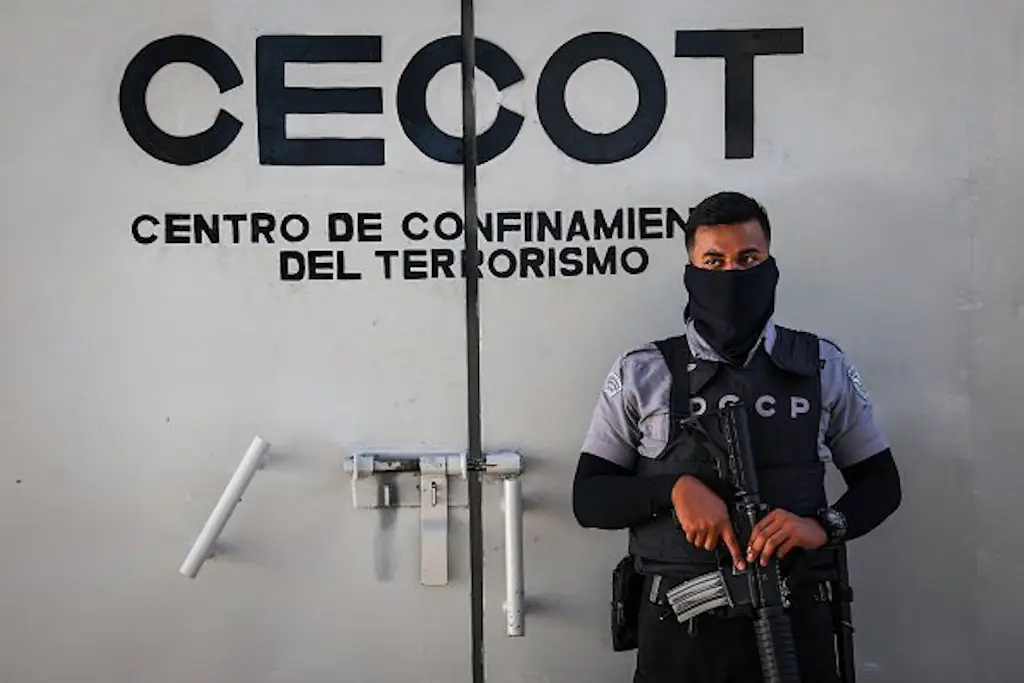
Opened in 2023 under El Salvador's president Nayib Bukele, CECOT was built as part of the country's crackdown on gang violence, with the facility housing thousands of prisoners, and authorities claiming it has the capacity to hold as many as 40,000 inmates.
The prison has primarily been used to detain people suspected of gang involvement, but Trump's latest comments have raised questions about whether he intends to send even more people there.
His administration has previously deported individuals from the US to the facility, where conditions have been widely criticized as inhumane, with CECOT being heavily guarded, and security personnel monitoring inmates continuously.
Nineteen watchtowers surround the compound, which is secured by two concrete walls and two electrified fences, but the facility's conditions have attracted international criticism, with Miguel Sarre, a former member of the United Nations Subcommittee on Prevention of Torture, describing it as a “concrete and steel pit”.
Those held inside must adhere to a strict regime, spending 23 and a half hours a day confined to their cells, and they are often shared by multiple inmates, with temperatures reportedly reaching 35C.
Trump's claims have raised questions
Despite the criticism, the Trump administration has previously expressed support for an arrangement allowing El Salvador to accept people deported from the US, including individuals who are not Salvadoran nationals.
US Secretary of State Marco Rubio previously described the agreement as “the most unprecedented, extraordinary, migratory agreement anywhere in the world”.
Bukele had offered to accept deportees regardless of their nationality, potentially extending the arrangement to American citizens.
“We can send them and he will put them in his jails,” Rubio said at the time. “He [Bukele] has also offered to do the same for dangerous criminals currently in custody and serving their sentences in the United States even though they're US citizens or legal residents.”
However, there remains a considerable legal obstacle to such a move - the US government cannot lawfully deport American citizens to another country and imprison them there simply by invoking the agreement.
That has not stopped concerns from being raised about whether the administration could attempt to push ahead regardless.
Trump previously faced legal objections over the deportation of Venezuelan nationals to CECOT, despite warnings that the removals could not lawfully proceed in the manner proposed.
The prospect of American citizens being sent to the facility therefore raises further questions about the limits of presidential power, as well as what legal remedies would be available if the administration attempted to carry out such a move.