Archeology and paleontology remain fascinating subjects, giving us a fascinating glimpse at the mysterious history of life on this planet. The vast majority of life forms to have walked the earth, flown through the air, or swam in the sea, are now sadly extinct.
But by examining their fossils, recovering their bones, and digging for their remains, we can piece together an idea of what these now-vanished creatures looked like. Now a team of scientists has found a veritable monster, after stumbling upon the fossil of a prehistoric species of a turtle the same size as a car.
Recently, a group of men were filmed riding on an endangered turtle's back:
According to a report by BBC News, the University of Zurich research team found the fossil of a giant sea turtle Stupendemys geographic, measuring between 2.4 to almost 3 meters, making it the largest type of turtle ever known.
The first Stupendemys fossils were discovered in the 1970s but, the latest ones are the largest yet, and were found in Colombia's Tatacoa Desert and Venezuela's Urumaco region.
The researchers also found a three-meter-long shell and a lower jaw bone that suggests that the huge animal subsided mostly on a diet of small animals, vegetation, fruit, and seeds, while its large frame kept it safe from predators.
In a press release, director of the Paleontological Institute and Museum of UZH and head of the study Marcelo Sánchez stated: “In some individuals, the complete carapace showed a peculiar and unexpected feature: horns. The two shell types indicate that two sexes of Stupendemys existed—males with horned shells and females with hornless shells.”
According to a paper from researchers Jean Bocquentin and Janira Melo (of the Brazilian Society of Paleontology), Stupendemys was possibly quite a weak swimmer since its large body mass meant that it was unable to move against swift currents, which may have contributed to its extinction.
Back in 2013, a lone shepherd working out on a farm in Argentina spotted something unusual. Underneath a rock, something was jutting out of the ground, looking out of place in the environment. On closer inspection, it seemed to be the bone of something monumentally big.
Palaeontologists were brought in to study the bone and reveal its origins, but before they even arrived, the shepherd unfortunately passed away. He would never know that he had made potentially the discovery of the decade. The bone he spotted in the earth that day belonged to the largest dinosaur that ever lived. It was a thigh bone that was an astounding eight feet long.
[[twitterwidget||https://twitter.com/Ben_garrod/status/895063187288203268]]
Now, four years later, the research into the life of this dinosaur has come a long way. A team of scientists from the Egidio Feruglio Palaeontology Museum has published an official account of the dinosaur, along with an official name: the Patagotitan Mayorum.
The name comes from a combination of three things; it combines the word titan with the fact it was found in the Patagonia region, and also includes the surname of the family who own the farm it was discovered on. On the same farm, they found over 200 bones from six different Patagotitans, dating back 100 million years.
It took two weeks to unearth the fossil, which they initially believed was from a titanosaur. But when their estimates conceived of the dinosaur being 122 feet long and weighing 69 tons, they believed it must be a new, larger species. The previous record-holder was the Argentinosaurus, but this find is an astonishing 10 percent larger.
[[twitterwidget||https://twitter.com/AdeAuthor/status/895301554290524160]]
John Hutchinson, from the Royal Veterinary College, spoke to The Atlantic:
“We have a decent idea how well the various methods for estimating dinosaur body mass work, and they tend to agree well enough most of the time. Even taking into account the uncertainty of those methods, Patagotitan comes out as a 60- to 80-ton behemoth. And nothing else we know of yet comes very close.”
To put it in perspective, the Tyrannosaurus Rex was only 40 feet long and weighed nine tons, a puny size compared to this new discovery. However, this long-necked vegetarian wasn't nearly as fierce. "I don’t think they were scary at all," co-author of the study Diego Pol told Fox, "They were probably massive big slow-moving animals".
The expedition's leader, Luis Carballido, revealed that the find was successful in many ways:
"The most amazing moment for us was realizing that the dinosaur is not only large, but also more complete than any other titanosaur. Maybe someone can find a bigger one. But I feel like maybe this is the limit."
It seems like not only is this the biggest one we have discovered, but it will likely stay on the top spot. It's mad to think that this creature was so massive and so powerful and yet was still eating leaves off trees. Maybe a more apt nickname for these colossal dinosaurs are "gentle giants".
It is often said that if you want to discover new life forms, you'd have more luck exploring the bottom of the ocean than the limits of outer space. And, considering that an estimated 99 per cent of the ocean floor remains undiscovered, it's pretty scary to think about what could be lurking down there.
We already know about the existence of giant squid, which have eyes the size of dinner plates, and anglerfish, which look arguably more extra-terrestrial than any other creature on the planet. However, there are trenches and depths that we have not yet been able to access, and the chances are that whatever is down there could be even worse.
Despite this, scientists are committed to uncovering the secrets hiding beneath the ocean - especially those which will give us more of an understanding of the Earth's past.
Recently, archaeologists discovered a 515-million-year-old sea creature that was "strange beyond measure". Martin Smith, an assistant professor in the Department of Earth Sciences at Durham University, said that the specimen was "like a mythical beast".
It was only 1.5cm long, and barely 3mm wide, but it is more alienlike than any other creature recently discovered. With armor-plated skin and a hard shell covering its head ("almost as if it's wearing a bike helmet," according to Smith) the slug-like critter was equipped with some extreme defense systems. Most prominent of all, however, "are the cocktail-stick-like spines that emerge from its sides like the rays of a sunburst," which were obviously an essential feature in the vicious prehistoric world.
The professor went on to say, "We don't know much about the animal underneath these mineralized plates — whether it had legs or a slug-like foot, [and] whether it had teeth or tentacles."
Scientists have named the creature "Orthrozanclus elongata", which refers to its stretched out body. "These fossils are incredibly rare," Smith said in an interview Live Science. "Only two specimens have been found, amidst the tens of thousands of other creatures known from the same deposits."
The creepy armored critter is said to be an example of the diversity amongst extinct animals, and could potentially help scientists understand the links between ancient creatures and the modern ones we still see today.
It also adds weight to the Cambrian Explosion theory, with suggests that the animal kingdom saw a massive injection of diversity and variety about 541 million years ago.
Because of how well-preserved this specimen is, it could give a lot of clues about a group of animals called brachiopods. These creatures still exist today, but are often referred to as "living fossils" because they appear to have stopped evolving some time ago.
"Whereas many lineages show evolutionary trends towards greater activity and complexity, brachiopods seem to have settled down to a sedentary existence, like a retiree settling down in a favorite armchair," said Smith.
Hopefully, archaeologists will uncover more specimens of the catchily-titled Orthrozanclus elongata very soon, as they could very well be the key to understanding an incredibly important period in our planet's history.
We tend to think of evolution as a straight line. One which leads tiny, single-cellular life forms breeding in volcanic primordial soup, through millions of years of environmental changes and genocidal cataclysm, all the way to us at the end: the upright, vertebrate ape species with the opposable thumbs, capable of bringing nature to heel. This is a typically egocentric view of a process which has been going on for millions of years, and one which will (hopefully) carry on quite unimpeded long after we humans have croaked. But it's one that completely ignores extinct species.Evolution is a lot more like a sprawling system of roots and branches. Some shoots twist off in one direction, and grow taller and taller, while others are trimmed and cut down. There’s only so much space and resources on our blue planet for a finite number of creatures, and competition is fierce. Over the countless millennia, the vast majority of all life has gone extinct, and as you can see below, in Earth’s long history, nature has thrown up some pretty weird-looking creatures, none of which have survived to the present day. Check out some of the oddest extinct species below.
1. Glyptodon
Glyptodon is quite hard to describe. Imagine a huge, armored armadillo, roughly the same size and weight as a Volkswagen Beetle, and you’re on the right track. The Glyptodon lived during the Pleistocene epoch which superficially resembled a turtle, and the ankylosaur dinosaur which lived many years before it. In this regard, the Glyptodon provides scientists with a prime example of convergent evolution within unrelated lineages. Evidence suggests that the Glyptodon was hunted into a state of extinction by human beings, who would have used the hollowed-out shell as a crude form of shelter.
2. Arthropleura
Arthropleura was a type of giant millipede arthropod which lived on the landmass which is now northeastern North America and Scotland 300 million years ago, in the late Carboniferous Period. These creepy-crawlies are the largest known land invertebrates ever discovered. Because they look like something from King Kong’s Skull Island, they had few, if any, predators, growing up to two meters long and nearly 50 centimetres thick. Arthropleura was able to grow larger than modern species of living arthropods due to the greater pressure of oxygen in Earth's atmosphere in the Carboniferous Period. It was thought to have died out when the climate became gradually less moist, and the marshland succumbed to desertification.
3. Quagga
The quagga is an extinct subspecies of zebra, which lived South Africa before becoming extinct in the 19th century, and was considered to be related to Burchell's zebra; it was approximately 250cm long and around 130cm tall. What distinguished this subspecies of zebra from typical zebras was the pattern of white and brown stripes on its pelt. While alive, Quaggas were said to be wild and lively animals, but not as aggressive or energetic as Burchell's zebra. Quaggas were sadly hunted to extinction by Dutch settlers and later by Afrikaners in the 1800s. Currently there is a breeding program in South Africa that is aiming to recreate the distinctive stripe pattern through husbandry.
4. Meganeura
Meganeura is a type of insect from the Carboniferous period, which looks a lot like a gigantic version of a contemporary dragonfly. It was so gigantic that its wingspan was around 65cm! Meganeura were predatory animals, and caught and ate other insects. The first Meganeura fossil was first discovered in the French Stephanian Coal Measures back in 1880. It is believed that they died out due to changes in the earth’s atmospheric pressure, which prevented them from maintaining their large size.
5. Purassaurus
The purussaurus is like a yacht-sized crocodile, which inhabited the continent of South America during the period geologists refer to as the Miocene epoch. Paleontologists estimate that these massive amphibious lizards would have grown to be around 10 metres in length, and weighed approximately five metric tonnes. Zoologists have since proposed that, although their large size gave them many advantages in their native territory, it also made them vulnerable to environmental changes which favoured smaller species.
6. Megalodon
Megalodon, (which means "big tooth" from Ancient Greek), is an absolutely colossal extinct species of shark, which lived around 24 million years ago, during the Early Miocene era to the end of the Pliocene era. This gigantic, razor-toothed monster is commonly regarded as one of the largest and most powerful predators in vertebrate history. Forget Jaws, or any other shark movie you care to mention. Megalodon fossils suggest that terrifying leviathan reached a length of nearly 20 meters. Its jawbone is so wide and high that marine biologists have good reason to believe that it could comfortably swallow a human being whole. But although it appears to be the apex predator of all apex predator, it eventually died out as a result of perfectly mundane circumstances. Megalodon apparently preferred warmer waters, and the onset of the ice ages inevitably led to extinction.
7. Anomalocaris
Now, this is one of the strangest sea creatures I’ve ever seen, period. It’s like an unholy hybrid of shrimp, shark and seahorse. Anomalocaris propelled swam by undulating flexible lobes which acted as fins. Anomalocaris boasted a large head and a pair of eyes on stalks, much like a slug or snail, as well as a disk-like mouth composed of 32 separate overlapping plates. When Anomalocaris managed to catch prey, its disk-like mouth would constrict to crush prey, before tooth-like prongs pushed it down the beast’s throat. Two large 'arms' with barb-like spikes were in front of the mouth. Paleontologists are still uncertain as to why Anomalocaris became extinct.
8. Great Auk
Think that all penguins are cute and cuddly? Think again. The Great Auk is a species of bird which resembled a gigantic penguin, which was almost as tall as human beings, but became extinct sometime during the mid-nineteenth century. Despite their outward appearance, the Auk was actually biologically unrelated to the birds we call penguins. As a matter of fact, penguins were actually discovered sometime later, and were named thus by sailors due to their resemblance to the great auk. They thrived on rocky, isolated islands in the North Atlantic, and had a similar diet to other aquatic birds, which included capelin, and crustacean. The Great Auk would mate for life, and both parents participated in the incubation of their single egg. The last surviving specimens were killed on Eldey on 3 June, 1844, after being hunted to extinction by humans.
Sadly, the human race has been responsible for the extinction of a great many irreplaceable animal thanks to our deforestation, exploitation of natural resources, and callous disregard for the environment. Which is all the more reason why World Animal Day should be so important to us all this year.
An incredibly rare Chinese giant salamander which was found in a cereal box has been nursed back to health. As the largest amphibian in the world, they can grow to 1.8 metres (five foot and 10 inches) in length. The creatures are referred to as “living fossils” because they have remained virtually unchanged for 170 million years.
However, the creature is classed as critically endangered by the International Union for the Conservation of Nature (IUCN) and their rarity makes them a target for smugglers. This particular specimen, now named Professor Lew, was one of five critically-endangered salamanders found in a mailbox at a postal hub.
[[imagecaption|| Credit: Getty]]
"Even I was astonished to see that they were Chinese giant salamanders - one of the world's most critically endangered amphibians," explained Ben Tapley of the Zoological Society of London's (ZSL) to which the animal was donated.
"Chinese giant salamanders may not be everyone's idea of beautiful - I've heard them described as giant brown blobs with eyes,” Tapley added. “But Professor Lew's crinkly purple tail and slimy smile have already made the newcomer a big hit with all our keepers, who have been finding any excuse to visit the Reptile House."
Keepers created a special enclosure for the salamander, which is estimated to be around four years old. At 30 centimetres (11 inches) in length, it could grow an astonishing six times larger. However, while unusual in the extreme, the Chinese giant salamander is in good company on Earth. Here are 10 more of the most bizarrely oversized creatures on the planet.
10. Japanese Spider Crab
The Japanese spider crab has the largest leg span of any arthropod - at a staggering 5.5 metres (18 foot) from claw to claw. Seen as a delicacy, it has been overfished and is classed as endangered. They can weigh up 19 kilograms (42 pounds) and are predominantly found around the Japanese island of Honshū.
[[imagecaption|| Credit: Getty]]
9. Giant Golden-Crowned Flying Fox
Unfortunately, you’re right. Foxes don’t fly. The giant golden-crowned flying fox is actually a rare “megabat”. They are native to the Philippines and are endangered. The creature’s wingspan can reach 1.7 metres (5.6 foot) and it can weigh up to 1.2 kilos (2.6 pounds). Quite literally a bat out of hell.
This monstrous creature is likely to have been the cause of many a sighting of the mythical "sea serpent". The world’s longest bony fish, giant oarfish have reached lengths of 11 metres (36 foot) though there have been unconfirmed reports of catches reaching 17 metres (56 foot). The image below shows a seven metre (23 foot) specimen held by US servicemen at the Naval Amphibious Base Coronado in 1996.
[[imagecaption|| Credit: Public domain]]
7. Colossal Squid
A close relative of the giant squid, the colossal squid is 12 to 14 metres (39 to 46 foot) long. Unlike giant squid, they have sharp hooks on their tentacles. Some of these hooks swivel, others are three-pointed. They have deep-sea gigantism - a little-understood phenomenon whereby deep sea creatures are much larger than those who live closer to the surface. They are thought to weigh up to 750 kilograms (1,650 pounds) and, you’ll be glad to know, are nowhere near endangered.
[[imagecaption|| Credit: Getty]]
6. Blobfish
Perhaps the world’s most meme-able sea creature, the blobfish is also fairly substantial in size. Reaching more than 30 centimetres (12 inches) in length, the blobfish lives at depths of between 600 and 1,200 metres (2,000 to 3,900 foot) around the coasts of Australia, Tasmania and New Zealand. The blobfish has been voted the world’s ugliest animal however, the image we are used to seeing is actually a deceased specimen. Above sea level, its body is suffering the effects of decompression.
No list of bizarrely oversized animals would be complete without the addition of the Komodo dragon. This prehistoric-looking reptile measures up to three metres (10 foot) and weighs up to around 70 kilograms (150 pounds). It can also run at speeds of 12 mph (20 kph) and is the world’s largest living lizard.
[[imagecaption|| Credit: Getty]]
4. Giant Huntsman Spider
An encounter with a giant Huntsman spider would be a living nightmare for any arachnophobe. Their leg span can reach 30 centimetres (12 inches) and they can reach 4.6 centimetres (1.8 inches) in body length. Found in Laos in Southeast Asia, the Huntsman is - in fact - far from a venerable foe. A bite from one of these spiders may hurt, but they aren’t venomous.
[[imagecaption|| Credit: Flickr / Petra & Wilfried]]
3. Giant Purple Squirrel
It’s only recently been confirmed that these animals do indeed exist - meaning verified information on them is hard to come by. However, instead of storing food underground, giant purple squirrels do so in the treetops. Native to India, they are not only clearly larger than your average squirrel, but also considerably more purple.
The Portuguese man o’ war is a near-mythical creature whose associations with chaos and terror have coloured its relationship with humankind. It is named after a Portuguese 18th-century warship, due to its resemblance to the vessel at full sail. It is the tentacles that sting and they can reach 30 metres (98 foot). These creatures are responsible for around 10,000 stings in Australia every year.
[[imagecaption|| Credit: Getty]]
1. Capybara
The capybara is the largest living rodent in the world. They are semiaquatic and are found in South America. In terms of size, they can grow up to 106 to 134 centimetres (3.48 to 4.40 foot) in length. Capybaras can weigh up to 91 kilos (201 pounds). So think yourself lucky next time you have a mouse in your house.
[[imagecaption|| Credit: Getty]]
ZSL’s Chinese giant salamander was discovered in Coventry, UK, in 2016. While clearly unusual, they come from a bizarre family. The axolotl, for instance, will metamorphose into a salamander if injected with iodine. Clearly, truth is stranger than fiction.
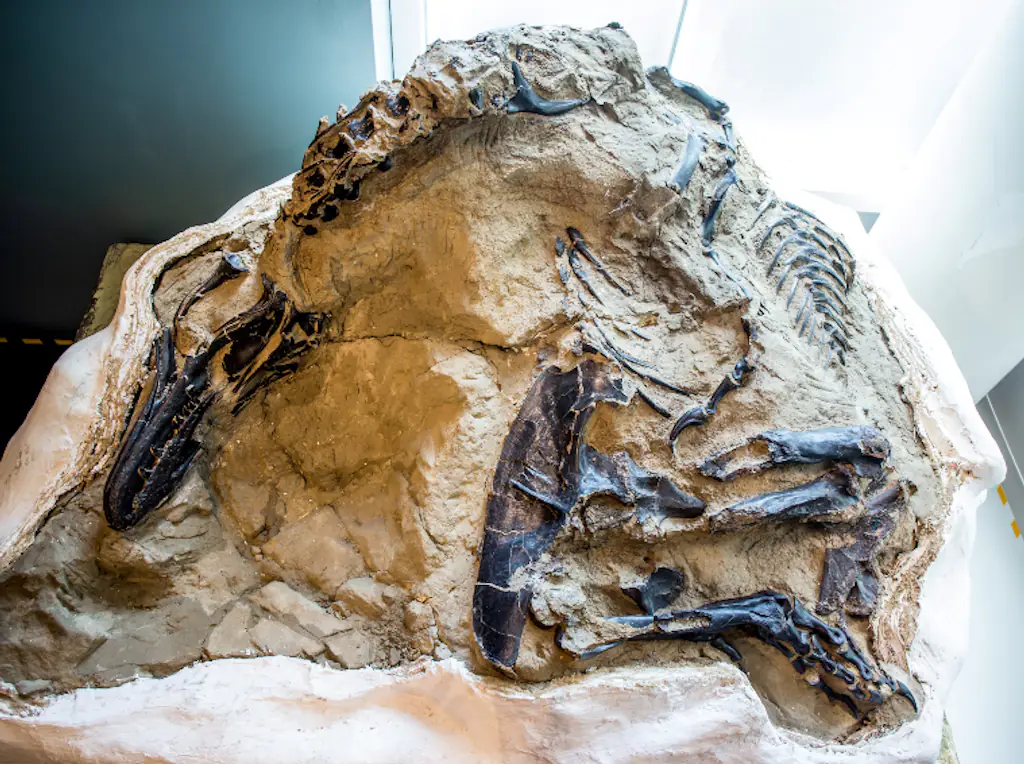
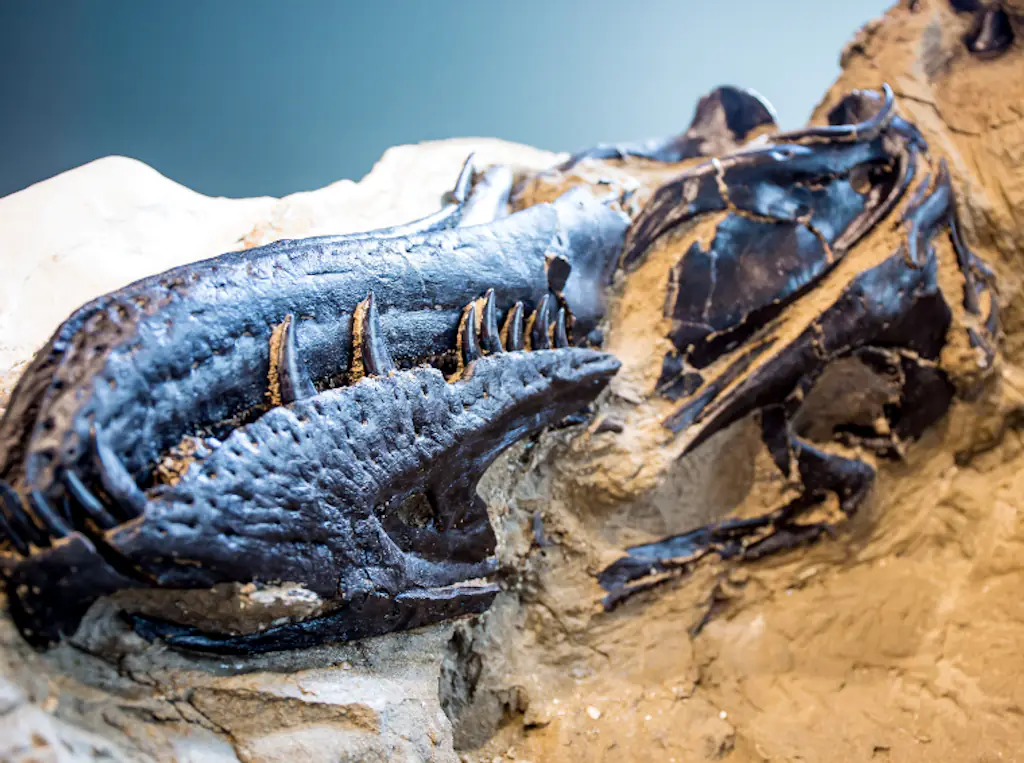
The world's first-ever 100% complete t-rex skeleton has been found, and the beast was locked in a duel to the death with a triceratops.
The remains were discovered in 2006, SWNS reports, but they have only been seen by a select few people over the past few years... until now.
The two dinosaurs, who have been dubbed the "Dueling Dinosaurs", have been preserved in what's known as a predator-prey encounter that involved them fighting to the death.
The importance of the discovery is emphasized by experts in the video below:
Professional fossil hunters - a cattle rancher cowboy and two friends - found the dinosaurs entombed in sediment in Montana.
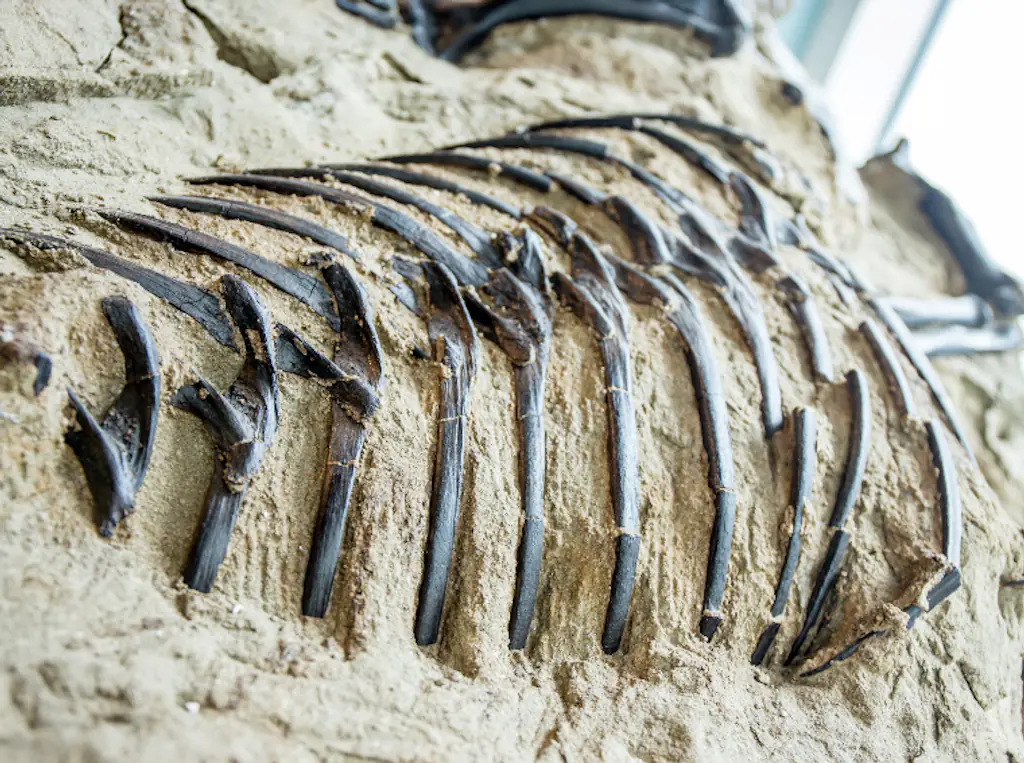
The quality of the skeletons is so good that their body outlines, skin impressions, and injuries - which include tyrannosaur teeth stuck in the triceratops body - are all still visible, despite the remains being 67 million years old.
[[imagecaption|| Credit: SWNS]]
The remains will now be available for the public to see after they were bought for an undisclosed sum by the Friends of the North Carolina Museum of Natural Sciences, who have donated them to the North Carolina Museum of Natural Sciences.
The museum is scheduled to begin building its exhibition of the remains in 2021, and these pictures have been released to mark the announcement.
It has been described as "one of the most important paleontological discoveries of our time".
[[imagecaption|| Credit: SWNS]]
Dr. Lindsay Zanno, head of paleontology at the museum, said: "We have not yet studied this specimen; it is a scientific frontier.
"The preservation is phenomenal, and we plan to use every technological innovation available to reveal new information on the biology of the T. rex and Triceratops.
"This fossil will forever change our view of the world's two favorite dinosaurs."
[[imagecaption|| Credit: SWNS]]
Dr. Eric Dorfman, director and CEO of the museum added: "The museum is thrilled to have the unique opportunity to house and research one of the most important paleontological discoveries of our time.
"Not only are we able to uncover unknown details of these animals' anatomy and behavior, but our new dedicated facility and educational programs will allow us to engage with audiences locally, across North Carolina, and worldwide."
The dinosaur bones are locked in their natural positions meaning that scientists have access to biological data that is typically lost as a result of the excavation and preparation processes.