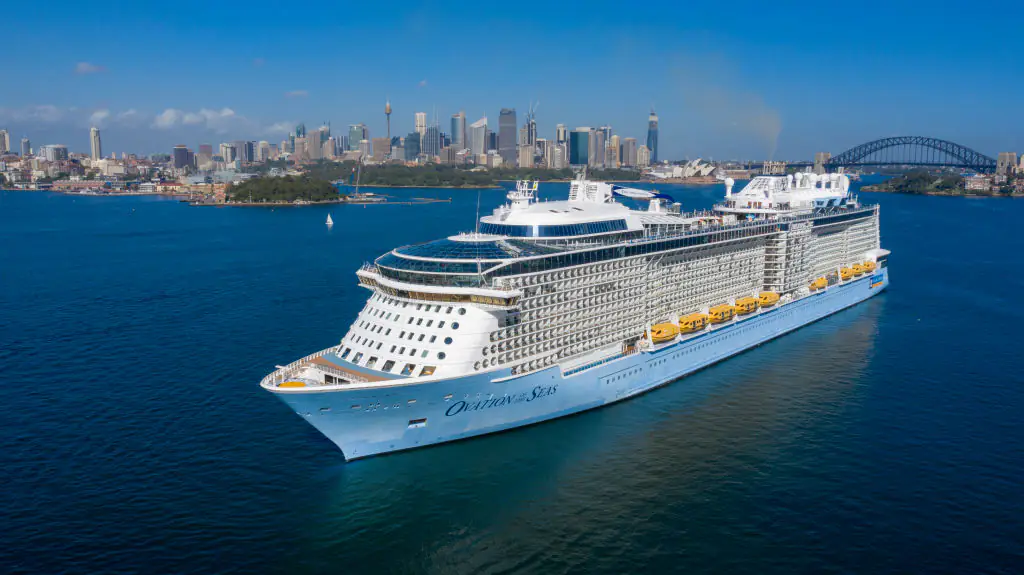
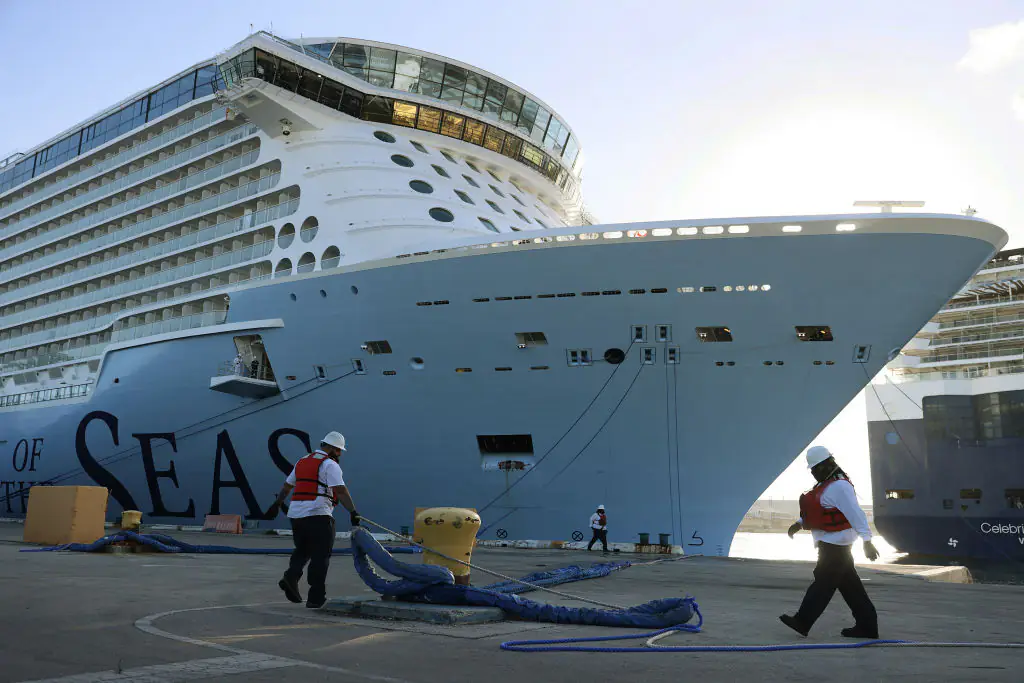
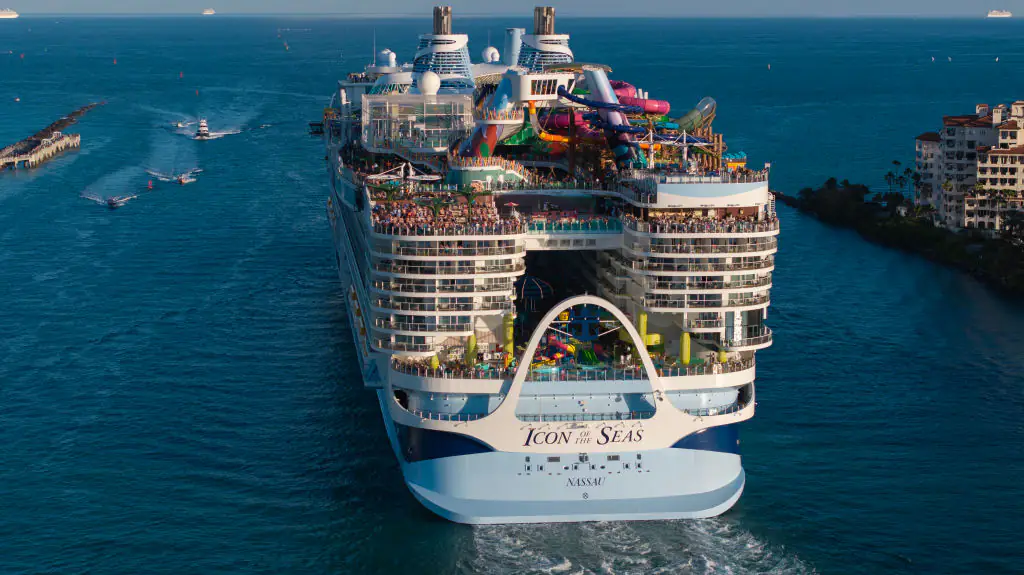
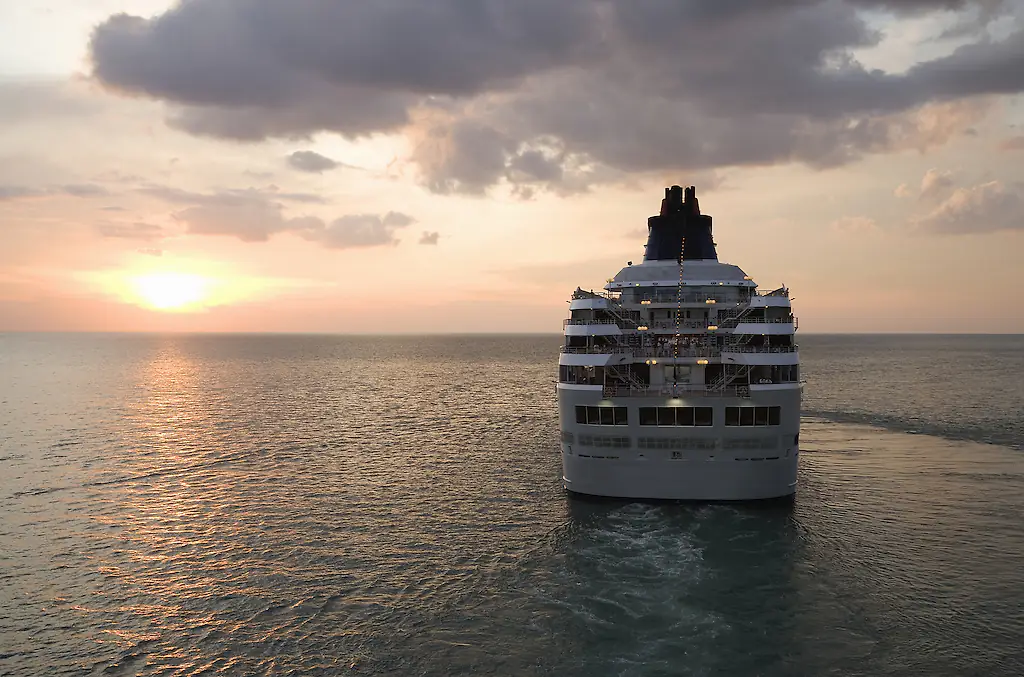
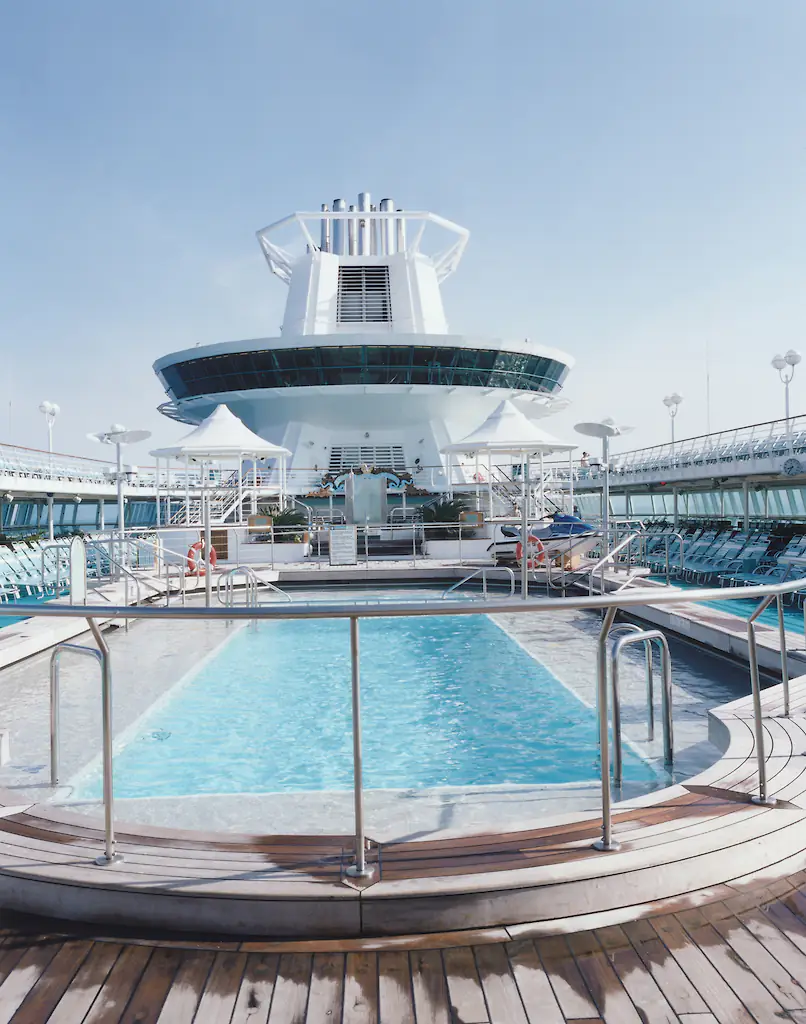
A man who has spent the past 25 years traveling on 1,000 cruise ships has revealed a strange health effect that he’s developed.
Mario Salcedo, who is nicknamed “Super Mario” in cruise circles, has spent more than two decades living at sea.
While his lifestyle may sound like a dream to some, it has come with an unexpected side effect.
In a candid interview with Conde Nast Traveler, the Cuban-born businessman, who recently completed his 1,000th voyage with Royal Caribbean, has shared that he lost his “land legs" as his body had become so accustomed to the motion of cruise ships.
Mario Salcedo has spent the past 25 years traveling on 1,000 cruise ships. Credit: James D. Morgan / Getty
“I’ve lost my land legs. I’m swaying so much I can’t walk in a straight line,” Salcedo said, cited by The New York Post. “I’m so used to being on ships that it feels more comfortable to me than being on land."
Salcedo's milestone 1,000th voyage took place aboard the Explorer of the Seas, an 11-night trip from Miami to Panama and the southern Caribbean that set sail on January 5, 2025.
Elaine Warren, CEO of The Family Cruise Companion, told Daily Mail that the cruiser's condition is known as Mal de Débarquement Syndrome (MdDS) - a rare vestibular disorder that makes you feel like you’re moving even when you’re not, per Cleveland Clinic.
"Spending extended time on a cruise ship sounds like a dream for many families. The convenience, entertainment, and all-inclusive nature of the experience make it an attractive idea,” Warren said.
"But when you shift from a vacation mindset to actually living at sea, a lot of unexpected things happen — especially to your body.”
Warren noted that long-term cruisers often develop “sea legs,” which is when they become so used to the ship’s movement that walking on land feels disorienting.
“I’ve spent years helping families plan cruise vacations, and while short-term trips are one thing, staying on board long-term is a different experience entirely,” she continued. “The first adjustment is to constant motion. The body adapts to the ship’s movement over time, but that doesn’t always mean in a good way.”
According to the Cleveland Clinic, MdDS symptoms typically fade within 24 hours, but in some cases, they can persist for months or even years.
Mario Salcedo said he lost his "land legs" after being on a cruise for so long. Credit: Joe Raedle / Getty
Salcedo spends around $101,000 per year on cruises. He splits his time between working about five hours a day and enjoying the luxuries of life at sea.
The full-time cruiser previously told the publication that he first fell in love with cruising in 1997 and never looked back. His time at sea was only interrupted once - when he was forced to return to land for 15 months during the pandemic in 2020.
“Nothing could lure me away from them, because I get treated like royalty,” he said about his journeys with Royal Caribbean. “The captains all know me."
Now, back on the water, it seems Salcedo has no plans to give up his floating paradise, even if it means never walking straight again.
A man who lived underwater for 100 days has revealed the bizarre effect it had on his body.Dr. Joseph Dituri, a 57-year-old biomedical engineer and retired U.S. naval officer, went on a 100-day underwater mission on June 9, 2023, where he made some startling discoveries.The mission, named Project Neptune 100, saw Dituri be confined in Jules' Undersea Lodge, a steel-and-glass habitat situated 30 feet beneath a lagoon in Key Largo, Florida, to investigate the physiological and psychological effects of prolonged exposure to such an extreme environment.And the effects that the process had on his body was shocking.According to the Marine Resources Development Foundation, which organized the event, Project Neptune aimed to "[combine] a long-term study of the physiological and psychological effects of compression on the human body and use the uniqueness of the mission and location to bring more awareness of current marine research and the importance of conservation of our ocean’s resources and processes."A press release from the University of South Florida said a project of this nature had the potential to discover how to help humans live longer.Dituri believed that the increased pressure of the environment had the potential to help humans live longer and prevent diseases associated with aging.After the 100-day stint, which he now holds a Guinness World Record for, he discovered some bizarre things that had happened to his body during the time he spent underwater.One of the major changes Dituri experienced while underwater was that the pressure caused him to shrink half an inch, according to the press release. He was initially measured at six foot one inches before entering the steel pod and came back at approximately six foot tall.Other preliminary findings included a drastic improvement in his sleep, cholesterol levels, and inflammation levels.He also noted: “It takes 200 days to travel to Mars. Our astronauts will have to travel in an environment similar to the one I’m in now – the confined area will limit their options for food, how far they can see, and how they can exercise. They will experience muscle loss, bone loss, and vision problems."This research could help us better prepare our astronauts to ensure they arrive healthy and strong enough to explore the planet," he noted.When he resurfaced in June 2023, Dituri also claimed that much of his health had improved, including a striking change to his telomeres - the structures on chromosomes that are often linked to extending life.He told WKMG News in Orlando: "I'm 56 now. My extrinsic [biological] age was 44. When I got out of the water, my extrinsic age was 34."So, my telomeres lengthened. I actually got younger when I was under the water."He claimed that blood tests also showed a 50 percent reduction in every inflammatory marker in his body.In addition to the research associated with human living, it was reported that the 57-year-old also collaborated with experts on how to protect, preserve, and rejuvenate the marine environment."It’s really not about the record," Dituri said at the time. "If we can get people excited about science, that would be a great success to me."University Professor Robert Frisina, chair of the Department of Medical Engineering spoke of the researcher's amazing achievement, stating: "Dr. Dituri’s amazing accomplishment is a great testimony to significant advances in knowledge and translational research that we are making here at USF in the area of bariatric medicine."Much important data has been collected over the past 100 days, that will eventually find its way to key preventative and curative clinical procedures," she added.Featured Image Credit: Giordano Cipriani/Getty
A woman who spends her life living on cruise ships has revealed the dark sides that others may not have considered.
Cruises are a popular vacation choice. Credit: David Sacks / Getty
Lynnelle, a 53-year-old content creator behind the YouTube channel Poverty to Paradise, decided in 2024 to trade in her toxic job, broken marriage, house, and car for life on the open sea.
Now, with over 70,000 subscribers tuning in, she’s sharing the unfiltered truth about what full-time cruising really looks like — and it’s not all umbrella drinks and ocean views.
“So you’ve been watching all the YouTube videos and you’ve seen all these people living on the cruise ships and you are just about ready to sell your house, pack everything up and come live on a cruise ship,” Lynnelle says.
“Before you do that there are some things you need to know. It’s not all paradise and glitz and glamour but there are some things that might make you pause.”
Cruises can have downsides. Credit: Joe Raedle / Getty
She originally planned just 90 days at sea.
“When I first started doing this I was not planning to live on cruise ships. I was going through a transition and I saw some deals here and I thought let me go through this for 90 days while I think about what I’m going to do with my life and it turned out this is perfect for me.”
But even though it works for her, Lynnelle warns that there are eight major realities would-be sea nomads need to come to terms with first.
1. Space: Say Goodbye to Roominess
If you think cruise cabins are cute and cozy, try living in one permanently.
“Take your current bedroom, cut it in half and squeeze a queen-size bed a couple of night stands and everything you need to live into that half of a bedroom,” Lynnelle explains. “That’s what your cabin is going to look like.”
2. Noise: Thin Walls, Loud Neighbours
The cruise ship soundtrack isn’t just the ocean breeze — it’s karaoke, theatre shows, scraping pool chairs, and other guests’ private activities.
“The cabins on cruise ships are paper thin so if you are the type of person who wants to spend a significant amount of time in your cabin you need to think about that,” Lynnelle warns.
“I have heard so many things that were disturbing to me that I pulled the pillow over my head and put ear plugs in.”
“You hear everything, depending what deck you are on. You might hear noise from the theatre, karaoke singing, one time I heard the scraping of pool chairs up on the Lido deck because I was right below it. Also, the neighbours when you can hear their ‘extra-curricular activities, their snoring, their arguments, their TV blasting.”
You might be able to hear everything your neighbours do. Credit: Michael Dunning/Getty
3. People: It’s Hard to Hide from Social Interaction
If you're the type who enjoys solitude, cruising might test your patience.
“I am not a shy person but I am very quiet and introverted … so a lot of times I just enjoy my own company and enjoy being by myself,” she says.
“If you are an introverted person and you don’t like to be socially interactive you might want to rethink living on a cruise ship because you are going to be in places and people are going to talk to you."
“Even if you get a private table somebody is going to come and say ‘hey, how you doing’ and strike up a conversation with you."
“You are on a ship so unless you sit in your room the whole time, which I don’t suggest you do, you’re going to see that same chatty couple at breakfast, lunch, dinner and you cannot escape them.”
4. Seasickness: The Ocean Has No Chill
Location on the ship and seasonal weather can make a huge difference in how your stomach handles the motion.
“Depending on where you are on the ship – particularly at the very front of the ship or the very back – you are going to feel the motion of the ship from the waves,” she says.
“If there’s a storm, forget it, you’re going to feel it wherever you are on the ship."
“If the motion of the ocean bothers you then that’s something you definitely want to think about.”
Higher decks = more motion, and possibly more nausea.
Lynelle has shared her experiences. Credit: YouTube / Poverty to Paradise
5. Cost: Not As Cheap As You Think
Living at sea isn’t necessarily a money-saver — at least not unless you play it smart.
“Living on a cruise ship can be upwards of (USD) $80,000 to (USD) $100,000 or more and that’s just for the cruise itself,” Lynnelle explains.
“That’s not including any of the extras you want to get like specialty dining, pictures, souvenirs. All that other stuff adds into the cost of cruising.”
She’s managed to reduce her own expenses dramatically. “My average is USD $2000 per month,” she says — which adds up to about USD $24,000 annually, thanks to her cruise loyalty perks and savvy deal-hunting.
6. Healthcare: Prepare to Pay Out of Pocket
Need to see a doctor at sea? Get ready to open your wallet.
“I am 53 and I am pretty much healthy but a lot of people have health issues where they can’t live on a cruise ship or they can but they are going to need special care,” Lynnelle explains.
“If you have some pre-existing health conditions where you need to go to your doctors on a regular basis then living on a cruise ship is probably going to cause some drawbacks for you.”
She once had to get treatment for an infection on board — the appointment alone cost $150, not including medication.
7. Food: Not As Varied As It Seems
Sure, cruise food is a highlight… until it’s not.
“I hear a lot of people complain about the food being monotonous,” Lynnelle says.
“I was on one cruise ship for two months straight and even though there was a variety of food … it can be monotonous and so if you are not into eating the same food and you get bored easily that is something you need to take into consideration.”
Cruise menus tend to repeat on a weekly cycle — and after months at sea, you’ll likely be able to recite them by heart.
Would you go on a cruise? Credit: Megan Maloy / Getty
8. Wi-Fi and Loneliness: The Hidden Emotional Toll
Connectivity at sea is expensive — and not always reliable.
“If you are a person who, on a regular basis, is Facetiming people and you’re on social media all the time, the Wi-Fi on cruise ships is not very reliable,” she admits.
“About 75 per cent of the time it is great but the other 25 per cent of the time you want to pull your hair out because it’s like ‘ah, I have paid for this Wi-Fi but I am not getting coverage’.”
But the biggest challenge of all? Emotional isolation.
“It’s hard to make lasting friendships because the nature of cruising is transient, so those people will only be on the ship with you for maybe 10 days but after that they move on their merry way,” Lynnelle explains.
“I’m not saying you can’t make friends on cruise ships but, for the most part, especially if you are cruising solo like I am, you need to find people you click with but it is difficult."
“If you are a social butterfly or someone who needs to have deep connections with a person all the time then this might not be the lifestyle for you.”
A Florida man who spent 100 days living underwater says his body has since undergone a shocking transformation.
In fact, he's saying that a new "glitch" has totally transformed the way he uses his body on land.
Doctor Joseph Dituri, also known as Dr Deepsea, spent more than three months 30 feet underwater inside a special pod at a Key Largo lagoon in Florida.
Once he landed back on dry land, Dituri went to work seeing just how those 100 days underwater had changed his body. He was shocked by what he found.
Dr Dituri spent 100 days living underwater in the Florida Keys. Credit: YouTube/DrDeepSea
Why living underwater was a "life glitch" for Dr Deepsea
After returning from his world record-breaking stay underwater, Dituri started to examine himself and the many changes his body had undergone.
In fact, it turned out that living underwater in such a high pressure environment for so long had changed his body.
Dituri says that, following his underwater adventure, his body had de-aged, with his cells appearing younger than when he had gone in.
Speaking to NBC, he revealed that he'd undergone a host of tests in order to determine just how much his body had changed.
When the results came back, they showed that his cholesterol levels had decreased, the inflammation throughout his body had gone down, and that he was now able to concentrate on tasks much better than he had before.
He also maintains that, now back on land, he sleeps much better and, due to his rigorous workout schedule underwater, retained his total body mass.
How Dr Deepsea's 100 day stay underwater broke a world record
Dituri says that his stay underwater was motivated by curiosity, that he wanted to know how living in a pressurized environment could affect the human body, and claimed the results of the experiment could help ocean researchers and astronauts planning manned missions to Mars in the future.
The pod Dituri stayed in was designed to have the same pressure as the ocean outside of it.
But Dituri did actually break a world record whilst spending all that time underwater.
With his original experiment taking place in 2023, Dituri officially became a Guinness World Record holder for the longest time spent living underwater in a fixed habitat, something which has since been broken again.
But he remained steadfast that his work was about much more than a title.
"It was never about the record," he told. CBS News. “It was about extending human tolerance for the underwater world and for an isolated, confined, extreme environment.”
A retired couple has decided to spend their golden years enjoying 51 back-to-back cruises after realizing it was "much cheaper" than a retirement home.
Cruise. Credit: David Sacks / Getty
Marty and Jess Ansen embarked on their relaxing journey in June 2022 when they boarded the Coral Princess, two years after the strict pandemic lockdowns in Australia.
Since then, the great-grandparents have spent their days seeing the world -- dancing, enjoying indulgent buffets, and making new friends along the way.
The Ansens are expected to stay onboard the 2,000-passenger cruise for around three years initially, and said they would happily cruise for the rest of their life if they could.
In an interview with A Current Affair, Marty explained that he told his agent to book "whatever comes" and that's how they ended up on 51 back-to-back cruises.
The couple has enjoyed 51 back-to-back cruises. Credit: Joe Raedle / Getty
The pair have outlasted many people on the ship, including the captain.
"The wheels change over but we stay on board," Marty remarked, while Jess added: "We welcome the different captains on board."
Ren van Rooyen, the hotel manager on board the Coral Princess ship, confirmed that the loving couple are the most dedicated passengers they have.
"We always make a joke that I go away and I come back and it's like coming to see my family - my mom and dad again - they're like my second mom and dad on board," Van Rooyen said.
The hotel manager shared that the duo has become like "celebrities onboard" as others joining the ship for shorter cruises request to meet them as their story has been inspiring many people in their home country.
The couple enjoyed cruises for decades before starting their 795-day journey. It wasn't until they realized it was cheaper than paying for a retirement home that they decided to make it their full-time living situation. In addition to this, they also felt like they missed out on several years of fun amid the tough Australian lockdown.
In a joint statement via Princess Cruises to PEOPLE, they spoke out about the cost-efficiency of their plan, saying: "The cruise lifestyle is very efficient. You don’t have to worry about paying for rent or a mortgage, getting groceries or doing your laundry.
"We’re not young people, cruising is much cheaper than going to a nursing home and means we can continue to travel the world."
Now, they enjoy the perks that come with their current lifestyle such as quality entertainment like dancing and mouthwatering meals included in the ticket price.
Speaking about the fun activities available, Jess told the outlet: "Where else can you go? You go for dinner, you go to a show, you go dancing. Through the day, you have all these activities."
Furthermore, the retirees begin each day with an hour of invigorating ping pong and cracking a couple of beers open to sit on their balcony and take in the views.
They also manage to skip chores thanks to a team of housekeepers who clean their room daily. Marty joked that they have become so accustomed to life at sea that they "don’t know how to make a bed because we haven’t done it for so long".
"So now we have to stay on board just to stay alive," he joked.
Credit: Joe Raedle / Getty
Per PEOPLE, the Ansens briefly returned to dry land in August 2024, before Jess and Marty intended to venture on another year-long cruise aboard the Crown Princess.
A 77-year-old retired teacher from California has swapped her quiet retirement life for a never-ending holiday at sea.
A woman has moved onto a cruise ship for a 15-year journey. Credit: Charles McQuillan / Getty
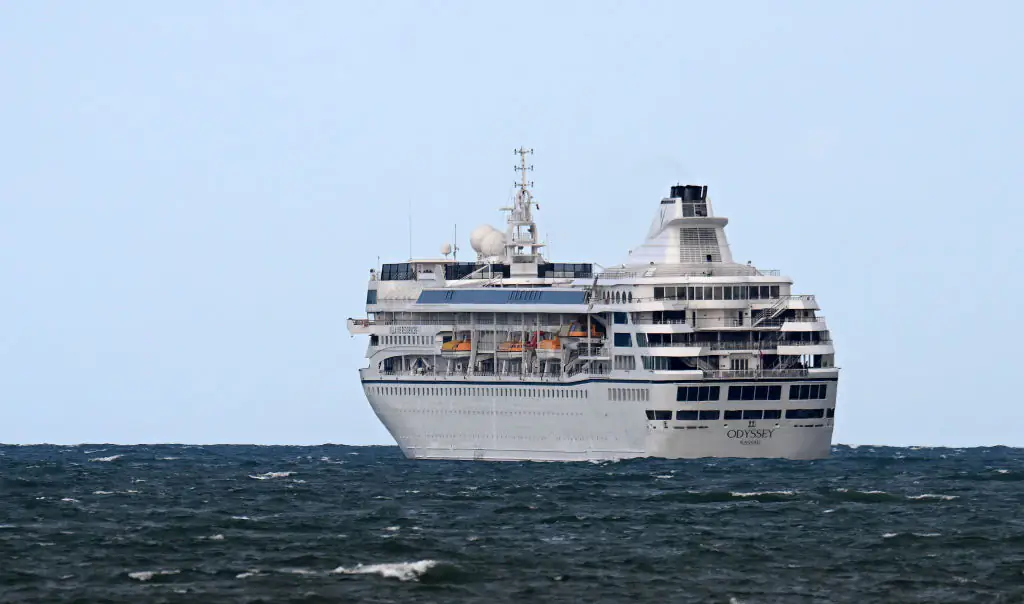
Sharon Lane, a former high school foreign language teacher, now lives aboard the Villa Vie Odyssey, a 600-foot residential cruise ship offering permanent homes at sea, with plans to visit 425 destinations across 147 countries during its ambitious 15-year voyage.
“I’m finally able to do what I’ve wanted to do for years,” Lane told CNN Travel. “I buy the cabin, I live in the cabin, and that’s it. And then there’s no end.”
Lane boarded the ship on June 16, fulfilling her long-held dream of living at sea.
She claimed it was not only affordable but would cost her less than staying on land while having “everyone taking care of me instead of me taking care of everybody,” she told NBC Los Angeles.
The Odyssey offers cabins on 15-year leases starting at $129,000, with monthly fees around $2,000 per person or $3,000 for solo occupancy, covering food, drinks, Wi-Fi, medical visits, 24/7 room service, and housekeeping.
While the price may sound expensive, it is cheaper than the average cost of living in London, which is £4,245 ($5.7k) per month for a single person, and far less than Southern California’s expenses, Lane explained.
“All the chores you do in life? Done!” she said. “If you put your to-do list on a piece of paper and you cross off anything that wasn’t a fun activity, then you end up with the life we have now.”
The Villa Vie Odyssey launched in October 2024 after delays caused by rudder and gearbox issues, forcing early residents to live on the docked ship in Belfast, Northern Ireland until the voyage officially began.
The eight-deck ship can hold 650 passengers and is designed to navigate both oceans and inland waterways, per The New York Post.
Cruisers can rent their cabin out to others, allowing passengers to join the voyage temporarily. However, most residents like Lane have committed to it for the long haul.
"Most of our cabins are sold to full-time or mostly full-time residents," Villa Vie Residences’ CEO Mikael Petterson shared.
He added: "I only know of a couple of residents who have investment cabins that they actively rent out. Most rentals come from owners who decide to stay off the ship for a period of time."
The retired professional, who spent her life savings to secure her cabin, described how she’s enjoying life with fellow travelers.
Her windowless cabin is mainly for sleeping, as she spends her days exploring ports, lounging on the deck, or using the ship’s amenities, which include entertainment lounges, a library, a fitness center, a spa, a pickleball court, and a pool.
Having already sailed to Vancouver and up to Alaska, Lane plans to join the Odyssey’s forthcoming transpacific voyage to Japan and Taiwan in the coming weeks.
The journey will continue to the beaches of Bora Bora, the fjords of Norway, Europe, Australia, New Zealand, and beyond in a continuous three-and-a-half-year cycle.
“I don’t have to do my laundry anymore. I don’t have to go grocery shopping,” Lane gushed to the outlet. “Living on the ship is much less expensive than living in Southern California.”
While residential cruising remains a relatively new and untested concept, the former teacher says she is embracing life at sea and doesn’t plan to land anytime soon.