Loading...
US2 min(s) read
us2 min(s) read
us3 min(s) read
uncategorised3 min(s) read
Published 21:10 20 Apr 2021 GMT
us2 min(s) read
Published 16:28 15 Apr 2021 GMT
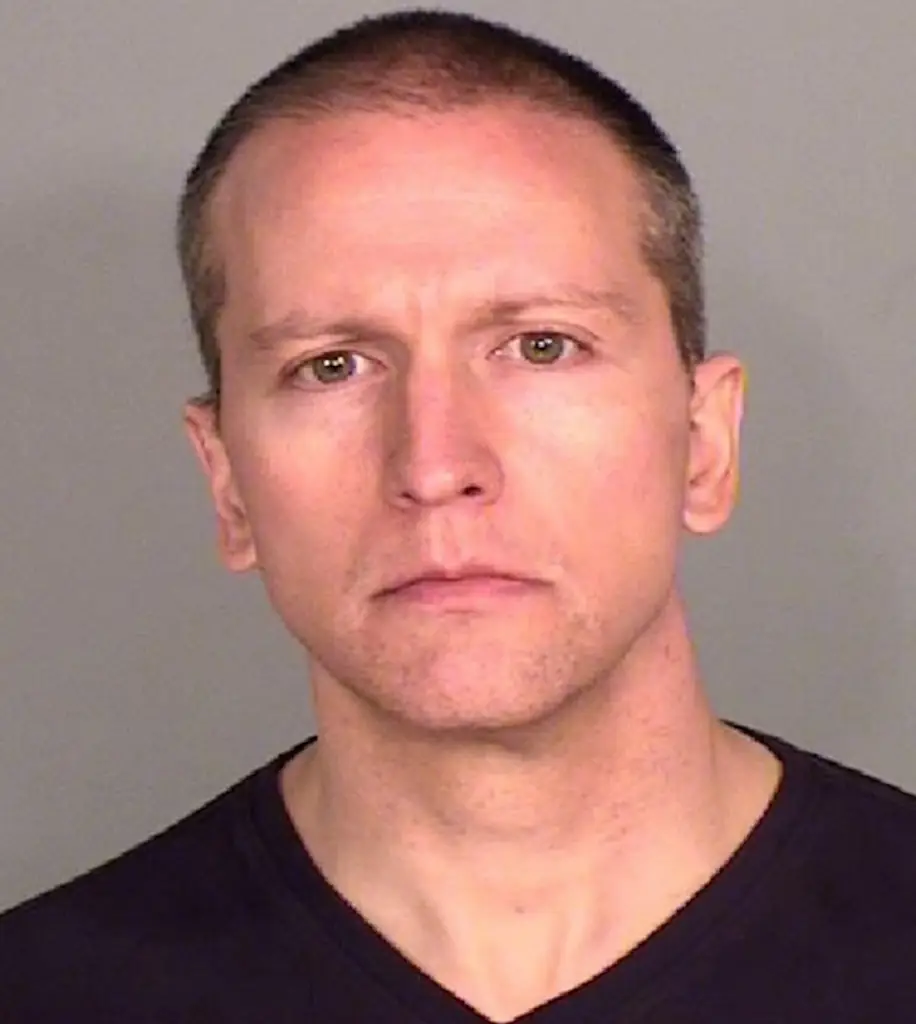
Derek Chauvin has invoked his Fifth Amendment right and will not testify at his trial for the murder of George Floyd.
As per CBS News, this comes after the defense presented a medical testimony that contradicted the case made by the prosecution over Floyd's death in May of last year.
Contrary to the numerous medical experts, such as Dr. Martin Tobin, who have testified for the prosecution and stated that the officers' restraint restricted oxygen to Floyd's body and caused his heart to stop. Dr. David Fowler, a forensic pathologist and former Maryland chief medical examiner, told the court yesterday that Floyd died as a result of sudden cardiac arrhythmia brought on by underlying heart disease.
This is the moment Chauvin told the court he would be remaining silent:Fowler added there were other contributing factors to Floyd's death including the use of the drugs and possible carbon monoxide poisoning via exposure to vehicle exhaust fumes.
He also cited Floyd's paraganglioma - a pelvic tumor that emits adrenaline - as a potential contributing factor.
"All of those combined to cause Mr. Floyd's death," Fowler said.
Chauvin, in footage that shocked the world, was seen kneeling on Floyd's neck for more than nine minutes, despite Floyd saying that he couldn't breathe.
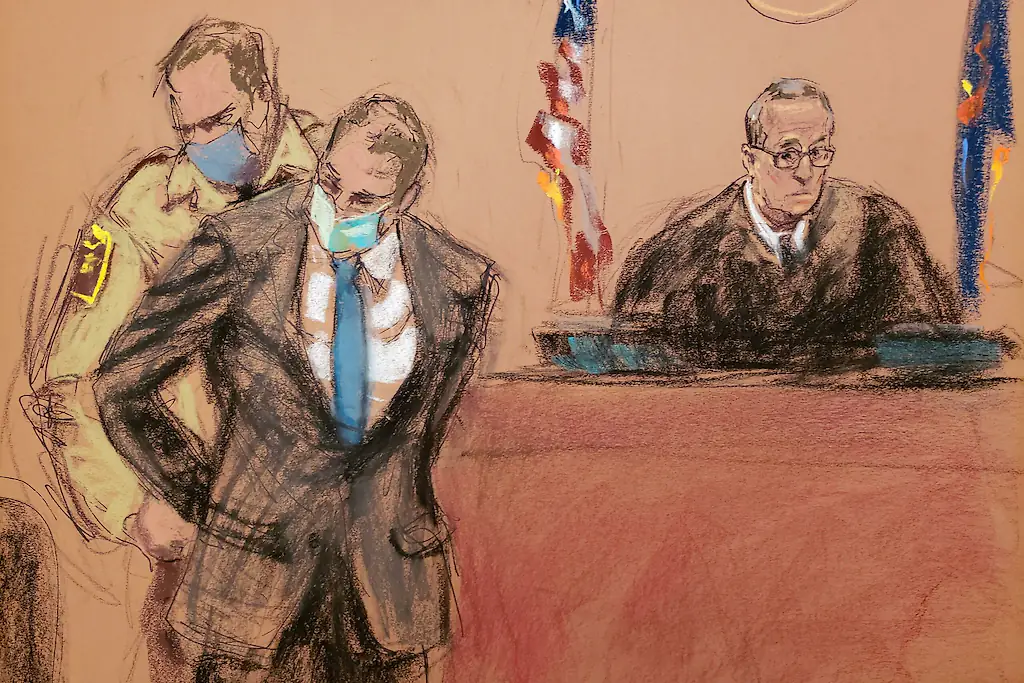
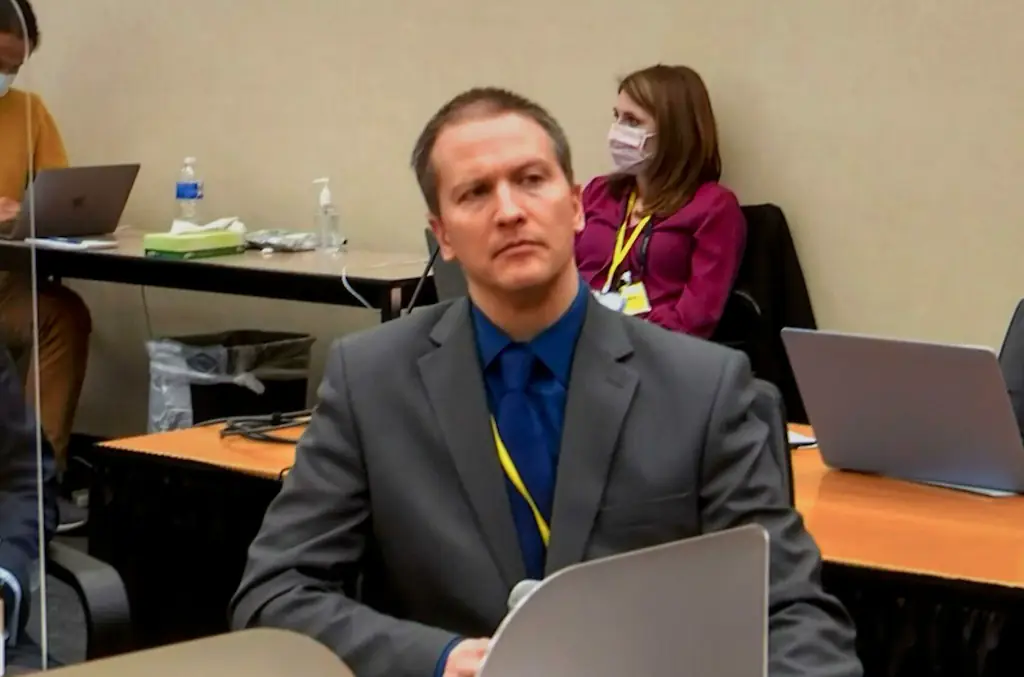
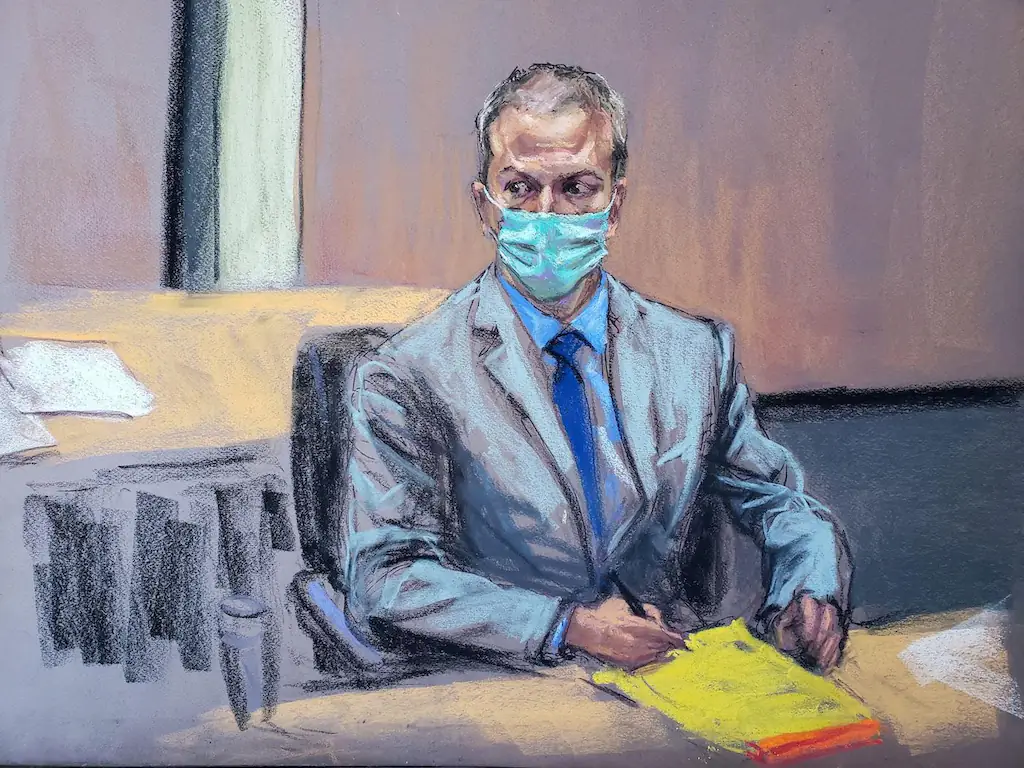
Speaking through a microphone, Chauvin answered questions from his lawyer Eric Nelson, explaining to the court that he understands the implications of his right to remain silent.
Nelson explained that he and Chauvin had a number of conversations about his testimony, and Chauvin was advised by Nelson that the decision of whether to give one or not was his own.
The lawyer asked Chauvin if he understood that should he invoke the Fifth Amendment, the court and state cannot "equate your silence with guilt."
"Yes," Chauvin said.
The former police officer, who is charged with second and third-degree murder and second-degree manslaughter, said that he understood that waiving his right to remain silent would result in extensive cross-examination.
"We have gone back and forth on the matter would be kind of an understatement, right?" Nelson asked.
"Yes it is," Chauvin said.
Nelson explained that he and Chavin had discussed his testimony over Floyd's death extensively and again on Wednesday (April 15) at night, with the former police officer agreeing.
He was then asked if the pair had reached a decision on the matter.
"I will invoke my Fifth Amendment privilege today," Chauvin said.
Published 11:55 09 Apr 2021 GMT
Prosecutors at the trial of Derek Chauvin have revealed a new aspect to George Floyd's death.
According to The Times, critical care specialist Dr. Martin Tobin testified at the trial of the former police officer that Chauvin had lifted his back leg off the ground when kneeling on Floyd's neck.
Tobin displayed in a diagram that, according to CCTV footage of the incident, the toe of Chauvin's boot was not touching the ground, meaning that all of his body weight was resting on the back of Floyd's neck, severely restricting his oxygen supply at the time of his death.
He then told the jury at the Hennepin County Government Center in Minneapolis that, at times when Chauvin was in a near-vertical position, half of Chauvin's body would have weighed 41.5 kilograms.
Drawing the jury's attention to the distressing footage, Tobin told the court: "At the beginning, you can see he’s conscious, you can see slight flickering, and then it disappears. That’s the moment the life goes out of his body."
Tobin went on to state that the lack of oxygen led to a loss of consciousness and severe brain damage, adding: "A healthy person subjected to what Mr. Floyd was subjected to would have died."
Chauvin is charged with second-degree murder, third-degree murder, and second-degree manslaughter after he knelt on Floyd's neck for more than nine minutes.
Floyd, a former security guard who lost his job as a result of the COVID-19 pandemic, died on May 25, 2020.
He was killed after four police officers were summoned to a grocery store in Powderhorn Park after the proprietor accused Floyd of using a counterfeit banknote to pay for his purchases.
Floyd was then handcuffed while laying face down in the street. Security camera footage showed that he repeatedly asked for help and pled for leniency from ground level, even stating audibly "I can't breathe" more than 20 times.
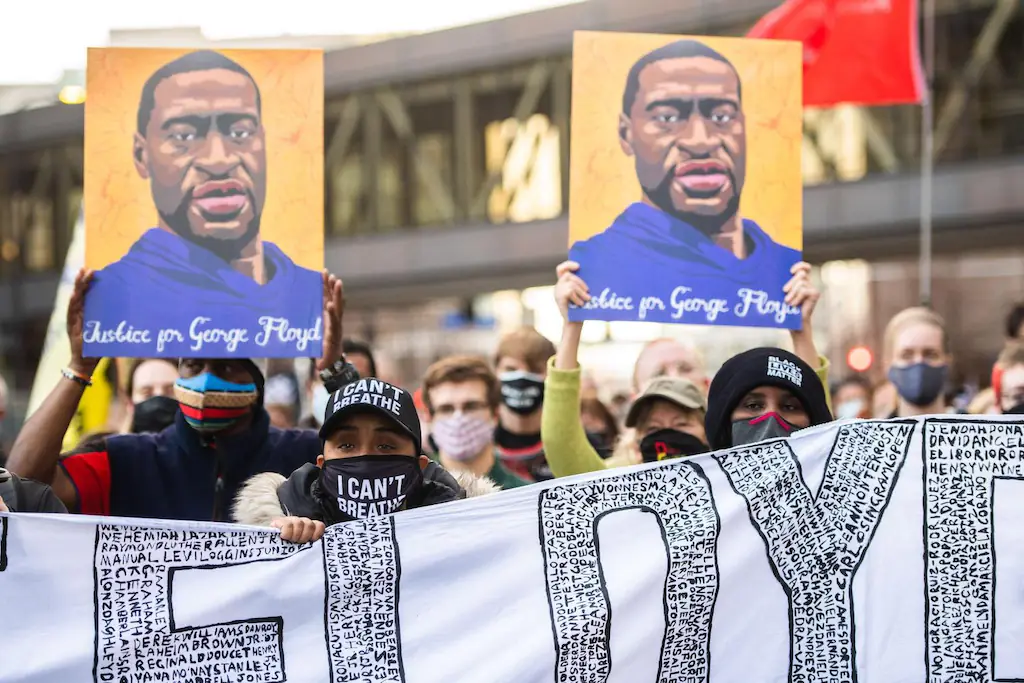
When footage of the incident emerged online, Floyd's death sparked a wave of protests across America and the entire world over the issues of police brutality and racial profiling.
The trial, which began on March 29, is expected to last another three weeks before the jury begins the process of sentencing.
Published 10:26 13 Apr 2021 GMT
A cardiologist has stated that George Floyd did not die from a pre-existing heart condition or drug overdose in his powerful testimony at the Derek Chauvin trial.
The trial, which hopes to determine whether former police officer Chauvin caused the death of Floyd, whose neck he knelt on for over nine minutes last year, has brought forward some damning testimonies against the defendant in recent weeks.
On Monday (April 12), cardiologist Dr. Jonathan Rich told the jury that Chauvin's excessive use of force on Floyd, who was unarmed and handcuffed, resulted in a lack of oxygen, which, in turn, led to a cardiac arrest.
Dr. Rich stated as part of his testimony, per CNN: "After reviewing all of the facts in evidence of the case, I can state with a high degree of medical certainty that George Floyd did not die from a primary cardiac event and he did not die from a drug overdose."
According to the medic, Floyd had been "trying to get enough oxygen, and because he was unable to because of the position that he was subjected to, the heart didn’t have enough oxygen either, which means the entire body is deprived of oxygen."
Also while on the witness stand, Dr. Rich declared that Floyd's death was "absolutely preventable".
He said: "There was one moment in the video where I heard one of the officers say, ‘I think he’s passing out.
"That would’ve been an opportunity to quickly relieve him from that position of not getting enough oxygen, perhaps turn him into a recovery position, and allow him to start to expand his lungs again and bring in oxygen."
The testimony comes after the doctor who pronounced Floyd dead at the Hennepin County Medical Center in May last year stated that he, too, believes Floyd had gone into cardiac arrest due to the lack of oxygen received.
Dr. Bradford Langenfeld said that when considering all the factors, oxygen deficiency was the most probable cause of death.
Langenfeld said, per the New York Times: "Any amount of time that a patient spends in cardiac arrest without immediate CPR markedly decreases the chance of a good outcome. Approximately 10-15% decrease in survival for every minute that CPR is not administered."
He also stated the likelihood that Floyd had suffered a heart attack was not very high as there was no indicator that he had experienced any chest pain.
Published 15:03 07 May 2021 GMT
A grand jury has indicted Derek Chauvin, as well as the three other former Minneapolis police officers involved in the fatal arrest of George Floyd, for violating the unarmed Black man's civil rights.
Per ABC News, the indictment claims that recently convicted Chauvin, along with Tou Thao, J. Alexander Kueng, and Thomas Lane denied Floyd his civil rights on May 25, 2020.
They are accused of depriving him of his urgent need for medical care, and it is alleged that they "willfully failed to aid Floyd, thereby acting with deliberate indifference to a substantial risk of harm."
Chauvin, who was convicted on all charges as part of last month's trial, has now been charged with one count of deprivation of rights under color of law for his role in Floyd's death a year ago.
The indictment said, per the outlet: "Chauvin held his left knee across George Floyd's neck, and his right knee on Floyd's back and arm, as George Floyd lay on the ground, handcuffed and unresisting, and kept his knees on Floyd's neck and body even after Floyd became unresponsive.
"This offense resulted in bodily injury to, and the death of George Floyd."
As well as this indictment, Chauvin has been accused in a separate indictment filed on Thursday, May 6, for deprivation of rights under color of law for allegedly undermining the civil rights of a 14-year-old back in 2017.
The indictment said "Chauvin, without legal justification, held" the teen "by the throat and struck Juvenile 1 multiple times in the head with a flashlight."
The ex-cop is also accused of holding "his knee on the neck and the upper back of Juvenile 1 even after Juvenile 1 was lying prone, handcuffed, and unresisting."
Thao and Kueng are have been charged separately in count two of the indictment for denying Floyd his civil rights, with the federal grand jury alleging that they were "aware that [Chauvin] was holding his knee across George Floyd's neck as Floyd lay handcuffed and unresisting.
"And that Defendant Chauvin continued to hold Floyd to the ground even after Floyd became unresponsive, and the defendants willfully failed to intervene to stop Defendant Chauvin's use of unreasonable force."
Following Chauvin's conviction last month, the three other officers involved in Floyd's fatal arrest are awaiting trial over the role they played in his death.
Derek Chauvin has been found guilty of murdering George Floyd.
The jury found the former police officer guilty of second-degree unintentional murder, second-degree manslaughter and third-degree murder.
Chauvin now faces spending the rest of his life in prison.
Jurors reached their verdict after deliberating for more than 10 and a half hours following a trial which lasted over three weeks.
According to Sky News, US correspondent Sally Lockwood said that the jury reached its verdict with "very little doubts in their minds".
She told the broadcaster: "The fact that the jury has taken around 11 hours of deliberation does suggest there's been very little doubt in their minds.
"It's not a hung jury... they certainly have agreed on the ruling they're about to deliver in court."
Chauvin had denied the charges against him, claiming that Floyd's cause of death was heart disease and drug use.
During the trial, the 45-year-old former police officer invoked his fifth amendment right and choose not to testify.
Other key moments in the lead-up to the verdict include veteran dectective Lieutenant Richard Zimmerman testifying that the force used on George Floyd during his arrest was "totally unnecessary".
"Once the person is cuffed, the threat level goes down all the way," the department's top detective, who's been at the Minneapolis Police Department since 1985, told those present at the trial.
The trial also saw some incredibly moving testimonies from witnesses, including a teenager named Darnella Frazier, who was 17 at the time of Floyd's death.
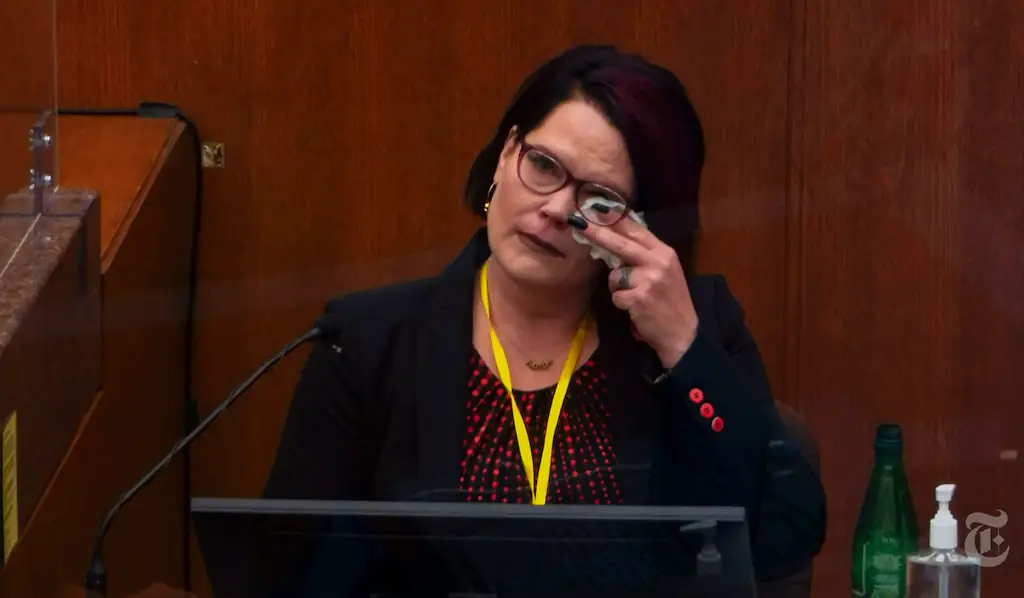
Frazier had filmed the video in which Chauvin was seen kneeling on Floyd's neck. The teen tearfully shared that she would stay up at night "apologizing to George Floyd for not doing more and not physically interacting and not saving his life".
She said: "When I look at George Floyd, I look at my dad. I look at my brothers, I look at my cousins, my uncles. Because they are all Black.
Floyd's girlfriend Courteney Ross also testified, telling the jury that she and her late partner of three years suffered chronic pain, which led to a troubling opioid addiction.
"We got addicted and tried really hard to break that addiction many times," she said at the trial.
The former Minnesota police officer was charged with the killing of George Floyd after he knelt on his neck for more than nine minutes in May 2020.
Floyd, who had previously worked as a security guard but lost his job due to the Covid-19 pandemic, died on May 25, 2020.
He died after four police officers were called to a grocery store in Powderhorn Park after Floyd, 46, was accused of using a counterfeit $20 bill for a packet of cigarettes.
Published 11:07 05 May 2021 GMT
Derek Chauvin is requesting a new trial citing "misconduct" by the jury and prosecutors.
The 45-year-old former Minneapolis police officer, who knelt on George Floyd's neck for more than nine minutes, faces up to 40 years in prison after being found guilty on all charges last month.
Chauvin's lawyer has filed court documents obtained by NPR claiming that the publicity surrounding the three-week trial resulted in the defendant not receiving a fair trial.
As per the court documents filed in Hennepin County District Court on Tuesday, the convicted ex-cop's attorney Eric Nelson wrote:
"The publicity here was so pervasive and so prejudicial before and during this trial that it amounted to a structural defect in the proceedings."
The filing alleges that there was "race-based pressure" on the jurors and that errors had been made by the judge.
According to Nelson, Judge Peter Cahill denied his client of a fair trial when he dismissed the request to move the trial to another county.
The court papers state: "The Court abused its discretion when it denied Defendant's motion for a change of venue… in violation of Mr. Chauvin's constitutional rights to a due process and a fair trial."
Per NPR, Chauvin's lawyer states that Judge Cahill should have isolated the jury for the trial or told them to avoid consuming any media coverage. Nelson also took issue with his refusal to allow the individual who was with Floyd at the time of his arrest to testify.
The filing comes as one juror's impartiality has been called into question after images began circulating of him at a racial justice protest.
Brandon Mitchell, 31, was one of the two jurors who have gone public since Chauvin's conviction on April 20.
Per the BBC, he was pictured wearing a shirt with a photo of the late Martin Luther King Jr on it, as well as the words "Get Your Knee Off Our Necks" and the letters "BLM".
But as part of a pre-trial questionnaire, potential jurors were asked if they had taken part in any anti-police brutality protests following Floyd's death on May 25, 2020 – Mitchell answered "no" to that question.
He later told the Minneapolis Star Tribune that he went to the rally to commemorate the civil rights movement and did not consider it to be an anti-police brutality gathering.
He said: "The opportunity to be around thousands and thousands of black people, I just thought it was a good opportunity to be a part of something."