


US3 min(s) read
Why investigators will look at tragic Learjet crew’s last 72 hours before they even boarded aircraft

Days after a $2 million private jet crashed into a mobile home community in Florida, killing nine people, an investigation has been launched to uncover how the tragic incident happened and what could have been done differently in the 72 hours leading up to it.
At around 1PM on Sunday, November 1, the aircraft nose-dived into the ground, exploding with a huge fireball and creating a massive crater, just nine miles from President Trump's Mar-A-Lago resort.
A young family with two small children, their nanny, and two close friends were killed alongside the pilot and co-pilot.
The nine people were: Austin-based tech entrepreneur Adam Robinson, 44, his wife Helen Sharp, their four-year-old daughter Emma, and their two-year-old son Charlie, nanny Anita Maria Apellido Cetina, and friends Rachael Reed and Charmi Fehr, alongside 55-year-old captain Jeff Gregory, and 20-year-old co-pilot Nathalia Gadelha Filgueiras.
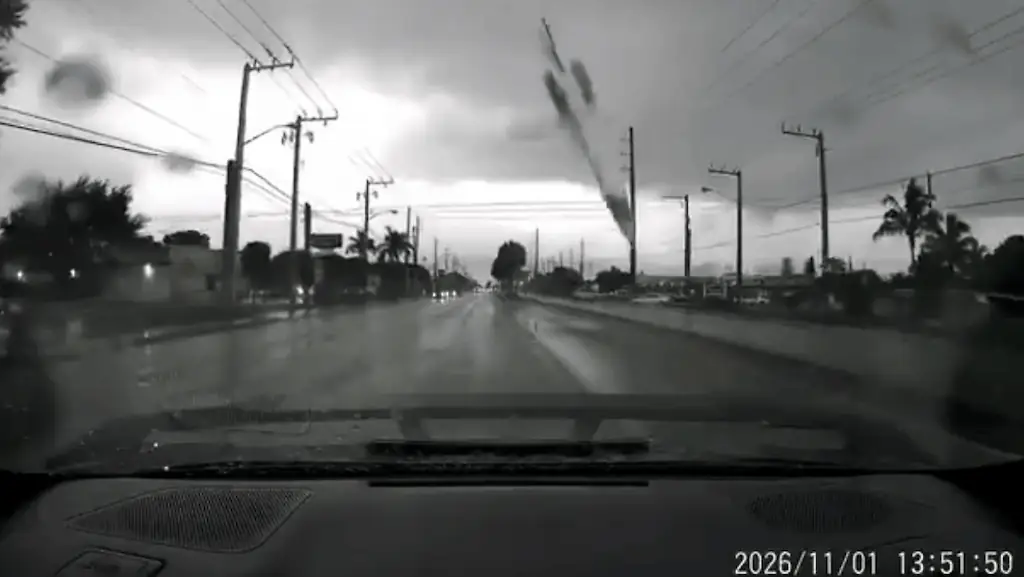
An expert reveals how the tragic incident will be investigated
Daniel Rose, an aviation expert and lawyer who investigates plane disasters, told VT what the investigation will analyze and ultimately how the National Transportation Safety Board (NTSB) will determine the cause of the crash.
He revealed that the Learjet 60 incident will be investigated by a team "comprised of various subject matter experts including in the areas of flight path reconstruction, weather, aircraft structure, aircraft systems, aircraft operations and human factors.
Their overall job is to preserve all factual information related to the crash for analysis and ultimately to determine the probable cause of the crash."
According to the aviation lawyer: "The aircraft’s flight path will be recreated from radar data, ads-b data transmitted by the plane, and flight data recording (FDR) data from the plane’s black box.
The weather will also be thoroughly analyzed "by gathering available pre-crash weather information including radar data, actual observed weather during the flight and up to and beyond the time of the crash, weather forecasts issued prior to and during the flight, and pilot reports concerning observed weather in the area of the flight prior to and through the time of the crash."

The actions of the pilot and co-pilot in the days leading up to the crash will be examined thoroughly
Another team, called the Human Factors Group, will examine how the jet's two-person crew conducted themselves in the three days leading up to the fateful flight. Rose said it will take into account: "Conduct prior to and during the flight, including their training, experience, and what they did for the 72 hours prior to the flight."
To determine whether the incident was a result of human error or a fault with the plane itself, Rose claims: "The aircraft’s systems will be analyzed by gathering and piecing together, as best as possible, the entire aircraft to determine, among other things, whether any parts or systems of the plane failed."
Although it will take a long time to pinpoint exactly what caused the fatal crash, a preliminary report will be issued by the NTSB in the next few weeks. However, a final report will take at least a year or two, according to the board.