On March 7, 2025, South Carolina conducted its first execution by firing squad in 15 years, marking a significant moment in the state's history.
Brad Sigmon, 67, was sentenced to death for the 2001 murders of his ex-girlfriend's parents, David and Gladys Larke.
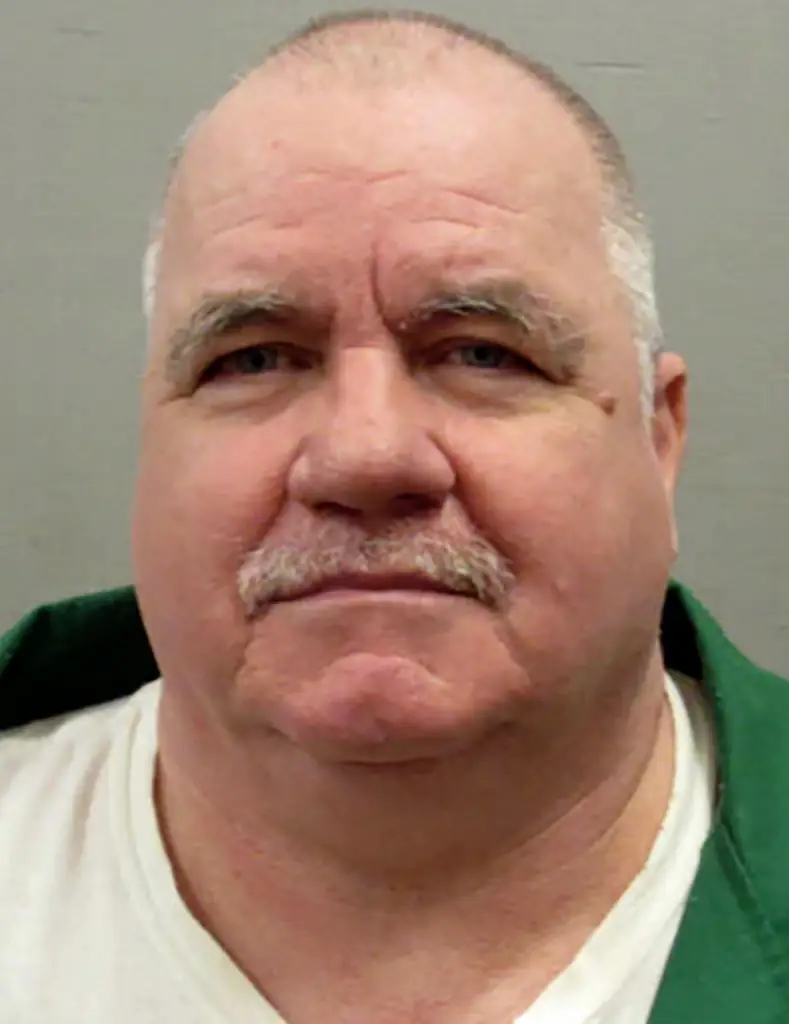
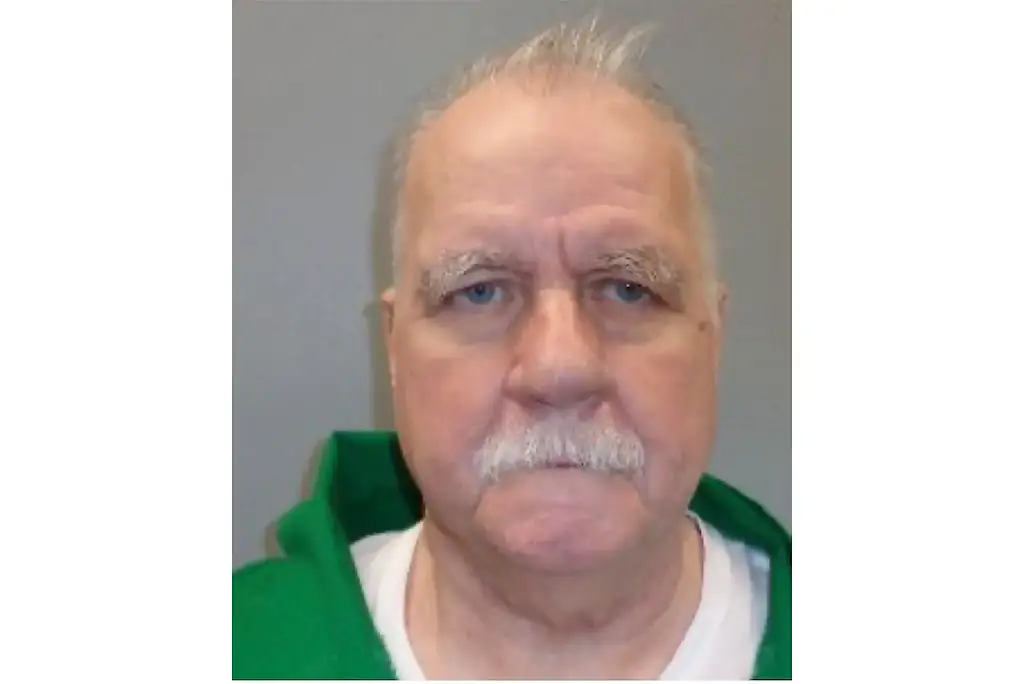
Brad Sigmon, 67, has spent more than two decades on death row. Credit: South Carolina Department of Corrections
His decision to choose the firing squad over other execution methods has been a focal point of discussion.
Execution Witnessed by Veteran Reporter
Jeffrey Collins, an Associated Press reporter with over two decades of experience covering executions, was among the witnesses. He described the scene as unprecedented in his career.
Sigmon was dressed in a black jumpsuit and strapped into a chair with a target placed over his heart. Collins noted in an essay for AP, "It’s impossible to know what to expect when you’ve never seen someone shot at close range right in front of you."
Final Moments and Execution Details
According to Collins, approximately two minutes after the shooters were positioned, they fired without warning or countdown. He recounted, "And the white target with the red bullseye that had been on his chest, standing out against his black prison jumpsuit, disappeared instantly as Sigmon’s whole body flinched." A jagged red spot appeared where Sigmon was shot, and his chest moved two or three times. Outside of the rifle crack, there was no sound.
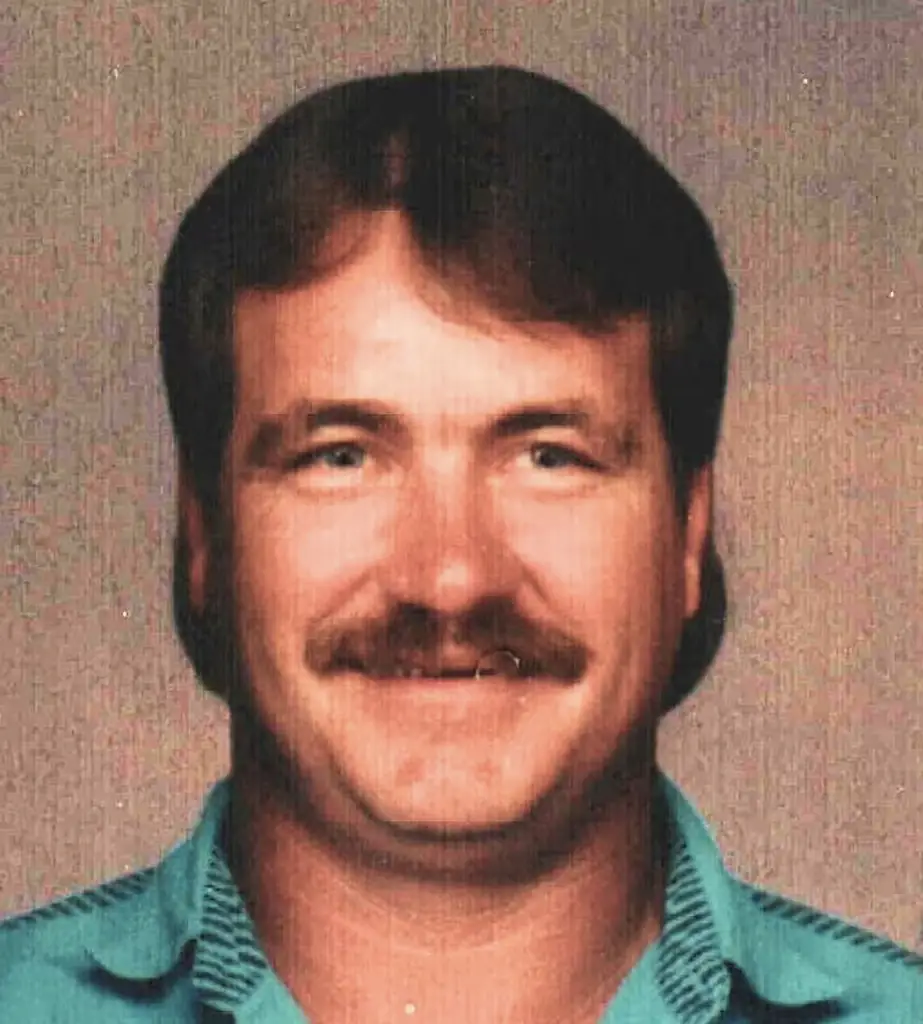
Sigmon in 1990. Credit: Brad Sigmon's legal team
Sigmon's Choice of Execution Method
Sigmon opted for the firing squad due to concerns about the potential pain associated with other methods. He feared being 'burned and cooked alive' by the electric chair and was apprehensive about the efficacy of lethal injection drugs.
Final Statement Opposing the Death Penalty
In his last statement, Sigmon expressed his opposition to the death penalty, citing biblical scriptures to support his plea. He emphasized the transition from Old Testament to New Testament teachings, arguing against the practice of capital punishment.
Public Reaction and Controversy
The execution has sparked discussions about the ethics of capital punishment and the methods employed. Human rights activists and anti-death penalty groups have condemned South Carolina's revival of such executions, highlighting ethical concerns about making inmates choose their method of death.
Brad Sigmon's execution by firing squad has reignited debates on capital punishment in the United States. The detailed accounts from witnesses like Jeffrey Collins provide a rare glimpse into the realities of such execution methods, prompting further reflection on their use in modern times.
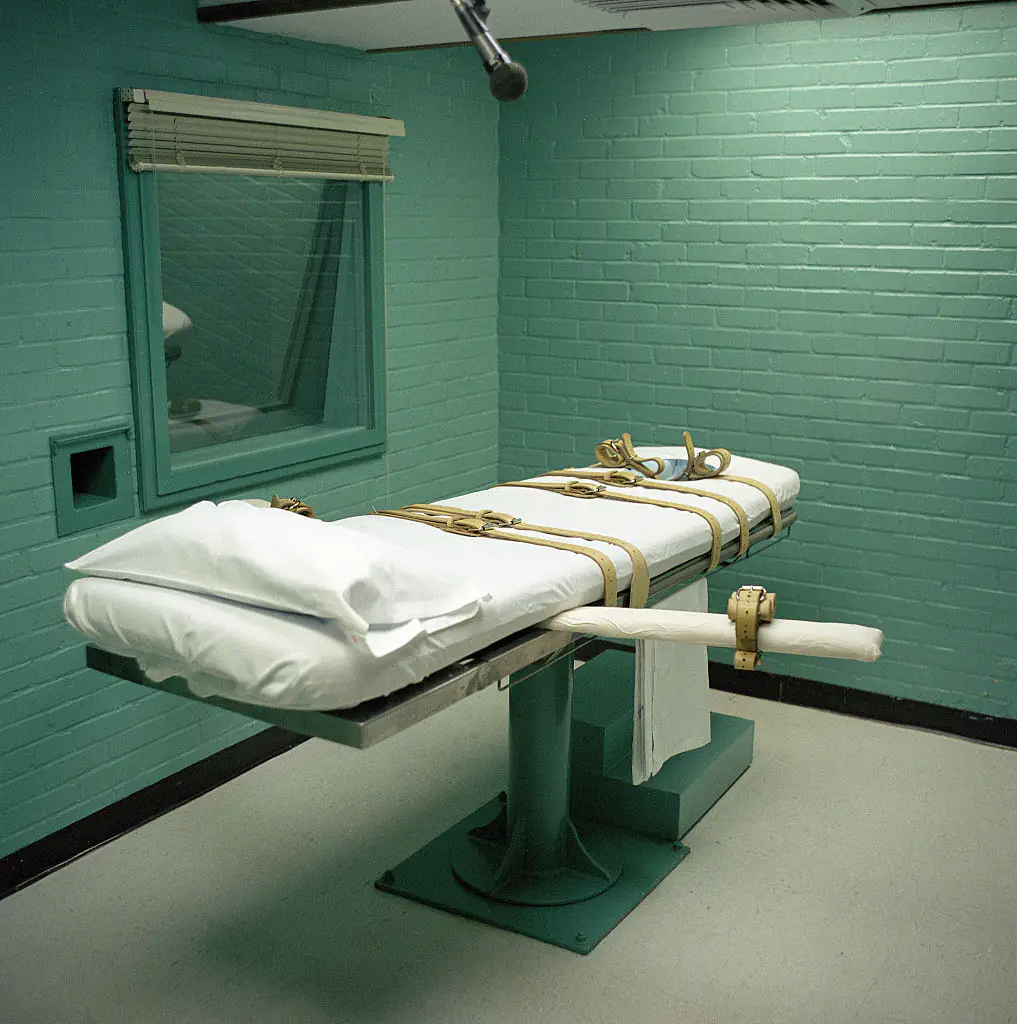
Featured image credit: Ferencziviktoria21 / 500px / Getty
A death row inmate shared his final words before being executed by a firing squad.
Brad Sigmon, 67, has spent more than two decades on death row. Credit: South Carolina Department of Corrections
Brad Sigmon, a convicted double murderer, has become the first person in 15 years to be executed by firing squad in the United States and only the fourth since 1976.
The 67-year-old spent more than two decades on death row for the brutal killings of David and Gladys Larke. He was executed at Broad River Correctional Institution in Columbia, South Carolina, on Friday, March 7.
Three state corrections department volunteers, hidden from the viewing area, simultaneously fired a round of 100-grain TAP Urban bullets from their .308-caliber Winchester rifles.
Sigmon was strapped to a metal chair, hooded, and dressed in a black jumpsuit with a target placed over his heart. A basin sat beneath him to catch blood.
The execution took place at 6:05PM, and after a doctor examined him for approximately 90 seconds, Sigmon was pronounced dead at 6:08PM, BBC News reported.
Brad Sigmon was seated on the firing squad chair pictured at the back. Credit: South Carolina Department of Corrections
Before his execution, Sigmon used his final statement to urge Christians to oppose capital punishment.
In a message read aloud by his attorney, he cited four biblical passages, arguing that the New Testament does not support execution.
"I want my closing statement to be one of love and a calling to my fellow Christians to help us end the death penalty," he wrote, per Daily Mail.
"An eye for an eye was used as justification to the jury for seeking the death penalty. At that time, I was too ignorant to know how wrong that was. Why? Because we no longer live under the Old Testament law but now live under the New Testament."
"Nowhere does God in the New Testament give man the authority to kill another man. That is why the Bible is divided into the Old Testament and the New Testament," he continued. "Remember the words of Jesus, John 7:19, 'Did not Moses give you the law? Yet none of you keep with the law."
He concluded with a statement on divine mercy: "We are now under God’s grace and mercy."
Sigmon was sentenced to death for the 2002 murders of his ex-girlfriend Rebecca Barbre's parents, a crime committed just one week after she ended their relationship.
Armed with a baseball bat, he killed David and Gladys by beating them with a baseball bat inside their Greenville County home.
Following his conviction, Sigmon was given two life sentences along with a 30-year prison term for first-degree burglary. His legal team fought for him to serve life in prison instead of facing execution, but a jury ultimately decided on the death penalty.
In South Carolina, condemned prisoners can choose their method of execution. With lethal injection drugs unavailable, Sigmon’s options were limited to the electric chair or the firing squad.
According to Sigmon’s attorney, Gerald 'Bo' King, the prisoner avoided the electric chair because it would "burn and cook him alive," cited by NBC News. "But the alternative is just as monstrous."
Sigmon also ruled out lethal injection after witnessing the prolonged suffering of three other inmates executed in South Carolina since September.
"If he chose lethal injection, he risked the prolonged death suffered by all three of the men South Carolina has executed since September - three men Brad knew and cared for - who remained alive, strapped to a gurney, for more than twenty minutes," he explained.
The death row inmate's execution marks the 1,613th carried out in the US since 1977 and South Carolina’s first by firing squad.
On March 7, 2025, Brad Sigmon became the first person in 15 years to be executed by firing squad in the United States.
Convicted for the early 2000s murders of David and Gladys Larke, the parents of his ex-girlfriend, Sigmon's choice of execution method drew significant attention. His legal team indicated that he feared being 'cooked alive' if subjected to the electric chair.
Brad Sigmon, 67, has spent more than two decades on death row. Credit: South Carolina Department of Corrections
In a last-ditch effort to postpone the execution, Sigmon's attorneys argued that he was compelled to choose the firing squad due to insufficient information about lethal injection protocols.
Despite these efforts, the execution proceeded as scheduled, with Sigmon pronounced dead at 6:08PM local time on March 7.
Following the execution, Sigmon's brother, Mike, provided insight into Brad's final moments. Describing his demeanor during the execution, Mike stated to The New York Post, "He had a proud face when he sat down to be shot."
Reflecting on the inevitability of the situation, he added, "I’m never going to feel relieved about it but he said what he wanted to say and he died the way he wanted to die."
The Sigmon family, comprising three brothers and two sisters, visited Brad in prison before his execution. Additionally, one of Brad's sons had a private visit with him.
Mike revealed that since his arrest, Brad had expressed remorse, stating, "He’s been apologetic since the day he was captured."
Credit: South Carolina Department Of Corrections
He also mentioned Brad's initial desire for a fatal confrontation with law enforcement, noting, "He wanted death by cop. He called my mom and she said you know my phone is tapped. He knew. He wanted to pretend he had a gun behind his back so the cops would shoot him but they tackled him so fast he had no time to react."
Their mother, currently residing in a nursing home due to Alzheimer's disease, has not been informed of Brad's execution, and the family does not plan to tell her.
Brad's legal representatives also commented on the execution. Attorney Bo King emphasized that Brad sought assurance regarding the drugs used in executions, stating, "Brad only wanted assurances that these drugs were not expired, or diluted, or spoiled - what any of us would want to know about the medication we take, or the food we eat, much less the means of our death."
King further criticized the state's decision, remarking, "It is unfathomable that, in 2025, South Carolina would execute one of its citizens in this bloody spectacle."
Featured image credit: Ferencziviktoria21 / 500px / Getty
Brad Sigmon, 67, has spent more than two decades on death row. Credit: South Carolina Department of Corrections
Brad Sigmon, a 67-year-old death row inmate, was sentenced to death in 2002 for the brutal murders of his ex-girlfriend Rebecca Barbre’s parents in Greenville County.
According to CBS News, Sigmon beat them to death with a baseball bat before kidnapping Barbre at gunpoint. She managed to escape from his car as he attempted to shoot her.
In addition to receiving two death sentences, the prisoner was handed a 30-year prison term for first-degree burglary.
Over the years, Sigmon's legal team filed multiple appeals but failed, leaving the prisoner with one last hope - an intervention from Governor Henry McMaster.
His attorney, Bo King, made a last-minute plea for clemency for his client just hours before he was set to become the first person executed by firing squad in South Carolina on Friday, March 7.
He argued that the inmate was denied critical information regarding lethal injection when it was still an option.
"He wanted to know had the drugs expired, had they been diluted, had they spoiled? And none of those facts were disclosed despite his repeated requests," King told WYFF4, cited by The New York Post.
King is also contesting the death penalty itself, stating that Sigmon was suffering from a mental illness at the time of his crimes.
"The death penalty is intended for the worst of the worst, and so in a case like Brad's, the evidence that he's experiencing the psychotic break, that he's not competent at the time of trial, we think that argues against the imposition of the sentence," he added.
South Carolina grants death row inmates the option of execution by electric chair, lethal injection, or firing squad.
However, with lethal injection drugs unavailable and the electric chair already in use, Sigmon’s fate was sealed with the state’s first-ever execution by firing squad in 15 years.
His execution took place just after 18:00PM local time on Friday. According to BBC News, Sigmon shared his final words to the witnesses, which were: "An eye for an eye was used as justification to the jury for seeking the death penalty."
"At that time, I was too ignorant to know how wrong that was. Why? Because we no longer live under the Old Testament law but now live under the New Testament," he added.
Following his statement, Sigmon was strapped to a chair equipped with a basin beneath it to collect blood, and a hood was placed over his head.
At 6:01PM, a curtain concealing the executioners was drawn back. Without any countdown, three state corrections department volunteers fired at his chest from approximately 15 feet away.
Chrysti Shain of the South Carolina Department of Corrections confirmed that a doctor pronounced Sigmon dead at 6:08PM. Witnessing the execution were three members of the Larke family, as well as Sigmon’s spiritual adviser.
Jeffrey Collins of the Associated Press, who witnessed the execution, described how Sigmon had a red bullseye target placed over his heart.
When the shots were fired, his chest rose and fell several times before a doctor conducted a brief examination, declaring him dead after about 90 seconds.
Featured image credit: Ferencziviktoria21 / 500px / Getty
A South Carolina death row inmate set to be executed this week has explained why he chose such a brutal method of execution.
Brad Sigmon, 67, has spent more than two decades on death row. Credit: South Carolina Department of Corrections
Brad Sigmon was sentenced to death in 2002 for the brutal murders of his ex-girlfriend Rebecca Barbre’s parents.
He killed David and Gladys Larke by beating them with a baseball bat inside their Greenville County home.
Prosecutors say he then kidnapped Rebecca at gunpoint, but she escaped his car as he attempted to shoot her - missing his target.
In addition to receiving two death sentences, Sigmon also received a 30-year prison term for first-degree burglary. Despite numerous appeals over the years, his conviction has been upheld, and his execution is now imminent.
Sigmon will face execution on Friday, March 7. He has chosen to be put to death by a firing squad, making him the first person in the state’s history to die by this method.
South Carolina law allows death row inmates to select between the electric chair, a lethal injection, or a firing squad. If no choice is made, execution defaults to the electric chair.
Sigmon’s attorney, Gerald 'Bo' King, explained his client's reasoning, stating that avoiding the electric chair was a priority because it would "burn and cook him alive," per NBC News. "But the alternative is just as monstrous."
Sigmon also ruled out lethal injection after witnessing the prolonged suffering of three other inmates executed in South Carolina since September.
"If he chose lethal injection, he risked the prolonged death suffered by all three of the men South Carolina has executed since September - three men Brad knew and cared for - who remained alive, strapped to a gurney, for more than twenty minutes," he explained.
With both other options carrying horrific risks, Sigmon settled on the firing squad - but not without deep apprehension.
"Brad has no illusions about what being shot will do to his body," King said. "He does not wish to inflict that pain on his family, the witnesses, or the execution team. But, given South Carolina’s unnecessary and unconscionable secrecy, Brad is choosing as best he can."
According to The New York Post, Sigmon will be strapped to a chair, his head covered by a hood, and a target placed over his heart.
Three volunteer shooters will then fire from 15 feet away through a small opening in the death chamber wall.
Firing squad executions are rarely used in the US, with the last one occurring 15 years ago.
South Carolina’s return to the practice highlights ongoing debates over the ethics of capital punishment, particularly as lethal injection drugs become harder to obtain.
Featured image credit: Jose A. Bernat Bacete / Getty
Brad Sigmon, a 67-year-old man on death row in South Carolina, has chosen to die by firing squad — marking the first time in the state's history this method would be used if the execution proceeds as scheduled on March 7.
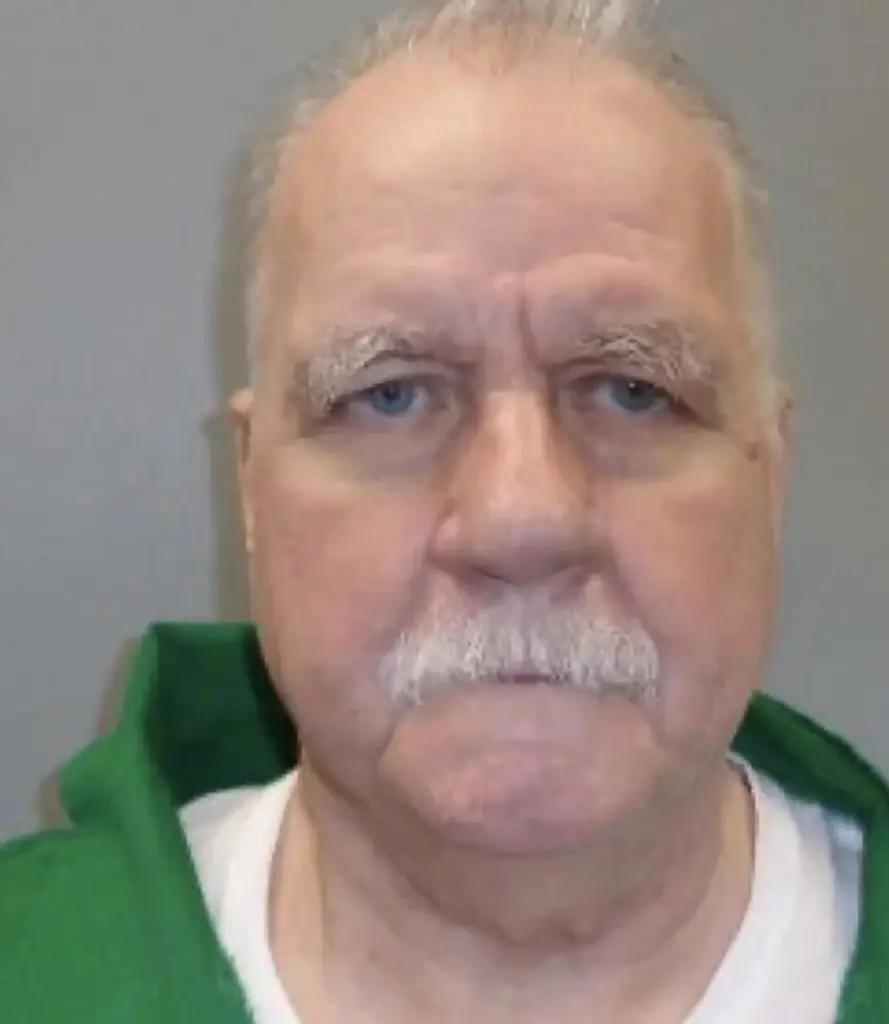
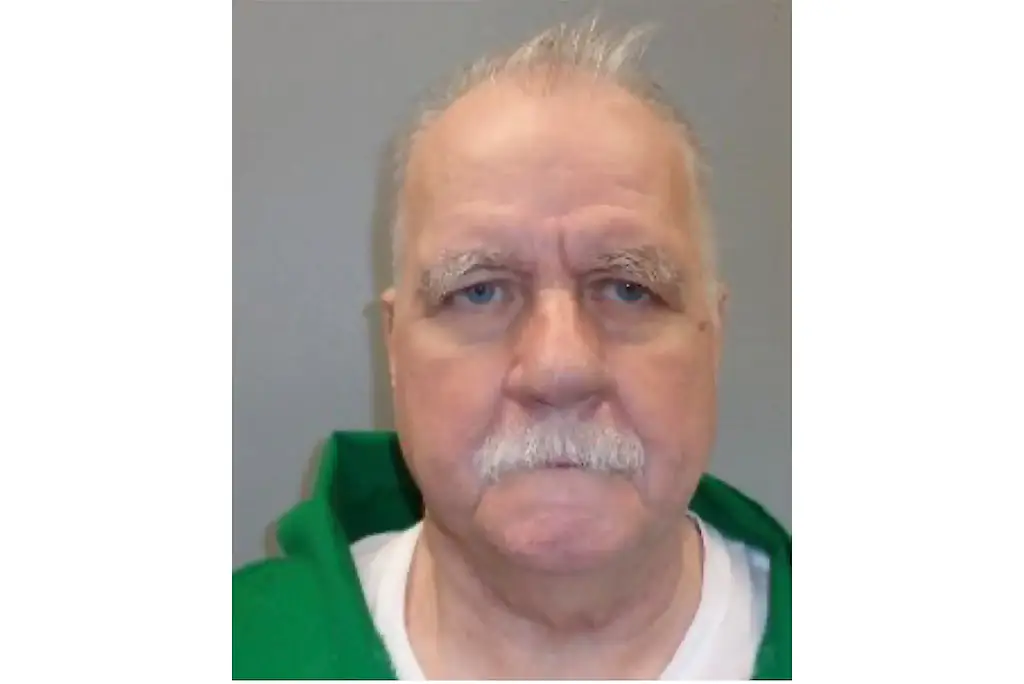
Sigmon's attorneys say the inmate had an "impossible" choice. Credit: South Carolina Department Of Corrections
His execution will mark the first time in 15 years that the US has allowed the method to go ahead, the Guardian reports.
The decision comes amid growing controversy over execution methods, with Sigmon's attorneys arguing that his options amounted to choosing between different forms of torture.
Sigmon was sentenced to death in 2002 for the brutal murders of his former girlfriend’s parents, David and Gladys Larke, WISTV reports.
According to investigators, he attacked them in separate rooms with a baseball bat, going back and forth between them until both were dead.
Under South Carolina law, death row inmates must select one of three execution methods: lethal injection, the electric chair, or the firing squad. If they refuse to choose, they are automatically assigned the electric chair.
Since the state resumed capital punishment in 2024 after a 13-year hiatus, all previous inmates have opted for lethal injection — until now.
A Choice Between ‘Monstrous’ Methods
Sigmon’s lawyers argue that his "impossible" decision was made under extreme duress.
"Unless he elected lethal injection or the firing squad, he would die in South Carolina’s ancient electric chair, which would burn and cook him alive," his attorneys said, per CBS News. "But the alternative is just as monstrous."
Sigmon in 1990. Credit: Brad Sigmon's legal team
His legal team has raised significant concerns over the state’s recent lethal injections, which they claim have been botched. The last three men executed — Freddie Owens, Richard Moore, and Marion Bowman — “remained alive, strapped to a gurney, for more than twenty minutes,” his attorneys stated.
They also argue that South Carolina’s Department of Corrections (SCDC) has withheld key information about the drugs used, their effectiveness, and potential pain inflicted on inmates.
"How can Brad possibly determine the least torturous way to die when the state hides the truth at every step? How could anyone?" they said. "The only choice that remained is the firing squad."
Gerald “Bo” King - Sigmon’s attorney - described the decision as “not an informed choice” but rather “a forced one.” He expressed frustration that his client must decide between “being electrocuted, poisoned, or shot,” while critical information about each method is concealed.
How a Firing Squad Execution Works
If carried out, Sigmon’s execution would be the first by firing squad in the U.S. since 2010, when Utah executed Ronnie Lee Gardner. South Carolina is one of five states that allow firing squads, alongside Utah, Mississippi, Oklahoma, and Idaho.
Sigmon refused the lethal injection and the "default" electric chair. Credit: Andrew Lichtenstein / Getty
The SCDC’s execution protocols dictate that Sigmon will be strapped into a metal chair and restrained.
A hood will be placed over his head, and a target affixed to his heart. Three executioners, standing behind a 15-foot barrier, will fire rifles loaded with live ammunition at the target. After the shots are fired, a doctor will examine him and pronounce him dead.
A South Carolina judge previously ruled in 2022 that firing squad executions constitute “torture” and violate constitutional protections against cruel and unusual punishment. The judge noted that the inmate is “likely to be conscious for a minimum of 10 seconds after impact” and may suffer additional pain if the bullets fail to fully incapacitate the heart. If necessary, additional shots may be fired after 10 minutes.
Despite this, the South Carolina Supreme Court later upheld the practice, ruling that offering inmates multiple execution options made it lawful.
Controversy Over Lethal Injection
Lethal injection has long been the default execution method in South Carolina, but the state ran out of lethal injection drugs in 2011 after pharmaceutical companies stopped selling them for capital punishment.
In response, lawmakers passed a "shield law" in 2023, allowing officials to keep suppliers' identities secret. With the ability to restock drugs, executions resumed last year.
However, Sigmon’s attorneys claim the state's handling of lethal injections has been deeply flawed. The November execution of Richard Moore allegedly required a second dose of pentobarbital after 10 minutes, despite the SCDC claiming the protocol calls for a single dose.
Moore’s autopsy showed he suffered pulmonary edema, a condition where the lungs fill with fluid, causing sensations similar to drowning.
Similarly, in January, the execution of Marion Bowman lasted 23 minutes, and officials refused to disclose how many doses were administered. “You have three executions that have seemingly gone awry,” King said, arguing that “it could be excruciatingly painful.”
Despite these concerns, SCDC spokesperson Chrysti Shain defended the state's lethal injection practices, stating they adhere to federal guidelines. However, the U.S. Justice Department withdrew its own pentobarbital protocol in January, citing “uncertainty” over whether the drug causes unnecessary suffering.
Sigmon’s Final Days
Beyond the legal battle over his execution, Sigmon’s attorneys emphasize his personal transformation during his decades on death row. They describe him as “enormously remorseful,” a “devout Christian,” and a “source of strength and stability” to both fellow inmates and prison guards.
King argued that executing Sigmon serves no purpose other than to send a chilling message: “No matter how profoundly a person repents, South Carolina refuses to recognize redemption.”
If executed on March 7, Sigmon will be the oldest person ever put to death in South Carolina.


.webp_SmgFsc?tr=cr-292.0.1244.952,f-webp,q-70,w-100)

.webp_4nh1Az?tr=cr-0.0.1.0.6,f-webp,q-70,w-1024)


.webp_vBqgAR?tr=cr-242.0.1293.1051,f-webp,q-70,w-100)
.jpg_wDPjVb?tr=f-webp,q-70,w-525,h-200)

.jpg_7GrJVM?tr=cr-0.0.1024.532,f-webp,q-70,w-525,h-200)
.webp_SmgFsc?tr=cr-292.0.1244.952,f-webp,q-70,w-1024)


.webp_vBqgAR?tr=cr-242.0.1293.1051,f-webp,q-70,w-1024)