


Tech & Innovation3 min(s) read
Scientists issue warning about deadly tsunami that could reach the US West Coast after making undersea discovery

Terrifyingly, scientists have detected that a huge underwater fault, which caused catastrophic disasters in the past, is again ready to cause major destruction.
A team at Tohoku University has uncovered that the Japan Trench is stuck in a very similar position to where it was before triggering the magnitude 9.0 Tohoku earthquake on March 11, 2011, which sent a tsunami all the way to Hawaii and the US West Coast.
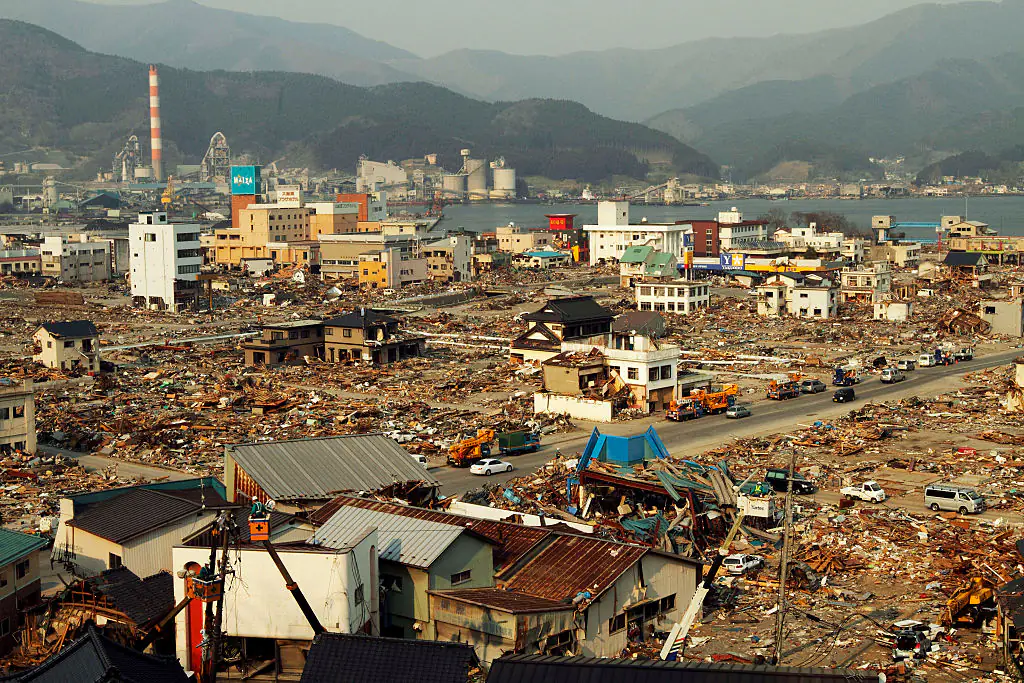
The disaster 15 years ago caused devastation across continents
The monumental earthquake broke a huge portion of the Japan Trench and devastated the country’s northeast coast with a tsunami that led to over 20,000 deaths and disappearances.
Alarmingly, the same disaster started the Fukushima Daiichi nuclear disaster as the tsunami flooded the power plant, causing three reactors to melt and release dangerous radioactive material into the air.
Almost 5,000 miles away in America, the tsunami produced $100 million worth of damage across the West Coast, and even killed a person in Crescent City, California.
The group of scientists has now published a study that found the same underwater fault is about to lock in place and trigger the same pressure buildup within the Earth's crust that will eventually be pushed to boiling point and break, sparking another major disaster.
The trench, known as the "megathrust," is a mammoth fault that lies deep under the ocean where the Pacific Plate is slowly sliding beneath Japan.
Earthquakes occur when two or more tectonic plates get stuck together by friction, so instead of sliding against each other, they eventually snap and release huge amounts of energy in the form of a devastating earthquake, which often sparks tsunamis.
How did the scientists make the scary discovery?
Lead researcher Fumiaki Tomita and his colleagues worked out that prior to the 2011 earthquake, the Japan Trench had been stuck and building seismic stress for roughly 1,100 years, as the last disaster struck in 869.
Their calculations were made through studying layers of sand left behind by past tsunamis in the coastal lowlands of northeast Japan.
As the same fault has already locked and started storing energy again only a decade after the last giant earthquake, researchers warned that the next large event could come much earlier than the centuries-long average previously predicted.
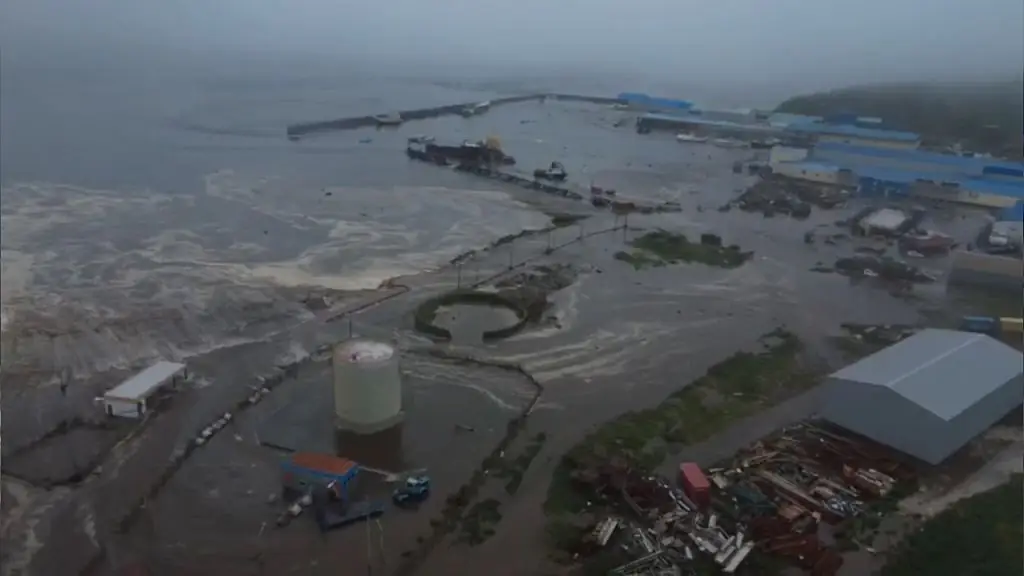
A scary example of how soon the next devastating disaster could happen came in July 2025, when an earthquake unfolded along the same Kuril-Kamchatka subduction zone where a magnitude 9.0 earthquake had already occurred in 1952.
The fact that there were only 73 years between the catastrophic quakes is a stark reminder of the looming threat posed by the Japanese Trench.
In the journal Science, the team warned: "Although great earthquake recurrence in this region is typically several centuries, a relocked megathrust is a reminder that, like the 2025 M8.8 Kamchatka earthquake, slip can come early."