


World15 min(s) read
Japan has a shockingly brutal rule for prisoners that are sentenced to death and their families
.jpg_I4Ebof?tr=cr-0.338.2730.3068,f-webp,q-70,w-100)
Japan is one of only four developed democracies in the world that still actively carries out executions.
But it's not just the fact of the death penalty that shocks - it's how Japan does it, and the extraordinary secrecy that surrounds every single execution.
As Christa Pike's botched execution proved, not all execution methods are created equal, and Japan's is a controversial one by any standards.
Does Japan have the death penalty?
Yes. Japan has the death penalty.
Capital punishment is a legal penalty under the Penal Code of Japan, which lists 14 capital crimes.
In practice, death sentences are handed down almost exclusively in cases of aggravated murder.
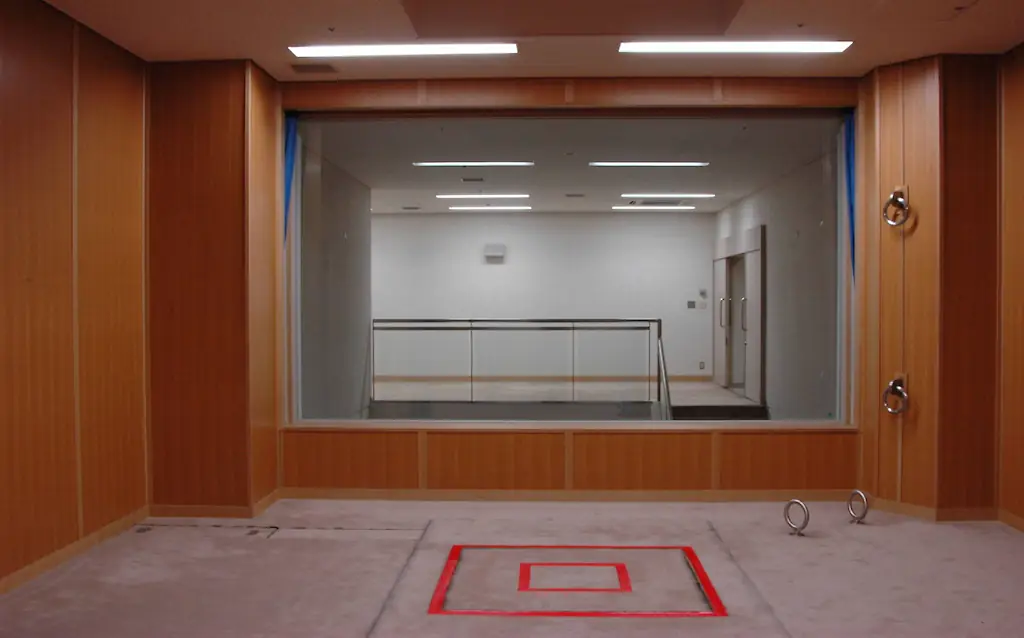
Executions are carried out by hanging at one of seven facilities across the country.
Japan is one of only four developed democracies worldwide - alongside the United States, Singapore, and Taiwan - that continues to actively use capital punishment.
Within the G7 group of leading industrialised nations, Japan and the US stand alone as the only two countries that still carry out executions.
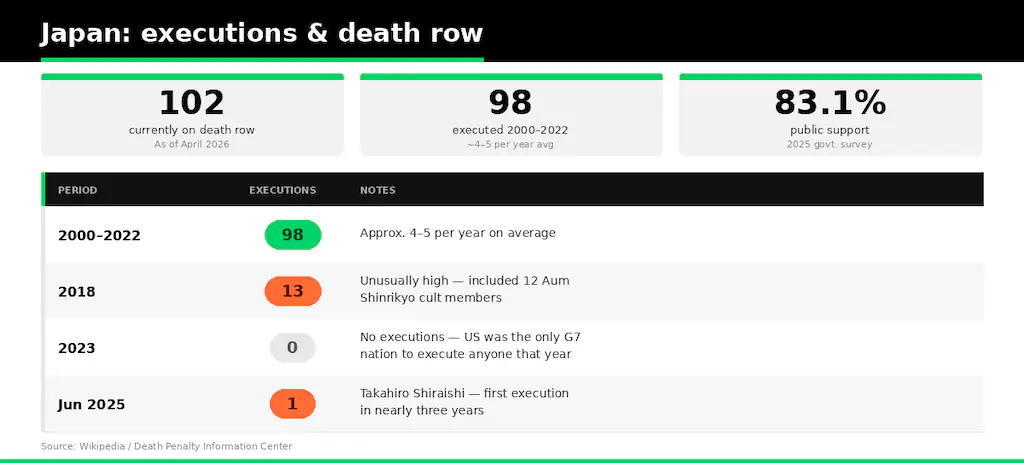
That distinction came into sharp focus in 2023, when Japan performed no executions at all — leaving the US as the sole G7 nation to use capital punishment that year.
But the existence of the death penalty in Japan is almost secondary to how it operates.
The rules surrounding execution in Japan are, by any international standard, extraordinarily brutal, not just for the prisoners themselves, but for their families too.
Japan death penalty: key facts at a glance
- 102 people are currently on death row in Japan (as of April 2026)
- Executions are carried out by long-drop hanging
- Prisoners are not told of their execution date in advance, only on the morning itself
- Families and lawyers are typically not informed until after the execution has taken place
- The most recent execution was Takahiro Shiraishi on 27 June 2025
- 83.1% of Japanese people support the death penalty (2025 government survey)
The rule that shocks the world: prisoners learn of their execution on the day it happens
The single most controversial aspect of Japan's death penalty system is a policy that human rights groups have repeatedly condemned as inhumane: death row prisoners in Japan are only told they are going to be executed on the morning of the execution itself.
There is no advance notice, no final days to prepare and no opportunity to say goodbye to family members, who will often not find out their loved one has been executed until after it has already happened.
Lawyers are also typically not informed in advance.
The secrecy is total and deliberate.
Japan's Ministry of Justice has defended the policy on the grounds that advance notice would cause unnecessary psychological suffering, an argument that critics have described as perverse, given that the alternative is a lifetime of waking up every morning not knowing if today will be the day you die.
It is a stark contrast to how other countries handle the same moment.
In the United States, the only other G7 country that retains capital punishment, death row inmates are given a formal execution date weeks or months in advance, are permitted a final visit with family, and are offered a last meal of their choosing.
Japan provides none of these things.
The contrast even extends to Texas, which famously abolished last meal requests after one prisoner abused the tradition, yet even that state tells its inmates when they will die.
Two Japanese death row prisoners have filed a lawsuit arguing that the same-day notification practice is 'inhumane' and violates their rights.
The challenge has gained little traction in a legal system where the constitutionality of capital punishment was upheld as far back as 1948.
How does Japan execute prisoners?
Japan executes prisoners by long-drop hanging.
The prisoner is blindfolded and their knees are bound before the trap door beneath them is released.
Executions take place at one of seven execution chambers located in major Japanese cities.
The process can, in some documented cases, take more than two minutes from the moment the trap door opens to the point of death.
That duration has been subject to significant criticism from medical and human rights professionals.
In 2011, the Osaka District Court itself acknowledged that the method can take more than two minutes, a finding that cast a harsh light on a method Japan has used without reform for decades.
The comparison with other execution methods used globally is uncomfortable.
In the United States, the ongoing debate over lethal injection causing severe suffering, including autopsy findings of pulmonary oedema described as 'near-drowning', has driven several US states to move to alternative methods.
South Carolina made headlines when a death row inmate chose death by firing squad rather than the electric chair, becoming the first person executed by firing squad in the US in nearly half a century.
Idaho recently passed legislation making firing squad its default execution method.
Japan, meanwhile, has not changed its method in over a century.
Executions take place in complete secrecy, with no public witnesses present and no announcement made beforehand.
The public typically only learns of an execution after it has taken place, through a brief government statement - and even then, details are minimal.
Who is on death row in Japan right now?
As of April 2026, 102 people are on death row in Japan.
The figure has hovered around this level for years, as new sentences are handed down and occasional executions slowly reduce the number.
The typical profile of a death row inmate in Japan is someone convicted of multiple murders.
Death sentences for single-victim murders are rare but not unknown - they tend to occur in cases involving exceptional brutality, torture, kidnapping with ransom, or murder committed while already on parole for a previous killing.
One of the most striking features of Japan's death row is the sheer length of time inmates can spend on it.
Prisoners may wait decades between sentencing and execution, spending years in a state of indefinite uncertainty, under strict solitary confinement, with severely restricted contact with the outside world.
The situation echoes cases in the United States, where inmates have also spent so long on death row they no longer remember committing their crime, raising profound questions about the purpose of execution decades after the fact.
The Takahiro Shiraishi execution: Japan's most recent case
On 27 June 2025, Japan carried out its first execution in nearly three years.
Takahiro Shiraishi, known as the 'Zama killer', was hanged at a detention facility in Japan after being convicted of murdering nine people in 2017, victims he had recruited via social media by targeting people who had expressed suicidal thoughts online.
The execution prompted immediate international reaction.
Amnesty International called it 'the latest callous attack on the right to life in Japan.'
The European Union and a group of other countries issued a joint statement expressing regret and calling for Japan to suspend the death penalty, according to The Asahi Shimbun.
The Shiraishi case illustrates how Japan's death penalty operates in practice: a single execution, carried out secretly, with no advance public notice, followed by a brief government announcement.
For Japan's 102 remaining death row inmates, every morning carries the same unknowing weight.

The Iwao Hakamada case: Japan's most damning miscarriage of justice
No discussion of Japan's death penalty is complete without Iwao Hakamada, a case that came to define everything critics say is wrong with Japan's capital punishment system.
Hakamada, a former professional boxer, was convicted in 1968 of murdering his employer and the employer's family in Shizuoka.
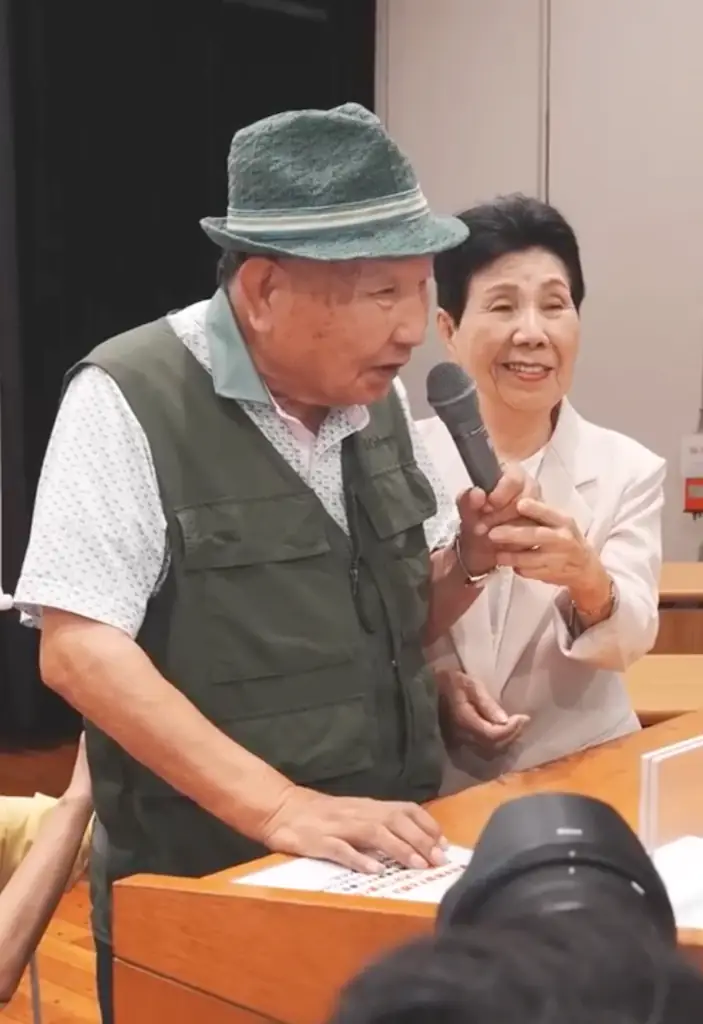
He was sentenced to death. He spent 46 years on death row, the longest period of any death row prisoner in recorded history.
In 2024, after years of legal battles, he was formally acquitted by the Shizuoka District Court, which found that the blood-stained clothing used to convict him had been fabricated as evidence.
In March 2025, Hakamada was awarded just over ¥217 million (approximately £1.1 million) in compensation, the highest ever awarded for a wrongful conviction in Japan. He was 88 years old.
The Death Penalty Project has argued that Japan has failed to learn from the case, noting that the structural problems that led to his wrongful conviction - a legal system with a 99.9% conviction rate and heavy reliance on confessions - remain entirely unchanged.
Hakamada is only the fifth death-sentenced prisoner to receive a retrial in post-war Japan.
There are almost certainly others on death row today who are innocent.
It is a situation that draws uncomfortable parallels with cases elsewhere. In the United States, convicted murderer Angela Simpson - who admitted she felt she deserved the death penalty - at least had the benefit of a system where her guilt was never in doubt.
Hakamada spent 46 years on death row for a crime he did not commit, with no idea each morning whether he would be taken to the gallows that day.
Why does Japan have a 99.9% conviction rate?
Japan's criminal justice system has an extraordinary conviction rate, consistently sitting above 99.9%.
Understanding this is essential to understanding the death penalty, because it means that by the time someone is being tried for a capital crime in Japan, acquittal is almost statistically impossible.
Japanese prosecutors exercise enormous discretion over which cases go to trial, proceeding only when they are virtually certain of conviction.
But critics argue the system is also structurally biased: suspects can be detained for up to 23 days without charge, interrogations can be lengthy and conducted without a lawyer present, and confessions - even those later recanted - carry significant weight with judges.
Japan introduced a lay judge system (saiban-in) in 2009, in which citizen judges sit alongside professional judges in serious criminal cases, including capital cases.
This was intended to introduce more public accountability into verdicts.
The conviction rate has remained essentially unchanged.
Public opinion on the death penalty in Japan
The Japanese public strongly supports the death penalty.
A 2025 government survey found that 83.1% of Japanese people support capital punishment - one of the highest rates of public support for the death penalty anywhere in the world, and a figure that has remained broadly stable for decades.
The 2025 result was a 2.3 percentage point increase from the previous survey five years earlier.
This is not a fringe political position in Japan.
Support cuts across age groups and political affiliations.
Scholars who study Japanese attitudes toward the death penalty point to a deep-rooted belief that justice for murder victims - and their families - requires the death of the perpetrator.
There is also a folk concept that a murdered person's soul cannot rest until their killer is also dead.
Japan's Buddhist tradition is complex on this point.
During the Heian period (794–1185), Buddhism led Japan's rulers to observe a moratorium on executions that lasted 346 years.
But in subsequent centuries, as historians note, the imperatives of state authority and social order came to take precedence and have done ever since.
Why does Japan still have the death penalty?
Given the near-universal abolition of capital punishment across Europe and the growing global trend away from executions, why does Japan retain it?
The honest answer is: because the public wants it, and the political will to abolish it does not exist.
Japanese politicians who have expressed personal opposition to the death penalty have typically been required, as Justice Ministers, to sign execution orders regardless - a practice that illustrates how capital punishment is embedded structurally in the system rather than dependent on individual political choices.
Japan has faced sustained international pressure.
The UK government has formally raised concerns about Japan's practices.
The United Nations Human Rights Commission has passed unfavourable resolutions.
The Council of Europe has threatened Japan with loss of its observer status.
None of it has produced any meaningful movement toward abolition.
Within Japan, the primary argument for retention remains the suffering of victims' families.
Any political move toward abolition would immediately be framed as a betrayal of murder victims - and in an environment where more than four in five Japanese adults support the death penalty, that framing is politically impossible to overcome.
It is a dynamic also seen in parts of the United States, where the debate over capital punishment remains fiercely contested.
Tennessee, for example, is currently preparing to execute its first woman in over 200 years, with the victim's family central to the calls for the sentence to be carried out.
Nationwide, there are only 48 women on death row in the US, compared to nearly 2,100 men - figures that reflect just how sparingly the ultimate punishment is actually used, even in retentionist countries.
Japan's death penalty in historical context
Capital punishment has a history in Japan stretching back over 1,500 years. According to the Kojiki - Japan's oldest historical text - the death penalty first appeared in the first half of the fifth century, during the reign of Emperor Nintoku, with methods including strangulation, beheading, and burning.
The Heian period (794–1185) represents the most striking historical anomaly: Japan went 346 years without a single execution, following the introduction of Buddhist principles into governance.
It remains one of the longest recorded moratoriums on capital punishment in any nation's history.
The death penalty was revived during the Hōgen rebellion of 1156 and has remained part of Japan's legal system ever since.
Modern executions resumed following a shorter moratorium that ended in 1993.
The legal criteria governing when the death penalty is applied today were established in 1983 by the Supreme Court of Japan - the Nagayama criteria, a nine-point framework for capital sentencing that has been followed in virtually every capital case since, though it is technically not a binding precedent.
Is Japan likely to abolish the death penalty?
In the short to medium term: no.
With 83.1% public support and no significant political movement toward abolition, the death penalty in Japan is structurally secure.
The Hakamada case, which might in another country have sparked a serious national conversation about abolition, produced no lasting legislative response in Japan.
Younger generations in Japan do show slightly lower levels of support for capital punishment, and sustained international pressure - particularly from the EU and from organisations like the Death Penalty Information Center - keeps the issue visible.
But with no mainstream political party advocating abolition, change is not imminent.
What is almost certain is that executions will continue, sporadically, secretly, and with the same same-day notification rule that makes Japan's system unlike almost any other in the developed world.
For the 102 people currently on death row, that means every morning is the same: wake up, and wait to find out.
Frequently asked questions
Is the death penalty still legal in Japan?
Yes. Capital punishment is a legal penalty in Japan under the Penal Code, which lists 14 capital crimes. In practice it is applied almost exclusively in cases of aggravated murder involving multiple victims or exceptional brutality.
How does Japan execute prisoners?
Japan executes prisoners by long-drop hanging. The prisoner is blindfolded and their knees are bound before the trap door is released. Executions take place at one of seven facilities in major cities. The process can take more than two minutes.
How many people are on death row in Japan?
As of April 2026, 102 people are on death row in Japan.
When was the last execution in Japan?
The most recent execution was that of Takahiro Shiraishi on 27 June 2025. He had been convicted of murdering nine people in Zama, Kanagawa in 2017. It was Japan's first execution in nearly three years.
Does Japan tell prisoners when they will be executed?
No. Japan's policy is to inform prisoners of their execution only on the morning it takes place. Their families and lawyers are typically not notified until after the execution has been carried out.
What five countries use the death penalty the most?
According to Amnesty International data, the five countries that carried out the most known executions in 2024 were China (1,000+), Iran (972+), Saudi Arabia (345+), Iraq (63+), and Yemen (38+). Japan executes far fewer — typically between zero and five people per year.
Is Japan the only G7 country with the death penalty?
Japan and the United States are the only two G7 countries that retain the death penalty. In 2023, when Japan carried out no executions, the US was temporarily the sole G7 nation to execute anyone.
Sources and further reading
- Wikipedia — Capital punishment in Japan
- Amnesty International — Japan: Cruel execution a stain on country's human rights record (June 2025)
- Death Penalty Project — From exoneration to execution: Japan fails to learn (July 2025)
- University of Oxford Death Penalty Research Unit (July 2025)
- Death Penalty Information Center — Japan
- Nippon.com — Hanging of Zama Killer is Japan's First Execution Since 2022
- The Asahi Shimbun — EU urges Japan to suspend death penalty after execution
- UK Government — Death Penalty in Japan: some facts and questions
- Wikipedia — List of death row inmates in Japan