ADVERT
Space3 min(s) read
Published 14:10 02 Dec 2023 GMT
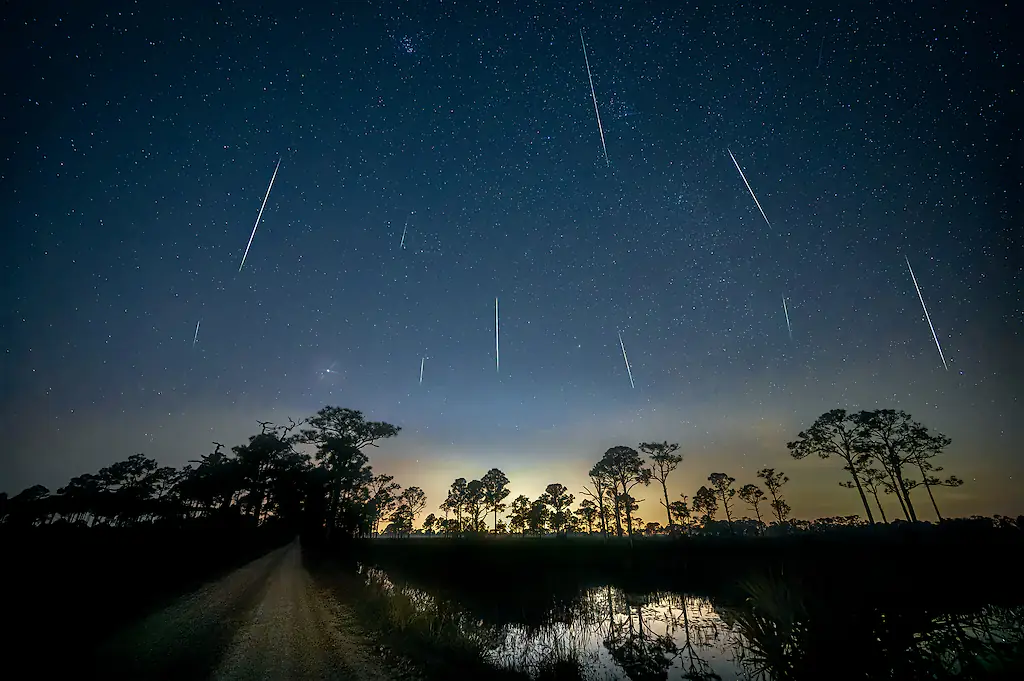
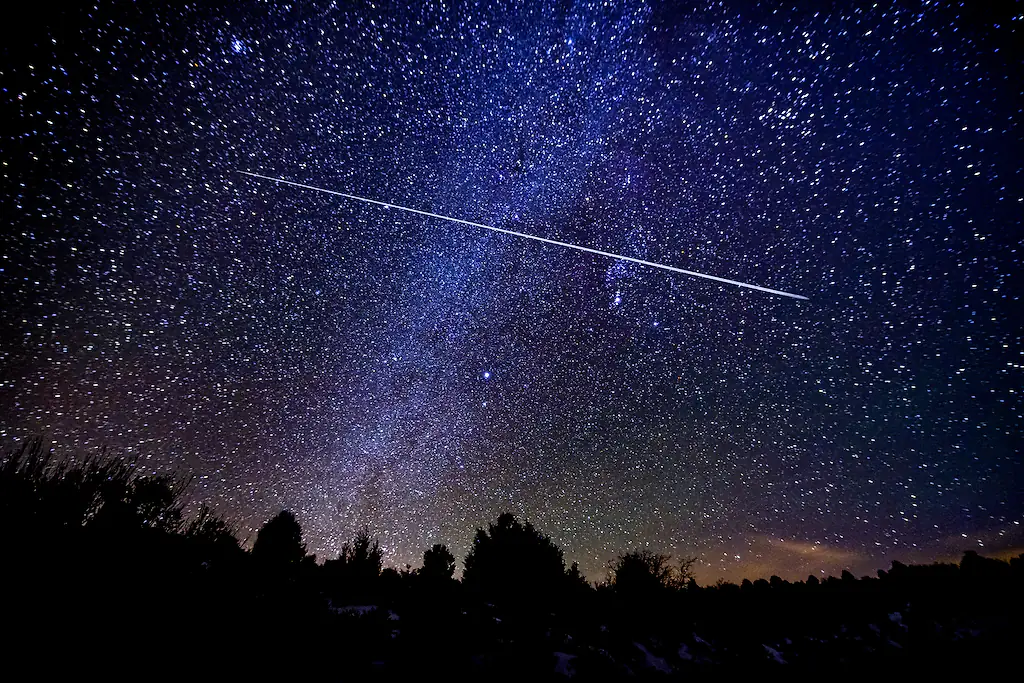
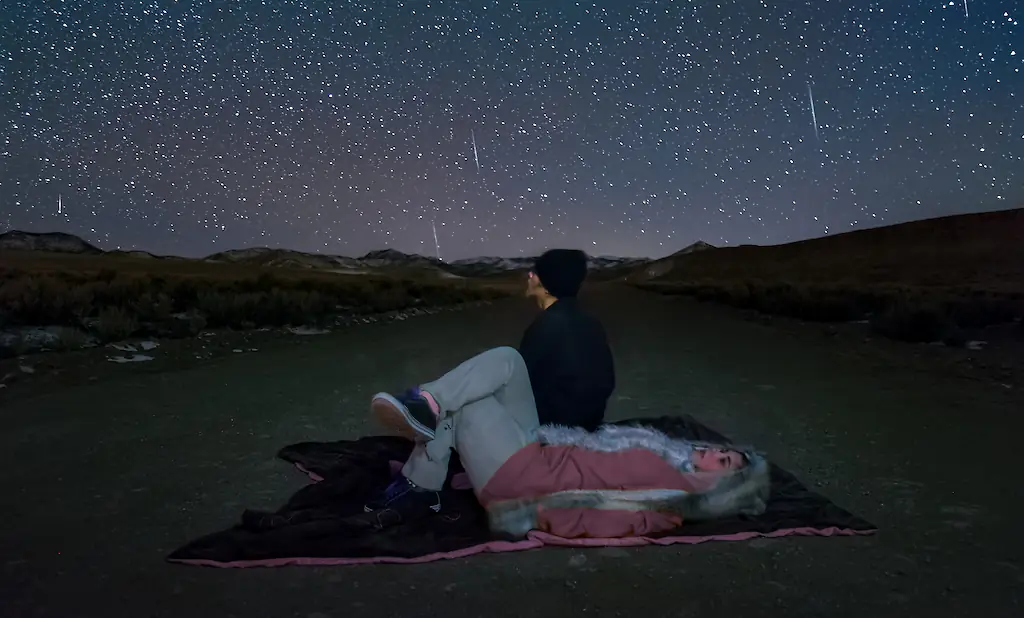
An often "forgotten" meteor shower is set to light up the skies tonight.
With the winter nights continuing to grow colder and longer, one nighttime spectacular is guaranteed to bring a smile to your face this evening.
As reported by the BBC's Sky At Night magazine, the Andromedids meteor shower will take place on the evening of December 2 and into the morning of December 3.
The outlet reports that lucky viewers can expect to see up to 200 meteors every hour, with each meteor predicted to be traveling at a "slow" 16 km/s.
The Andromedid meteor shower is one of the lesser-known celestial events of the year - with most people being more familiar with showers such as the Quadrantids, Lyrids, Perseids, Orionids, and Geminids.
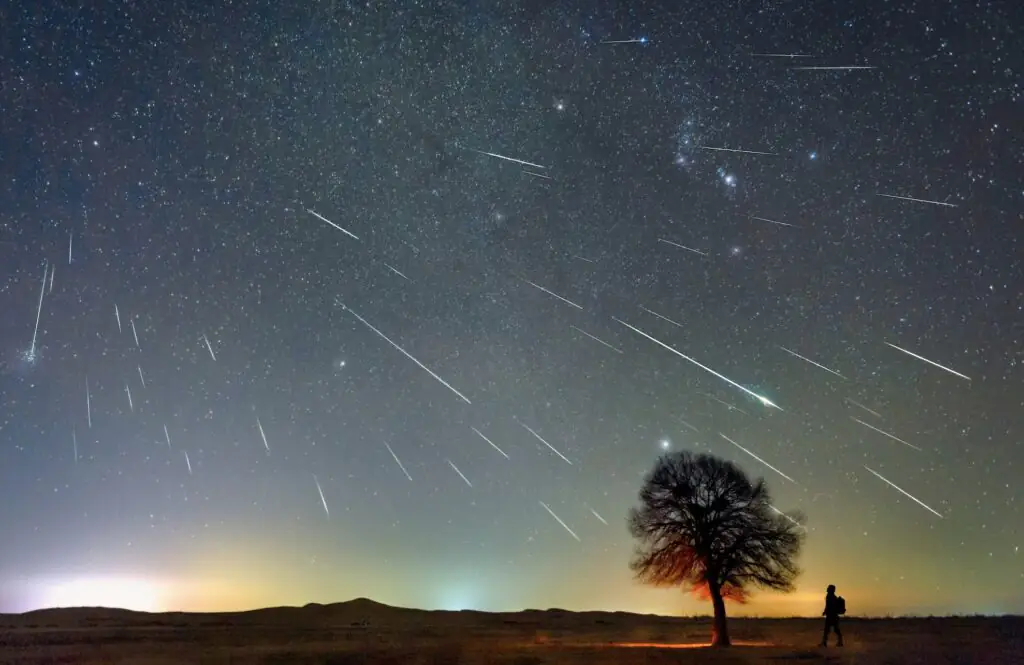
However, the Andromedid has a very rich and interesting history.
This particular meteor shower is actually the result of the break up of comet 3D/Biela - a periodic Jupiter-family comet that was first recorded in 1772 by Jacques L. Montaigne and independently by Charles Messier. It was later finally identified as periodic in 1826 by Wilhelm von Biela.
This is why the Andromedids are also known as the Bielids.
It earned its name due to the fact that its radiant point (from where the meteors appear to emanate from) is within the Andromeda constellation. More precisely, the meteors appear to emanate near the Almach and Mirach stars.
What's more, this weekend's shower is believed to have an increased activity due to dust released from the comet all the way back in 1649 (as predicted by Paul A. Wiegert).
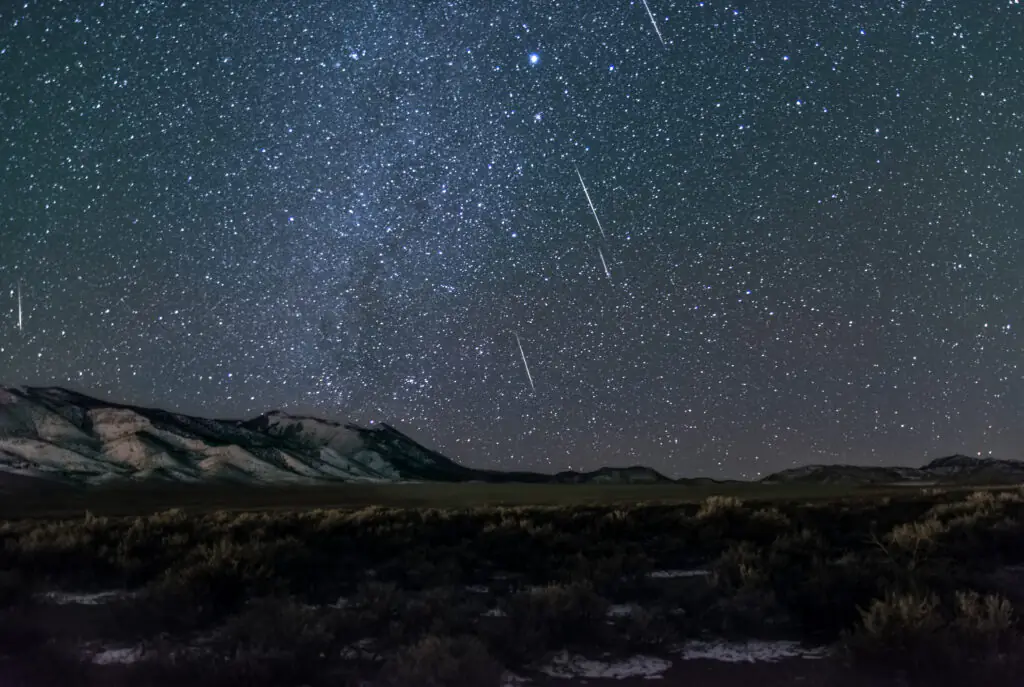
This means that - although the Andromedids shower is often overlooked and nothing much to write home about - this year is could see more meteors per hour than the more famous Perseids and Geminids showers, per the British Astronomic Association.
Back in 1872 and 1885, the spectacular Andromedid meteor storms resulted in thousands of meteors lighting up the skies every hour - a sight that one observer described as "a real rain of fire," per Scientific American.
The peak time of the meteor showers is predicted to be around 19:00 UT - meaning people in the UK and Europe will have the best chance at witnessing this beautiful event. However, with clear skies, those in North America can be just as fortunate - especially if the activity occurs later than anticipated.
And that's not even the end of the celestial events for December! There's also a strong possibility that a meteor shower from comet 46P/Wirtanen will also be visible to the naked eye between December 10 and December 12.
So, grab your binoculars, and let's all hope for a clear night sky.
space4 min(s) read
Published 14:51 20 Oct 2023 GMT
Skygazers won't want to miss tonight's show as up to 25 shooting stars per hour are set to light up the night sky, thanks to the Orionid meteor shower.
Over the coming days the meteor shower will be visible prior to the break of dawn, made up of fragments left behind by the famous Halley's Comet.
Known as the Orionid meteor shower, it peaks during the third week of October and they are scheduled to reach their maximum this weekend, with the best show happening before sunrise on Sunday morning (October 22).
So here is everything you need to know about the Orionid meteor shower to give yourself the best chance to see it in person.
Orion is a winter constellation according to Space.com, which states that it will be high in the sky towards the south-southeast between 4 and 5AM on Sunday.
The moon is also not set to pose too much of an obstacle to seeing the meteors as it will be at first quarter (half) phase, setting around 11.30PM on Saturday night, meaning it won't hinder views in the early hours of Sunday.
The Orionids are visible between October 16-26, reaching their peak on Sunday morning, with the best time to catch them on any given night being from 1 or 2AM until dawn breaks just before 6AM.
The Orionids are one of a few known meteor showers that can be seen equally as well from both the Northern and Southern Hemispheres, but for the best chance to catch a glimpse - as these shooting stars tend to be quite dim - stargazers will want to be in as rural a location as possible to avoid light pollution ruining their visibility.
David Levy and Stephen Edberg explained in Observe: Meteors, an Astronomical League manual via Space.com: "They are easily identified ... from their speed. At 66 kilometers (41 miles) per second, they appear as fast streaks, faster by a hair than their sisters, the Eta Aquarids of May. And like the Eta Aquarids, the brightest family members tend to leave long-lasting trains. Fireballs are possible three days after maximum."
The Orionids originate from Halley's Comet. All comets are leftovers from the early days of the universe and are made up of the remnants of simple gases such as methane, ammonia, carbon dioxide, and water vapor which were left over from when the sun and planets in our solar system came into being in their current form.
All comets eventually disintegrate into meteoroids, which Halley's Comet is currently in the process of doing, and it is when these minuscule particles - which range in size from grains of sand to specks of dust - collide with the Earth's atmosphere and the friction raises them to white heat that we can see them in the sky as shooting stars.
While they may not be the brightest of shooting stars, the Orionid meteor shower can be seen with the naked eye - as long as there is no light pollution affecting the view - so you won't need any special equipment such as a telescope or binoculars to see them as long as you give your eyes around half an hour to adjust to looking at the darkness.
NASA says: "The Orionids, which peak during mid-October each year, are considered to be one of the most beautiful showers of the year.
"Orionid meteors are known for their brightness and for their speed. These meteors are fast – they travel at about 148,000 miles per hour (66 km/s) into Earth's atmosphere.
"Fast meteors can leave glowing "trains" (incandescent bits of debris in the wake of the meteor) which last for several seconds to minutes.
"Fast meteors can also sometimes become fireballs; look for prolonged explosions of light when viewing the Orionid Meteor Shower."
space1 min(s) read
Published 16:57 13 Dec 2020 GMT
The Geminid meteor shower is set to light up the night sky tonight in what will be one of the most impressive celestial displays of 2020.
With as many as 120 meteors shooting through the sky every hour, the meteor shower will be extra bright if you're viewing it in the northern hemisphere thanks to the new moon.
As per The Independent, you will be able to catch a glimpse of the shooting stars until Wednesday evening, December 16.
If you're a seasoned stargazer - or simply want to plan ahead for an evening to remember - it's worth noting that the meteors will be at their brightest between December 13 and December 14 at night.
In fact, if you want to catch a glimpse of them and you're based in the UK, it is recommended that you stay up until 2 am which is when the sky will be at its darkest - and therefore, the best time to spot those shooting stars.
But if you're wanting to make your experience of the celestial event even better, professional astronomers and photographers recommend going out 45 minutes beforehand to give your eyes a chance to adjust to the darkness.
However, this is far from the only impressive celestial event taking place in the night sky this month.
An incredibly rare "Christmas star" is set to light up the night sky for the first time in 800 years (that's the Middle Ages) when two of the largest planets in our solar system are set to collide.
On December 21, Jupiter and Saturn will come so close that it will look like they are a "double planet", creating a particularly bright point of light.
[[twitterwidget||https://twitter.com/kytxcbs19/status/1334573128262049799]]
"Alignments between these two planets are rather rare, occurring once every 20 years or so, but this conjunction is exceptionally rare because of how close the planets will appear to be to one another," Patrick Hartigan, an astronomer at Rice University, told Forbes.
"You'd have to go all the way back to just before dawn on March 4, 1226, to see a closer alignment between these objects visible in the night sky."
The celestial phenomenon has been known as the "Christmas Star" or "Star of Bethlehem" and is definitely not one to miss.
world3 min(s) read
Published 10:52 21 Dec 2023 GMT
Get ready to make a Christmas wish, folks, because the celestial fireworks are back!
The Ursids meteor shower, the grand finale of this year's meteoric spectacle, is gracing our night skies with its shimmering "shooting stars".
This cosmic extravaganza - which began on December 17 and will continue to dazzle us until December 26 - will reach its peak tonight. Mark your calendars for the night of Thursday, December 21, through Friday, December 22, when the Ursids meteor shower is set to put on its most spectacular show.
Now, you might be wondering, how does the Ursids meteor shower stack up against its recent celestial predecessor, the Geminids? Well, the Geminids, which lit up our skies earlier this month, boasted over 100 brilliant "shooting stars" in one of 2023's most robust meteor showers.
But don't let that burst your celestial bubble! The Ursids may not be quite as star-studded, offering around 10 meteors per hour at its peak. However, during its prime, this meteor shower can sometimes deliver up to 25 meteors per hour, as confirmed by the American Meteor Society.
What's even more exciting this year is that the peak of the Ursids aligns with December's solstice. While these two celestial events may seem unrelated, they share an intriguing connection. Earth's journey around the sun, as it reaches the point where the northern axis tilts farthest away from the sun, leads to both events. This journey also carries our planet through the dust and debris left behind in the inner solar system by a comet.
Now, what exactly causes these breathtaking "shooting stars"? The answer is dust and dirt particles colliding with Earth's atmosphere. While comets often serve as the source for these celestial wonders, the Ursids have their own cosmic partner in crime—comet 8P/Tuttle. This comet, which takes a leisurely 13.6 years to complete its orbit around the sun, was last spotted in our celestial neighborhood in 2021. It's expected to make a triumphant return in 2035.
Back in 2008, scientists got an up-close and personal look at this cosmic traveler using the now-retired Arecibo Observatory's colossal radio dish. Their findings revealed that comet 8P/Tuttle is no ordinary space rock; it's about 2.8 miles (4.5 km) in diameter and shaped like a peanut.
So, where's the best seat in the house to catch this meteoric performance? Well, stargazers are urged to focus on the constellation Ursa Minor, whose stars beautifully encircle Polaris, the North Star. To catch this celestial show, simply gaze northward. Here's some extra good news—Ursa Minor is a circumpolar constellation, meaning it remains visible throughout the night. This makes it perfect for early bird and night owl meteor watchers alike.
However, there's a tiny cosmic wrinkle to keep in mind. During the Ursids' peak, a waxing gibbous moon will be shining brightly, which isn't ideal for stargazing. But fear not! Bundle up, exercise a bit of patience, and spend an hour outside before dinnertime, leaving your binoculars or telescopes indoors.
With a bit of luck and a sprinkle of stardust, you might just catch a glimpse of a meteor or two gracing the northern sky. So, make a wish, and let the Ursids meteor shower light up your night!
world3 min(s) read
Published 10:45 07 Oct 2024 GMT
As the night sky darkens on Monday evening, the Draconid meteor shower promises a celestial spectacle you won't want to miss.
Yes, grab a flask of coffee, a blanket, and maybe some binoculars, because the best show this evening isn't on Netflix - but could be visible in your own backyard.
Unlike many meteor showers that demand late-night viewing, the Draconids are best observed just after nightfall, thanks to their early evening peak and a moon that’s only 27% illuminated, enhancing visibility of even the faintest meteors, per EarthSky.
Although known for its modest display - peaking at about 10 meteors per hour - the Draconid meteor shower, derived from the debris of comet 21P/Giacobini-Zinner, offers a unique stargazing experience each October.
The shower owes its name to the constellation Draco the Dragon, which points to the origin of the meteors in the sky. Alternatively, they're known as Giacobinids, celebrating the comet's discoverer, Michel Giacobini, who first spotted it in 1900.
These meteors are slower than those from other showers, making them visible for a longer duration, around one or two seconds (plenty of time to make a wish).
Historical meteor storms in 1933 and 1946, and a significant event in 2011, have shown that the Draconids can sometimes produce a stunning number of meteors, with counts in the hundreds per hour.
In fact, CNN reports that 2011's spectacle saw European stargazers reporting more than 600 meteors an hour!
To catch the Draconid show, no special equipment is necessary - but you will want to limit light pollution.
Simply find a spot away from city lights, recline on a lawn chair, or lay back to gaze up at the vast sky. For those in urban areas, a short drive to darker skies could dramatically increase the visibility of the meteors. In fact, experts from NASA state that driving out to the country will increase visibility by up to three times.
Just make sure you check the weather forecast and wrap up warm if you do plan on being outside for long on this October evening.
And you won't need any fancy equipment, as many meteors will be visible to the naked eye - but you may want to pack some binoculars for a closer look.
For photography enthusiasts, this meteor shower is an excellent opportunity for time-lapse videos and long-exposure photography. Capturing the slow-moving meteors against the backdrop of the night sky can yield breathtaking results.
And don't worry if you miss the peak of the meteor shower this evening, as you may be lucky enough to see the Draconids up until October 10.
So make sure you don’t miss out on the chance to witness the annual Draconid meteor shower peak this evening. Just look up!
space1 min(s) read
Published 16:09 16 Apr 2020 GMT
A meteor shower with up to 100 shooting stars is set to appear in the sky tonight.
If you're based in the UK, you will be able to look up at the night sky and see what's known as the Lyrid meteor shower. In a nutshell, this means that you have the chance to witness between a dozen and a hundred shooting stars every hour. Sounds pretty magical, right?
In the video below, the NASA chief warns against the dangers of meteors:
[[jwplayerwidget||https://content.jwplatform.com/videos/R1UGVUST-Q0L14jDU.mp4||R1UGVUST]]
The Lyrid meteor is an annual event that was first documented around 2,700 years ago, enchanting stargazers on the northern and southern hemispheres. Beginning tonight, it will be available to watch until April 25. However, its peak is expected to take place on April 21 and last into the early hours of April 22.
[[twitterwidget||https://twitter.com/SPACEdotcom/status/1250439640982507520]]
The meteor shower is happening because the Earth is currently passing through the trail of an ancient comet orbiting the Sun, and it's this trail that creates the meteors.
The meteors are called Lyrids because of their connection with the Lyra the Harp constellation in the North East, which is where they originally come from. While they are not as bright as other types of meteor showers such as August's Perseid shower, they can produce fireballs, which, as we all know, are incredibly bright.
[[twitterwidget||https://twitter.com/CoastalCentre/status/1250771196213366785]]
Lyrids typically make 10 to 15 visible meteors an hour, however, in darker skies, this can increase to a larger number.
In an interview with Cornwall Live, Exeter Observatory's astronomer John Maclean said: "The Lyrids have been known to surge but again, it is not something we can predict accurately.
"It is the oldest known meteor shower still active and was first observed in 687 BCE. As they come through the atmosphere, the meteors reach speeds of 50kms a second, but most will turn up before reaching the surface of Earth."