Uncategorised3 min(s) read
world5 min(s) read
The terrifying reason why the pilot who was flying the Singapore Airlines flight which experienced such extreme turbulence that one passenger died and several others were injured has been revealed.
The flight, which took off from London's Heathrow Airport at 10.17PM local time on Monday, encountered "sudden severe turbulence" over the Irrawaddy Basin in Myanmar at an altitude of 37,000 feet, around 10 hours into its journey and in the middle of meal service.
Footage shared by passengers aboard the flight showed chaos inside the cabin with items strewn across the floor after the incident, with one man being declared dead while over 70 were injured when the plane unexpectedly dropped 6,000 feet.
An expert has now revealed why the pilot would not have been able to avoid the patch of turbulence or route around it.
The plane, which was heading to Singapore, had 211 passengers on board, including 56 from Australia, 47 from the UK, and four from the United States, as well as 18 crew.
Emeritus Professor Jason Middleton, who was head of the UNSW School of Aviation from 1995 to 2017, explained why it isn't as simple as the pilot avoiding patches of turbulence to prevent such incidents.
He told News.com.au: "If the pilot had thought there was a problem, he or she would have suspended meal service."
Middleton revealed that despite what passengers may believe, aircraft do not have a turbulence monitor to pre-warn of potential disturbances, and this is why he only ever removes his own seatbelt when he needs to go to the toilet.
He explained: "The [weather] radar doesn’t show turbulence, the radar only shows rainfall, it only shows water droplets."
Pilots will avoid patches of heavy rain or thunderstorms that do show up on the radar, however, just because an area shows up as clear on the monitor does not mean there are no clouds or turbulence in that area, it just means there are no water droplets big enough to be detected by the equipment.
This could be one reason for the sudden extreme turbulence experienced on board, as Middleton revealed that if they were already flying within clouds without rain, visibility ahead would have been impacted.
Due to the cloud cover, pilots would be "lucky to see a few hundred meters" out of the cockpit window, as he explained: "You can’t see what’s coming ahead, the weather radar is showing there is no precipitation, there’s no way known that the pilot can actually figure out ... he or she might suspect there’s turbulence because they’re already getting some but they don’t know exactly where it is and can’t avoid it."
However, the sudden turbulence could also occur in clear skies without clouds, as clear air turbulence can be caused by jet streams, which are narrow bands of strong winds in the upper levels of the atmosphere. reaching up to 120-150km/h (75-93mph).
Turbulence would then occur where between the strong winds and weaker winds below, which happens in "absolutely clear air" which may not contain any water vapor at all.
Todd Lane, an atmospheric science professor at Melbourne University, also told the outlet that while thunderstorms are a well-known cause of turbulence, the clear air around a storm can also have a lot of turbulence too.
This can occur up to 100km (62 miles) away from the storm itself, which can often cause sudden and unexpected turbulence as the air is smooth and the seatbelt signs are usually off.
He added that episodes of turbulence as bad as that experienced on the Singapore Airlines flight are "quite rare", but that 97 percent of injuries related to turbulence are down to people not wearing their seatbelts on board.
Lane added: "It has to be a significant vertical deviation of the aircraft or big turbulence event for people to get injured like this.
|What we more commonly experience is the smaller choppy turbulence where you’re not going to fly out of your seat, it’s just uncomfortable."
The area in which the plane was flying at the time, the Intertropical Convergence Zone, an area near the equator, is also known for turbulence due to many storms in the area.
After hitting the patch of turbulence, the pilot declared a medical emergency and the Boeing 777-300ER was diverted to Bangkok.
Geoff Kitchen, 73, tragically died as a result, with preliminary reports suspecting he may have suffered a heart attack.
Of those on board, 143 were taken to Singapore on a relief flight, while 79 passengers and six crew members remained in Bangkok, including those receiving medical care as well as their family members who were on board.
Singapore Airlines CEO Goh Choon Phong said the airline was fully cooperating with an investigation into the incident, adding in a statement: "On behalf of Singapore Airlines, I would like to express my deepest condolences to the family and loved ones of the deceased passenger.
"We also deeply apologize for the trauma experienced by all passengers and crew members on this flight. We are providing all possible assistance and support to them, along with their families and loved ones, during this difficult time.
"The wellbeing of our passengers and staff is our utmost priority."
Our thoughts remain with Mr. Kitchen's family at this heartbreaking time, as well as those injured in the incident.
us3 min(s) read
A flight turned into a nightmare for one passenger as severe turbulence left him with a broken leg, enduring excruciating pain for over six hours until landing.
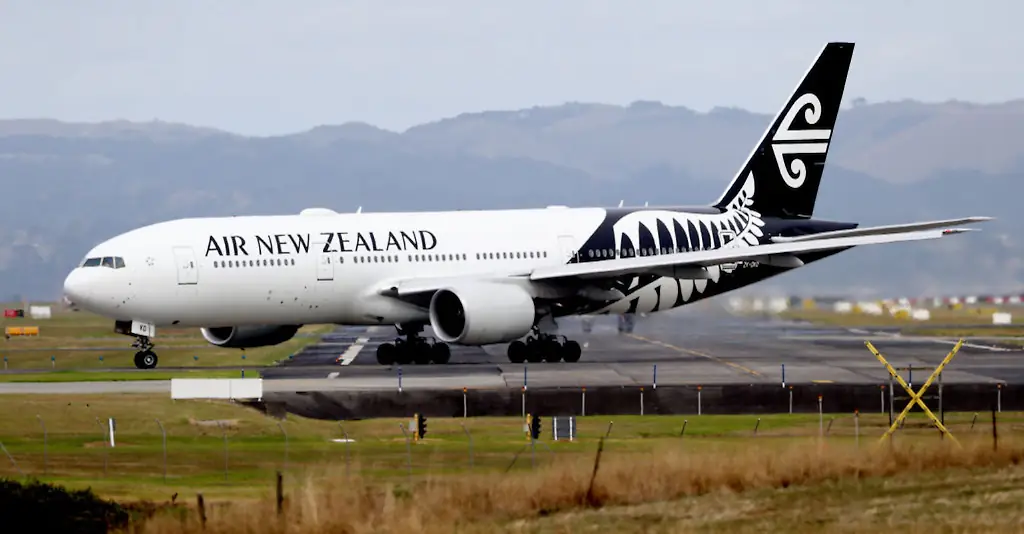
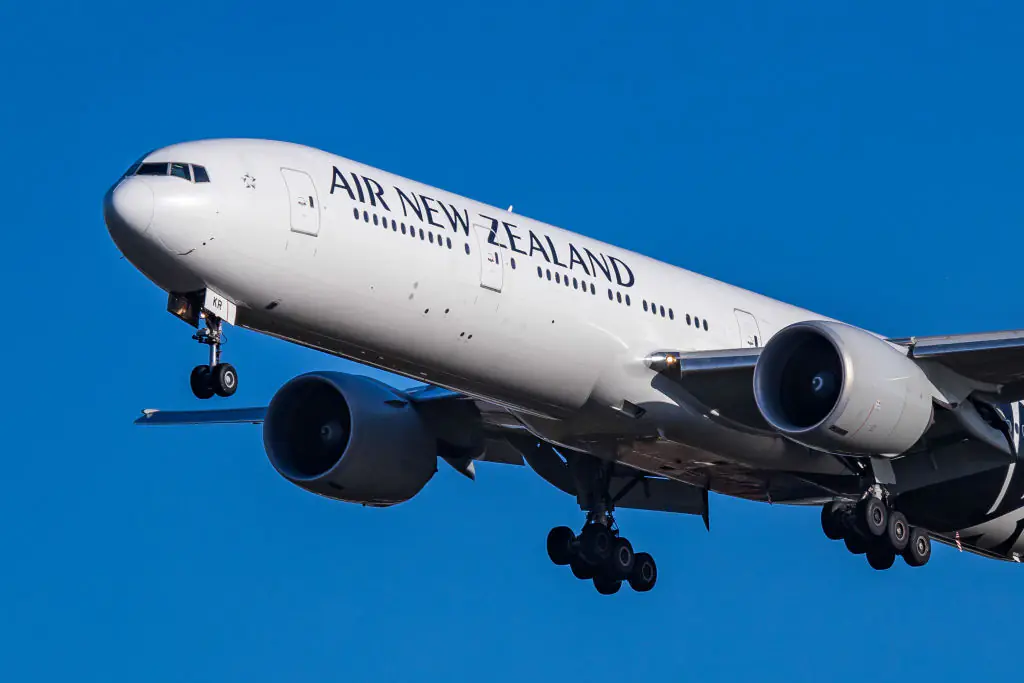
German-born Niko and his girlfriend Sasha embarked on a seven-hour journey from Bali to Auckland, New Zealand, in April, flying via Air New Zealand. However, just 30 minutes into the flight, as the plane hit turbulent air, tragedy struck.
Niko, walking back to his seat from the restroom, described the moment the plane "dropped," resulting in his leg "snapping in half." His friend informed The New Zealand Herald that the 47-year-old sustained a fractured tibia and fibula.
Despite apologies from the pilot, Niko was left to suffer until landing, with only Panadol (aka Tylenol or paracetamol) available to alleviate his pain. Passengers were asked to vacate their seats so Niko could lie down for the remainder of the flight.
After landing at Auckland's international terminal, paramedics swiftly attended to Niko. A spokesperson from Hato Hone St John confirmed the incident, stating they had responded to a turbulence-related injury.
Air New Zealand confirmed the occurrence, attributing it to sudden "clear air turbulence," which pilots cannot anticipate in cloudless areas.
Captain David Morgan, the airline's Chief Operational Integrity and Safety Officer, assured that no other injuries were reported, per News.com.au.
Turbulence, although nothing to worry about normally, has proven to be fatal before.
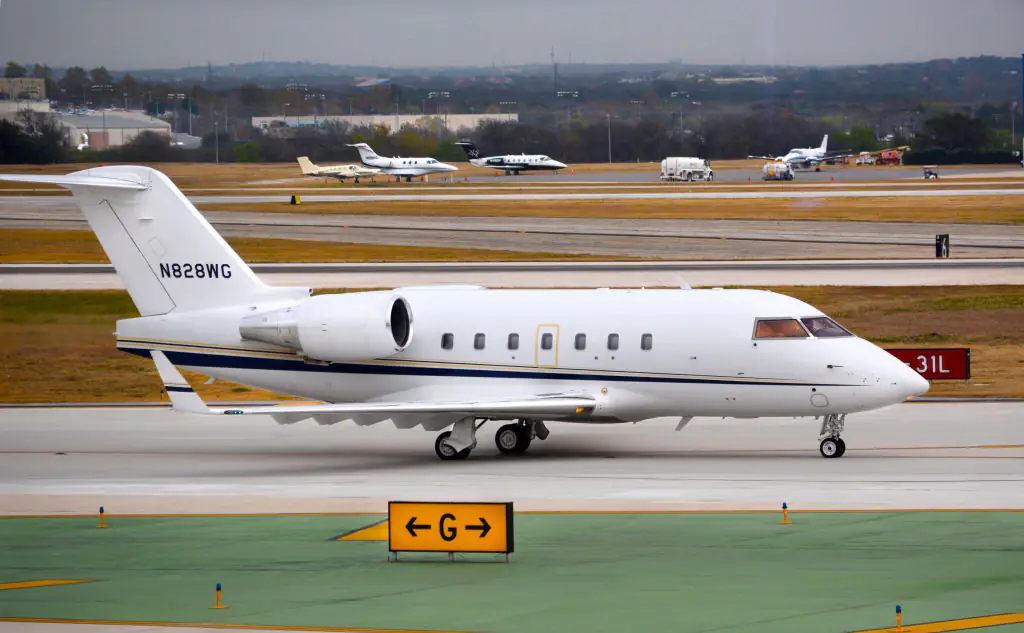
In March 2023, Dana J. Hyde, 55, who served in both the Clinton and Obama administrations, lost her life after a private business jet she was aboard encountered severe turbulence.
The private jet, owned by Conexon, a company specializing in expanding high-speed internet service to rural communities and led by Hyde's husband, Jonathan Chambers, was en route from Keene, New Hampshire, to Leesburg, Virginia, before diverting to Bradley International Airport.
According to flight data reported by The Daily Mail, the jet took off around 3:35 PM and quickly reached an altitude of 26,000 feet before encountering turbulence and landing approximately 10 minutes later.
Abby Carere, a spokesperson for Conexon, confirmed the ownership of the aircraft and Hyde's relationship with Chambers. Fortunately, Chambers and his son, also onboard, escaped injury.
Turbulence, though common, rarely results in injury or death. Pilots utilize technology to navigate away from stormy areas, activating seatbelt signs when necessary for passenger safety.
The Federal Aviation Authority recorded no deaths from turbulence between 2009 and 2020, with only 30 reported serious injuries.
uncategorised1 min(s) read
world3 min(s) read
Following the events on a Singapore Airlines flight that saw a man lose his life after severe turbulence, people have vowed never to fly on a Boeing plane ever again.
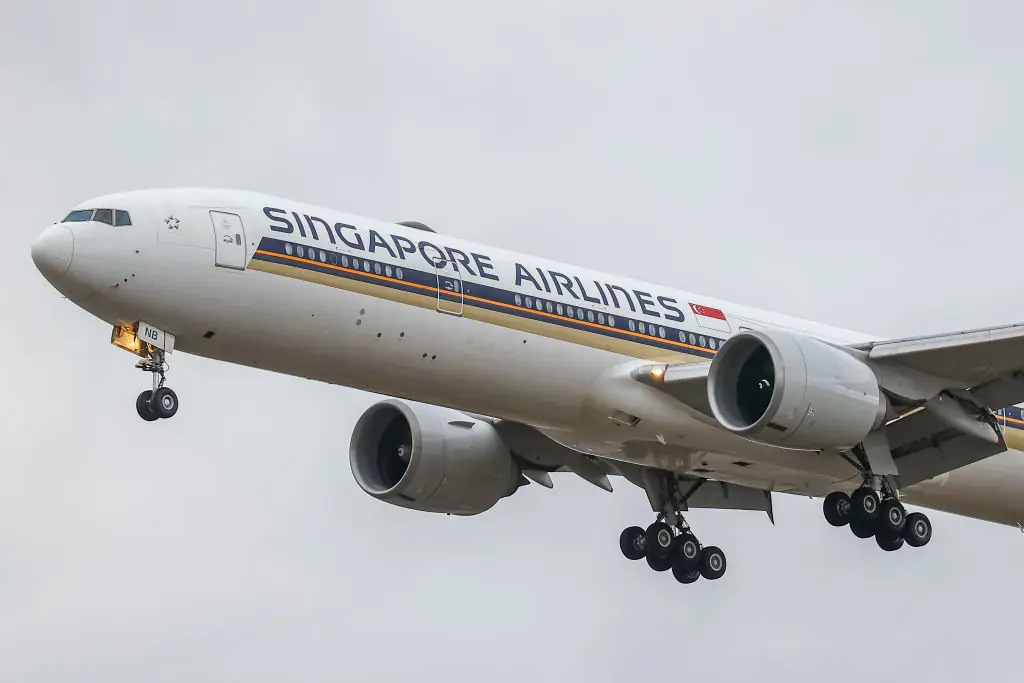
The most recent disaster for the airline company occurred when a Boeing 777 aircraft, en route from London to Singapore, encountered an air pocket and plummeted 6,000 feet in just five minutes.
The sudden descent caused chaos on board, forcing an emergency landing at Bangkok's Suvarnabhumi Airport.
Passengers aboard the flight shared footage of the cabin in disarray, with items strewn across the floor.
Geoffrey Kitchen, 73, tragically died, possibly from a heart attack. Of the 211 passengers, including 56 Australians, 47 Britons, and four Americans, 143 continued to Singapore on a relief flight.
Seventy-nine passengers and six crew members stayed in Bangkok, including those receiving medical care.
Singapore Airlines CEO Goh Choon Phong expressed condolences and assured cooperation with the investigation. "On behalf of Singapore Airlines, I would like to express my deepest condolences to the family and loved ones of the deceased passenger.
"We also deeply apologize for the trauma experienced by all passengers and crew members on this flight. We are providing all possible assistance and support to them, along with their families and loved ones, during this difficult time. The wellbeing of our passengers and staff is our utmost priority."
In response to this incident, many flyers have vowed to avoid Boeing jets, citing a series of well-publicized safety issues involving the manufacturer’s planes.
One X user declared: "Never flying another Boeing plane. If it's Boeing, I'm not going," while another wrote: "Boycott Boeing. I am never flying in a Boeing made airline again."
Another user added: "Bro at this point I’m never flying on Boeing plan again I refuse to gamble with my life this."
While Boeing is under scrutiny for the safety of their planes, they've also received attention after two whistleblowers lost their lives.
Joshua Dean, a former quality auditor at Spirit AeroSystems, a key supplier for Boeing, died of a "sudden illness" after exposing defects in 737 Max jets.
Dean had been terminated from Spirit AeroSystems in April 2023, a dismissal he attributed to his questioning of safety standards.
His concerns gained wider attention when he spoke with NPR earlier this year, emphasizing the repercussions of raising safety issues. "I think they were sending out a message to anybody else. If you are too loud, we will silence you," Dean stated.
Dean was represented by the same legal team assisting John Barnett, another Boeing whistleblower, until Barnett's death in March.
Barnett, 62, was found dead in a hotel car park, reportedly having taken his own life just before he was scheduled to testify in a lawsuit against his former employer.
world3 min(s) read
A mother whose son was aboard Singapore Airlines flight SQ321 from London to Singapore has revealed the terrifying text message she received as the plane encountered extreme turbulence.
As previously reported, over 70 people were injured and one man tragically died when the flight hit severe and unexpected turbulence.
Footage from inside the plane showed the chaotic aftermath with debris scattered all around the floor of the cabin after the aircraft suddenly dropped around 6,000 feet during a meal service.
One mother, whose son was on board, has shared the chilling message he sent her before the plane made an emergency landing in Bangkok.
Allison Barker, whose son Josh Barker was among the 211 passengers on board, revealed that he'd sent a panic-stricken text message from the air.
The turbulence occurred around 10 hours into the flight, and he managed to send a single text message to his mother, reading: "I don’t want to scare you, but I’m on a crazy flight. The plane is making an emergency landing … I love you all."
Alison told the BBC that receiving such a message was "petrifying", adding: "It was terrifying. I didn’t know what was going on."
They then had an agonizing wait to see if their son, who had been on his way to Bali via Singapore, was OK.
She added: "We didn’t know whether he’d survived, it was so nerve-wracking. It was the longest two hours of my life. It was awful; it was petrifying."
While Josh was thankfully alive, Allison revealed that he is in "a lot of pain" after having sustained injuries to his teeth, and she fears he will be left with lasting trauma from the scary incident.
Tragically, 73-year-old Geoff Kitchen died after the incident, with preliminary reports claiming he suffered a heart attack on board.
Over 70 others were injured and several needed medical attention after the plane suddenly dropped around 6,000 feet in altitude, causing items to be thrown around the cabin.
Pictures and videos from inside the plane showed the cabin in disarray and a flight attendant appearing to have a bloody nose.
The plane was forced to make an emergency landing in Bangkok where those that needed medical attention were taken to hospital, while others were taken to Singapore on a relief flight.
The plane, which was heading to Singapore, had 211 passengers on board, including 56 from Australia, 47 from the UK, and four from the United States, as well as 18 crew.
The flight, which took off from London's Heathrow Airport at 10.17PM local time on Monday, encountered "sudden severe turbulence" over the Irrawaddy Basin in Myanmar at an altitude of 37,000 feet, around 10 hours into its journey and in the middle of meal service.
The area in which the plane was flying at the time, the Intertropical Convergence Zone, an area near the equator, is also known for turbulence due to many storms in the area.