Uncategorised3 min(s) read
celebrity2 min(s) read
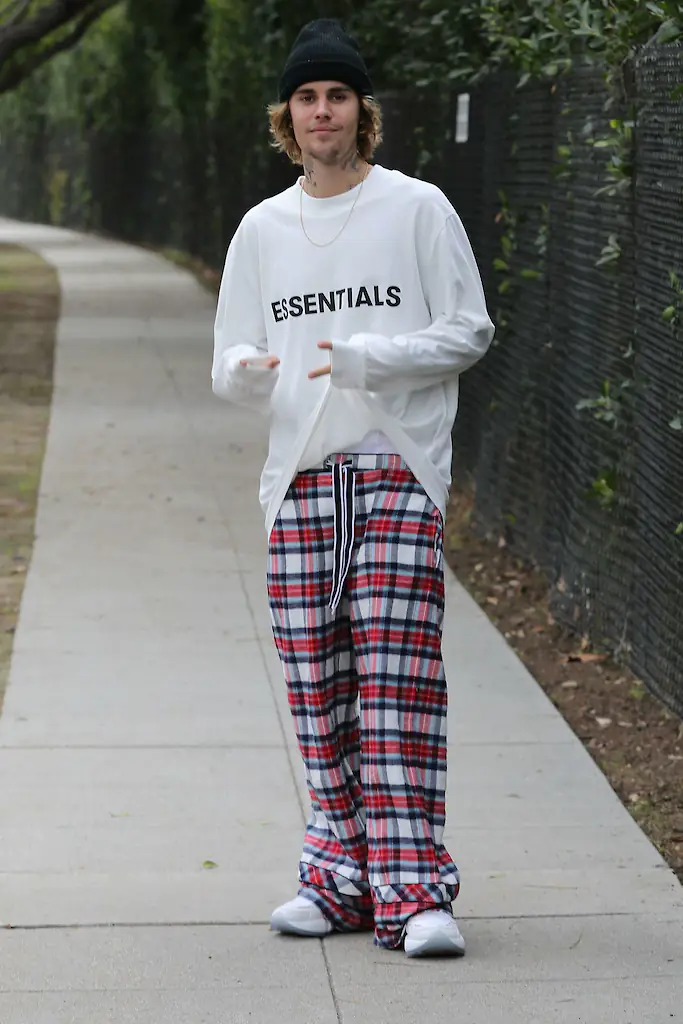
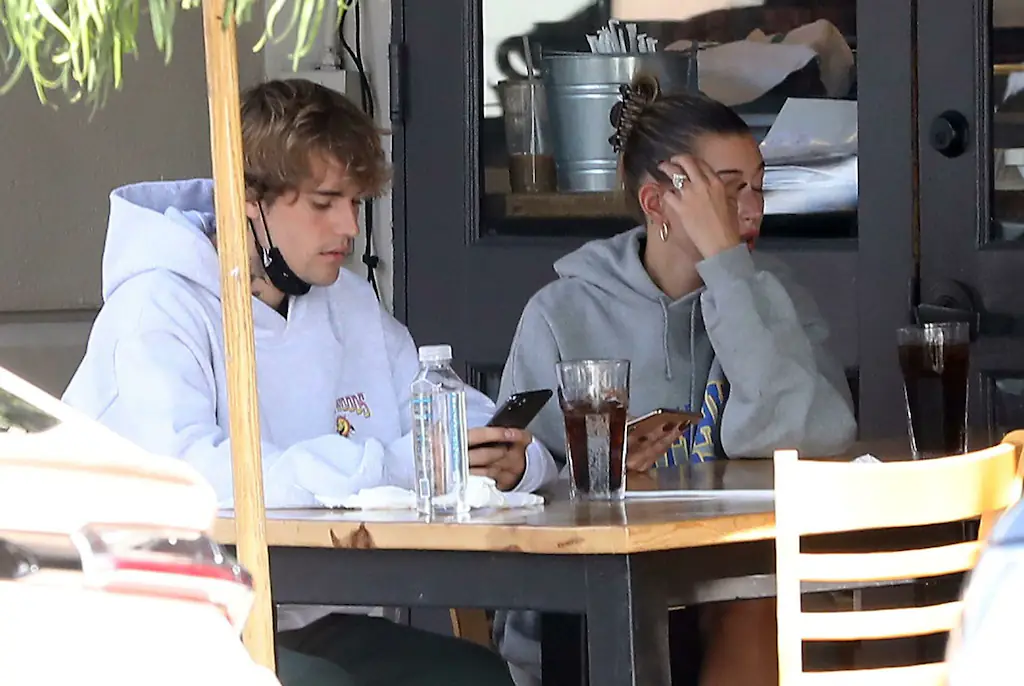
Justin Bieber has opened up about the height of his life-threatening drug addiction.
In a very candid interview with GQ Magazine, Bieber, who graced the magazine's May issue, spoke openly about how his security guards would check he was still alive as he slept as his drug habit became increasingly severe.
According to the 'Yummy' singer, at night, his team even made a habit of checking his pulse.
Bieber explained: "There was a sense of still yearning for more. It was like I had all this success and it was still like: I’m still sad, and I’m still in pain."
The 27-year-old chart-topper added: "And I still have these unresolved issues. And I thought all the success was going to make everything good. And so for me, the drugs were a numbing agent to just continue to get through."
He also told the magazine: "I was surrounded by a lot of people, and we were all kind of just escaping our real life. I think we just weren’t living in reality... I think it would have probably resulted in just a lot of doing drugs and being posted up, to be honest."
The singer explained that his past demons had made the first year of his marriage to Hailey Baldwin extremely challenging, with the singer recalling how the couple have had to overcome a "lack of trust"
Bieber married the supermodel, 24, in a secret ceremony in New York in 2018. The pair went on to exchange vows in a formal ceremony in South Carolina in September 2019.
Last year, Bieber also spoke about his struggles with addiction on his YouTube documentary, the Justin Bieber: Sessions.
Per NME, he revealed that he first tried marijuana at the age of 13, and later became addicted to stronger substances.
He said: "I was, like, dying. People don’t know how serious it got It was legit, crazy scary.
"I basically said to myself, ‘God, if you are real, you get me through this season of stopping these pills and stuff, and if you do, I’ll do the rest of the work.’ I never did the actual work.
"I got off the pills but never went to the root of everything so I just circled back around which most people do."
health1 min(s) read
If you haven't had a chance to see Queer Eye yet, do yourself a favour and check it out. While it may look from the outside like just another makeover show where a few tears are shed and someone gets a new haircut, this show has something really special about it.
The magic ingredients comes from the Fab Five, who each bring their own unique personality to the table alongside their specialist skills.
[[instagramwidget||https://www.instagram.com/p/BqK8NqoHHR2/]]
Karamo Brown, their resident lifestyle and culture expert, often ends up giving people advice on how to deal with self-esteem and confidence issues.
Yet sometimes those with the best advice had to learn those lessons the hard way.
[[twitterwidget||https://twitter.com/people/status/1103507567303671808]]
Last August, Brown shared a video to Instagram in which he spoke about mental health. While this isn't unusual for his social media output, this video went to a much darker place, as he revealed that in 2006 he attempted suicide.
"I know so many of us suffer from mental health issues and we just don't know where to turn," he said in the video. "I want you to know that things do get better."
[[instagramwidget||https://www.instagram.com/p/BnHPAAqA9Vr/?hl=en]]
This week, Karamo has opened up about another dark time in his life, during which he was addicted to cocaine. Speaking to People Magazine, he explained how his recreational use escalated to the point he was using it as an "escape," sometimes even multiple times a day.
"Cocaine became my escape. I went to a place where I was using this drug and using it like early in the morning, in the evening," he recently told People Magazine. He continued:
"There was a point where I had my ATM set for fast cash for an eighth of cocaine. I would give my card to this strange dealer, I didn't even know his last name, so that he could go to the ATM for me and get cocaine.
"He could have robbed me blind. That was a low point, where I was like, ‘How could you embarrass yourself?’"
[[instagramwidget||https://www.instagram.com/p/Btgc2bjgjQ7/]]
Karamo goes on to explain a particularly painful memory from one New Year's Eve. Sharing a car with his mother (who knew about his addiction), with her in the front and him in the backseat, he used.
"I was doing cocaine while she was in the front seat, and the look on her face - of hurt and pain. I put my family through that, but I had to forgive myself. Because going through that allows me to talk to people who have addictions and say 'I know what you're going through'.
"It allows me to talk to family members who are dealing with someone with an addiction, and whether it's drugs, alcohol, food, exercise, porn... there's so many addictions. I can speak to that and say 'you can grow through this and heal from it'."
[[instagramwidget||https://www.instagram.com/p/BuTpLzVAGV-/]]
Since he's gotten clean and worked through his own issues, Karamo has sought to give back to the world.
In recent years he has acted as the wellness ambassador for the National Black Justice Coalition, and co-founded 6in10, an organisation that works to fight stigma about HIV and provides mental health support and HIV education to the black LGBT community.
He will be in Queer Eye once again for their third season, which is set to premiere on Netflix on March 15.
lifestyle4 min(s) read
One woman has shared her inspirational story on how she transformed herself from a jailed meth addict to a graduate of the University of Washington.
Last month, 48-year-old Ginny Burton shared a side-by-side post showing her 2005 mugshot next to a picture taken of her smiling on her graduation day. Burton captioned the Facebook post: "How about that for motivation?
"I honestly thought I'd die on a park bench with a needle in my arm or by gunshot to the head. I would've never in a million years thought my life would look the way it does today.
"Stop selling yourself short. You don't know what tomorrow might bring so you might consider starting today."
Ginny's post quickly amassed over 7,000 shares on the social media platform, and her inspirational story has now gone viral.
Speaking to ABC News affiliate KATU, Ginny told reporter Eric Johnson that she was born in Tacoma in 1972 as one of seven children. Her mother suffered from mental illness, and was also a drug dealer and addict.
When Ginny was four years old, her father was sent to prison for a number of armed robberies.
At six years old, her mother introduced her to marijuana. At 12 years old, she started using meth. At 14, she was smoking crack.
When she was 16, she was raped by a man who bought drugs from her mother. At 17, she attempted to take her own life for the first of many times.
By the age of 23, Ginny had two children and had married into an abusive relationship. She was also a heroin addict.
Speaking to KATU, Ginny said of her past life: "I am that person. I have 17 felony convictions. I am the person you used to clutch your bag when I walked by you. I am the person that would randomly attack somebody in public. I was not a savory person. Everybody was a victim, and everybody was prey."
Her last prison stay was in 2008 and lasted 33 months. After reaching the point where she would rather be dead than alive, Ginny revealed that each of the three times she went to state prison, she was given the chance to get clean and think about how she wanted to turn her life around.
However, Ginny didn't have to tools or support network to make this a reality, and she would quickly fall back into using drugs.
Ginny then credits December 5, 2012, as the day her life changed for the better.
Sitting in the back of a police car, Ginny had just been arrested after crashing a stolen truck.
After her charges were transferred to King County, Ginny begged to be placed into a Drug Diversion Court program. Fortunately, she received a treatment program at the Regional Justice Center and hasn't looked back.
Over the next seven years, Ginny went on to carry out social service work for the Post Prison Education Program and at a men's shelter called Lazarus.
She then started school, attending classes at South Seattle College.
Ginny says that being in classes surrounded by people much younger than her made her recognize how much time she had wasted in her life. Not only that, but she also realized that she was actually good at learning and enjoyed it.
A few years ago, Ginny was accepted into the University of Washington and in 2019, she was awarded a Martin Honor Scholarship to study political science.
During her time at university, Ginny excelled, becoming the 2020 Truman Scholar for the state of Washington.
Now, Ginny plans on using her degree to change the prison system so that addicts are supported while on the inside.
For now, Ginny's story is proof that hope is not lost on anybody, and that redemption and success are achievable for anyone.
Writing on Facebook, Ginny later posted: "Most of my journey was not graceful, however, it has been beautiful and TREMENDOUSLY painful. But, I would not change a moment of it. This is just the beginning for me. I share openly so others know there is hope for them to change."
She continued: "I am so grateful for where I am today. I was lucky enough to become involved with a non-profit that helped me not have to go to prison the 4th time and they stood beside me as I clawed my way out of my past. [...[ Sometimes that is all it took, a section of folks to tell me I am doing the right thing and to keep going."
uncategorised3 min(s) read
"What started the relapse [this time] was missing Wilmer. That's one of the reasons why we broke up — was because I've never been alone. When I was in a relationship with Wilmer, I went three years without purging."
The sparks never faded. But there are issues that I haven't conquered yet that I know I won't conquer if I'm relying on somebody else to take care of the loneliness. I just wasn't ready and there was so much in my life that I hadn't explored yet."
As everyone knows, the road to recovery is not easy. However, the mental health warrior has made a lot of progress, and her fans are very supportive. One of them posted a side-by-side photo, juxtaposing the old Demi Lovato with what she looks like today. Over the past seven years, she's made a dramatic transformation: [[instagramwidget||https://www.instagram.com/p/BaXIWTnBnID/]] Can you believe how much healthier she looks? Congratulations to Demi for seeking help and changing her lifestyle. It might be obvious to us the old Demi looks unhealthy, but it's not obvious to people who suffer from body image issues. The caption reads "More confident," which is perfect. Once you're comfortable with your body, you're a lot happier. Demi shared her fan's photo on her Instagram stories, adding the message "Recovery is possible." Remember to seek help if you have mental health issues. You can check out Simply Complicated below: [[youtubewidget||https://www.youtube.com/watch?v=ZWTlL_w8cRA]]