


Health3 min(s) read
Average penis size revealed with study suggesting men overestimate their measurements

Men have a reputation for embellishing the truth when it comes to their manhood, but research suggests the gap between perception and reality could be bigger than many realize.
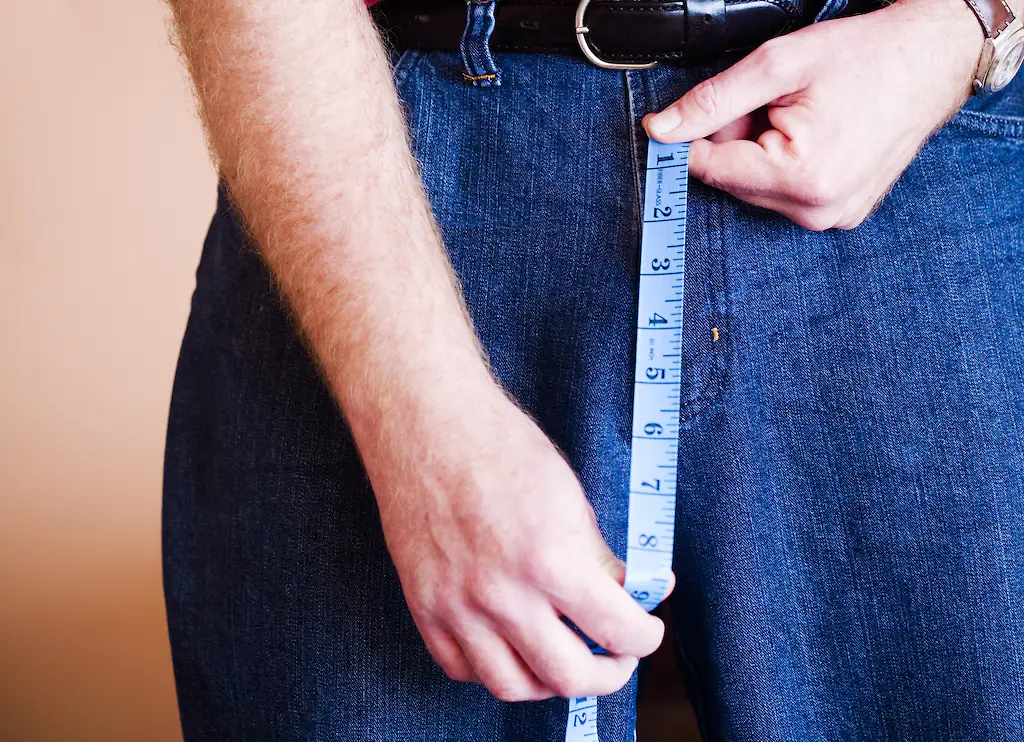
One study found that men exaggerate the length of their penis by approximately 20%, despite medical reviews having found that the typical flaccid penis is around 3.63 inches long and 3.58 inches in circumference when measured by a healthcare professional.
When fully erect, the average length increases to approximately 5.45 inches, with a circumference of around 4.69 inches.
Men's misconception of penis size
If those figures are much lower than you anticipated, you're certainly not alone, with sex and couples therapist Vanessa Cushing telling The New York Post that many men have a rather different idea of what constitutes an average measurement.
“In therapy, we frequently see that men believe the true ‘average’ is much larger, often around 6½ to 7 inches,” she claimed.
Cushing believes social expectations and the way masculinity is portrayed play a major role in creating these particular misconceptions among both men and women.
“Men often overestimate or exaggerate because our culture closely links penis size to masculinity, worth and the ability to give pleasure,” she explained.
According to the therapist, unrealistic portrayals of sex and the human body can leave men comparing themselves against standards that are far removed from reality.
“When the main sources of education [are] mainstream pornography, locker-room bragging or pop culture, men are comparing themselves to extreme outliers,” she said.
“This creates a widespread sense of inadequacy, often leading to performance anxiety or penile dysmorphic disorder, where men believe their entirely normal bodies are flawed.”
And dissatisfaction with penis size is far from unusual, and as per a 2019 survey, of 4,109 men in the US, it found that approximately 26.4% were unhappy with their measurements, with the issue certainly not just confined to the US, either.
A 2015 survey involving 15,521 men from around the world found that just 55% were satisfied with the size of their penis.
However, the psychological impact of these concerns can extend well beyond feeling embarrassed or inadequate.
Research has linked penile dysmorphic disorder and anxiety surrounding penis size with higher rates of erectile dysfunction and lower levels of intercourse satisfaction.
These difficulties were found to be more common among men preoccupied with their measurements than those without similar concerns.
While popular culture often portrays a larger penis as a symbol of masculinity, power and sexual ability, research suggests women may not attach nearly as much importance to size as men assume.
One study found that around 85% of women were satisfied with their partner's penis size, but in comparison, 45% of men said they would prefer to have a larger penis.
Expert advice on penis insecurity

For those who feel insecure about their measurements, Cushing shared several recommendations that she regularly discusses with patients.
Her first suggestion is to concentrate on anatomy rather than penetration depth.
“The majority of sensitive nerve endings in the vagina (including the internal clitoral network) are located within the first 2 to 3 inches,” she explained.
“Real pleasure is built on arousal, communication and emotional presence, not length.”
She also recommends taking a closer look at the media people consume, particularly content that encourages unrealistic comparisons.
“Take a conscious step back from media that triggers body shame,” Cushing advised.
“Realizing that adult entertainment casts performers specifically for extreme traits can help reset realistic expectations.”
Finally, she encourages men to move away from treating intimacy as a test of their physical abilities and focus instead on the experience they share with their partner.
“Practice focusing on overall sensory touch rather than treating intimacy like a physical test to pass,” she urged.