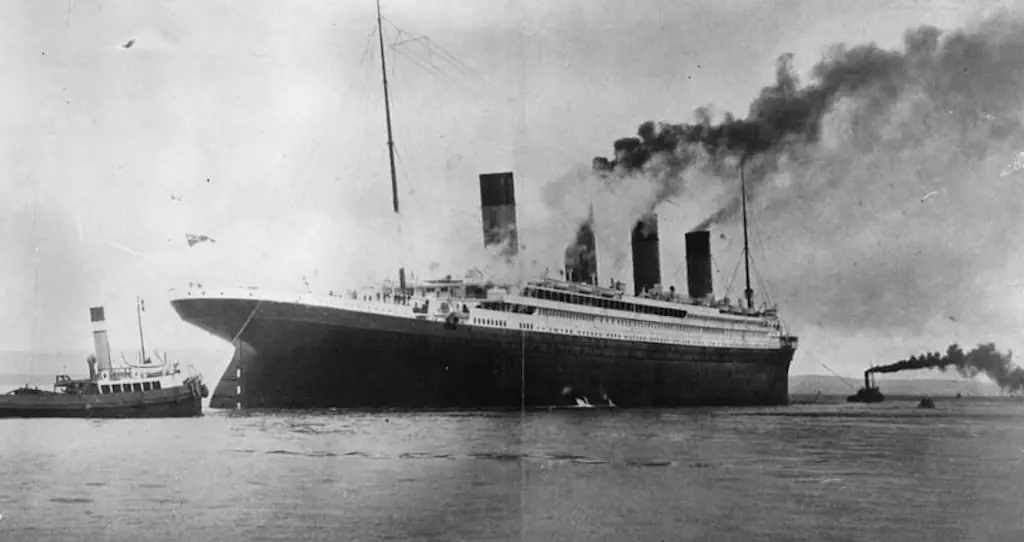
More than 100 years after the first iteration plunged into the icy depths of the Atlantic, another Titanic is set to sail the seas, and let's hope this one is able to complete its journey.
Back in April 1912, the Titanic set out to cross the Atlantic Ocean, going from Southampton, England, to New York City, but only got through four days of its voyage before the so-called unsinkable ship hit an iceberg and sank.
Blue Star Line, the company behind the plans, say that work on the liner was suspended in 2015 following a dispute with a Chinese conglomerate, but those plans are back operational now, and a second Titanic is hopefully going to succeed where the previous Titanic failed.
[[imagecaption|| Credit: Getty]]
According to a statement from Clive Palmer, Chairman of Blue Star Line, Titanic II is set to be even more luxurious than the first, confirming it would initially follow the same path as its doomed predecessor:
"Blue Star Line will create an authentic Titanic experience, providing passengers with a ship that has the same interiors and cabin layout as the original vessel, while integrating modern safety procedures, navigation methods and 21st century technology to produce the highest level of luxurious comfort.
"Titanic II is a unique project that will generate unprecedented international exposure and public interest. The ship will follow the original journey, carrying passengers from Southampton to New York, but she will also circumnavigate the globe, inspiring and enchanting people while attracting unrivalled attention, intrigue and mystery in every port she visits."
Take a look inside the new Titanic II - it looks just like the original:
The successor has been designed as somewhat of a love letter to the doomed original, with the layout and interior inspired by the original Titanic. It will even have a near identical version of the ship’s grand staircase - made famous in the 1997 film as Leonardo DiCaprio, aka Jack, waited patiently for Kate Winslet, who played Rose, at the top.
The new Titanic is expected to ferry 2,400 passengers across the Atlantic, and has been in the works for nearly a decade. Work first started on it in 2012, but it's expected to set sail at some point in 2022. Hopefully, it does a bit better than the first one.
In April 1912, the Titanic set sail on its maiden voyage. Barely five days into its journey, however, it hit an iceberg and sank, killing more than 1500 passengers and crew. Once hailed as an unsinkable vessel, the Titanic has since gone on to become one of the greatest tragedies of modern history, with people around the world sharing the awful story.
But that's not quite where the story ends.
This week, it was revealed that Blue Star Line, a passenger ship company, has plans to build an exact replica of the 1912 ship, and that it will make its first trip in 2022 - 110 years after the original Titanic disaster.
[[imagecaption|| Credit: Getty]]
Set to be named the Titanic II, the ocean liner will carry almost exactly the same number of passengers (2,400) and crew (900) as the original model - but will have a number of additional features. Unlike the original ship, this vessel will have enough lifeboats to hold everybody, and will obviously be updated with all the most up-to-date technology to ensure the utmost comfort and safety for its passengers.
The plan to build the ship has actually been going on for many years, but was halted back in 2015 due to some "financial disagreements". If it had gone ahead as intended, we should have actually seen the completed replica make its debut in 2016.
As well as looking the same as its former iteration, the Titanic II will make the same journey as the 1912 version (hopefully encountering fewer icebergs along the way). This time around, however, it will set sail from Dubai before making its way on to Southampton, England, and then it'll make the infamous trip to New York.
But that's not the only place it'll be going.
[[imagecaption|| Credit: Getty]]
"The ship will follow the original journey, carrying passengers from Southampton to New York, but she will also circumnavigate the globe, inspiring and enchanting people while attracting unrivaled attention, intrigue and mystery in every port she visits," said the Blue Star Line’s chairman, Clive Palmer.
And with the project costing $500 million in total, it almost certainly will be a sight to behold - but there's no word on how much tickets will cost yet, nor when they're set to be released.
Even despite its tragic past, the ship is expected to be a popular attraction for travellers all over the globe, many of whom will no doubt want to recreate some of the scenes from the classic 1997 movie (though hopefully there won't be too many people flocking to have their own steamy romance moment in one of the cars).
[[imagecaption|| Credit: Getty]]
Of course, many others will be put off by the fate of the original ocean-liner - but they need not worry. Every effort has been made to ensure that the 21st-century version of the ship is equipped to take on the oceans, and the designers of the vessel have certainly made from the mistakes of their predecessors.
So, if you want to have your own "king of the world" moment on the Titanic II, keep an eye out for tickets in the near future.
The first-ever full 3D scan of the Titanic has been released and it shows the historic passenger liner in a way that we've never seen it before.
As many of you will know, The Titanic is one of the most famous ships to ever set sail. The ill-fated passenger liner first made its maiden voyage from Southampton on April 10, 1912, with 2,240 passengers and crew onboard the state-of-the-art vessel.
Tragically, just five days later as the ship sailed across the North Atlantic Ocean, it struck an iceberg which resulted in the Titanic breaking in half and sinking to the depths, as per the National Oceanic and Atmospheric Administration.
Of those onboard, more than 1500 people sadly lost their lives before the Titanic could reach its intended destination of New York City.
The ship is resting around 350 nautical miles off the coast of Newfoundland, Canada - and is at a depth of around 12,000 feet.
There have been attempts to salvage some elements of the Titanic but it would be impossible to bring it to the surface intact, so the decision was made to leave it in its final resting place.
For decades people have been intrigued by the Titanic, made even more famous by the movie featuring a young Leonardo Di Caprio and Kate Winslet.
In fact, the movie's director, James Cameron, has spent so much time around the wreckage that he has actually been around the vessel longer than those who were on board it during its voyage, per CBC.
New state-of-the-art technology has produced 3D scans of the ship so now we can see the impressive remains as if it were sitting on dry land.
As reported by the BBC, the mapping of the Titanic was carried out by Magellan Ltd, a deep-sea mapping company, and Atlantic Productions, who are shooting a documentary about the new findings.
They took over 700,000 images from every possible angle, using remote-controlled submersibles to give an in-depth 3D model of the vessel.
The ship lies in two parts, with the bow and stern separated by around 2600 feet. It is also surrounded by debris.
Magellan's Gerhard Seiffert, the leader of the group, said that this was the biggest underwater project that he had ever taken on.
"The depth of it, almost 4,000m, represents a challenge, and you have currents at the site, too - and we're not allowed to touch anything so as not to damage the wreck," he said.
"The other challenge is that you have to map every square centimeter - even uninteresting parts, like on the debris field you have to map mud, but you need this to fill in between all these interesting objects."
While some of the ship has been ravaged by time and the elements, the front is still recognizable and there are even details still viewable such as serial numbers on parts of the propellers.
Parks Stephenson, who has studied the ship for many years, stated that these new images may be able to tell us more about the night that the Titanic sank.
He explained: "We really don't understand the character of the collision with the iceberg. We don't even know if she hit it along the starboard side, as is shown in all the movies - she might have grounded on the iceberg."
While the condition of the Titanic continues to deteriorate at the bottom of the ocean, these new images will give experts more of an opportunity to study them in depth so we can really know the finer details of one of the most famous catastrophes in history.
The story of the ill-fated Titanic has become a legend. It was the grandest and largest ocean liner of its day when it set sail from Southampton on April 10th, 1912. Built in Belfast by Harland and Wolff, the ship had a watertight compartment system that caused many to believe it was unsinkable.
[post_page_title]The True Story Of The Titanic[/post_page_title]
As we all know, the Titanic wasn't unsinkable. The tragedy which unfolded on the Atlantic ocean just five days after the ship set sail was the greatest maritime disaster in history. However, there's still a lot of unbelievable facts about the Titanic that people don't know!
The Titanic disaster claimed the lives of 1,517 people. Only 706 survived. But what makes the disaster even more shocking is the fact that Titanic wasn't full on her maiden voyage. She had the capacity to hold 3,547 passengers and crew, but only set sail with 2,223. It's a good thing that she did. Otherwise, over a thousand more would have perished.
Titanic's designer, Thomas Andrews, had planned for the ship to carry 48 lifeboats. But the number was reduced to just 20 boats so that there was more deck space - despite the fact that the ship could have held 64 boats, more than enough for her maximum capacity. It was a cosmetic decision that cost the lives of more than half of the passengers.
[[imagecaption|| Credit: 20th Century Fox]]
[[pagebreak]]
[post_page_title]Famous People Didn't Sail[/post_page_title]
One of the most famous people who didn't sail onboard the Titanic was Milton Hershey. As you can probably guess from his surname, he was the creator of the chocolate bar that we've all came to know and love. He was asked to return to America early and left England three days before Titanic set sail on another liner called the America.
[[imagecaption|| Credit: 20th Century Fox]]
[[pagebreak]]
[post_page_title]Only One Child In First-Class Died[/post_page_title]
Many steerage passengers died because they had to travel further up the ship to get to the lifeboats. They were kept in separate quarters from the rich because there were a number of nationalities on board, and, under immigration law, they had to be separated to prevent the spread of infectious diseases. Only one first-class child died during the sinking, all second-class children survived, but only 25 of the 80 third class children survived.
[[imagecaption|| Credit: 20th Century Fox]]
[[pagebreak]]
[post_page_title]Hundreds More Could Have Lived[/post_page_title]
The people who got onto the lifeboats first were very brave because they were leaving the safety of a ship to go onto a small raft. When the officers began to load the lifeboats, many people believed the Titanic wasn't going to sink. The officers who were in charge of loading up the boats were also frightened that if they put too many people into them, they might sink.
A lifeboat drill was scheduled for April 14th, however, it was canceled at the last minute for reasons we'll never know. On top of underfilling the boats, another fatal mistake was that the two collapsible lifeboats weren't properly launched. If the drill had taken place, this information would have been fresh in the officer's minds.
[[imagecaption|| Credit: 20th Century Fox]]
[[pagebreak]]
[post_page_title]No Binoculars[/post_page_title]
There were no binoculars on the crow's nest on the Titanic. The night of April 14 was a famously clear one, and if Fleet had binoculars there's no doubt the iceberg would have been spotted sooner. The officer who'd been on the shift before Fleet, David Blair, simply forgot to give him the key to the box which contained them.
[[imagecaption|| Credit: 20th Century Fox]]
[[pagebreak]]
[post_page_title]Ice Warnings[/post_page_title]
The day she sank, the Titanic received no less than six ice warnings. These were all ignored. The wireless operator was too busy sending out passengers' messages. If they'd been heeded, there's no way that Fleet wouldn't have had binoculars.
[[imagecaption|| Credit: 20th Century Fox]]
[[pagebreak]]
[post_page_title]Poor Materials[/post_page_title]
Research has shown that Harland and Wolff were struggling to find enough skilled riveters to build Titanic and enough good quality rivets. To complete the project, they had no option but to use substandard rivets and riveters. If better materials and more skilled tradesmen had been used, Titanic may have survived her collision with the iceberg.
[[imagecaption|| Credit: 20th Century Fox]]
[[pagebreak]]
[post_page_title]A Fire[/post_page_title]
There was a fire on board the ship. Whilst attempts were made to extinguish it, they were ultimately unsuccessful, and it was kept a secret from passengers and crew alike. "We have experts telling us that when you get that level of temperature against steel it makes it brittle, and reduces its strength by up to 75 percent," journalist Senan Malony said.
[[imagecaption|| Credit: 20th Century Fox]]
[[pagebreak]]
[post_page_title]Speed[/post_page_title]
If the Titanic had been going slower, that 37 second impact time would have been a lot longer. Even if she'd still hit the iceberg, if she'd been going at a slower pace, the damage it would have caused to the ship's hull wouldn't have been anywhere near as bad. As you can tell by now, the perfect storm was brewing onboard the world's grandest ship.
[[imagecaption|| Credit: 20th Century Fox]]
[[pagebreak]]
[post_page_title]Wrong Turn[/post_page_title]
Trying to avoid the iceberg was the wrong choice, but the crew was obviously panicking, and it does seem like a logical decision to make. If the Titanic had hit the berg head-on, she wouldn't have suffered as much damage. She would have stayed afloat for longer, allowing ample time for the Carpathia to come to her rescue.
[[imagecaption|| Credit: 20th Century Fox]]
[[pagebreak]]
[post_page_title]The Bulkheads[/post_page_title]
The bulkheads - whilst an innovative design - could overflow into the rest of the ship if damage was sustained to more than two of them. So these compartments weren't watertight at all. As the iceberg hit the side of the ship, too much damage had been done for them to be effective. The unsinkable design really wasn't unsinkable.
[[imagecaption|| Credit: 20th Century Fox]]
[[pagebreak]]
[post_page_title]People Were Calm[/post_page_title]
Everyone on board was relatively calm. This probably contributed to the reluctance of passengers to board the lifeboats when they were launched. Historians who have analyzed the event have compared it to similar sinkings and reached the conclusion that the people were calm because the ship took so long to sink. As a result, panic did not set in until near the end.
The Californian was arguably close enough to the Titanic on the night of the sinking to save everyone onboard. However, it didn't answer the ship's distress calls, or the flares it sent off into the night sky. Another lesser-known fact about this part of the sinking was that Titanic was the first ship in history to use the SOS signal but to no avail...
[[imagecaption|| Credit: 20th Century Fox]]
[[pagebreak]]
[post_page_title]A True Love Story[/post_page_title]
Isidor and Ida Straus, owners of Macy's department store, were last seen walking off together onboard the Titanic. They had both been offered a place on a lifeboat, but Isidor refused to leave because women and children were still on board the ship. Despite telling Ida to go, she refused and instead chose to die by his side. She was heard saying, "We have lived together for many years. Where you go, I go."
[[imagecaption|| Credit: 20th Century Fox]]
[[pagebreak]]
[post_page_title]Famous Last Words[/post_page_title]
Once they knew that they were doomed, wealthy businessman Benjamin Guggenheim and his valet went back to their rooms to change into their finest evening wear. They went to the ship's famously beautiful grand staircase, and, Guggenheim said, "We've dressed in our best and are prepared to go down as gentlemen."
As depicted in James Cameron's movie, the band onboard the Titanic played for over two hours on the deck, attempting to console the passengers and keep them as calm as possible. The last song they were heard playing was 'Nearer my God to Thee'.
[[imagecaption|| Credit: 20th Century Fox]]
[[pagebreak]]
[post_page_title]Thomas Andrews[/post_page_title]
Andrews was the man who knew the design of the Titanic best, and he used this knowledge to save lives on the night of the sinking. People trusted him enough to take his advice and get into the lifeboats. He was last seen throwing deck chairs and lifebelts to people flailing in the water as the ship sank.
[[imagecaption|| Credit: 20th Century Fox]]
[[pagebreak]]
[post_page_title]The Ship Split In Two[/post_page_title]
Shortly before she sank, the Titanic split in two. However, unlike in the movie, reportedly, there was no huge swell which dragged those on deck deep into the water. The Titanic went down bow first, and the pressure this put on the stern of the ship resulted in it splitting. The two halves of the ship now lie just under 2,000 feet apart on the seabed.
Molly Brown famously helped to row her lifeboat - number six - away from the stricken ship to safety and encouraged the other women on board to do the same, something which wouldn't have been considered ladylike at the time. Once the ship had sunk, she argued with the officer in her boat, pleading with him to return to the site to look for survivors.
[[imagecaption|| Credit: 20th Century Fox]]
[[pagebreak]]
[post_page_title]People Survived In The Water[/post_page_title]
Jack Thayer, who was just 17 at the time of the Titanic's sinking, was one of a few people who survived going down with the ship. He revealed that one in 36 of those who found themselves in the water survived. His savior came in the form of an upturned lifeboat which he desperately held onto until help arrived.
[[imagecaption|| Credit: 20th Century Fox]]
[[pagebreak]]
[post_page_title]Whiskey Saved A Life[/post_page_title]
Titanic's head baker, Charles Joghin, survived the sinking all thanks to alcohol. After doing his duty by the women and children onboard, he was offered a space in a lifeboat, but declined and went off to get a drink - or twenty. He drank so much alcohol that it helped him to survive for at least two hours until a lifeboat returned looking for survivors!
[[imagecaption|| Credit: 20th Century Fox]]
[[pagebreak]]
[post_page_title]Rhoda Abbott[/post_page_title]
Rhoda Abbott was the only woman to go into the water and come out alive. She was one of around 20 people to climb into a boat that was partially submerged. Of these 20 people, only 13 survived long enough to be rescued. But she never got over the disaster or the loss of her two young sons who were just 16 and 13 when they met their fate on board the Titanic.
[[imagecaption|| Credit: 20th Century Fox]]
[[pagebreak]]
[post_page_title]No Deaths[/post_page_title]
"Late last night the White Star officials in New York announced that a message had been received stating that the Titanic sank at 2.20 yesterday morning after all her passengers and crew had been transferred to another vessel," it was reported in The Guardian on April 16, 1912. "Later they admitted that many lives had been lost."
[[imagecaption|| Credit: 20th Century Fox]]
[[pagebreak]]
[post_page_title]Burce Ismay[/post_page_title]
Chairman and director of the White Star Line Bruce Ismay managed to survive the sinking by jumping into a lifeboat after assisting women and children into it. There was such a backlash at his survival that his name was ruined for the rest of his life. Ismay was the highest-ranking member of the company to live to tell the tale of what happened on the Titanic.
[[imagecaption|| Credit: 20th Century Fox]]
[[pagebreak]]
[post_page_title]Dogs Survived[/post_page_title]
Horrifyingly, three of the 13 dogs on-board survived the sinking. They were admittedly small and carried onto the lifeboats by their wealthy owners. It was reported that one woman refused to get into a lifeboat and instead chose to stay with her dog.
[[imagecaption|| Credit: 20th Century Fox]]
[[pagebreak]]
[post_page_title]The Money Boat[/post_page_title]
Fashion designer Lady Duff Gordon and her husband Cosmo survived the sinking on a boat that contained just 12 people, seven of whom were crew members. Their wealth and the fact that the boat did not return to collect other passengers caused many to speculate that the couple had bribed their way to safety, but they were later cleared of any wrongdoing.
[[imagecaption|| Credit: 20th Century Fox]]
[[pagebreak]]
[post_page_title]Till Death Us Do Part[/post_page_title]
The reason that a number of honeymooning couples were able to survive the sinking was because they were the first people to board the lifeboats. As the first lifeboat was being launched, number seven, the officer in charge realized that too few people were willing to get into it, so he said that as well as women and children, "all brides and grooms may board".
[[imagecaption|| Credit: 20th Century Fox]]
[[pagebreak]]
[post_page_title]It Was Predicted[/post_page_title]
In a bizarre coincidence, a novel seemed to predict the Titanic's fate. It was about a ship called the Titan, which is freakishly similar in name, to the Titanic that people claimed was unsinkable. It too was sunk by an iceberg, resulting in the deaths of the majority of its passengers. The Titan also sunk in April.
A first-class passenger called Mary Elizabeth was approached by a fortune-teller who emerged from a crowd to tell her that "You are in danger every time you travel on the sea, for I see you adrift in an open boat. You will lose everything but your life." This came to pass, and she survived the sinking.
Jonathan Shepherd was praised for his calmness during the Olympic's collision with the warship. He remained equally calm during the Titanic disaster as the boiler rooms flooded with water, but sadly broke his leg and didn't survive. It was reported that "[he] was not so jolly when he went away, as he seemed to have an idea that something would happen."
[[imagecaption|| Credit: 20th Century Fox]]
[[pagebreak]]
[post_page_title]The Recovery[/post_page_title]
The bodies of 334 people were recovered from the site. These included the body of the most wealthy passenger on the ship, John Jacob Astor. His death was symbolic because it was a reminder that money couldn't save anyone onboard the Titanic. Of the bodies recovered, 125 were buried at sea.
[[imagecaption|| Credit: 20th Century Fox]]
[[pagebreak]]
[post_page_title]The Curse[/post_page_title]
The cursed survivor who stands out most to me, however, was stewardess Annie Robinson. She was so traumatized by her experience that she killed herself in October of 1912 when she was traveling on board another ship that was passing through a patch of dense fog. Terrified of another disaster, she committed suicide by jumping from the ship's deck.
[[imagecaption|| Credit: 20th Century Fox]]
[[pagebreak]]
[post_page_title]The Law Was Changed[/post_page_title]
The Titanic disaster resulted in various maritime laws being changed in both Britain and the United States. The first of which, naturally, was the number of lifeboats which were legally required on a vessel. The absence of a lifeboat drill would never happen again either, nor would officers possess insufficient knowledge about how to evacuate a ship.
The story of the ill-fated Titanic has become a legend. It was the grandest and largest ocean liner of its day when it set sail from Southampton on April 10th, 1912. Titanic's passengers ranged from the poorest of the poor to the then richest man in the world, John Jacob Astor, and its layout was a direct reflection of the class system at the time. Built in Belfast by Harland and Wolff, the ship had a watertight compartment system that caused many to believe it was unsinkable.
As we all know, the Titanic wasn't unsinkable. The tragedy which unfolded on the Atlantic ocean just five days after the ship set sail from Southampton was the greatest maritime disaster in history. It has been retold countless times in books, documentaries and movies. However, there's still a lot of unbelievable facts about the Titanic that people don't know, and we've compiled a list of 35 of the best!
It's no secret that the Titanic disaster resulted in a colossal loss of life. The arrogance of those who believed it was unsinkable meant that the ship only carried what was legally required in terms of lifeboats - enough to carry 1,178 people, which equated to just half of those onboard. However, it's a little-known fact that even more could have died.
[[imagecaption|| Credit: 20th Century Fox]]
The Titanic disaster claimed the lives of 1,517 people. Only 706 survived. But what makes the disaster even more shocking is the fact that Titanic wasn't full on her maiden voyage. She had the capacity to hold 3,547 passengers and crew, but only set sail with 2,223. It's a good thing that she did. Otherwise, over a thousand more would have perished.
Everyone knows that the reason so many people died onboard the Titanic was because there weren't enough lifeboats. It took the ship two hours and 40 minutes to sink so if she'd carried enough boats, no one would have died as there was time to save everyone. However, she was designed to carry even fewer lifeboats than what she did.
[[imagecaption|| Credit: 20th Century Fox]]
Titanic's designer, Thomas Andrews, had planned for the ship to carry 48 lifeboats. That would have meant she'd have had the capacity to save everyone. But the number was reduced to just 20 boats so that there was more deck space - despite the fact that the ship could have held 64 boats, more than enough for her maximum capacity. It was a cosmetic decision that cost the lives of more than half of the passengers. The arrogance of her makers really did know no bounds.
[[pagebreak]]
[post_page_title]Famous People Didn't Sail[/post_page_title]
A number of rich and wealthy people wanted to sail on Titanic because of how luxurious she was - her dining hall was modeled on the glamorous Ritz hotel in London. However, fate intervened for these very famous faces who'd booked their passages across the Atlantic on the Titanic and that meant they never sailed.
[[imagecaption|| Credit: 20th Century Fox]]
One of the most famous people who didn't sail onboard the Titanic was Milton Hershey. As you can probably guess from his surname, he was the creator of the chocolate bar that we've all came to know and love. He was asked to return to America early and left England three days before Titanic set sail on another liner called the America.
[[pagebreak]]
[post_page_title]Only One Child In First-Class Died[/post_page_title]
It's a common misconception that those who held steerage (third class) tickets were deliberately kept below the decks of the Titanic when the ship was sinking. That was just to make the movies more compelling. However, it's no secret that the rich had the best chance of survival, but it's not for the reason you might think.
[[imagecaption|| Credit: 20th Century Fox]]
Many steerage passengers died because they had to travel further up the ship to get to the lifeboats. They were kept in separate quarters from the rich because there were a number of nationalities onboard, and, under immigration law, they had to be separate to prevent the spread of infectious diseases. So it would have taken them longer to get to safety. To put this in context, only one first-class child died during the sinking, all second-class children survived, but only 25 of the 80 third class children survived.
[[pagebreak]]
[post_page_title]Hundreds More Could Have Lived[/post_page_title]
Whilst the Titanic didn't have enough lifeboats for everyone onboard, even the ones which were used weren't filled to their capacity. Shockingly, one boat even left with just 12 people onboard. If the lifeboats had been filled, around 500 more people could have survived the disaster. But unfortunately, there were a number of tragic factors at play.
[[imagecaption|| Credit: 20th Century Fox]]
The people who got onto the lifeboats first were very brave because they were leaving the comparative safety of a ship to go onto a small raft. When the officers began to load the lifeboats, many people believed that Titanic wasn't actually going to sink. Another problem was that the officers who were in charge of loading up the boats were frightened that if they put too many people into them, they might sink - something which was reported by a surviving officer at the inquest into the sinking.
If you've ever been onboard an ocean liner, you'll know that lifeboat drills are a standard practice. They allow passengers and crew alike to familiarise themselves with the best way to get off a ship, and shockingly, this happened on the day the Titanic sank...
[[imagecaption|| Credit: 20th Century Fox]]
A lifeboat drill was scheduled for April 14th, however, it was canceled at the last minute for reasons we'll never know. One of the fatal mistakes made on the night of the sinking was that the boats were underfilled as the officers didn't know that they'd been previously tested to hold the weight of 70 men. Another fatal mistake was that the two collapsible lifeboats weren't properly launched. If the drill had taken place, this information would have been fresh in the officer's minds.
[[pagebreak]]
[post_page_title]No Binoculars[/post_page_title]
Federick Fleet was the Titanic lookout who famously shouted "Iceberg right ahead!" before the ship made her fatal collision at 11:40 on April 14, 1912. He spotted the iceberg a mere 37 seconds before the collision happened and this is why...
[[imagecaption|| Credit: 20th Century Fox]]
There were no binoculars on the crow's nest on the Titanic. The night of April 14 was a famously clear one, and if Fleet had binoculars there's no doubt the iceberg would have been spotted sooner. The officer who'd been on the shift before Fleet, David Blair, simply forgot to give him the key to the box which contained them.
[[pagebreak]]
[post_page_title]Ice Warnings[/post_page_title]
In 1912, ships were able to communicate effectively with each other through the use of wireless telegraphy. Without this technology, the Carpathia wouldn't have eventually come to the aid of the survivors. In fact, Titanic was made well aware of the dangers of ice in the area. This is the shocking number of warnings which were sent to the doomed liner...
[[imagecaption|| Credit: 20th Century Fox]]
The day she sank, the Titanic received no less than six ice warnings. These were all ignored. The wireless operator was too busy sending out passengers' messages. If they'd been heeded, there's no way that Fleet wouldn't have had binoculars.
[[pagebreak]]
[post_page_title]Poor Materials[/post_page_title]
It took millions of rivets to build Titanic. Rivets are large metal screws that hold the hull of a ship together. However, a number of issues which resulted in the grandest ship in the world's hull being built with substandard materials.
[[imagecaption|| Credit: 20th Century Fox]]
Research has shown that Harland and Wolff were struggling to find enough skilled riveters to build Titanic and enough good quality rivets. To complete the project, they had no option but to use substandard rivets and riveters. If better materials and more skilled tradesmen had been used, Titanic may have survived her collision with the iceberg.
[[pagebreak]]
[post_page_title]A Fire[/post_page_title]
There was also a problem onboard the ship that unquestionably compromised the safety of every single passenger. Can you guess what might have caused the black mark on Titanic's hull in this photograph? Her owners had something to hide.
[[imagecaption|| Credit: 20th Century Fox]]
There was a fire onboard the ship. Whilst attempts were made to extinguish it, they were ultimately unsuccessful, and it was kept a secret from passengers and crew alike. Chairman and director of the White Star Line, Bruce Ismay, however, knew about it."We have experts telling us that when you get that level of temperature against steel it makes it brittle, and reduces its strength by up to 75 percent," journalist Senan Malony said after years of investigation. "The fire was known about and briefly addressed at the inquiry, but it was played down." So Titanic's hull was weakened by the cheap rivets and a fire.
[[pagebreak]]
[post_page_title]Speed[/post_page_title]
Another factor which led to the sinking of the Titanic was the ship's speed. Despite receiving countless ice warnings, the ship sailed on at 23 knots - its maximum speed. It was Captain Edward's last voyage across the Atlantic before his retirement, and he was encouraged to make it in record time.
[[imagecaption|| Credit: 20th Century Fox]]
If the Titanic had been going slower, that 37 second impact time would have been a lot longer. Even if she'd still hit the iceberg, if she'd been going at a slower pace, the damage it would have caused to the ship's hull wouldn't have been anywhere near as bad. As you can tell by now, the perfect storm was brewing onboard the world's grandest ship.
[[pagebreak]]
[post_page_title]Wrong Turn[/post_page_title]
The moment the crew was made aware of the iceberg, their actions ultimately sealed Titanic's fate in the space of less than a minute. The decision was made to go hard to starboard (that's to the right-hand side on a ship) in an attempt to avoid the iceberg, however, this increased the damage it was able to do.
[[imagecaption|| Credit: 20th Century Fox]]
Trying to avoid the iceberg was the wrong choice, but the crew was obviously panicking, and it does seem like a logical decision to make. If the Titanic had hit the berg head-on, she wouldn't have suffered as much damage. She would have stayed afloat for longer, allowing ample time for the Carpathia to come to her rescue.
[[pagebreak]]
[post_page_title]The Bulkheads[/post_page_title]
I briefly mentioned why people claimed the Titanic was unsinkable at the beginning of this article. It was because of her bulkheads. These were compartments that could easily be sealed in the event of a collision, preventing further damage to the rest of the ship, however, they were fatally flawed.
[[imagecaption|| Credit: 20th Century Fox]]
The bulkheads - whilst an innovative design - could overflow into the rest of the ship if damage was sustained to more than two of them. So these compartments weren't watertight at all. As the iceberg hit the side of the ship, too much damage had been done for them to be effective. The unsinkable design really wasn't unsinkable.
[[pagebreak]]
[post_page_title]People Were Calm[/post_page_title]
Those onboard the Titanic would have undoubtedly been worried after the collision, however, contrary to what's depicted on the silver screen, there was no mass panic as people began to escape the ship on the lifeboats. After all, the Titanic was colossal and equipped with the latest technology available at the time.
[[imagecaption|| Credit: 20th Century Fox]]
Everyone onboard was relatively calm. This probably contributed to the reluctance of passengers to initially board the lifeboats when they were first launched. Historians who have analyzed the event have compared it to similar sinkings and reached the conclusion that the people were calm because the ship took so long to sink. As a result, panic did not set in until near the end.
Shockingly, after the Titanic struck the iceberg and began to sink, a light was reportedly spotted from the port (left) side of the ship. Those who spotted it must have thought that there was a small glimmer of hope twinkling in the distance, but it was soon lost.
[[imagecaption|| Credit: 20th Century Fox]]
The Californian was arguably close enough to the Titanic on the night of the sinking to save everyone onboard. However, it didn't answer the ship's distress calls, or the flares it sent off into the night sky. Another lesser known fact about this part of the sinking was that Titanic was the first ship in history to use the SOS signal but to no avail...
[[pagebreak]]
[post_page_title]A True Love Story[/post_page_title]
The love story we've all come to associate with the Titanic's sinking is that of Jack and Rose famously portrayed in James Cameron's 1997 movie. However, there was a real-life couple onboard the ship who made the most romantic gesture possible towards each other in the ship's final hours.
[[imagecaption|| Credit: 20th Century Fox]]
Isidor and Ida Straus, owners of Macy's department store, were last seen walking off together onboard the Titanic. They had both been offered a place on a lifeboat, but Isidor refused to leave because women and children were still onboard the ship. Despite telling Ida to go, she refused and instead chose to die by his side. She was heard saying, "We have lived together for many years. Where you go, I go."
[[pagebreak]]
[post_page_title]Famous Last Words[/post_page_title]
There were a lot of men like Isidor onboard the ship who calmly accepted their fate. After making sure that his mistress and her maid were safely in a lifeboat and coming to the aid of women and children, this man and his valet retired to do what any true gentlemen would when faced with inevitable death.
[[imagecaption|| Credit: 20th Century Fox]]
Once they knew that they were doomed, wealthy businessman Benjamin Guggenheim and his valet went back to their rooms to change into their finest evening wear. They went to the ship's famously beautiful grand staircase, and, Guggenheim said, "We've dressed in our best and are prepared to go down as gentlemen."
Perhaps one of the most poetic stories to emerge from the reports about Titanic's last hours was the actions of the ship's band. Whilst people were initially calm, a point would have come when they began to panic, but the band was determined to help keep order on the ship...
[[imagecaption|| Credit: 20th Century Fox]]
As depicted in James Cameron's movie, the band onboard the Titanic played for over two hours on the deck, attempting to console the passengers and keep them as calm as possible. The last song they were heard playing was 'Nearer my God to Thee'.
[[pagebreak]]
[post_page_title]Thomas Andrews[/post_page_title]
Thomas Andrews was 39 years old at the time of the Titanic's sinking. As the designer of the ship, he was the man who wanted it to have 46 lifeboats, however, his sensible plan was never made a reality because people thought the boats would clutter up the deck space. He also wanted to improve the watertight compartment system further, an idea which was also overruled.
[[imagecaption|| Credit: 20th Century Fox]]
Andrews was the man who knew the design of the Titanic best, and he used this knowledge to save lives on the night of the sinking. As we already know, a lot of people did not want to get onto the boats at first as they were convinced that the ship wouldn't sink, and, even if it was in trouble, they thought that Titanic was so big that it would stay afloat long enough for help to arrive. Andrews, however, was knowledgeable, and people trusted him enough to take his advice and get into the lifeboats. He was last seen throwing deck chairs and lifebelts to people flailing in the water as the ship sank.
[[pagebreak]]
[post_page_title]The Ship Split In Two[/post_page_title]
Whilst there's a lot of fiction in Cameron's movie, its depiction of the Titanic's sinking was fairly accurate. Especially when it came to what happened to the ship shortly before it sank beneath the waves into its watery grave.
[[imagecaption|| Credit: 20th Century Fox]]
Shortly before she sank, the Titanic split in two. However, unlike in the movie, reportedly, there was no huge swell which dragged those on deck deep into the water. The Titanic went down bow first, and the pressure this put on the stern of the ship resulted in it splitting. The two halves of the ship now lie just under 2,000 feet apart on the seabed.
One of the characters in Cameron's movie, Molly Brown, was, in fact, a real person, whose actions on the night of the sinking resulted in her earning the nickname "The Unsinkable Molly Brown". She was a first class passenger who did everything she could to try and help those who were still trapped onboard the ship.
[[imagecaption|| Credit: 20th Century Fox]]
Molly Brown famously helped to row her lifeboat - number six - away from the stricken ship to safety and encouraged the other women onboard to do the same, something which wouldn't have been considered ladylike at the time. Once the ship had sunk, she argued with the officer in her boat, pleading with him to return to the site to look for survivors.
[[pagebreak]]
[post_page_title]People Survived In The Water[/post_page_title]
On the night of the sinking, the water was just below freezing. Many of those who went down with the ship would have died within a few minutes, but most would have probably survived for around 15 minutes before dying. However, amazingly, there were a handful of people who survived going down with the ship.
[[imagecaption|| Credit: 20th Century Fox]]
Jack Thayer, who was just 17 at the time of the Titanic's sinking, was one of a few people who survived going down with the ship. He revealed that one in 36 of those who found themselves in the water survived. His savior came in the form of an upturned lifeboat which he desperately held onto until help arrived.
[[pagebreak]]
[post_page_title]Whiskey Saved A Life[/post_page_title]
Do you remember the man who took a large drink of whiskey as he went down on the Titanic with Rose and Jack? Just like Molly Brown, he was a real person, and, amazingly, he was pulled from the water alive, even though he had absolutely nothing to hold onto and was treading water for hours.
[[imagecaption|| Credit: 20th Century Fox]]
Titanic's head baker, Charles Joghin, survived the sinking all thanks to alcohol. After doing his duty by the women and children onboard, he was offered a space in a lifeboat, but declined and went off to get a drink - or twenty. Amazingly, he drank so much alcohol that it helped him to survive in the water for at least two hours until a lifeboat returned looking for survivors!
[[pagebreak]]
[post_page_title]Rhoda Abbott[/post_page_title]
As we know, the Titanic had just 20 lifeboats, but of these 20 only 18 were actually launched. There were, however, two collapsible lifeboats which enabled some people who'd gone down with the ship to survive the sinking. This woman had been offered a place in a lifeboat but refused because her sons could not go with her.
[[imagecaption|| Credit: 20th Century Fox]]
Rhoda Abbott was the only woman to go into the water and come out alive. She, like John Thayer, survived thanks to one of the two launched boats which hadn't been launched. She was one of around 20 people to climb into a boat that was partially submerged. Of these 20 people, only 13 survived long enough to be rescued, and she was one of them. But she never got over the disaster or the loss of her two young sons who were just 16 and 13 when they met their fate onboard the Titanic.
[[pagebreak]]
[post_page_title]No Deaths[/post_page_title]
Even though a catastrophic disaster had occurred in the middle of the Atlantic Ocean, the full extent of the tragedy didn't become clear until two days after the ship had sunk. In fact, it was initially reported that no one had died onboard the Titanic.
[[imagecaption|| Credit: 20th Century Fox]]
"Late last night the White Star officials in New York announced that a message had been received stating that the Titanic sank at 2.20 yesterday morning after all her passengers and crew had been transferred to another vessel," it was reported in the British newspaper The Guardian on April 16, 1912. "Later they admitted that many lives had been lost. An unofficial message from Cape Race, Newfoundland, stated that only 675 have been saved out of 2,200 to 2,400 persons onboard."
[[pagebreak]]
[post_page_title]Burce Ismay[/post_page_title]
Whilst countless tales of heroism emerged from the sinking, and, many men like Charles Joghin narrowly escaped death, one man's survival incited widespread outrage. He wasn't just wealthy, but one of the few onboard the doomed liner who knew about the fire raging below deck.
[[imagecaption|| Credit: 20th Century Fox]]
Chairman and director of the White Star Line Bruce Ismay managed to survive the sinking by jumping into a lifeboat after assisting women and children into it before him. There was such a backlash at his survival that his name was ruined for the rest of his life. Ismay was the highest-ranking member of the company to live to tell the tale of what happened onboard the Titanic.
[[pagebreak]]
[post_page_title]Dogs Survived[/post_page_title]
Perhaps most shockingly of all was the fact that even though 1,517 people lost their lives on-board the Titanic, there were animals who survived. This shocking fact, like the number of people who survived from each respective class, is a testament to the power of wealth.
[[imagecaption|| Credit: 20th Century Fox]]
Horrifyingly, three of the 13 dogs on-board survived the sinking. They were admittedly small and carried onto the lifeboats by their wealthy owners. It was reported that one woman refused to get into a lifeboat and instead chose to stay with her dog.
[[pagebreak]]
[post_page_title]The Money Boat[/post_page_title]
Bruce Ismay wasn't the only person whose survival was criticized. There were two other prominent and wealthy individuals whose survival was questioned as they escaped on a boat carrying just twelve people. They even went on trial for their actions.
[[imagecaption|| Credit: 20th Century Fox]]
Fashion designer Lady Duff Gordon and her husband Cosmo survived the sinking on a boat that contained just 12 people, seven of whom were crew members. Their wealth and the fact that the boat did not return to collect other passengers caused many to speculate that the couple had bribed their way to safety, but they were later cleared of any wrongdoing.
[[pagebreak]]
[post_page_title]Till Death Us Do Part[/post_page_title]
Another amazing fact about the Titanic is that there were a number of Honeymooning couples onboard. Those who were rich were returning from long honeymoons in Europe and further afield. Even though there was a woman and children first rule, remarkably, a few of these couples survived.
[[imagecaption|| Credit: 20th Century Fox]]
The reason that a number of honeymooning couples were able to survive the sinking was because they were the first people to board the lifeboats. As the first lifeboat was being launched, number seven, the officer in charge realized that too few people were willing to get into it, so he said that as well as women and children, "all brides and grooms may board". Three couples were saved in this particular boat. It ended up leaving the Titanic with just 28 people onboard, despite having a capacity of 65.
[[pagebreak]]
[post_page_title]It Was Predicted[/post_page_title]
The Titanic's sinking was ultimately declared as an "act of God", but a number of frightening coincidences and premonitions came to light after the sinking. Perhaps the eeriest was similarities which a novel called The Wreck of The Titan, published 14 years before the disaster, bore to the tragedy...
[[imagecaption|| Credit: 20th Century Fox]]
In a bizarre coincidence, a novel seemed to predict the Titanic's fate. It was about a ship called the Titan, which is freakishly similar in name, to the Titanic that people claimed was unsinkable. It too was sunk by an iceberg, resulting in the deaths of the majority of its passengers. The Titan also sunk in April.
Whilst The Wreck of The Titan can be classed as an incredible coincidence, shortly before traveling on the Titanic, a first-class passenger who was just fourteen at the time of the sinking, had been approached by a fortune teller in Cairo, Egypt, who made a terrifying prediction about her future.
[[imagecaption|| Credit: 20th Century Fox]]
A first-class passenger called Mary Elizabeth was approached by a fortune teller who emerged from a crowd to tell her that "You are in danger every time you travel on the sea, for I see you adrift in an open boat. You will lose everything but your life." This came to pass, and she survived the sinking.
A man who had worked on Titanic's sister ship Olympic when it had a near miss with a British warship in 1911 had a premonition about the disaster. He reportedly wasn't his usual chipper self in the days leading up to his voyage.
[[imagecaption|| Credit: 20th Century Fox]]
Jonathan Shepherd was praised for his calmness during the Olympic's collision with the warship. He remained equally calm during the Titanic disaster as the boiler rooms flooded with water, doing his duty, but sadly broke his leg and didn't survive the sinking. It was reported that "[he] was not so jolly when he went away, as he seemed to have an idea that something would happen."
[[pagebreak]]
[post_page_title]The Recovery[/post_page_title]
A staggering 1,517 souls went into the sea on the night of April 14th, 1912. These included very prominent people. The ships which passed by the disaster site began the process of recovering the bodies of the dead so that they could be identified and returned to their families, but many were deliberately left in the ocean.
[[imagecaption|| Credit: 20th Century Fox]]
The bodies of 334 people were recovered from the site. These included the body of the most wealthy passenger on the ship, John Jacob Astor. His death was symbolic because it was a reminder that money couldn't save anyone onboard the Titanic. Of the bodies recovered, 125 were buried at sea. This was because there wasn't enough embalming fluid on the ships that recovered them and because some of the remains were in an advanced state of decomposition, or too damaged to be brought back.
[[pagebreak]]
[post_page_title]The Curse[/post_page_title]
Whilst Violet's story could be regarded as a remarkable coincidence, many people believed that those who survived the Titanic were cursed. In fact, at least 10 survivors went on to take their own lives. And an actress who survived the sinking, Dorothy Gibson, for example, ended up in a Nazi concentration camp during World War Two.
[[imagecaption|| Credit: 20th Century Fox]]
The cursed survivor who stands out most to me, however, was stewardess Annie Robinson. She was so traumatized by her experience on the Titanic that she killed herself in October of 1912 when she was traveling onboard another ship that was passing through a patch of dense fog. Terrified of another disaster, she committed suicide by jumping from the ship's deck.
[[pagebreak]]
[post_page_title]The Law Was Changed[/post_page_title]
Over a hundred years on from the sinking of the Titanic, people young and old remain captivated by its glorious beginning and tragic demise. Ultimately, a number of factors contributed to this terrible disaster. As a result, various laws were changed to prevent a similar atrocity from ever happening again.
[[imagecaption|| Credit: 20th Century Fox]]
The Titanic disaster resulted in various maritime laws being changed in both Britain and the United States. The first of which, naturally, was the number of lifeboats which were legally required on a vessel - never again would a ship be allowed to set sail without enough boats for everyone onboard. The absence of a lifeboat drill would never happen again either, nor would officers possess insufficient knowledge about how to evacuate a ship. Another notable change was the development of ice patrols in areas known to be treacherous for passing ships.
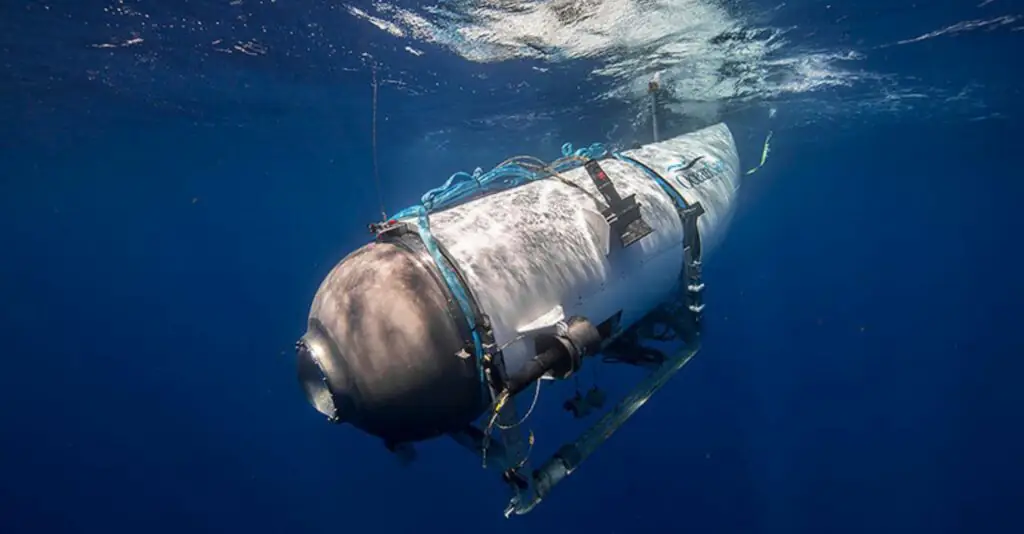
Just months after the OceanGate submersible tragedy that resulted in the death of five passengers, a company is planning a new expedition down to the famed Titanic wreckage.
In a move that's raising eyebrows and triggering legal debates, a new expedition to visit the ill-fated Titanic wreckage reportedly in the works, per Sky News.
This announcement comes just months after a tragic incident took the lives of five individuals during a submarine voyage to the same site.
RMS Titanic Inc (RMST), the company holding salvage rights to the wreckage, is organizing the trip with the aim of recovering historical artifacts. However, the US government is actively trying to halt this mission.
"RMST is not free to disregard this validly enacted federal law, yet that is its stated intent," argue US lawyers in recently filed court documents, via Metro. Many believe that the Titanic's final resting place is not being honored as a memorial to the more than 1,500 lives lost at sea, as per a prior agreement with the UK.
The planned adventure comes just two months after the tragic incident of the Titan submersible expedition, which imploded while attempting to see the wreckage of the famed passenger liner.
British billionaire explorer Hamish Harding, French diver Paul-Henri Nargeolet, Pakistani businessman Shahzada Dawood, his 19-year-old son Suleman, and OceanGate CEO Stockton Rush all died following the catastrophic implosion.
Their vessel's debris was discovered near the Titanic's bow just five days after setting off on June 18.
Five people lost their lives back in June during an expedition to the Titanic wreckage: Anadolu Agency/Getty
The mission, tentatively slated for May 2024 according to a court report RMST filed in June, aims to capture comprehensive images of the wreck and recover artifacts. These could include "objects from inside the Marconi room, but only if such objects are not affixed to the wreck itself," as RMST clarified.
The company assures it does not intend to "cut into the wreck or detach any part of the wreck," but rather plans to explore "inside the wreck where deterioration has opened chasms sufficient to permit a remotely operated vehicle to penetrate the hull."
Despite RMST's stated intention to "work collaboratively" with the National Oceanic and Atmospheric Administration (NOAA), the company has no plans to seek an official permit. This drew further scrutiny from US government lawyers, who claim RMST must gain approval from the US Secretary of Commerce, who oversees NOAA.
"RMST is not free to disregard this validly enacted federal law, yet that is its stated intent," court documents filed on Friday stated. The shipwreck "will be deprived of the protections Congress granted it," US government lawyers have argued.