We all have fears. Clowns, heights, spiders, the dark depths of the ocean - the list is endless. For one Victorian doctor, however, his phobia of being buried alive was so great he had a window installed in his grave so people could check if he was truly dead.
Dr. Timothy Clark Smith, a Vermont medical doctor born in 1821, has one of those wacky graves people will rave about in the years to come.
(Though late Irish actor, Spike Milligan, surely takes the top prize with his headstone that reads: "I told you I was ill.")
According to Find A Grave, Dr. Smith first received his bachelor's degree in 1842, before completing his medical degree in New York City some 13 years later.
He led a colorful life - having worked as a teacher, a clerk in the US Treasury Department, and as a physician.
Smith also worked as a surgeon for the Russian Army, as well as the US Consulate in both Russia and Romania. However, the most interesting thing about him - that will continue to live on for decades - was his intense fear of being buried alive, something he literally took to his grave upon his death in 1893.
Check out this visit to Smith's grave below:
For the time period, however, this wouldn't have been so irrational, given the high instances of live burials during the 17th century. In fact, medical sources have shown 149 cases of premature burial, 10 cases where bodies were accidentally dissected prior to death, and 2 cases where embalming was performed prematurely, per Vermonter.
One can only believe that these stories would have continued to emanate as urban legends throughout the following decades to Smith's lifetime.
Credit: YouTube.com
A local newspaper article from the time Dr. Smith died wrote that he "died suddenly on Saturday morning at the Logan House (hotel) where he had been living. After breakfast, he walked out into the office and stood by the stove when stricken."
Upon burial, the doctor's grave was installed with a 6-foot tube and 14"x14" glass panel so that anyone visiting his grave would be able to see if he'd accidentally been buried alive.
The Committee for Skeptical Inquiry has since published an article about his unique burial, writing: "There are other legends about the tomb. One is that Smith had it outfitted with 'tools for his escape.' Although condensation and plant growth inside the shaft now block one’s view, residents in years past claimed to see the tools along with Smith’s bones."
"Said one, 'You can see the face of the skeleton down there with a hammer and chisel crossed on the ground next to it.'
Another source claims that when Smith was interred, "in the corpse's hand they placed a bell that he could ring should he wake up and find himself the victim of a premature burial,'" the article continued.
Well, I guess we know where those sayings your mom always uses - "saved by the bell" and "dead ringer" - come from!
Well, this is everyone's worst nightmare.
To be pronounced dead, be given a funeral and then buried, when it turns out that – hey! – you're still alive. We saw it in that episode of Lost where Nikki and Paulo (who did kind of deserve it) were bitten by paralysing spiders and then were accidentally buried alive. Then there's Kill Bill 2 or the film Buried, where the protagonists are both intentionally trapped inside a coffin and lowered into a put, trapped under the earth with limited air supply to try and figure a way out of their claustrophobic death trap.
But does it really happen in real life? Well, yes. Almost.
A young Peruvian man was this week pronounced dead, until his family saw something to make them think otherwise at his funeral. Watson Franklin Mandujano Doroteo, who was from the Peruvian city of Tingo María, was believed to be dead after a root canal operation that went badly. The 24-year-old was experiencing fever and chills after the October 21 operation, before doctors announced that he had died.
Only, when it came to his funeral, his already distressed relatives were horrified to see what they thought was Doroteo still breathing as he lay in his coffin. Relatives said they noticed his ribcage rising and falling as he continued to breathe.
The family immediately called a doctor to the wake, who inspected the body to check vital signs. And lo-and-behold, the doctor indeed confirmed what the family saw as signs of life.
The young man was quickly removed from the coffin and rushed to hospital in order to fully revive him. However, when he was looked at by other medical practitioners at Tingo Maria Contingency Hospital, it was again confirmed that he was indeed dead. Doctors reiterated that he had passed away after his dental operation on October 21 after suffering fever and chills.
Doroteo’s relatives were upset, claiming they think he may have been alive all along since the operation. They believed he was just strongly sedated as a result of the drugs he had been given at the dental surgery. One family member was quoted as saying “They gave him diazepam”. Prosecutors in the area are now looking into the case.
While there are a few cases where bodies of the deceased have still shown muscle movement, there are far more incidents where people have been wrongly diagnosed as being dead.
Ten years ago, a 33-year-old Venezuelan man woke up during his own autopsy. Carlos Camejo was pronounced dead after a motorway accident, and said he woke up after examiners cut into his face, later telling reporters “The pain was unbearable”. He greeted his grieving wife at the morgue by waiting for her in a corridor, when she initially thought she was going there to identify his body.
In 2014, a 79-year-old American named Walter Williams was found literally kicking in a body bag before he was due to be embalmed. People had thought he'd died because his pacemaker had turned off.
Then in 2012, the doctor who signed a waiter's death certificate realised that the 28-year-old man was still alive despite having suffered a heart attack at work. His funeral turned into a celebration after everyone realised he wasn't, in fact, dead.
Unfortunately, the same thing didn't transpire in Doroteo’s case, and his family just endured false hope in believing the 24-year-old was still alive.
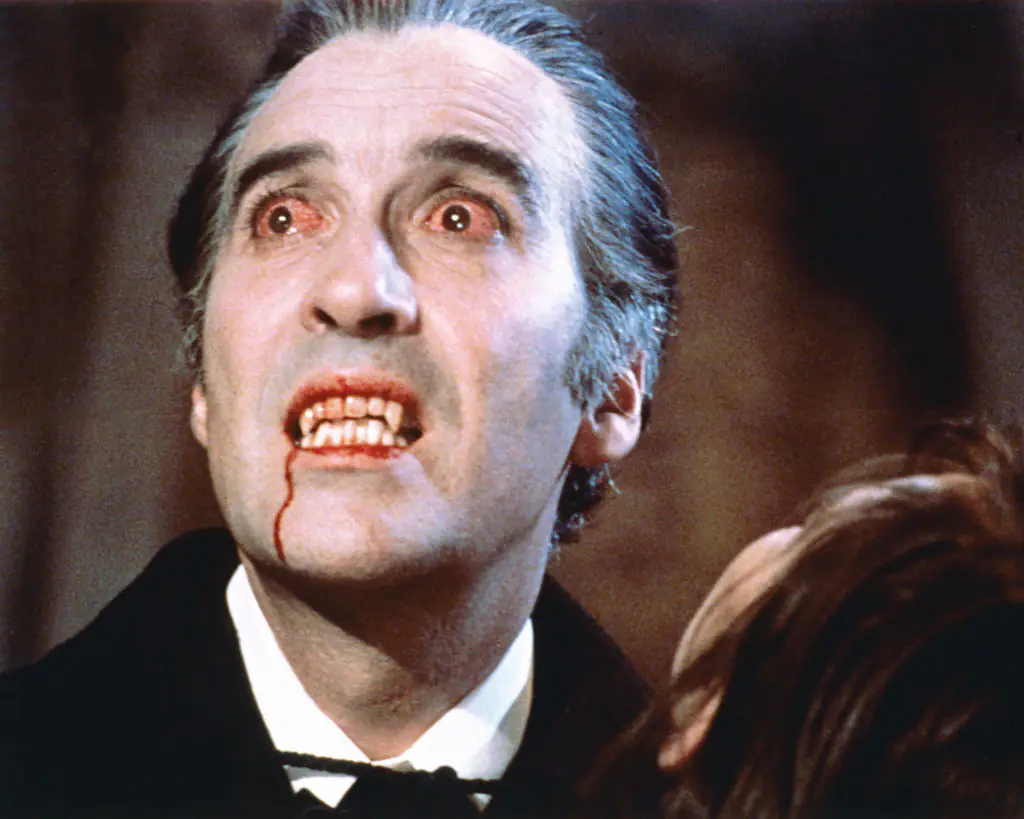
Vampires have long fascinated us and stories of what they are capable of have been told for centuries.
From Dracula to Edward Cullen, there are all sorts of vampires out there in the fictional world.
But these stories had to start somewhere, right?
Vampires are a common character in horror movies. Credit: Silver Screen Collection/Getty
Well, a "real-life vampire" may have been discovered in Poland.
The skeleton, discovered two years ago at a medieval cemetery in Pień, has drawn attention for its unusual burial methods, meant to prevent the deceased from "rising again."
The remains belong to an elite young woman, believed to have been around 18 years old at the time of her death, who has been named "Zosia" by researchers.
Based on reconstructions, Zosia may have had fair skin, blue eyes, short hair, and a distinct protruding incisor tooth - features that could have contributed to suspicions of vampirism.
Zosia’s social rank was evident from a silk cap found on her head, a symbol of high status.
Despite her elite standing, Zosia was buried under circumstances suggesting fear rather than honor.
Archaeologists discovered that her body was secured with a sickle across her neck and a heavy padlock on her toe.
“It can be assumed that for some reason those burying the woman were afraid that she would rise from the grave. Perhaps they feared she was a vampire,” explained Professor Dariusz Polinski, who, along with his colleague Magda Zagrodzka, has led extensive research on the burial site, per the Daily Mail.
The sickle, according to Polinski, served as “double protection” against Zosia potentially rising from the grave.
Positioned just above her neck, it would have decapitated her if she attempted to sit up.
“The sickle was not laid flat, but placed on the neck in such a way that if the deceased had tried to get up, most likely the head would have been cut off or injured,” Polinski explained.
Working alongside Polinski and Zagrodzka, forensic expert Oscar Nilsson created a facial reconstruction of Zosia.
Using a digital scan of her skull, Nilsson employed a 3D printer and clay modeling to recreate Zosia’s facial structure, and then used silicon to approximate her skin.
His work has provided a detailed glimpse into her appearance.
Further investigation into Zosia’s bones, conducted by medical investigator Dr. Heather Edgar of the University of New Mexico, revealed an abnormality in her breastbone, indicating a possible physical deformity.
“The abnormality suggests there might have been a physical deformity that caused her great pain and ‘marked this person [to others] in a negative way,’” Edgar explained to the Times, potentially leading to fears of vampirism among her contemporaries.
The graveyard, dubbed the “Field of Vampires,” contained approximately 100 other graves, of which around 30 showed signs of being restrained in some way.
These included individuals buried face down, others weighed down with stones, and some with coins placed in their mouths.
Among these graves were those of a partially exhumed child, a woman with advanced syphilis, a pregnant woman, and a man with a child’s remains at his feet.
According to Polinski, the cemetery likely served as a final resting place for individuals excluded from society, yet all graves were unmarked, and no historical records mention the identities of those buried there.
“Ways to protect against the return of the dead include cutting off the head or legs, placing the deceased face down to bite into the ground, burning them, and smashing them with a stone,” Polinski said, noting that Zosia’s sickle was an especially severe measure.
If you’ve been blissfully unaware of what happens to your body post-mortem, brace yourself — this revelation might just haunt you.
A mortician has revealed what really happens to your organs after you die. Credit: Darrin Klimek / Getty
Mortuary technician Hayleigh - known on TikTok as @themortuarytech - has gone viral for spilling some unsettling details about what happens to your organs after you shuffle off this mortal coil.
Spoiler alert: They don’t go back where they came from.
Appearing on the wildly entertaining Tea At Four podcast, Hayleigh laid it all bare. “During a postmortem examination, people seem to think that your organs are put back where nature intended,” she explained. “They’re not.”
According to Hayleigh, following a post-mortem examination, your organs are essentially bagged up like leftovers and placed back into your chest and abdominal cavities, which are then stitched up.
And no, your brain doesn’t stay in your head either. Why? Because once your insides are removed, it’s not exactly easy to reassemble the original setup.
“They’re all put in a clinical bag back inside your torso, and your chest cavity and your stomach/abdomen, and you’re sutured back up. So your brain’s not in your head," she said.
The podcast hosts - Lauren and Billy were visibly horrified.
Billy, exclaimed: “Oh my god. [That] really freaked me out a bit… just thrown in like a goody bag.”
When the podcast's producer, Bobbi, asked why this happens, Hayleigh explained: "Because once you start cutting and taking things out, it's not going to go back. It's just going to wobble [...] It's best to keep it all contained."
Elsewhere in the podcast, Hayleigh revealed how she's seen some of the bodies she's been working on "gasp", and revealed that she's skilled in applying makeup and false nails to the dead.
Over in the comments section, the reactions were just as intense.
“I absolutely wish I didn’t know that,” admitted one commenter. Another lamented: “Seems I’ve taken a terribly wrong turn somewhere along my TikTok journey.”
One more joked: “Whoever digs us up in 3,000 years is gonna question everything.”
Another more understanding comment read: "Did people seriously think everything was all put back together again?"
Despite the macabre nature of her job, Hayleigh insists her goal is to educate, not terrify. She’s made it clear that she has her workplace’s support in demystifying the mortuary world and showing the care that goes into preparing loved ones for their final farewell.
Yes, it may sound spooky, but Hayleigh is here to "educate people people on the amount of genuine care that goes into looking after people's loved ones".
And if it wasn't for people like Hayleigh, we'd all just be lying around stinking up the place.
The 2017 Survey of American Fears found that just over a fifth of Americans are "afraid" or "very afraid" of dying.
This fear, as noted by mortician Caitlin Doughty, is almost certainly fueled, in part, by the sanitization of death in the western world.
While, in the past, relatives would keep deceased loved ones at home, caring for and dressing the body prior to burial, now, corpses are removed from homes soon after death, and typically only ever seen embalmed and presented in a way that makes them look like they are merely "sleeping".
In the video below, Doughty asks why are we afraid of death?
But despite our fear of death, it is inevitable, and most of us will have to confront its unsanitized reality at some point.
When journalist and author Erica Buist's father-in-law, Chris, unexpectedly passed away, she was forced to do this after his body lay undiscovered for eight days.
This sparked an intense bout of agoraphobia that inspired Erica to go to seven of the world's death festivals in a bid to get over her fear.
She did so while writing her debut book, This Party's Dead, which is being published by Unbound in February 2021.
One death festival for every day that she and her husband did not find Chris.
[[imagecaption|| Credit: Supplied / Erica Buist]]
VT recently spoke to Erica about her fear of death, what we can all learn from her incredible journey to the world's death festivals... and that time she was hit in the head by a corpse.
Prior to finding Chris' body, Erica said that she was horrified by the concept of death "as much as, or perhaps even more than, anyone else."
"I'd always had a generous measure of death anxiety," she said. "I was raised by death-phobic medics who once told me point-blank that 'in our industry, death means failure'.
"Which even then - when I never questioned the premise that death is always shocking and terrible - struck me as an odd attitude to take, since everyone dies and here in the UK we're usually lucky enough to get to see a doctor for the thing that's killing us."
[[imagecaption|| Credit: Supplied / Erica Buist]]
Erica realized that she had been profoundly affected by the discovery of Chris' body after it had been removed from his home and she was struck by the smell.
"The lingering smell just enveloped me; I remember feeling like something had cracked inside my brain and was struck with the thought that I'd never feel right again," she said.
"But the real effects came later. The fact that he had been dead for eight days before we found him made me realize something that in the moment seemed entirely logical: anyone I'm not looking at might be dead.
"I started stalking everyone I knew online to check they were still alive, which of course quickly became a full-time job.
"No news is good news but no amount of it seemed to satisfy me, it was as if I was CONVINCED someone else was going to drop dead and the only way to deal with it was to be ready.
"It seems hilarious now but I honestly thought I was a genius and that the rest of you were all idiots."
[[imagecaption|| Credit: Supplied / Erica Buist]]
Prior to the discovery of Chris, Erica had never seen any corpses in the flesh, and she never actually saw his body because her husband told her not to go upstairs.
The result was that I spent several years double-taking on the street, thinking I'd seen [Chris]," she said. "That didn’t happen to my husband."
Even after Erica developed agoraphobia, she was unwilling to confront her fear head-on, and her "disastrous attempt to 'cure' is what finally prompted her to seek help.
"The treatment for agoraphobia is to just go outside. So I went out to buy a sandwich. To be clear, agoraphobia isn’t simply a fear of going outside; it's that you have a panic attack when you do and that's the thing you stay inside to avoid.
"I was right on the edge the entire time; the air was thick in my lungs and I was barely half a breath from full panic.
"I went into the supermarket, grabbed whatever sandwich I thought I'd be least likely to drop - and then someone approached me. She was just a nice lady trying to give me a discount on Jaffa Cakes and she must have been baffled when I threw the sandwich and ran home."'
Erica had lived in Mexico before she developed agoraphobia and was familiar with the country's famous Day of the Dead Celebrations.
She was well aware that some people confront their mortality by dealing with death head-on, so she decided to google "death festivals around the world" and was surprised by how many there are."
"I decided to visit seven of them (in Mexico, Nepal, Sicily, Thailand, Madagascar, Japan, and Indonesia) - one for every day we didn't find Chris," she said.
[[imagecaption|| Credit: Supplied / Erica Buist]]
Erica said that the biggest celebration was in Nepal where the city bounced and popped "along the streets to upbeat drums and music", which she found "utterly joyful."
The "tastiest treats" meanwhile, could be found in Sicily, and she particularly enjoyed the festival in Thailand as she got to celebrate it with her father, stepmother, and extended Thai family.
"Madagascar and Tana Toraja in Indonesia were the most striking simply because those were the two festivals where the dead people themselves were invited to the party - in Tana Toraja the dead are even given new clothes and walked around, held in poses for photos and FaceTime calls from family members who couldn't make it," she said.
"The strangest thing about it was how quickly it seemed normal and loving rather than shocking. Like shining a light into the dark and realizing the monster is just a cat."
The photographs above and below were taken at Ma'nene in Tana Toraja.
[[imagecaption|| Credit: Supplied / Erica Buist]]
The death festivals were as chaotic as many good parties are, and Erica was hit in the head by a corpse at the Turning of the Bones in Madagascar.
Pictured below, the event involves the opening of the family tomb, exhuming the corpses within, and rewrapping them in fresh shrouds.
"They are hoisted on the shoulders of the descendants who dance around with them," Erica said. "There's a huge brass band playing music, everyone's drinking rum, it's a huge party.
She said that while family members hosted a corpse onto their shoulders, they underestimated its weight and before she knew what was happening she felt "a THUNK in the back of my head."
"We all burst out laughing and they said, 'Oops! Azafady! (Sorry!)'.
"It was a strange and wonderful moment because I thought about how a few years earlier I'd been stuck indoors, so utterly consumed by death anxiety I was stalking everyone and afraid to go outside, and here I’d just been hit in the head by a corpse and it was fine."
[[imagecaption|| Credit: Supplied / Erica Buist]]
The sanitization of death in the Western world might set it apart from other cultures, but Erica said that, fundamentally, death makes people feel the same way.
"The difference is that some of us are dealing with it well, and some of us are dealing with it badly," according to Erica. "And after doing these journeys and writing this book I couldn’t be more convinced that we deal with it really, really badly.
[[imagecaption|| Credit: Supplied / Erica Buist]]
"The main thing we can learn," Erica said, "is that the death festivals are about carving out some time, every year to sit with death - not just with your grief over people who've died, but with your own fear of mortality."
The festivals are an opportunity for people to reflect on their attitude towards death and what is it doing for them.
"There is no other stressful, sad or frightening part of life where the recommended course of action is to refuse to think or talk about it until it's absolutely necessary - namely, when a loved one dies unexpectedly, and you’re faced with the death chores, with suddenly having to fulfill wishes you never even talked about," she said.
"We are refusing to deal with this hugely stressful but inevitable part of life until our highest moment of trauma. That’s like refusing to exercise until you've sprained something. Why, why, why would we do that?"
[[imagecaption|| Credit: Supplied / Erica Buist]]
While most people go on journeys to discover something about themselves, this was never Erica's intention: instead, she wanted to explore how people deal with death.
"But I guess I learned that I'm pretty relentless when I've got a question I want answering (I started this whole thing before I even got a publisher, was advised to give up several times, and was then approached by an editor at Unbound when I had a tweet go viral)," she said.
As the world continues to battle its way through the ongoing pandemic, many people are finding themselves battling with mental health conditions like agoraphobia for the first time.
For them, Erica has some advice:
"First of all: hi, and I'm sorry you’re going through this, and don’t you dare be ashamed - staying indoors is as inviting to agoraphobia as lukewarm mayonnaise is to bacteria.
"Before my sandwich mission, I couldn't even spend more than a few moments looking out of the window without shuddering with horror and disgust, but the 'go outside' advice is, annoyingly, correct. Start small. Go out for a few minutes, with someone else if they’re there. Know that a panic attack can't kill you and that it gets easier every time.
"If it's available to you, therapy helps. And the super-deluxe option to stop it coming back: get a dog. It's impossible to stay indoors with those big old Disney eyes staring up at you."
A doctor who "died" for 30 minutes after a 1999 kayak accident in Chile has described her near-death experience in a new Netflix docuseries.
Surviving Death tells the stories of people who have had near-death experiences and what happens to them when they "die" for a short period of time.
One of these stories is that of Dr. Mary Neal, 62, from New York, who was submerged under a kayak for 24 minutes, leaving her brain completely starved of oxygen.
Watch the trailer for Surviving Death below:
Per The Sun, the mom-of-four said: "I was not breathing. My torso was absolutely plastered to the front deck of the boat and I could feel my bones breaking.
"I thought, 'I should be screaming' but I wasn't. I felt no pain, no fear, no panic. I felt more alive than I've ever felt.
"I could feel my spirit peeling away from my body, and my spirit went up towards the heavens. I was immediately greeted by a group of... somethings. I don't know what to call them. People? Spirits? Beings?
"I didn't recognize any of them, but they had been important in my life somehow, like a grandparent who died before I was born.
"They were so overjoyed to welcome me and greet me and love me."
Neal said that what she experience was a "shift in time and dimension".
She said she was led by the "beings" down a path covered in flowers that were "every color of the universe."
Neal said: "I experienced all of eternity in every second and every second expanded into all of eternity.
"The pathway went to this great dome structure and I believe I was in heaven. I had an overwhelming sense of being home."
The group spent 15 minutes attempting to save the doctor's life before switching into "body recovery mode."
She explained: "One of the guys saw my life jacket pop up downstream and thought that maybe my husband would want it.
"As he got that he felt my body touch his leg and was able to reach under the water and grab my wrist.
"My body was bloated and purple and I had fixed eyes. There's no doubt in my own mind that I was physically dead, but I watched from the entrance to the dome structure as they started CPR and I could still hear them."
As she floated in the water, she recalls the kayakers attempting to save her life.
She added: "I had been without oxygen for 30 minutes and the statistical likelihood of my survival should have been zero.
"I did not want to go back down to my body. I had a very physical sensation of being held and comforted and reassured that everything was fine, but the beings told me that it wasn't my time, that I had more work to do on Earth and that I had to go back to my body.
"When I opened my eyes the guys who resuscitated me were stunned."
Surviving Death is currently available to stream on Netflix.