ADVERT
US3 min(s) read
Published 14:57 01 May 2021 GMT
Former US president Barack Obama has revealed the details of the final conversation he had before Osama bin Laden was killed by US troops.
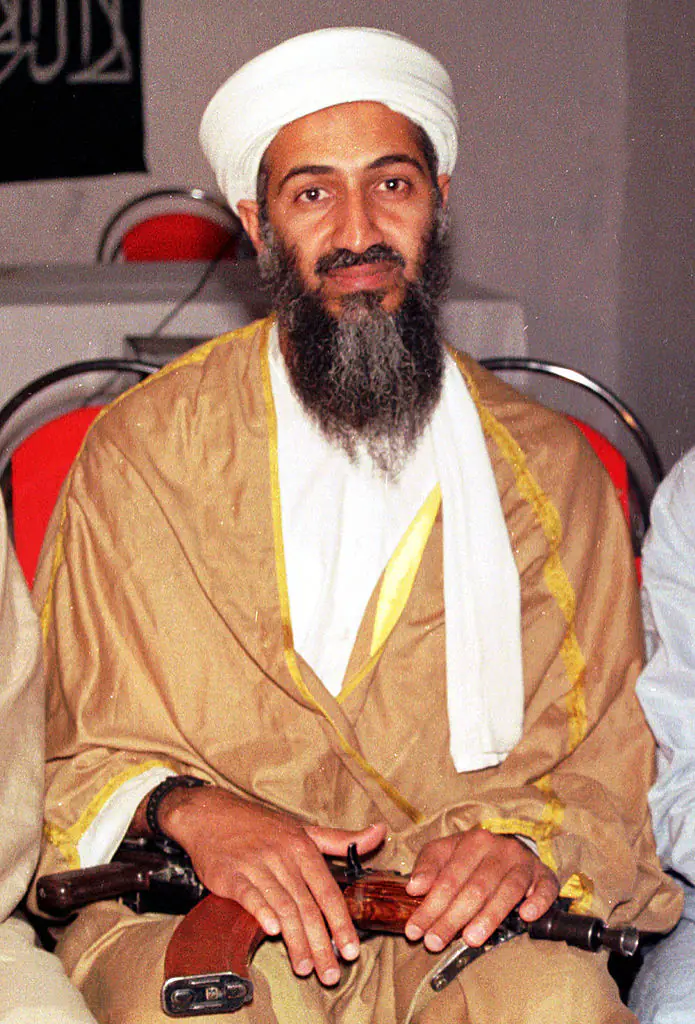
Per BBC News, al-Qaeda leader Osama Bin Laden was killed ten years ago tomorrow - on May 2, 2011.
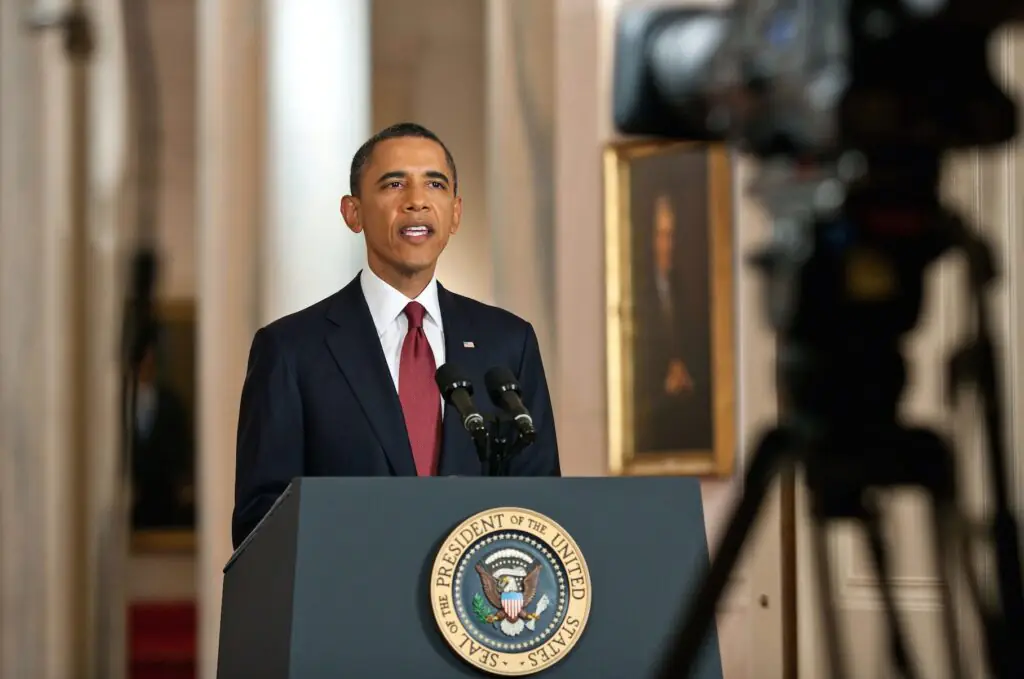
In a statement to the American people and the entire world, Obama announced: "Tonight, I can report to the American people and to the world that the United States has conducted an operation that killed Osama bin Laden, the leader of al Qaeda, and a terrorist who’s responsible for the murder of thousands of innocent men, women, and children."
Watch Obama's statement following Bin Laden's death below:In his statement 10 years ago, Obama spoke about the long-lasting damage the September 11 attacks had on the US, and detailed the nation's determination to find Bin Laden. He then said:
"Today, at my direction, the United States launched a targeted operation against that compound in Abbottabad, Pakistan. A small team of Americans carried out the operation with extraordinary courage and capability.
"No Americans were harmed. They took care to avoid civilian casualties.
"After a firefight, they killed Osama bin Laden and took custody of his body."
Now, nearly 10 years on, Obama has revealed details of his final phone call with Admiral Bill McRaven.
McRaven is the now-retired commander of the US Special Operations Command - the team which carried out the operation.
Alongside McRaven, the former POTUS spoke to ex-Deputy National Security Advisor Ben Rhodes about the operation, and the final phone call the two men shared before Bin Laden's death.
Watch the full interview below:Speaking to ex-Deputy National Security Advisor Ben Rhodes, the ex POTUS confirmed that he had called McRaven to wish the mission’s team well, and to ask the admiral to share his thanks with the other troops.
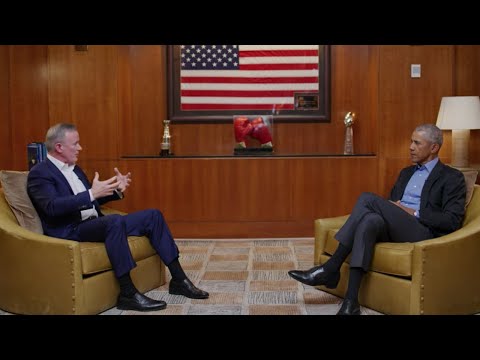
Explaining that there were two reasons why he made the call, Obama said: "Two reasons I did that. One, no matter how highly trained those warriors were, there was still enormous risk to a mission like that.
"But the second reason I think it was important for me is that, as Commander-in-Chief and certainly here in Washington, a lot of times these issues of war are treated as abstractions.
"We forget that these are folks who have families and loved ones, and that they are carrying a burden on behalf of hundreds and millions of America," he added.
"When you are a commander in chief, and you make a decision about a particular mission like that, it was one of those rare opportunities where I had a chance to say - not after the fact, not in retrospect, not when folks are coming home, but before they go – that we don’t take this for granted."
McRaven responded by saying that Obama's phone call "meant a lot to me and to the guys getting ready to go on the mission".
us4 min(s) read
Published 11:40 06 May 2026 GMT
Osama bin Laden's wife has revealed the chilling final words he spoke moments before he was shot dead.
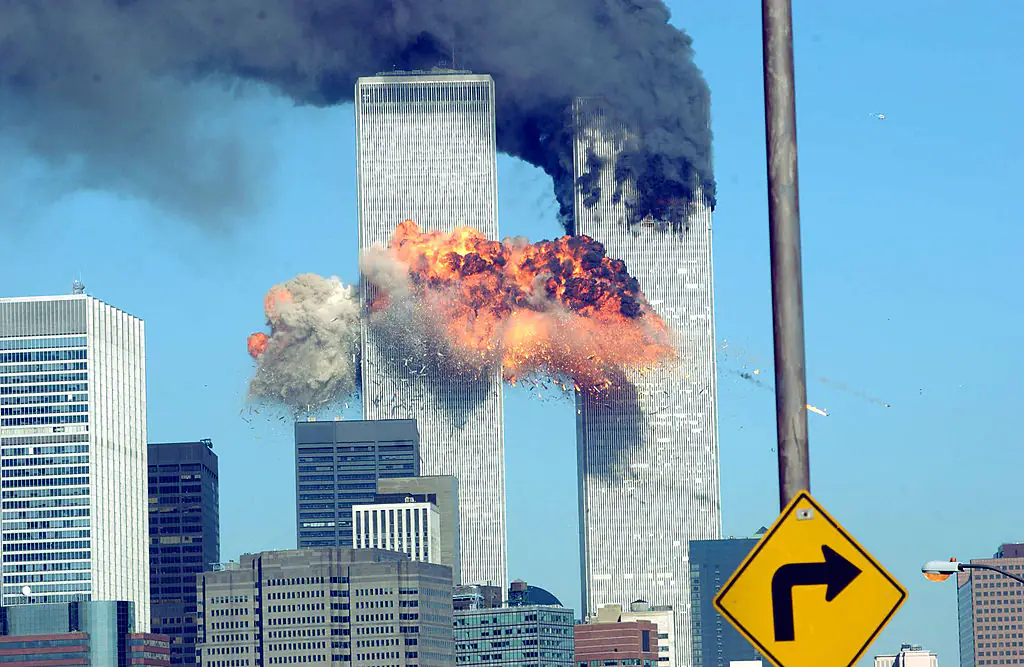
On May 2, 2011, US Navy SEAL Team Six carried out Operation Neptune Spear at a compound in Abbottabad, Pakistan, ending a decade-long manhunt for the Al-Qaeda leader following the 9/11 attacks that killed nearly 3,000 people.
Bin Laden’s youngest wife, Amal, later described the terrifying final moments inside the compound during an interview with the Sunday Times in 2017.
Amal revealed that the family woke up to the sound of a helicopter overhead before the walls of the compound began shaking.
She said her husband told one of his sons to "come up" with his gun and instructed his wives to go downstairs because "they want me, not you".
However, Amal stayed behind with the couple’s two-year-old son, Hussein, as they listened to the sound of Navy SEALs moving through the compound.
Realizing there was no escape, she recalled bin Laden turning to her and saying: "Don’t turn on the light."
The power inside the compound had already been cut by US forces, meaning the lights would not have worked anyway. Moments later, Navy SEALs entered the room.
Amal said she rushed toward the first soldier before suddenly collapsing after being shot in the leg.
The raid ended with bin Laden being gunned down inside the compound where he had spent years hiding behind intense security measures that prevented outsiders from seeing in while also limiting his own view of the outside world.
Time Magazine reported that bin Laden reportedly had money sewn into his clothing and carried two phones to call for help, though neither helped him escape.
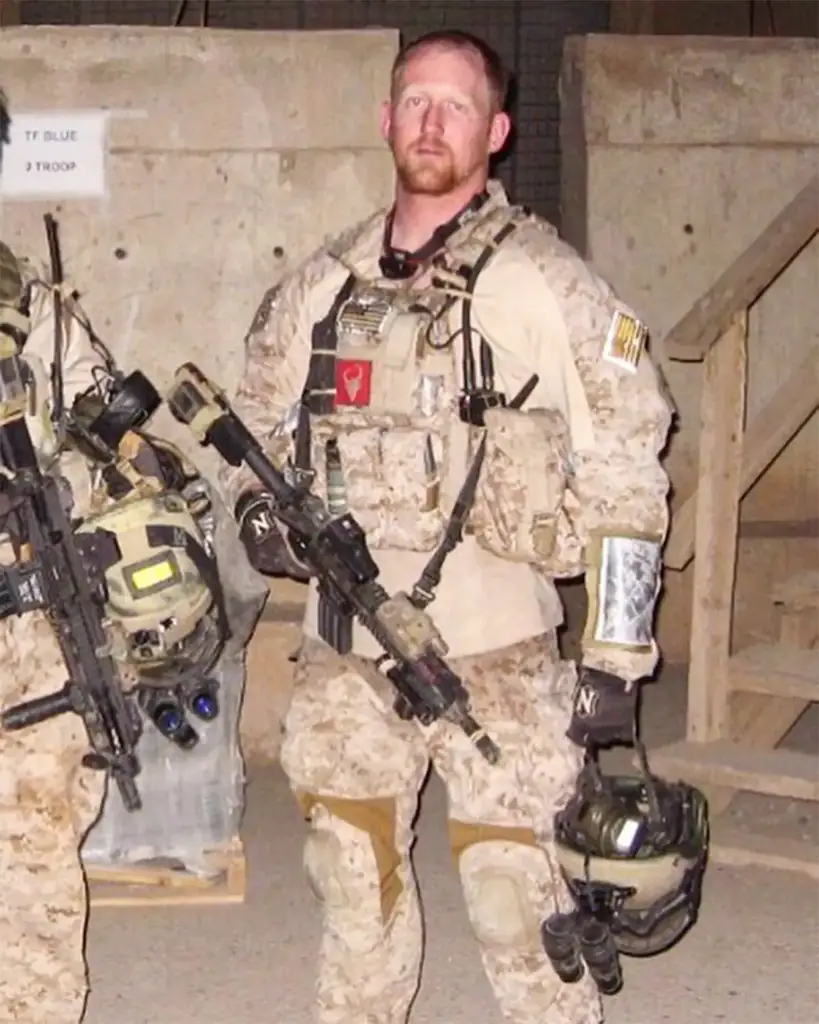
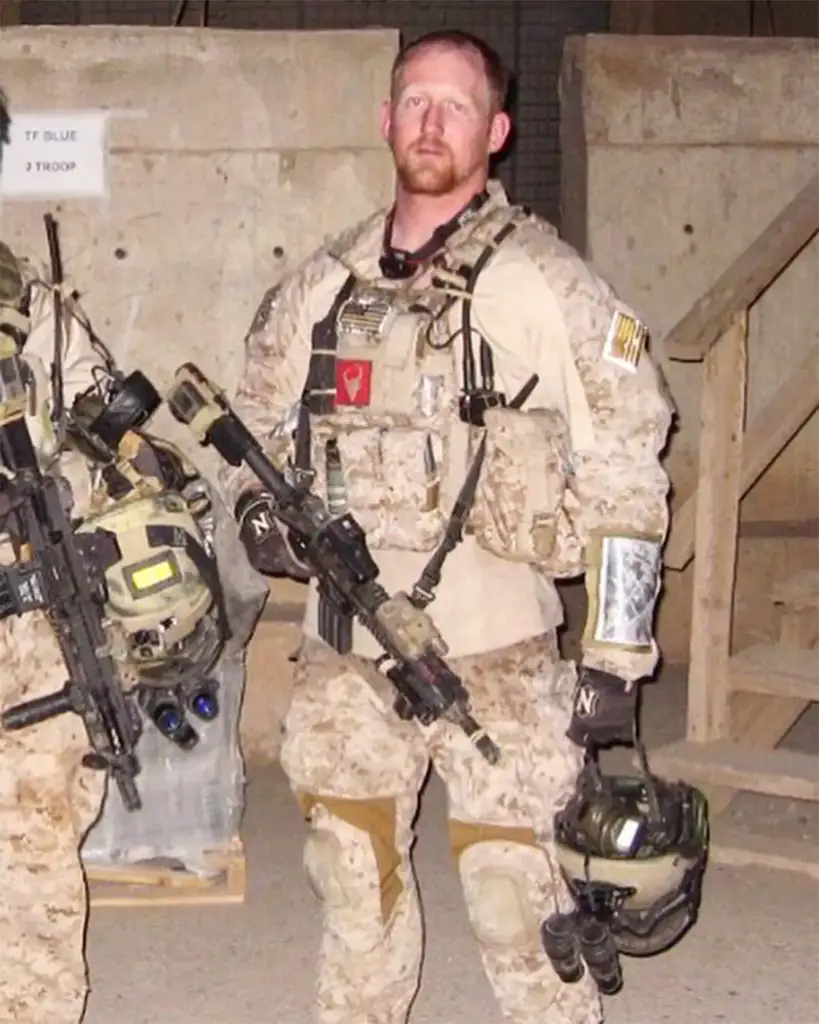
Robert J. O'Neill, the former Navy SEAL who claims he fired the fatal shots, later shared his memories of the raid and the moment he came face-to-face with the world’s most wanted terrorist.
Speaking during Netflix’s American Manhunt: Osama bin Laden, he said: "I turn this way and standing in front of me, two feet away is Osama bin Laden. It was one of those moments in life where things slow down," cited by The Mirror.
"He's taller than I thought, he's skinnier than I thought, his beard was grey/white, but I recognized his nose, this is definitely him. He's not surrendering, he's a threat, not only to me but to my entire team, he has to die."
"I can hear bin Laden taking his last breath. When I shot him he fell to the foot of the bed," he continued. "I shot him in the face three times. I moved Amal and… his two-year-old son is now standing there, and this is the humanity of everything."
"This kid has got nothing to do with this. I’m a father. I picked him up, and I move them to the back of the bed," he added.
Despite the mission being considered one of the biggest military operations in modern US history, O’Neill admitted there is one decision he strongly disagrees with.
After the raid, bin Laden’s body was buried at sea to prevent his grave from becoming a shrine.
However, O’Neill said he believed a different message should have been sent. "I would have hung him from a bridge in New York City," he said, per The New York Post.
The former Navy SEAL also stressed that the mission was driven by the memory of the victims killed on September 11, 2001.
"We were going for the single mom who dropped her kids off at school on a Tuesday morning, then an hour later, jumped out of the World Trade Center, pressing down her skirt as her last act of human decency," he said. "She was never supposed to do that."
us4 min(s) read
Published 15:42 05 Jun 2026 GMT
A former Navy SEAL who claims he fired the fatal shots that killed Osama bin Laden has spoken out about one of the biggest questions surrounding the al-Qaeda leader's death.
Last year, Netflix released the documentary series American Manhunt: Osama bin Laden, which explores the aftermath of the September 11 attacks and the decade-long hunt for the world's most wanted terrorist.
Bin Laden was killed on May 2, 2011, when members of SEAL Team Six carried out Operation Neptune Spear at a compound in Abbottabad, Pakistan.
While the raid itself is well documented, what happened to bin Laden's body has remained the subject of conspiracy theories for years.
The US government has never officially identified the person who fired the fatal shot; however, several former SEALs involved in the mission have publicly discussed the raid.
Among them is Robert O'Neill, who has repeatedly claimed he was the man who killed bin Laden and features prominently in the Netflix film.
O'Neill is not the only person to have claimed responsibility. Former Navy SEAL Matt Bissonnette also detailed his version of events in his 2012 book No Easy Day: The Firsthand Account of the Mission that Killed Osama bin Laden.
Speaking in American Manhunt, O'Neill recalled the moment he came face-to-face with bin Laden.
"I turn this way and standing in front of me, two feet away is Osama bin Laden. It was one of those moments in life where things slow down," he said.
"He's taller than I thought, he's skinnier than I thought, his beard was grey/white, but I recognized his nose, this is definitely him. He's not surrendering, he's a threat, not only to me but to my entire team, he has to die," he added.
According to official accounts, bin Laden's body was first transported to Afghanistan so his identity could be confirmed.
It was then flown to the USS Carl Vinson aircraft carrier, where US officials say Islamic funeral rites were carried out before the body was buried at sea in the Arabian Sea, per BBC.
US authorities have said the burial was conducted within 24 hours in accordance with Islamic customs, which traditionally involve cleansing the body, wrapping it in a white shroud, and carrying out the burial quickly after death.
The decision to bury bin Laden at sea has sparked speculation for more than a decade, with some conspiracy theorists claiming there is no proof the terrorist leader was ever killed.
Others have suggested a body double was used. The theory gained attention in 2020 after President Donald Trump retweeted an article promoting the claim.
O'Neill quickly pushed back on the suggestion, writing: "Very brave men said good bye to their kids to go kill Osama bin Laden. We were given the order by President Obama. It was not a body double. Thank you Mr. President."
After the release of the Netflix series, O'Neill again addressed questions about bin Laden's burial, clarifying that he played no role in disposing of the body.
"I didn't bury anyone at sea, BTW…" he wrote on X.
US officials have previously given two reasons for the decision to bury the al-Qaeda leader at sea.
Per the BBC, no country was willing to accept bin Laden's remains, while authorities were also concerned that a traditional gravesite could become a shrine for his supporters.
Despite the official explanation, the decision remains one of the most debated aspects of the operation.
O'Neill himself has previously admitted he disagreed with the move. "I would have hung him from a bridge in New York City," he said, according to The New York Post.
us5 min(s) read
Published 13:35 02 May 2026 GMT
The former US Navy SEAL who fired the shots that killed Osama bin Laden has been reflecting on the historic raid on its 15th anniversary, including the chilling single code word the team had been instructed to radio in once the al-Qaeda leader was confirmed dead.
Robert O'Neill, now 50, was a member of SEAL Team Six's Red Squadron when, on the night of May 2, 2011, he and a small group of operators stormed a high-walled compound in Abbottabad, Pakistan, and brought a near-decade-long manhunt to an end.
He has spoken publicly about the mission multiple times since identifying himself as the shooter in 2014, giving an interview to the New York Post to mark the milestone this week.
Operation Neptune Spear, as it was officially known, saw around two dozen SEALs flown into Pakistan in stealth Black Hawk helicopters.
The mission was so closely held that the Pakistani government wasn't told it was happening on its own soil.
Things didn't go to plan from the off.
One of the helicopters crash-landed on arrival, and the SEALs had to clear the compound floor by floor.
By the time O'Neill and a fellow SEAL reached the third-floor landing, they could see figures moving behind a curtain.
Concerned the people on the other side might be wearing suicide vests, the two men opted against waiting for backup and pushed forward.
"I can remember thinking, 'We're going to blow up now, and I'm just tired of thinking about it. Go," O'Neill told Cowboy State Daily in 2025.
The 'point man' tackled two women he believed were wearing suicide vests, an act O'Neill has repeatedly said should have earned a Medal of Honor.
'He jumped on a grenade that didn't go off,' O'Neill said.
That left O'Neill alone in the doorway of an adjoining room, face-to-face with the man whose photo he'd seen tens of thousands of times.
O'Neill has described the encounter more than once over the years.
"Osama bin Laden stood near the entrance at the foot of the bed, taller and thinner than I'd expected, his beard shorter and hair whiter,' he wrote in his memoir The Operator.
"He had a woman in front of him, his hands on her shoulders.'
"In less than a second, I aimed above the woman's right shoulder and pulled the trigger twice. Bin Laden's head split open, and he dropped.
"I put another bullet in his head."
It's worth noting that O'Neill's version of events is one of several.
Fellow operator Matt Bissonnette, who wrote the book No Easy Day under a pseudonym, has claimed bin Laden had already been mortally wounded by the point man's shots from the stairwell before O'Neill ever entered the room.
Other accounts, including one published by The Intercept, suggest bin Laden was 'bleeding out on the floor, possibly already dead' when O'Neill walked in and fired the additional rounds.
The US government has, to this day, neither officially confirmed nor denied O'Neill's account.
Retired Admiral William McRaven, who oversaw the raid, told CNN in 2020 that O'Neill was 'the SEAL that, in fact, shot bin Laden.'
To the outside world, the operation was known as Operation Neptune Spear.
But to the team on the ground and the small group watching the live feed in the White House Situation Room, bin Laden himself had a different name entirely.
He was 'Geronimo.'
The choice of name has been criticised in the years since, particularly by Native American groups who objected to the use of the Apache leader's name as the call sign for one of the most wanted terrorists in modern history.
But on the night, it was the agreed signal.
Once bin Laden's death was confirmed, the SEAL team leader transmitted what would become one of the most-quoted radio calls in modern military history: "For God and country, Geronimo, Geronimo, Geronimo."
After Admiral McRaven prompted for confirmation, the follow-up came: "Geronimo EKIA."
EKIA stands for 'enemy killed in action.'
Watching back at the White House, then-President Barack Obama is reported to have responded with three words of his own: "We got him."
O'Neill, who served for more than 16 years and earned more than 50 commendations including two Silver Stars, has spent the past decade telling the story publicly, in interviews, in his bestselling memoir, and on the speaking circuit.
His decision to identify himself in 2014 was controversial within the SEAL community, where the unwritten rule is to never seek public credit for an operation.
But O'Neill has stood by it, telling CBS News at the time: "I think it's a difficult secret to keep.
"Everyone was proud. I think it was apparent that we had done it."
Some of his fellow SEALs disagree, both on the credit-seeking and on the details of his account.
The full picture of who fired the killing shot may never be officially confirmed.
What isn't in dispute is the outcome. Fifteen years on from the raid, bin Laden's death remains one of the most consequential moments of the post-9/11 era.
And it was a single radio call, repeated three times, that confirmed it.
us5 min(s) read
Published 11:38 05 May 2026 GMT
The Navy SEAL who killed Osama Bin Laden has opened up about his one major regret 15 years later.
Robert O’Neill, now 50, was part of SEAL Team Six during Operation Neptune Spear on May 2, 2011, when US forces stormed a compound in Abbottabad, Pakistan, and killed the al-Qaeda leader.
The raid came after nearly a decade-long hunt following the September 11 attacks, which killed nearly 3,000 people.
O’Neill said the elite unit had just weeks to prepare for the operation, initially unaware of its full significance until senior officials briefed them.
"They said on a Friday, go home and be with your kids, and come back Sunday for a read-in," he recalled, per The New York Post.
"I asked, 'Who’s going to be at the read-in?' It was the vice president, the secretary of defence, the secretary of the Navy," he added. "We’re like, 'What in the world?'"
The team then rehearsed relentlessly, knowing the risks.
"This would be a one-way mission. You’re not afraid you’re gonna die, but you’re prepared for death," he shared. "We were going after bin Laden for the first Americans who were forced to fight al Qaeda, to the death, toe to toe, on a Tuesday morning: the passengers on Flight 93."
"Any one of us could pull ourselves out and live for another 50 years."
"But when you’re on your deathbed, if you could give every single day back for one shot at this motherf**ker...The hardest part is telling your kids goodbye, because death is coming," he added.
The operation itself lasted just nine minutes. After searching the compound, O’Neill said he came face-to-face with bin Laden.
"I recognized him immediately," he said. "I was impressed with how skinny he was. His beard was sort of grey. His hands were on his wife Amal’s shoulders. I took it as a threat; he could blow himself up."
"At SEAL Team Six, we shoot you twice in the head right away. I shot him twice and shot him again with my H&K 416. He crumpled on the foot of his bed," he revealed. "I just shot Bin Laden - like what the f***? Everything I had ever known, everything I planned, just changed drastically."
Moments later, the reality of what had happened began to sink in.
"I have to clean his face, hold his head together and take a picture. One of my guys asks, 'Hey, are you good bro?' I said, 'Yes, what do we do now?'
"He said go find the computers. 'You just killed Osama bin Laden, your life is about to f***ing change, now get back to work,' he told me," he said.
Despite the mission being considered a major success, the Navy SEAL said there is one decision he strongly disagrees with.
Bin Laden’s body was buried at sea to prevent his grave becoming a shrine, but O’Neill believes a different approach should have been taken.
"I would have hung him from a bridge in New York City," he said.
O’Neill has previously said the team was never motivated by fame, instead acting in memory of the victims of 9/11.
"We were going for the single mom who dropped her kids off at school on a Tuesday morning, then an hour later, jumped out of the World Trade Center, pressing down her skirt as her last act of human decency," he said. "She was never supposed to do that."
While the raid marked a turning point, former CIA officer John Kiriakou has revealed how little US intelligence agencies knew about al-Qaeda before the attacks.
"We had not yet captured a high-value target, and we didn’t know a whole lot about al-Qaeda," he said.
Although key figures like bin Laden were known, the network remained a mystery.
"We knew that it was founded and headed by Osama bin Laden," he continued. "The Number two was Ayman al-Zawahiri, who had been the founder of Egyptian Islamic Jihad...
"Number three had been Muhammad Atif, but we killed Muhammad Atif in a bombing in Tora Bora in October of 2001," he added.
Beyond that, he admitted: "We didn't know anything else about al-Qaeda. We had no idea what the structure of it looked like. We had no idea where the cells were located."
According to Kiriakou, the attacks reshaped the CIA’s role entirely.
"It went from an organization whose mission was to recruit spies to steal secrets to a paramilitary organization whose job it was to travel around the world and to kill as many people as they could kill,” he said.
us1 min(s) read
Published 14:26 14 Sep 2019 GMT
Per FOX News, President Donald Trump has confirmed that Hamza bin Laden, the son of former Al Qaeda leader and 9/11 mastermind Osama bin Laden, has been killed in a US counterterrorism operation.
In a statement released by the White House on Saturday morning - just three days after the 18th anniversary of the September 11 terror attacks - President Trump confirmed that Hamza, a high-ranking Al Qaeda member and one of the most wanted men on the planet, "was killed in a United States counterterrorism operation in the Afghanistan/Pakistan region."
The statement continued:
"The loss of Hamza bin Laden not only deprives Al Qaeda of important leadership skills and the symbolic connection to his father but undermines important operational activities of the group. Hamza bin Laden was responsible for planning and dealing with various terrorist groups."
Kevin Liptak - the White House correspondent for CNN - also tweeted out the news, along with the White House's statement.
[[twitterwidget||https://twitter.com/Kevinliptakcnn/status/1172859426082045952]]
[[twitterwidget||https://twitter.com/charliekirk11/status/1172876155575250944]]
[[twitterwidget||https://twitter.com/cnnbrk/status/1172870488286212097]]
Sky News reports that Hamza bin Laden was rumored to have been killed in an airstrike back in August, following a report in the New York Post, but the outlet claimed that his death was being "shrouded in secrecy".
[[twitterwidget||https://twitter.com/nypost/status/1172877172786311169]]
They have now posted a follow-up article confirming that Hamza bin Laden has been sent to his father's home "in hell".
Per NBC News, Hamza bin Laden's last known public statement was released by al Qaeda's media arm in back in 2018.
It is still unknown when exactly Hamza bin Laden was killed, but NBC has reported that officials have said the death occurred at some point in the past two years, but public confirmation came only today.