


US4 min(s) read
Pilot who flew same Learjet reveals what he believes caused deadly Florida crash that killed nine after new evidence emerges

A pilot who previously flew the Learjet 60 involved in a fatal Florida crash has suggested two potential factors that could have contributed to the disaster.
Steve Morano, who operated the same aircraft months before the tragedy, believes extreme turbulence or an unusual buildup of ice could have caused the jet to lose control.
The Bahamas-bound twinjet departed Austin, Texas, on Sunday (November 1), and was headed for North Eleuthera.
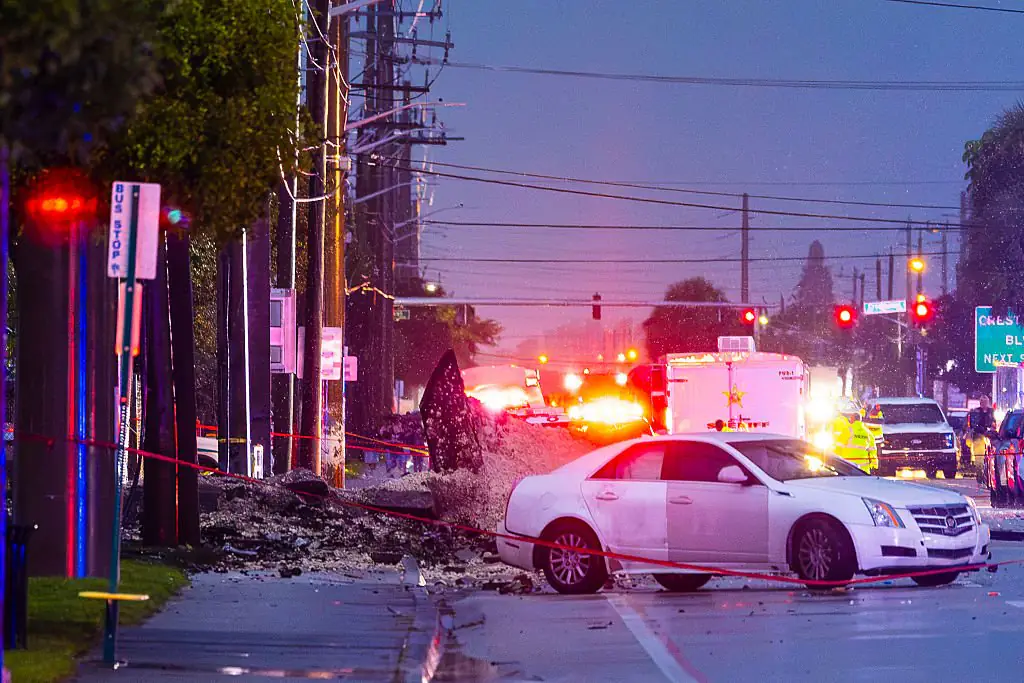
However, the plane plunged in roughly 77 seconds, crashing near Military Trail in Greenacres and killing Captain Jeff Gregory, First Officer Nathalia Gadelha Filgueiras, and seven passengers.
Flight data showed that the jet was cruising between 41,000 and 45,000ft before descending to 35,000 ft near Florida.
Pilot Suggests Extreme Turbulence May Have Damaged Aircraft's Tail
Morano believes the wreckage could mean that the aircraft lost essential control surfaces before impact.
His first theory involves severe turbulence inside a thunderstorm, which he said could have put enormous stress on the jet's structure.
"The thing that occurred to me first is, if you fly into a thunderstorm, it is very possible for those things to break your aircraft," he said. "You have air columns moving up, and air columns moving down to where you can get differences in the up and down of at least 100 knots, 120 knots. So that you can be flying straight forward and get hit by wind, or by a vertical shaft of air that could literally collapse your wing spars, things like this."
"This is not uncommon for planes going into a thunderstorm that they have structural failure," he added.
The pilot suggested that the aircraft's tail, rather than its wings, may have been vulnerable.
"At first, I thought they may have experienced a structural failure. On a Learjet, you're hardly ever going to break the wing because it's got one of the toughest wings out there. It came from a Swiss fighter design, and it is just a piece of art. It just will not break. But the tail might break."
"And if the tail broke at that time due to extreme G forces and wild turbulence, that would explain why the nose went down and why they were unable to recover it," he added.

Unusual Ice Buildup Could Offer Another Explanation
Morano's second theory is based on reports of icing at an altitude where he said such conditions are extremely rare.
"Number two is more obscure, but I think it's equally as likely," he said. "They were reporting something unusual before the crash. And I think you'd almost have to be an airline pilot or a private jet pilot to understand the significance of what they were saying."
According to him, the crew had reported encountering ice at approximately 40,000 feet, something he had never personally experienced during his flying career.
"I have never in my career gotten icing above 40,000 ft," he shared. "It is because once you get colder than -40 Celsius outside, there's just not enough moisture in the air to allow ice to form."
He recalled that the Learjet's operating guidance may even have allowed pilots to switch off certain anti-icing systems in extremely cold conditions.
"In fact, we may have been in the Lear that our system said if it's colder than 40 below, you can just turn off your anti-ice stuff. It's not going to form. Yet here they were, and I believe it was -45, and they said they were picking up...a significant amount of ice. And that's counterintuitive," he said.
Morano suggested that strong winds from a thunderstorm could have pushed moisture high into the sky.
"That doesn't make sense until you realize that a thunderstorm, because of its vertical columns of air, will pick up warm moisture and fly it up to huge altitudes. So they were reporting something that occurred because warm air, apparently, was getting to their altitude at 35 to 40, which is extremely rare," he concluded.
Investigators recover the cockpit voice recorder
While the NTSB previously shared that it recovered most of the plane's left elevator in three pieces, scattered up to 3.8 miles from the crash site, it has now announced it has recovered the cockpit voice recorder.
The recorder was located at the site where the Learjet crashed in Palm Beach County, the National Transportation Safety Board disclosed in a statement.
If data from the device can be retrieved, it could reveal important details about what the pilots said as they faced turbulence, ice on the wings, and a loss of control of the aircraft.
It was not known if the recorder had been damaged or if it was working in the first place.
The NTSB said the device was being evaluated at a Washington lab. Photos they shared online showed the recorder’s orange-painted metal shell appeared to be in decent shape, said aviation safety expert Jeff Guzzetti.
"It’s very plausible that any info on the recorder survived," Guzzetti said. "If they can recover it, and it’s from the accident flight, that will be a huge help to investigators."