


US5 min(s) read
Plane captain speaks out on what was missed before Florida Learjet crash: "I don't know how they didn't see that"

An aviation expert has explained a detail that was missed by pilots on the doomed Learjet 60, which crashed into a mobile home park in Palm Beach County, Florida, on Sunday.
The Bahamas-bound private jet went from flying at an altitude of 35,000 ft to plummeting into the ground in just 76 seconds.
The horrific incident resulted in the deaths of all nine on board, all of whom have been identified.
Those on board included entrepreneur Adam Robinson, 44, his wife Helen Sharp, their four-year-old daughter Emma, and their two-year-old son Charlie.
The family was traveling with their nanny, Anita Maria Apellido Cetina, and two close friends, Rachael Reed and Charmi Fehr.
Following the tragedy, air traffic control recordings have been made public, allowing aviation experts to listen in and give their own opinion.
In a video posted to YouTube, veteran pilot Captain Steeeve analyzed the recordings captured by LiveATC.net.
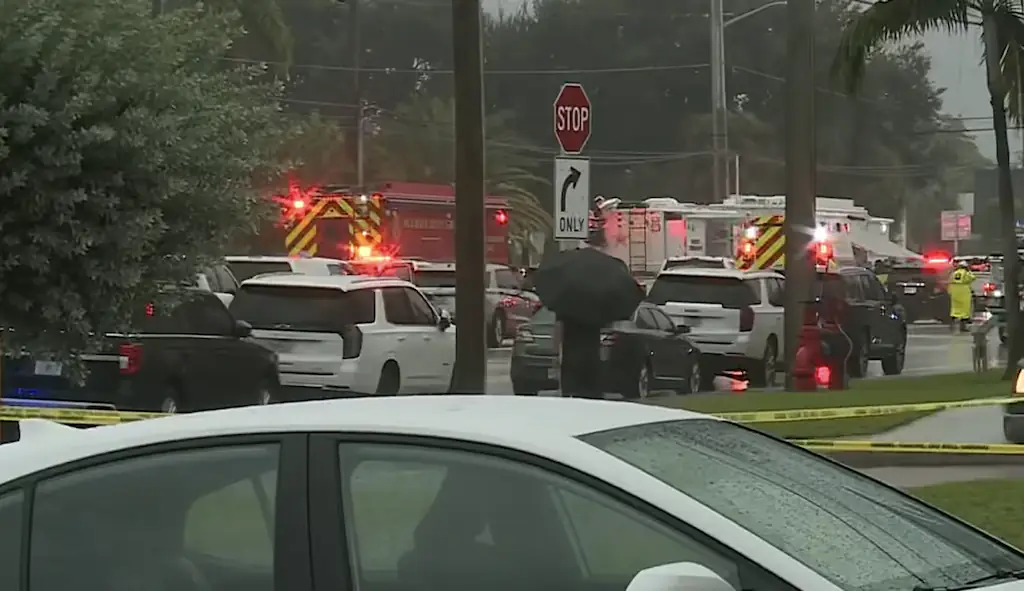
Plane captain explains what was missed
Before its crash into a mobile home park, the aviation expert claims that an important detail was missed on the Learjet 60.
Footage of the tragic crash has circulated online, with the private jet crashing after departing from Austin-Bergstrom International Airport in Texas, revealing the horrific extent of the incident.
The crew consisted of 55-year-old captain Jeff Gregory and 20-year-old co-pilot Nathalia Gadelha Filgueiras.
Captain Steeeve, who previously spoke about how icing may have caused the accident, gave viewers a live analysis of the ATC recording.
He noted that the co-pilot checked in with a new controller after switching frequencies, meaning that the aircraft isn't on the radar screen for the controller yet.
"I'm not sure he can see that thunderstorm they're about to fly into," the pilot explained.
"But, if you can see on the screen right in front of you now, that aircraft is pointed right at that yellow and red area and they're going to fly right through the red area - if I see that on my radar screen on the flight on my aircraft, I know that's a thunderstorm. I've got to go around that," the captain stated.

He explained: "But if they didn't see it, then this is tough, right? I don't know how they didn't see that.
"But there's no indication at this point that the radar is not working. But maybe we're going to find out from the NTSB that it wasn't," the pilot said of the National Transportation Safety Board, who have launched an investigation into the crash.
"If they're flying blind up there through this type of weather, they've got to be asking air traffic control, 'do you see anything in front of us?' Maybe they're not quite on this guy's scope yet. So that's between a rock and a hard place," he suggested.
Captain Steeeve then dissected what the co-pilot radioed: "She says we're we're plus or minus 700 ft, so she describes that as moderate turbulence - that's severe turbulence.
"If you can't maintain altitude plus or minus 700 ft, you don't really have full aircraft controllability. In my opinion, that's severe turbulence," he stated.
The pilot added that at the end of the day, it's 'up to the opinion of the pilots' on how they want to describe it.
"This is as extreme moderate as you can get without calling it severe. Plus or minus 700 ft, this aircraft is virtually out of control," he further reiterated.
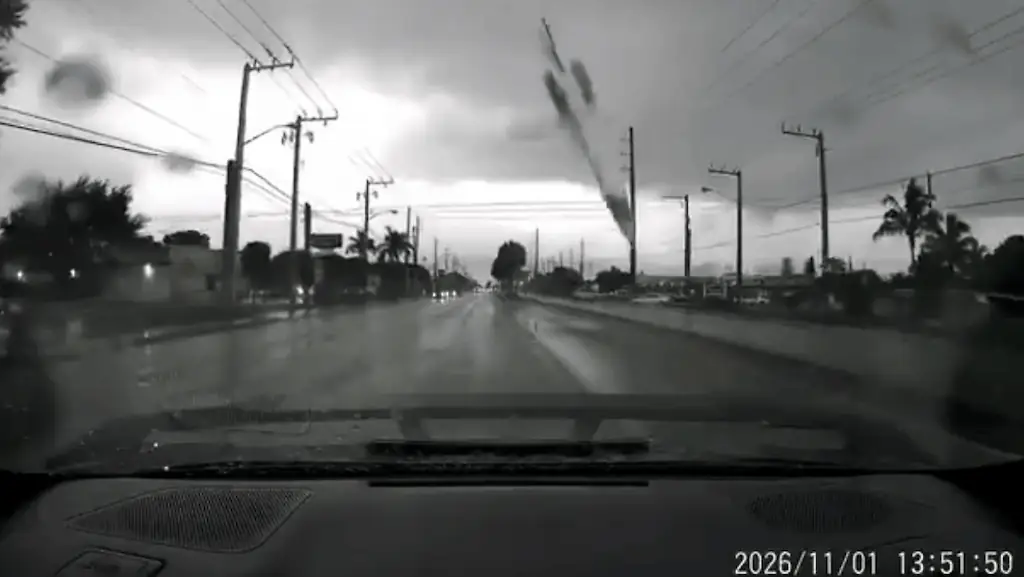
Severe icing may have caused the crash
The captain explained: "Severe icing is where the ice buildup is so rapid that the aircraft deicing and the anti-icing systems can't keep up with it."
He added: "That introduces something called supercooled large droplets. What are supercooled large droplets? They're called SLDs, and they're freezing rain or freezing drizzle.
"Now, you're going to see freezing rain or freezing drizzle probably at a much lower altitude than this. 35,000 ft and -47°C, and the introduction of precipitation, according to the pilot monitoring the co-pilot on the radio.
Due to the size of the droplets, they can freeze on the center portion of the wing, for example, affecting airflow.
"Now, that wing, that large hunk of metal out there, becomes like a vending machine instead of a wing producing lift," he said.
"And that vending machine then, as the air is flowing over the first part of the wing, but then goes straight up and kind of spirals like wind when it hits a mountain range."
Speaking about the harrowing ATC audio, he added: "That wing loses all lift. The aircraft begins to descend. That's where you heard her say that Mayday call. We're at 8,000, then 10,000, then 22,000 ft per minute rate of descent.
"Those supercooled liquid droplets are accumulating and making a ridge on the wing so that this aircraft just stops flying."