ADVERT
US1 min(s) read
Published 17:18 27 Dec 2018 GMT
There are some online scams that are so obviously fraudulent that they've become cliches. Everyone knows by now to ignore emails from Nigerian princes and that you probably don't have a long-lost great uncle who left millions to you in his will. It got to a point where it was remarkably easy to browse the internet without being roped into anything, but things have changed in recent years.
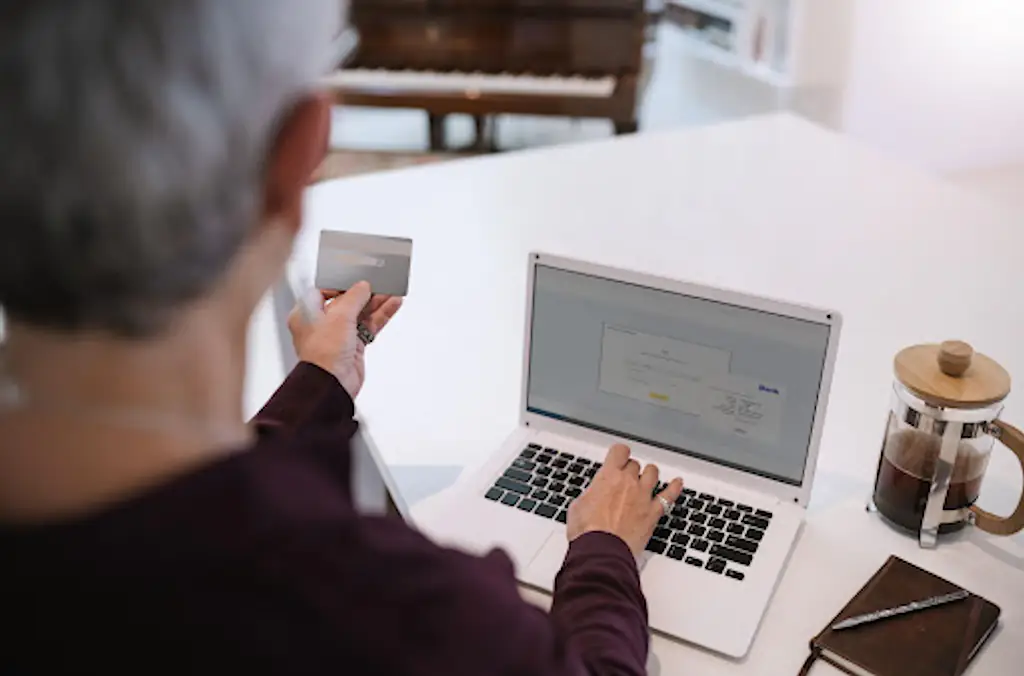
Given this is how they make money, scammers were bound to at least try and adapt to the times. Now, the idea is not only to reach a large amount of people, but convince them that you are genuinely contacting them on behalf of another company - hoping that the target of the scam uses a particular service.
And there's few services used as commonly as Netflix.
The United States Federal Trade Commission recently issued a warning for people to look out for fake emails from Netflix. This phishing scam looks to steal users' personal details and bank information by pretending to be the streaming service and requesting your information. In the post on the FTC's website, they explain what they mean by 'phishing':
"Phishing is when someone uses fake emails or texts to get you to share valuable personal information – like account numbers, social security numbers, or your login IDs and passwords.
"Scammers use your information to steal your money, your identity, or both. They also use phishing emails to get access to your computer or network. If you click on a link, they can install ransomware or other programs that can lock you out of your data."
This latest phishing attempt uses a convincing email from Netflix which claims that your account has been put on hold, as they are "having some trouble with your current billing information". If you end up clicking the link, it will take you to a page where you can input your payment details - at which point it will be delivered to the scam artists.
The FTC made a number of recommendations, chief of which is to be sure that you contact any company you've received correspondence from on their official customer service contact details, rather than any provided on a possibly-fraudulent email. On top of this, they suggested some things to look out for:
"While some phishing emails look completely legit, bad grammar and spelling can tip you off to phishing. Other clues: Your name is missing, or you don’t even have an account with the company.
"In the Netflix example, the scammer used the British spelling of “Center” (Centre) and used the greeting, “Hi Dear.” Listing only an international phone number for a US.-based company is also suspicious."
[[twitterwidget||https://twitter.com/FTC/status/1077965565921239040]]
Victims of phishing can end up giving away information such as social security numbers, login IDs and passwords, and bank details. As well as putting your money at stake, you can also provide access to your computer if they install ransomware or other programs via a phishing link.
So, even if you're convinced by an email like this, it's worth triple-checking that everything is legitimate just in case.
film & tv2 min(s) read
Published 12:43 10 Jan 2019 GMT
Are you the leech who uses your friend's Netflix account without paying your way? Well, lap it up while you can leech, because it could be about to get a lot harder to account share.
A London-based company named Synamedia is reportedly planning to launch an AI-based service that cracks down on password sharing.
The service, which is dubbed Credentials Sharing Insights, will use new software in order to figure out which users have logged in to which accounts and quickly flag shared ones.
Unveiled at the Consumer Electronics 2019 Show (CES) in Las Vegas by video software provider Synamedia, the new invention is reportedly aimed at the alleged 26 per cent of millennials who give out their credentials for video streaming services to other people.
However, Synamedia - which intends to empower Pay TV operators and video streaming websites - isn't just for small-time fee avoiders. The company has claimed that the system can also be used to track down large-scale for-profit operations.
It will reportedly use behavioural analytics and machine learning to check up on credentials-sharing activity.
The new system will let the operator specify exactly how many people should be using one account and then monitor a subscriber database for any fraudulent activity.
In an interview with Variety, Symanedia chief product officer Jean-Marc Racine claimed the focus was "on friends and family "taking their [users'] generosity a bit too far" in an age where TV operators can no longer rely on secure devices like locked-down set-top boxes and smart cards to decrypt satellite TV.
"The way you secure OTT is evolving," he said. "Passwords are easy to share."
With Parks Associates recently estimating that the industry could stand to lose as much as $9.9 billion due to password sharing by 2021, the new software is perhaps likely to be welcomed by streaming services such as Netflix and Amaz0n.
Jean-Marc Racine, CPO of Synamedia, said: "Casual credentials sharing is becoming too expensive to ignore. Our new solution gives operators the ability to take action. Many casual users will be happy to pay an additional fee for a premium, shared service with a greater number of concurrent users. It's a great way to keep honest people honest while benefiting from an incremental revenue stream."
However, the news wasn't taken well by people around the world who use streaming devices on a regular basis. In fact, many of them slammed the new development, with one claiming "They always find a way to ruin everything."
"So you can’t go have a movie night at a friends' now and use your Netflix, how stupid," another person added, while a third joked: "What I wonder how they will survive on 10 legit accounts?? [sic]"
There has been no comment so far from Netflix, Amazon, NowTV or any other streaming device as to whether they will be using the software.
science & tech3 min(s) read
Published 17:00 29 Jul 2018 GMT
If you're someone who leeches off a friend's Netflix account by using their login but not actually paying anything (no judgements here), you might want to think again about what you're doing. A recent poll found that 12 per cent of Netflix users do not pay for the service, which has been predicted could be costing the company over $500 million per year.
But before you feel bad about those statistics, remember that Netflix was the OG video streaming giant of the internet age, and their subscription numbers and profits are of such large numbers that they're almost impossible to keep track of.
One thing you should be worrying about, however, is that your password-sharing between friends might technically be illegal. Thanks to a little law called the Computer Fraud and Abuse Act in the US, you could be prosecuted for gaining access to a system you're not authorised to use. It's about permissions and data privacy, and while it was established to help control bigger issues than sharing Netflix accounts, the Act means you can't share passwords with other people so that they can use different log-in systems.
Oddly enough, the legislation is seemingly against what Netflix encourages users to do. In fact, Netflix CEO Reed Hastings doesn't mind you sharing your account with other people at all. "We love people sharing Netflix," he said at CES 2016. "That's a positive thing, not a negative thing."
Netflix is designed to enable sharing too, with the streaming service allowing you to set up different profiles inside your account so different people can have their own history, preferences and recommendations.
[[twitterwidget||https://twitter.com/ValleyMerch/status/1021945030171226112]]
The obvious constraint to sharing is that on the basic pricing plan, only one person can stream something at a time. For a little bit extra per month, two people can stream something simultaneously, while the premium option allows four different people to watch something on their own devices at the same time, even if you're living in different cities.
So with the last option making it impossible not to share a password (you know, without physically logging into the account yourself on their device), it's no wonder the Computer Fraud and Abuse Act has been dubbed "the worst law in technology".
But while Netflix might ~say~ sharing an account is okay – the aforementioned law tells you otherwise. And those 'terms of service' things that you definitely never read say something different about it too. Netflix's terms of use document states that “the Account Owner should maintain control over the Netflix ready devices that are used to access the service and not reveal the password or details of the Payment Method associated with the account to anyone."
So yeah, technically you can't share an account unless you have control over the devices and log in using the password that only you know yourself. That's Netflix's official statement on the matter of the Computer Fraud and Abuse Act, and you should keep that in mind.
I will add that the legislation is pretty vague and you're probably not very likely to be hunted down for sharing your password – but don't say I didn't warn you. You probably won't be able to watch Netflix in jail, after all.
uncategorised3 min(s) read
Published 11:25 13 Oct 2017 GMT
science & tech7 min(s) read
Published 12:13 09 Dec 2021 GMT
This is a sponsored article in partnership with TSB...
Fraudsters are getting more and more sophisticated in their attempts to extract your personal details and money. This means that as soon as you get used to one type of fraud, another appears quickly in its place.
They succeed not only because they often look just like the real thing, but because they catch you off guard when you’re least expecting it. And your age, profession and income don’t do much to safeguard you, as fraudsters target everyone.
With this in mind, VT spoke to Paul Davis, the Director of Fraud at TSB, about how to better protect ourselves from being the victim of these sorts of crimes.
As Davis explains, the techniques used by fraudsters are really advanced, and it can sometimes be tricky to tell if a message is genuine or not. “I think that the one thing consumers can’t rely on is where the message appears to come from, as those parts of the message can easily be changed by them,” he says.
“It’s much better to think about what the message is asking you to do, rather than what it says. So, if it says “TSB Bank” at the top, for example, that doesn’t necessarily mean that that company has sent the message.”
If the message contains hyperlinks, Davis says that it’s most likely fraud. The same goes if it’s also asking you to provide your banking card details, passwords, or personal information, such as your date of birth, as providers would not ask for such information over a message.
“Alternatively, if the message just asked you to respond with a yes or a no, then it’s probably genuine.”
If you’re shopping online, Davis recommends always using your bank card. “It’s the safest way to pay if something goes wrong, as you’ll get great protection,” he says. “It’s also a good sign that you’re dealing with a genuine merchant.
“If you find yourself looking to buy something online, and the only thing the seller accepts is bank transfer, I would go so far as to say that it’s probably fraud,” he adds.
Another thing to look out for are messages that arrive out of the blue, when you’re not expecting them, or when you’re not doing any banking or spending. “Always question the authenticity of someone who contacts you randomly,” Davis advises.
“If someone rings or texts you saying they’re from your bank, don’t believe them. You should end the call or ignore the text, and contact the company using genuine details, for example from your statement, or by looking at their website using an internet search engine.”
As Davis stresses again, fraud is constantly evolving, and becoming more complex. As such, they’re often carried out through different steps, which allows fraudsters to build up schemes over time.
“This reflects the fact that we’re all getting better at spotting fraud, so nowadays, they’re often not going to ring you up, and pretend to be from your bank because you’ll probably spot that,” he explains.
“So, what they’re starting to do is send spoof messages to gain information. The first message might pretend to come from Royal Mail, saying that they have a package for you that couldn’t be delivered or had the wrong postage. They will then get you to type in your card details.
“Nothing will happen right away, but they will call you a few days later regarding the information you gave them previously. Fraudsters can do a pretty good job sounding like they’re actually from your bank, because they’ll know things like your card number, and you may not put two and two together.
“So, even though something looks innocuous, it might still be part of a bigger fraud.”
While it may seem like fraud is everywhere, Davis walks us through three golden rules to help you avoid being a victim of fraud — so you can shop and go about your daily life in confidence...
“The one golden rule is to take your time,” Davis advises. “Fraud prevention advice can be pretty complicated, and everyone has their own top tips, but the one thing all fraud prevention has in common is to slow down.”
“If you take your time when you’re banking and moving money, you won’t fall for the thing that fraudsters want. They’re working to create a sense of urgency in your mind, a kind of rush and hot emotional state, which often leads to doing things that you’ll later regret,” he continues.
“As consumers, anything you can do to get out of that state is good. So take your time, talk to your bank, your friends, or even make a cup of tea before you make a final decision.”
Davis points out that there’s a belief that fraudsters only target the elderly, but, in reality, younger people are more likely to fall victim to lower-value online purchase fraud.
They target different age groups with different types of fraud, so it’s advisable to be aware of the ones that are most likely to impact your demographic.
Older people tend to be targeted with fraud that involves substantially more money, including investment fraud. Older people are also more likely to be targeted for impersonation fraud, which involves someone who is posing to be from their bank or a mail company, such as DHL.
“People need to remember that these are really serious crimes,” Davis stresses. “They’re often thought as being less impactful, but that’s not true.
“Amongst the cases we see at TSB, being a victim of fraud can have a profound impact on your physical and mental health, as well as your confidence when it comes to purchasing items or using online banking.
“It can take victims a long time to recover, and it goes much further than just getting a physical refund. So, at TSB we offer a Fraud Refund Guarantee, which will reimburse innocent victims, but that’s just one aspect of the crime.
“The key thing here is preventing fraud from happening in the first place.”
TSB offers a Fraud Refund Guarantee, which is valid from 14/04/2019.No refund if customers are involved in committing the fraud or ignore specific account safety advice. Guarantee limited to £1 million per claim for authorised transactions. Purchase disputes are not covered by the Guarantee. Other conditions apply.
lifestyle3 min(s) read
Published 17:05 13 Mar 2021 GMT
Some Netflix users have had their viewing pleasure disrupted as a part of a recent test by the streamer to crack down on users sharing passwords across different households.
If you're a Netflix user yourself, you may have noticed the change when visiting the streamer's website.
According to Digital Spy, in recent weeks, some viewers have reported seeing a message come up on the screen, asking them to verify their account after logging in.
"If you don't live with the owner of this account, you need your own account to keep watching," the message reads.
If a viewer wants to continue using the account, they are expected to verify their right to use it via an email or text code.
Of course, if the user is not actually the account holder themselves, they may have difficulties with the verification process.
I mean, who really wants to go to the trouble of asking the person whose account you're sponging off to check for a code purely so you can continue binge-watching your favorite shows free of charge?
If you're uncomfortable with the idea of bothering the individual funding your couch potato lifestyle, you're then left with the option of setting up your own account with a 30-day free trial.
A Netflix spokesperson told The Streamable: "This test is designed to help ensure that people using Netflix accounts are authorized to do so." It is not known whether users in the test simply need to have the same IP address to be considered part of the same household.
While the streaming giant does actually allow more than one user per account, password sharing "with individuals beyond your household" is absolutely not allowed.
According to Netflix's Terms of Use:
"The Netflix service and any content viewed through the service are for your personal and non-commercial use only and may not be shared with individuals beyond your household.
"During your Netflix membership, we grant you a limited, non-exclusive, non-transferable right to access the Netflix service and view Netflix content."
Depending on the plan you have, there are also limits on how many users on an account can view a program at the same time.
With their basic plan ($8.99), a program or movie can only be streamed on one device. So even if you were planning to watch a completely different show or film than the other user, if your account is currently in use, you won't be able to.
With the Standard plan ($13.99), streaming is available on no more than two devices, and the Premium plan ($17.99) allows up to four devices.