ADVERT
Space1 min(s) read
Published 17:02 12 Dec 2019 GMT
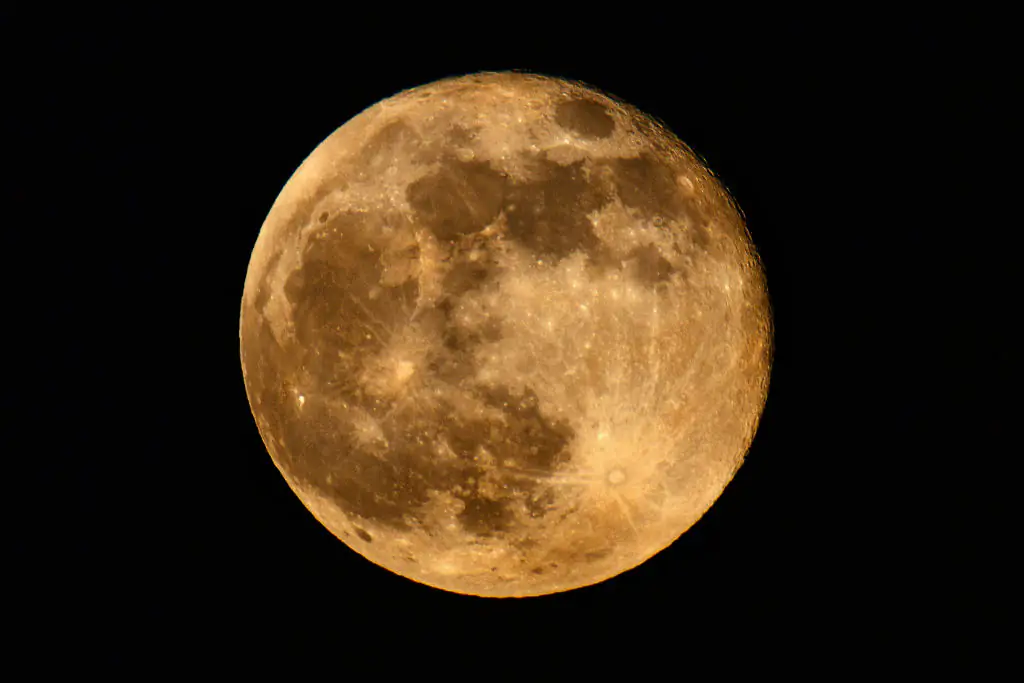
The final full moon of the decade arrived at 12:12 am Eastern Time on 12/12. So to be precise, it lit up the sky at 12 minutes past 12 on the 12th day of the 12th month of the year.
Anticipating the event, NASA explained the phenomenon in a blog post:
"The next full Moon is the Cold Moon, Oak Moon, Moon before Yule, Long Night Moon, Uduvapa Poya, the Karthikai Deepam Moon and the Chang'e Moon. The Moon will be full just after midnight on Thursday morning, Dec. 12, 2019, appearing 'opposite' the Sun (in Earth based longitude) at 12:12 AM EST. The Moon will appear full for about three days centered on this time, from Tuesday evening through Friday morning."
October saw the rise of the ‘Tiny Hunter’s Moon’ which set the sky ablaze with the most beautiful orange hue:
[[jwplayerwidget||https://content.jwplatform.com/videos/MwGAxt1j-Q0L14jDU.mp4||MwGAxt1j]]
Astronomy fans were able to watch and take pictures of the full moon because it was opposite a low sun, according to NASA.
"The moon takes a high trajectory across the sky and as it is opposite to the low sun, it will be above the horizon longer than at other times," NASA continued.
Check out these stunning photos capturing the last full moon of the 2010s:
[[instagramwidget||https://www.instagram.com/p/B59X51LnkHz/]]
[[instagramwidget||https://www.instagram.com/p/B59oIA6F9tX/]]
[[instagramwidget||https://www.instagram.com/p/B59R5ZNApij/]]
[[instagramwidget||https://www.instagram.com/p/B58-g1RAxVX/]]
[[instagramwidget||https://www.instagram.com/p/B583WqvgOtl/]]
The full moon in December is also known as the Cold Moon "due to the long, cold nights". And as it was the full moon closest to the winter solstice, Europeans named it the "Long Night Moon," NASA explains.
Its other names include the Oak Moon (Europe), Moon before Yule (Europe), Uduvapa Poya (Sri Lanka), the Karthikai Deepam Moon (Tamil Nadu, Sri Lanka, and Kerala) and the Chang'e Moon (China).
Over the night, NASA says it was possible to see five different planets. Jupiter was visible just after sunset, followed by Venus, the brightest planet in the sky, as twilight ended. Saturn appeared less than two degrees away from Venus, and as morning twilight began, Mercury appeared just above the horizon, followed by Mars.
world1 min(s) read
Published 10:38 13 Oct 2019 GMT
Be sure to find clear skies and look up tonight, as the evening of October 13 will host the spectacular lunar phenomenon known as the Hunter's Full Moon. Celestial enthusiasts will be treated to the rare brighter and orange-colored moon as it appears "opposite" the sun, NASA has announced.
According to NASA, full Hunter's Moon will reach peak "fullness" on Sunday, October 13 at 5:17 pm eastern daylight time (22:17 pm GMT).
Check out some incredible footage from this orange lunar phenomenon:
[[jwplayerwidget||https://content.jwplatform.com/videos/MwGAxt1j-Q0L14jDU.mp4||MwGAxt1j]]
The very first citation of the "Hunter's Moon" was found in the Oxford English Dictionary from way back in 1710, and it refers to the full moon that occurs after the Harvest moon, that would allow hunters to easily see any animals searching for scraps in the now harvested fields.
Science journalist Deborah Byrd writes on EarthSky: "If you’re in the Northern Hemisphere, look for the moon to be bright and full-looking for several nights beginning around October 11 and 12. Keep watching on October 13 and 14. Around all of these nights, you’ll see a bright round moon in your sky, rising around the time of sunset, highest in the middle of the night."
According to NASA, several sources suggest that other names for the Hunter's Moon are the Sanguine or Blood Moon, either associated with the blood from with hunting or the turning of the leaves in Fall.
Tania de Sales Marques, an astronomer at the Royal Observatory Greenwich, told Country Living:
"The October full moon will happen on the 13th and is known as the Hunter's Moon. The Moon will rise just after sunset [...], so if you go for a walk after dinner and the skies are clear, face south and you should be able to spot a beautiful full moon."
Per the official NASA website, this particular full moon has significance to many cultures and religions around the world:
[[jwplayerwidget||https://content.jwplatform.com/videos/DFWxNDLh-Q0L14jDU.mp4||DFWxNDLh]]
And don't worry if clouds spoil your view of this beautiful occasion, because NASA says that the orange moon will be visible until Tuesday morning. But in case you do miss the spectacular sight, the Hunter's Moon will return next fall.
us3 min(s) read
Published 14:52 04 Dec 2025 GMT
This month - tonight in fact - one of the most spectacular celestial sights you can experience with the naked eye is set to be visible in the USA - the Cold Supermoon.
This Thursday (December 4), it will be worth keeping your eyes to the skies to see if you can spot it.
NASA claims that tonight is the night if you want to see our biggest satellite in all her glory, and they tend to know what they are talking about when it comes to the moon.
So, this Thursday evening, you’d better pray for clear skies so that you can grab a peek - or a whole eyeful - of this relatively rare celestial event.
December’s full moon is known as the Cold Moon, but this time around, there is something special about it too, because it is going to be a supermoon.
According to the official stats, the moon will appear to be around 14 percent larger and 30 percent brighter.
So, you’re going to notice it.
NASA also pointed out that in a few days there will be a rare conjunction between the moon and Jupiter, meaning that they will appear very close together, despite the fact that clearly they aren’t.
The agency claims that the moon will be at peak on December 4 at 6:14pm ET.
That means that the peak might occur before sunset in certain parts of the USA, but that doesn’t mean you will miss out.
In fact, there’ll be a few days where the moon looks bigger and brighter, so don’t worry too much.
Supermoons occur when the moon is full and at the closest point to earth, which is known as the perigee.
That means that the moon is not only as exposed as it ever will be, it is also significantly closer, which means that it looks significantly bigger as a result.
Following this month’s Cold Moon, we’ll have another early in January 2026, as well as others in late November 2026 and late December next year too - really close to Christmas, as it happens.
However, one serious sticking point remains.
According to the National Weather Service, quite a lot of the USA is expected to be under heavy sky coverage during the night, so spotting the supermoon might require a bit of luck.
So, if you do spot it, know that you’re not only spotting a pretty rare and beautiful sight, but you are also fortunate to be in a place where you can actually see it.
Don’t take these things for granted.
lifestyle2 min(s) read
Published 16:54 31 Aug 2020 GMT
If you're looking for something spectacular to watch this Wednesday night, then you have to keep an eye out for the Harvest Moon which is set to light up the skies.
You will be able to see the full Corn Moon the early morning hours of Wednesday, September 2, when it will peak "opposite" the sun at approximately 1:22 am EDT.
A full moon will begin tonight (August 31) and last for three days, so now really is the perfect time to take a look up at the summer night skies - ideally with binoculars if you have them!
[[twitterwidget||https://twitter.com/PaulPiorek/status/1300100796932071431]]
According to NASA: "The Maine Farmer’s Almanac first published Native American names for the full moons in the 1930s. Over time these names have become widely known and used.
"According to this almanac, as the full Moon in September and the last full moon of summer, the Algonquin tribes in what is now the northeastern USA called this the Corn Moon, as this was the time for gathering their main staple crops of corn, pumpkins, squash, beans, and wild rice."
The moon has various names in Europe including the Fruit Moon, as this is a time of bounty, and the Barley Moon, as the end of the summer is when barley is typically harvested.
[[twitterwidget||https://twitter.com/PeteSercer/status/1298774774932529157]]
This moon also has additional spooky significance and its appearance in the sky coincides with the Chinese Hungry Ghost Festival.
"The seventh month of the Chinese calendar is the Ghost Month and the fifteenth day of this month (a full moon day) is called Ghost Day, on which ghosts and spirits, including those of deceased ancestors, come out to visit the living," NASA says.
However, it is worth noting that the corn moon not only has cultural significance in China. It also marks the end of a 10-day celebration called the Onam Hindus for Hindus in Kerala, India.
According to NASA: "This full Moon also marks the start of Pitri (or Pitru) Paksha (fortnight of the ancestors) during which Hindus pay homage to their ancestors, especially through food offerings. Pitri Paksha starts with the full moon in the lunar month of Bhadrapada and ends with the new Moon."
Buddhists in Bangladesh and Thailand described the Corn Moon as Modhu Purnima, the Honey Full Moon, or the Honey-offering Festival.
Now, if you're familiar with Buddhism, you'll know that the Honey-offering Festival is connected to the legend that says that a monkey and an elephant fed honey to the Buddha, bringing peace to two fractions, with the elephant bringing fruit and the monkey offering up a honeycomb.
In a nutshell, this is one celestial event that's not to be missed!
space1 min(s) read
Published 10:39 09 Oct 2019 GMT
Calling all astronomy fans: this Sunday evening (October 13th), you will be treated to the sight of a full orange moon in the night sky, Newsweek reports.
The Hunter's Moon will appear when the sun goes down on October 13, 2019, and will set the sky ablaze with the most gorgeous orange spectacle. According to Country Living, the precise time of the full moon is 22:07 pm GMT.
Check out this incredible footage of a Hunter's Moon, and learn more about this incredible phenomenon:
[[jwplayerwidget||https://content.jwplatform.com/videos/MwGAxt1j-Q0L14jDU.mp4||MwGAxt1j]]
"The October full moon will happen on the 13th and is known as the Hunter's Moon. The Moon will rise just after sunset, at 18:35 and will be highest in the sky around midnight, so if you go for a walk after dinner and the skies are clear, face south and you should be able to spot a beautiful full moon," Tania de Sales Marques, astronomer at the Royal Observatory Greenwich told Country Living.
Also known by its other names, the Travel Moon and the Dying Moon, the term ''Hunter's Moon'' refers to the fact that this time of year - when sunset and moonrise are closest together - was historically the best time to hunt.
According to de Sales Marques from the Royal Observatory Greenwich, "this name is thought to date back to early European and Native American tribes who would associate October's full moon with the season for hunting game and preparing for the winter months."
"It’s the location of the moon near the horizon that causes the Hunter’s Moon – or any full moon – to look big and orange in colour," science journalist, Deborah Byrd, explains.
[[instagramwidget||https://www.instagram.com/p/B2b56tUJlvc/]]
In any case, you don't have to worry too much if you miss the Full Hunter's Moon as the Frost Moon and Cold Moon can be spotted in November and December.
Also, stargazers can still catch sight of the Draconid and Southern Taurid meteor showers which will be setting the night sky alight with stunning shooting stars today and tomorrow, across the United States.
space2 min(s) read
Published 12:32 28 Sep 2020 GMT
The spookiest month of the year is almost upon us, and this October will be a particularly spectacular month for ghouls and witches with a penchant for looking up at the night sky.
A stunning harvest full moon and Mars will be visible in the night sky this week, with the former appearing on Thursday night, nine days after the autumn equinox.
There are two full moons each month, and the second, a hunter's moon, will be appearing on Halloween itself, October 31.
Earth Sky advises that the best time for UK stargazers to witness the harvest moon is at 10:05 pm; meanwhile, Forbes reports that the best time for American stargazers to catch a glimpse of it is at 5:05 p.m EDT.
Forbes has promised that this will be an "incredible sight" for Americans with the bonus of clear skies too.
While this isn't the only full moon in 2020, it is unlike another this year.
The Old Farmer's Almanac wrote: "There are just little over 12 complete Moon cycles every year, on average - there being about 29.53 days in a synodic month. The Harvest Moon isn't like the other Moons.
"Usually, throughout the year, the Moon rises an average of about 50 minutes later each day. But near the autumnal equinox, the difference is only 30 minutes.
"Additionally, the Full Harvest Moon rises at sunset and then will rise very near sunset for several nights in a row because the difference is at a yearly minimum. It may almost seem as if there are full Moons multiple nights in a row."
Mars will be visible in the night sky on October 2, and stargazers will be able to see the red planet near the almost-full moon during the last few hours of the sunset, with Forbes reporting that the two will be "exceptionally close" to each other.
However, if you're looking to enjoy the night sky even more in October, you can also catch a glimpse of the Draconid meteor shower, which is set to peak next week.
Timeanddate.com reports that the best days to view the meteor shower are October 8 and 9, and what makes this shower even better is that it will be viewable at a reasonable time rather than particularly late at night.
EarthSky revealed what this shower is: "This annual meteor shower happens when Earth in its orbit crosses the orbital path of Comet 21P/Giacobini-Zinner. Debris left behind by this comet collides with the Earth's upper atmosphere, to burn up as Draconid meteors. This comet has an orbital period of about 6.6 years.
"It’s about six times more distant at its farthest point from the sun than at its nearest point. At aphelion - its most distant point - it's farther out than the planet Jupiter. At perihelion - its closest point to the sun - it's about the Earth's distance from the sun."
So, if you're a fan of looking up at the night sky in wonder, October really is the best month this year to do it.