


Uncategorised4 min(s) read
18 Facts about the human body that will majorly freak you out
.jpg_I4Ebof?tr=cr-0.338.2730.3068,f-webp,q-70,w-100)
1. Internal organs
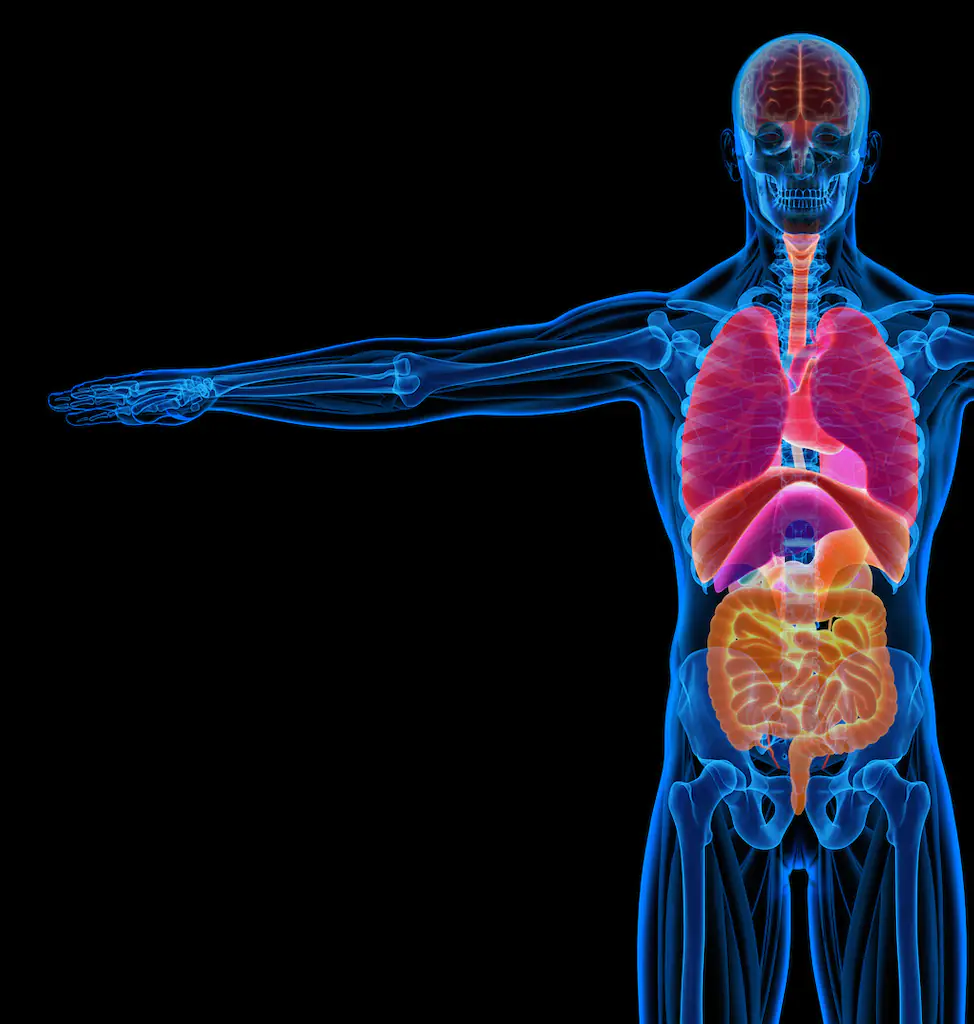
As vital as they are, human beings can survive extensive organ loss or damage. In fact, a person could theoretically live with no stomach, no spleen, a quarter of a liver, 20 per cent of their intestines, a single lung, one kidney, and could lose almost every organ from the pelvic area and still live to tell the tale.
2. Muscle
The largest muscle in the body is the gluteus maximus (located in the butt), the smallest is the stapedius (which can be found in the ear), and the strongest is the masseter (in the jaw).
3. Brain
Weighing in at only 3lb, the human brain is essentially the most important component of the human body. It's also one of the most protected - as its jello-like consistency makes it very susceptible to damage. Weirdly, though, it doesn't contain any pain receptors, which is why patients can undergo brain surgery under only local anesthetic.
4. Stomach acid
With a pH level of 1.5 - 3.5, stomach acid is strong enough to dissolve razorblades.
5. Feet
About a quarter of bones in the body are located in the feet. Also, the surfaces of our feet contain 500,000 sweat glands, making them capable of producing over a pint of sweat every day. Gross.
6. Iron
Your body contains enough iron to make a nail about 3 inches long.
7. Scent
Everybody in the world has a smell as unique as their fingerprints. Twins, however, share the same scent.
8. Hair
Every single day, an average human being will lose between 60 and 100 strands of hair - but it's not noticeable at all, as we each have around 100,000 strands in total. The lifespan of each hair is somewhere between three and seven years.
9. Kidneys
We've already established that you can survive with just one kidney, but a lot of people have more than two. This is because the recipient of a transplanted kidney will keep the new one in addition to the two old ones, simply because it's not worth the hassle to remove the spare one.
10. Height
If you measure yourself in the morning, you'll find you're about 1 cm taller than you would be in the evening. This is because our body relaxes when we're asleep, but daytime activities cause the cartilage in knees and other areas to compress.
11. Nerves
Neurons never stop growing throughout your lifetime, and the nerve impulses that travel to and from the brain can reach speeds of 170 miles per hour. Reflex actions, on the other hand, don't need to get to the brain at all and can cause your body to do something (such as remove your hand from a hot surface) without any mental processing.
12. Dreams
The brain is more active at night than during the day, and people who report having more frequent and vivid dreams are usually more intelligent than those who do not.
13. Taste
Younger people have a more refined sense of taste than older folks as, by the age of 60, most individuals will have lost around half of their taste buds.
14. Cells
Around 300 million of your cells die every single minute. But don't worry, you've got about 37.2 trillion in total.
15. Right-handed vs left-handed
Sorry left-handers: On average, right-handed people live for about nine years longer than you lot. This is mainly because a lot of workplace accidents or fatalities caused by tools afflict left-handers more, as the tools are better suited to those who favour their right hand.
16. Digestive tract
Human beings are basically just really complicated doughnuts, with the hole in the middle being the digestive tract that runs from the mouth to the anus. Think about that next time you tuck into the delicuous sweet treat.
17. Vision
Only a third of people have 20-20 vision - meaning most of us have imperfect seeing abilities.
18. Skin
Of all the organs in the human body, the skin is the largest. In fact, if you stretched out the skin of the average adult man, it would cover an area of 22 square feet. Even freakier: your top layer of skin is mostly dead, and will eventually end up as dust in your house.
So, not only is your body capable of running marathons, climbing mountains and creating masterpieces, it can also dissolve chunks of metal, give you mad dreams, and regenerate itself. And there's still so much about it that we've yet to discover.
.webp_lli6Ty?tr=cr-74.9.445.380,f-webp,q-70,w-100)
.webp_QQJmGo?tr=cr-345.0.1535.1190,f-webp,q-70,w-100)


.jpg_I4Ebof?tr=cr-0.338.2730.3068,f-webp,q-70,w-1024)


.webp_lli6Ty?tr=cr-74.9.445.380,f-webp,q-70,w-1024)

.webp_QQJmGo?tr=cr-345.0.1535.1190,f-webp,q-70,w-1024)