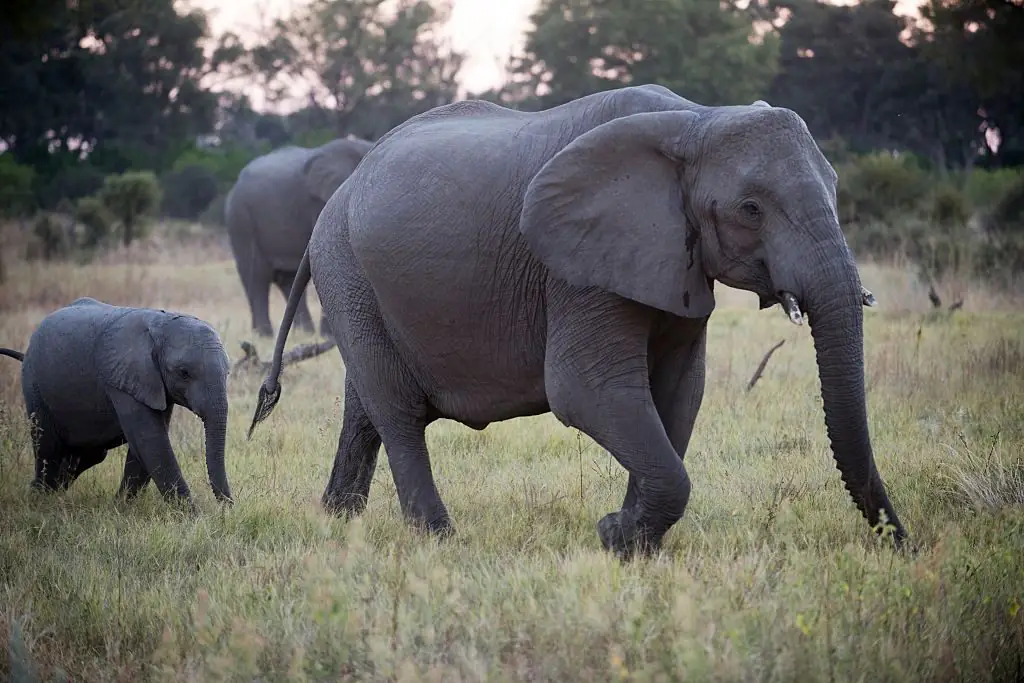
The government of Botswana has made the controversial choice to lift the national ban on elephant hunting, first introduced in 2014 by then-president Ian Khama, The Washington Post report.
The Botswana Democratic Party has justified the move by claiming that the local pachyderm population has recently increased, which has had a negative impact on farmers.
In a statement on Wednesday, Botswana’s Ministry of Environment, Natural Resources Conservation and Tourism said the committee determined that with the Khama's hunting suspension in place, "human-elephant conflict and the consequent impact on livelihoods was increasing."
President Mokgweetsi Masisi, who succeeded Khama in April of 2018, has vowed to ensure that elephant hunting is carried out in a responsible and ethical manner, but many environmentalist groups have been left incensed by this reversal.
[[imagecaption|| Credit: Getty]]
Commenting on the new legislation, Audrey Delsink, director of Humane Society International, stated:
"This horrifying decision by Botswana to lift its ban on elephant hunting will send shock waves throughout the conservation world. There are around 415,000 wild elephants in the whole of Africa, where they are relentlessly persecuted by trophy hunters and poachers, and Botswana is home to one-third of those elephants who have sought refuge within its borders. This population is vital to the overall regional survival of this iconic species."
[[imagecaption|| Credit: Getty]]
She added:
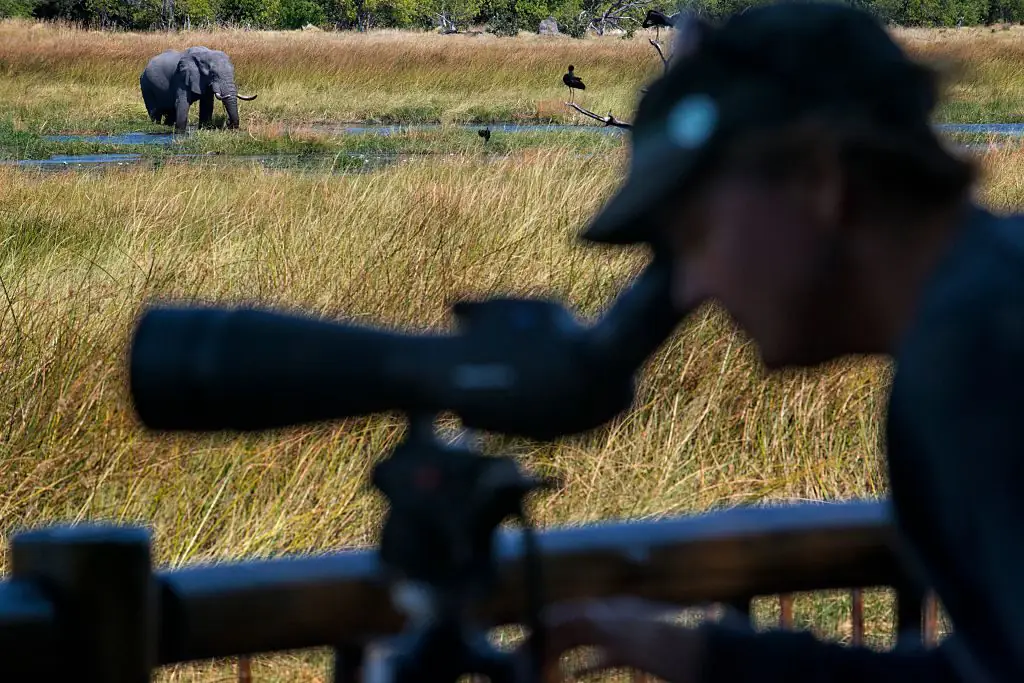
"Resuming elephant hunting is not only morally questionable and flies in the face of all international efforts to protect these giants, but it will also likely damage Botswana's hugely valuable tourism industry because visitors will be appalled at the idea that the very elephants they are photographing on eco-safaris could be gunned down by hunters the next day ... Elephants are worth far more to us all alive than dead.'"
[[imagecaption|| Credit: Getty]]
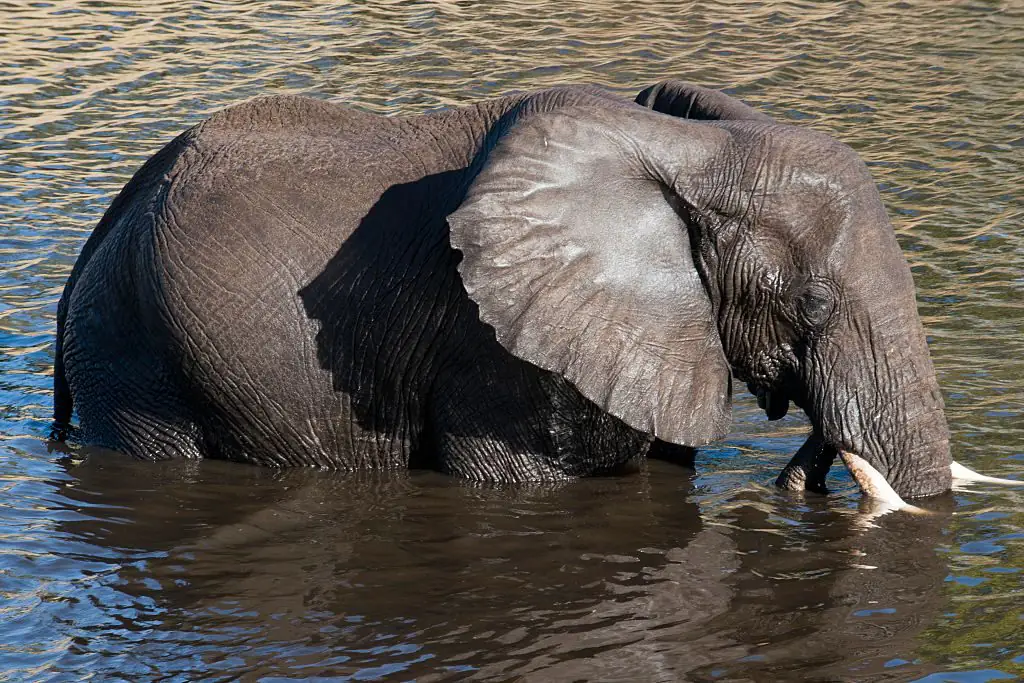
Botswana has the largest population of African elephants on the continent, boasting more than 135,000 in its national parks. Experts claim that their population has tripled over the last three decades as a result of various conservationist movements.
In 2014, the Obama administration placed a ban on the importation of elephant 'trophies' from several African countries. That means tusks, heads and other pieces taken from killed elephants can't be brought back to the country, incentivizing less big game hunting of the endangered African elephant population. Now, an official from the U.S. Fish and Wildlife Service has confirmed that the Trump administration plans to reverse this ban on elephant trophies.
The nations of Zimbabwe and Zambia will be re-opened to the transit of elephant trophies back to the U.S. That means that rich dentists, like the dude who killed Cecil the Lion, or Donald Trump Jr. himself, can hunt elephants and bring back the parts once more from these developing nations.
[[twitterwidget||https://twitter.com/WestWingReport/status/930992670213885952]]
Any gain in GDP from travel and the sale of these trophies seems minuscule in comparison to the actual consequences of loosening regulations on the sale of elephant parts. It seems needlessly cruel, and just another facet of the human desire to drive thousands of animal species into extinction. The oceans are becoming acidified and hostile to life, many extremely popular and iconic animal species are endangered (such as the elephant) and this will only add far more fuel to the fire of rich American men traveling abroad just to slaughter some endangered animals and bring back trophies.
There's no meat there, no suspense for the family. It isn't like hunting deer. It's exclusively for very rich people to kill very endangered animals for fun, and hang up the body parts in their home as examples of their colonial conquests. The famous photograph of Donald Trump Jr. standing over a dead elephant, holding its severed tail, is a microcosm of this decision. If that picture appalled you, well, events just like it are about to multiply in full-force.
[[twitterwidget||https://twitter.com/krassenstein/status/931152384838864896]]
The Fish and Wildlife spokesman defended the decision:
"Legal, well-regulated sport hunting as part of a sound management program can benefit the conservation of certain species by providing incentives to local communities to conserve the species and by putting much-needed revenue back into conservation."
Conserve the species to be hunted and killed, that is. That sounds like a rather temporary conservation. Of course, a black market elephant trade will exist no matter what, but surely it's difficult to illegally smuggle elephant tusks back to Oklahoma from Zimbabwe. The nation of Zimbabwe, by the way, has recently undergone a major coup, with longtime repressive ruler Robert Mugabe being overthrown by the military. Zimbabwe's elephant population, like it's political stability, is increasingly rare.
[[twitterwidget||https://twitter.com/DancingTheMind/status/931118136811835393]]
From 2007 to 2014, the elephant population in Africa fell by 30 percent across 18 countries. In Zimbabwe, it dropped only 6 percent, but varied by region. In certain areas in the country, up to 74 percent decline was seen, with "substantial declines along the Zambezi River".
Last year, 30 elephants were legally killed as part of trophy hunting in the country. To play devil's advocate, however, the funds paid by big game hunters do go to paying for conservation efforts. If a limited number of elephants are killed legally to fund conservation for the rest of the herd, is that justifiable?
We reported that Kenya is planning to introduce the death penalty for convicted wildlife poachers. This included a quote from Tourism Minister Najib Balala given to China’s Xinhua news agency, during a meeting held on May 10, 2018. However, Balala was not at that meeting, and told AFP Africa there was no such plan.
We want to make clear that this was an editorial error and apologize profusely to our readers for this.
At VT we take false news very seriously and want to assure all our readers that our articles are fact-checked strenuously before publishing.
Poaching is one of the world's least divisive issues. Almost everyone would agree that endangered animals should be allowed to live in peace - and roam their natural habitats without humans endangering their lives.
However, it remains a huge issue in African countries - including Kenya - where animals such as rhinos and elephants are targeted for their horns and tusks for alternative medicine and ivory, respectively. But the government is taking drastic steps to stem the bloodshed.
"We have in place the Wildlife Conservation Act that was enacted in 2013 and which fetches offenders a life sentence or a fine of U.S. $200,000," Cabinet Secretary for Tourism Najib Balala told China’s Xinhua news agency. "However, this has not been deterrence enough to curb poaching, hence the proposed stiffer sentence."
[[imagecaption|| Credit: Getty]]
In 2017, poachers killed nine rhinos and 69 elephants - cancelling out the growth rate of their populations. The number of black rhinos in the country is now below 1,000. Balala added that the law to see poachers face the death penalty, while not yet enacted, was being fast-tracked.
“Across the continent’s diverse wild lands, management authorities need data-driven solutions to enhance anti-poaching capacity to allow remaining priority populations to recover from previous, and current, crises," stated the African Wildlife Foundation.
"Meanwhile," they continue, "community-level interventions must explore different economic opportunities that secure rather than destroy biodiversity as pressure on natural resources grows with increasing development, infrastructure, and urbanisation.”
Ghana, home to animals as diverse as lions, elephants and monkeys, is seeing the rapid spread of human life - as the metropolis leaches into the countryside. But the main problem here, as it is in large swathes of Africa, is traffic. Meetings and functions usually start 45 minutes late and locals joke that "GMT" stands for "Ghana Maybe Time".
[[imagecaption|| Credit: Getty]]
In 2005, there were 159,000 registered vehicles in the country. Just 10 years later, there were already 890,000. Inevitably, as well as the impact on humans, wildlife is affected too - unless the animal in question is lucky enough to live on a protected wildlife reserve.
“Not only can KWS [Kenya Wildlife Service] catch wildlife criminals but now they have the capacity to ensure those criminals are convicted under Kenya’s robust laws," stated Max Graham of Space for Giants. "A ranger in the field should not have to experience the frustration of confronting a wildlife criminal they arrested a week earlier walking free again because of an acquittal. This is a critical step up in the battle against the illegal wildlife trade."
[[imagecaption|| Credit: Getty]]
However, as to whether Kenya's decisive steps to protect wildlife are progressive is up for discussion. The United Nations (UN) opposes the death penalty. The UN General Assembly has recommended a phasing-out of capital punishment and the Office of the High Commissioner for Human Rights advocates its abolition worldwide.
Furthermore, the idea that poachers enjoy what they do is misconceived. In many cases, it may be the only way they can provide for their families - creating a difficult moral dilemma for those tasked with policing the situation.
Kenya’s tourism chiefs say that the number of poaching incidents has reduced thanks to investment in conservation and wildlife law enforcement. These individuals, dubbed wildlife "bodyguards", also helped to publicise the desperate fight against poaching.
[[imagecaption|| Credit: Getty]]
“These efforts led to an 85 per cent reduction in rhino poaching and a 78 per cent reduction in elephant poaching, respectively, in 2017 compared to when poaching was at its peak in 2013 and 2012 respectively,” the ministry said.
"At current poaching rates, elephants, rhinos and other iconic African wildlife may be gone within our lifetime,” the African Wildlife Foundation states. They add that poachers “use high-powered technology and weaponry to track and kill many animals at once without being detected.”
However, conservationists are also turning to technological methods. Certain Kenyan rangers have started using thermal and infrared cameras in the hopes of spotting poachers before they spot their targets.
[[imagecaption|| Credit: Getty]]
“In the past, we would never have found these people,” explains Brian Heath, who runs the conservation group the Mara Conservancy. “Now the poachers are saying it’s just not worth going out because the chance of getting caught is getting higher and higher. It has been a big deterrent. In other areas, like South Africa where most rhinos live, dozens of rhinos have actually been airlifted out of poaching-prone areas and into safer locales, like Botswana, where poaching is rare.”
Vietnam has typically been thought of as the dominant market for rhino horn, while up to 70 per cent of illegal ivory ends up in China, where it sells for up to $1,000 a pound. But there are also tonnes of it in the west, forming a burgeoning antique ivory market. That said, its future - at least as a legal trade - looks increasingly uncertain.
While not divisive as a conversation topic, poaching remains an important source of income for some of the world's most impoverished people. Unfortunately, the issue isn't straightforward and enacting the death penalty will be seen by many not as a step forward, but a step back.
If you would like to help protect endangered species, you can donate to Drive4Wildlife - a conservation group formed of three brothers from Britain's Paradise Wildlife Park who recently travelled through Africa to get a better perspective on the issue of poaching
Circuses, which are apparently still a thing, are about to experience a major change in the United Kingdom. For centuries, the spectacles have featured wild animals, like elephants, lions, tigers, bears, camels, zebras, chimpanzees and reindeer. Animal rights activists have vigorously criticized circuses for subjecting those animals to confinement, torture and unhealthy living conditions. As a result, nearly 40 countries around the world have introduced bans.
On Wednesday, members of Parliament announced the Wild Animals in Circuses Bill, which bans traveling circuses from making wild animals perform for public entertainment in the UK. "Traveling circuses are no place for wild animals in the 21st century and I am pleased that this legislation will put an end to this practice for good," Environment Secretary Michael Gove stated, per the BBC.
"Today’s announcement follows other measures we have taken to strengthen our position as a world leader on animal protection," he added. "This includes our ban on ivory sales to protect elephants, and delivering Finn’s Law to strengthen the protection of service animals."
In February 2018, the government committed to introducing the ban by 2020. At the time, 94.5 per cent of the public supported the motion, according to The Independent.
The bill is a major victory for animal rights groups, who have been campaigning for the ban for years. They claim circus animals spend most of their lives behind bars, babies are torn away from their mothers, physical punishment is used as a training technique, deprivation is used as punishment, and the animals are faced to things they fear, like jumping through a ring of fire, balancing on a tightrope and riding a motorcycle.
"I am pleased that today’s legislation will deliver on the ban that many welfare charities and parliamentarians have been calling for," Animal Welfare Minister David Rutley said. "The general public can still enjoy a trip to the circus, but it is good to know that wild animals will no longer be a part of that experience."
"We really welcome the Government introducing a Bill to ban the outdated practice of using wild animals in circuses," stated David Bowles, the head of public affairs at the RSPCA, the largest annual welfare charity in the UK. "We’ve campaigned against having wild animals in circuses for many years. They have complex needs that cannot be properly met in a circus environment."
"It’s high time keeping wild animals in circuses is consigned to the history books and we look forward to the day that it is banned for good in England," Bowles added.
The ban only applies to wild animals, meaning circuses can still feature domestic creatures like horses, donkeys and dogs. Officials will regularly inspect the animals to make sure they are treated humanely.
The Niassa reserve in Mozambique, one of Africa's largest wildlife preserves, has gone a full year without any of its elephants being killed by poachers.
Indeed, the last recorded killing of an elephant by a poacher was on May 17, 2018.
The preserve, which just a year ago, had less than 2,000 elephants, now holds approximately 4,000 elephants.
This is the heartwarming moment a baby elephant rushes to save a man swimming in a river:
In recent times, the Mozambique government has introduced measures geared at increasing its elephant population and allowing it to flourish.
For instance, a dedicated police force was set up to protect the mammals, and better patrolling has been put in place, according to the New York-based Wildlife Conservation Society, which manages the reserve along with Mozambique's government
"It is a remarkable achievement," Wildlife Conservation Society country director James Bampton told The Associated Press.
[[imagecaption|| Credit: Getty]]
"The new rapid intervention police force is an elite unit that is better-armed than the reserve's normal rangers," Bampton said, before adding that no "bad incidents" had been reported in Niassa.
This new strategy allows the force to arrest any suspected poachers in a way that is quicker and more efficient.
According to Bampton, "just being caught with a firearm is considered intent to illegal hunting," and is punishable by a maximum prison sentence of 16 years.
However, while there has been a significant reduction in the poaching of elephants - to the extent that none were killed in the past year - experts are saying that the current death rate of African elephants is still greater than the birth rate.
Based on estimates, Africa's elephant population has plummeted from several million in 1900 to approximately 415,000 today.
Zimbabwe has banned mining in all 11 of its national parks, marking a huge victory for the country's iconic wildlife.
As reported by BBC News, the landmark decision means that officials have reversed their previous agreement to let Chinese firms explore for coal at its famous Hwange game park - which is home to approximately 40,000 elephants and a population of endangered black rhino.
In addition, the world-renowned Hwange National Park - the country's biggest national park - is also the location of leopard and painted dog conservation programs
[[imagecaption|| Credit: PA Images]]
The move comes after campaigners sought legal action against the government, calling for officials to prevent "ecological degradation" within the nation's parks. The movement was led by the Zimbabwe Environmental Lawyers Association (ZELA), who battled for over five years to block the mining rights that had been granted in 2015.
On Monday, ZELA filed court papers that warned that the parks would become sites "for drilling, land clearance, road building and geological surveys" if coal exploration was to be granted.
In response, Information Minister Monica Mutsvangwa announced on Tuesday (September 8) that a ban would be placed with immediate effect. She said: "Steps are being undertaken to immediately cancel all mining titles held in national parks."
In addition, Mutsvangwa also that mining along river beds would be banned across most of the country - a decision that will affect small-scale Chinese and local gold miners.
Per the New York Times, Shamiso Mtisi, the Zimbabwe Environmental Law Association deputy director explained how mining across Zimbabwe is a "widespread" problem.
Mtisi said:
"There is gold and diamond mining going on in several national parks across the country, it’s not just in Hwange. That’s a major threat to biodiversity and to tourism. It’s an economic issue, you cannot just rely on mining, you need to leverage on other sectors such as tourism."
The Times adds that as well as the large elephant population, Hwange park is also home to over 100 mammal and 400 bird species - such as buffalos, leopards, and lions.
[[imagecaption|| Credit: PA Images]]
Environment groups have since explained that many of these species are already struggling for food and water in the vast savannah due to a prolonged drought, and the proposed mining would only result in the pollution remaining water sources.


.jpg_I4Ebof?tr=cr-0.338.2730.3068,f-webp,q-70,w-100)


.jpg_I4Ebof?tr=cr-0.338.2730.3068,f-webp,q-70,w-1024)


