Uncategorised2 min(s) read
lifestyle3 min(s) read
Twins born from embryos frozen 30 years ago, which is a world record, have celebrated their first birthday.
Timothy and Lydia Ridgeway, born on October 31, 2022, have marked their first year of life. What makes their journey truly exceptional is that they were conceived from embryos frozen a staggering 30 years ago, earning them the distinction of being the oldest embryos used in a successful pregnancy, as recognized by the Guinness World Records, as reported by the Daily Mail.
These remarkable twins owe their existence to the generosity of their anonymous biological parents, who donated their embryos to the National Embryo Donation Center (NEDC) in Knoxville, Tennessee. Their embryos, frozen in April 1992, waited for decades before finding a new lease on life.
Adoptive parents, Rachel and Philip Ridgeway, who were just three and five years old when the embryos were first preserved, embarked on a unique path to expand their family. They used in vitro fertilization (IVF) in 2022 to bring the twins into the world.
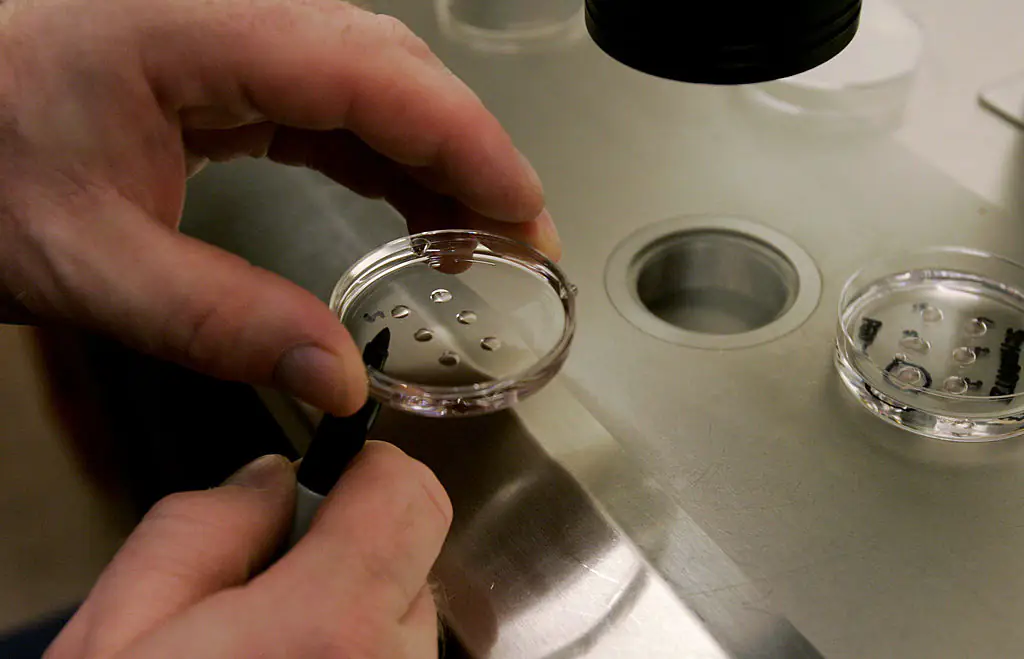
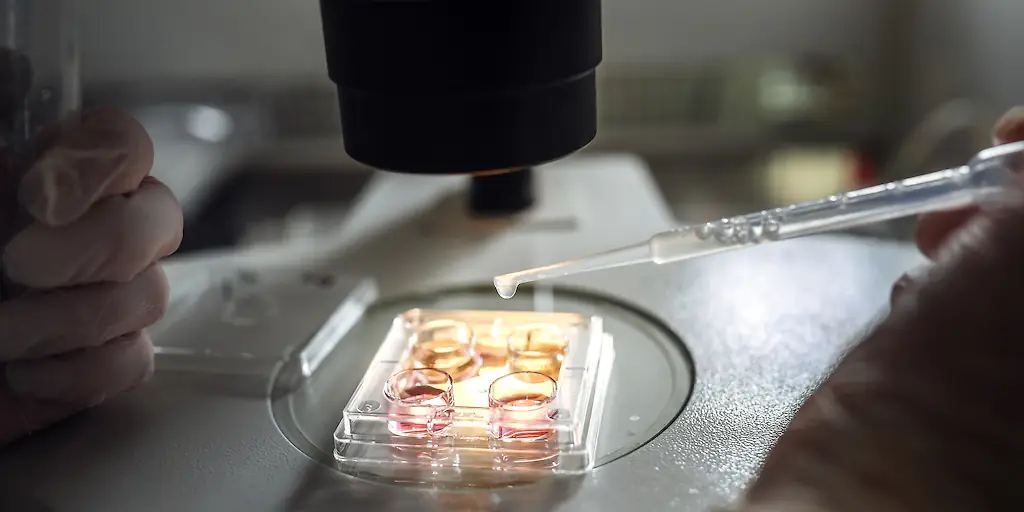
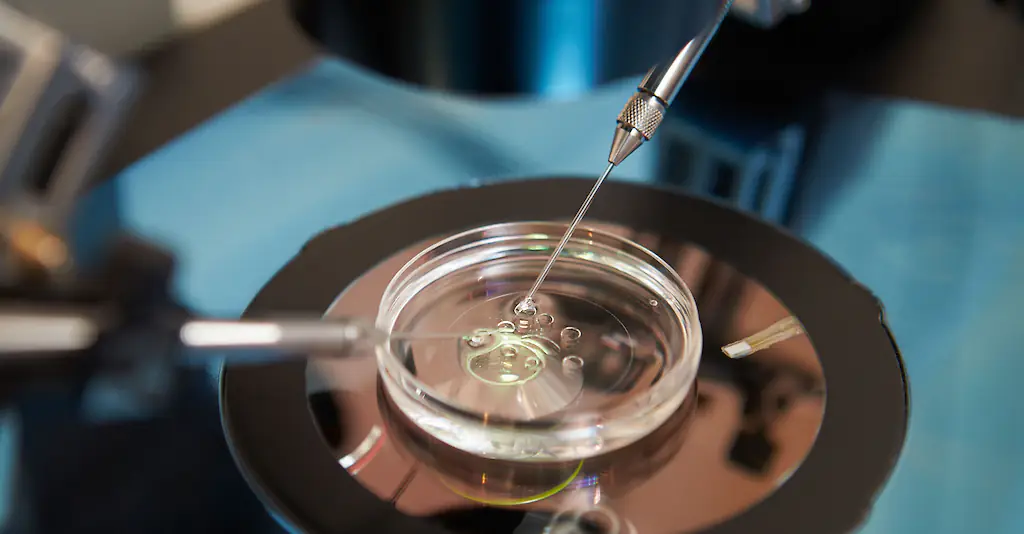
IVF, a popular fertility treatment, involves removing an egg from the ovaries and fertilizing it with sperm in a laboratory setting. Once the embryo forms, it is placed into the woman's uterus for gestation.
Philip, 36, expressed his amazement, telling Insider: "It's mind-blowing to think about. Pretty much everybody we've talked to has trouble wrapping their brain around it."
Before they decided to adopt the embryos, the Ridgeways already had four children, ranging in age from two to eight. They initially sought "fertility assistance" to conceive their older children, with Rachel taking hormone-boosting medications to increase their chances of having a child.
However, they decided to explore embryo adoption as an alternative means of expanding their family, planning to use the money they would have spent on fertility treatments. In a surprising turn of events, they naturally conceived their fourth child in 2020. Still, they remained committed to their goal of further expanding their family and visited the NEDC in March 2022.
Rachel explained their unique choice: "These embryos are often overlooked because they were donated by parents who had a known history of certain genetic disorders. We found out that these kids are rarely looked at because many parents coming into the process are wondering what they could have."
The Ridgeways decided to adopt the embryos from NEDC's 'special consideration' bank after learning that the biological father had succumbed to Amyotrophic lateral sclerosis (ALS), a rare and debilitating neurological disease also known as Lou Gehrig's disease.
ALS, although familial in some cases, has a relatively low overall risk for family members, with only about 10 percent of cases being genetic.
The Ridgeways made their choice without hesitation, believing that these embryos, despite their potential imperfections, deserved a chance at life.
"We decided that we were going to look for children that had, in one sense, been waiting the longest because they might not be perfect," Rachel said. "They have a potential flaw, which, to us, seems silly because all of us have potential flaws. All of us have the possibility of developing any number of illnesses, diseases, or whatever it may be."
The Ridgeways' oldest child, a nine-year-old daughter, has epilepsy and asthma, but the couple emphasizes that they love her unconditionally.
Mrs. Ridgeway encapsulated their journey with these words: "As believers in God, [we felt the twins] should be given the chance of life."
health3 min(s) read
A baby has been born from an embryo that was frozen more than 30 years ago - making him the world’s “oldest baby".
Thaddeus Daniel Pierce was born on July 26, 2025, in Ohio to Lindsey and Tim Pierce.
The couple adopted the embryo from Linda Archerd, now 62, through a Christian embryo adoption agency, marking the first reported birth from an embryo stored since 1994, Sky News reported.
“We didn’t go into it thinking we would break any records,” Lindsey told MIT Technology Review. “We just wanted to have a baby.”
Thaddeus was conceived in the early 1990s when Archerd and her then-husband underwent IVF after struggling with infertility.
The treatment produced four embryos - one of which was transferred to Archerd, resulting in the birth of her daughter, now 30, and a mother herself. The remaining three embryos were cryopreserved for future use.
After divorcing and later entering menopause, Archerd reconsidered the fate of the embryos.
She was uncomfortable with the idea of donating them to science or placing them anonymously, so she chose “embryo adoption," which is a more involved form of embryo donation that allows biological parents to help choose the recipient family.
Nightlight Christian Adoptions matched Archerd’s embryos with the Pierces, who met her criteria of a white, married Christian couple.
One of the embryos stopped developing, and two were transferred to Lindsey’s uterus in November 2024. One developed into a healthy pregnancy.
The embryo transfer was handled by Dr. John Gordon at Rejoice Fertility Clinic in Louisiana, a Christian-run facility focused on reducing the millions of embryos currently stored in freezers worldwide as a byproduct of IVF.
“We have certain guiding principles, and they’re coming from our faith,” Gordon said. “Every embryo deserves a chance at life, and that the only embryo that cannot result in a healthy baby is the embryo not given the opportunity to be transferred into a patient.”
Thaddeus now has a biological half-sister who is 30 years older and a niece who is 10, technically older than her uncle.
“The first thing that I noticed when Lindsey sent me his pictures is how much he looks like my daughter when she was a baby,” Archerd said, per The Guardian. “I pulled out my baby book and compared them side by side, and there is no doubt that they are siblings.”
While babies born from decades-old embryos remain rare due to concerns over viability, Thaddeus joins a small but growing number of successful cases.
Previous record-holding births had come from embryos frozen for 27 and 30 years, respectively.
In the US, approximately 2% of all births now result from IVF. In the UK, that number has risen steadily, accounting for over 3% of births in 2023, and nearly 11% for women aged 40 to 44, the Human Fertilisation and Embryo Authority revealed.
For the Pierces, this medical milestone is simply their miracle. “We had a rough birth, but we’re both doing well now. He is so chill. We are in awe that we have this precious baby," the new mom shared.
lifestyle2 min(s) read
A Utah woman has given birth to her son and daughter-in-law's baby daughter.
Nancy Hauck, 56, brought her own granddaughter into the world after offering to act as a surrogate for her son Jeff Hauck and his wife Cambria.
In an interview with People, the family opened up about their unconventional arrangement.
Jeff and Cambria - who were raised in The Church of Jesus Christ of Latter-day Saints - explained that they had always wanted a big family.
"We always had in our mind that we wanted four to six — whatever the Lord would bless us with, is what we would always say," Cambria told the outlet.
However, her infertility issues threatened to throw their plans off course. It took them four years and a round of IVF to conceive their first set of twins, Vera Ayva, now four.
After that, the couple - who still had five fertilized embryos from their IVF round - welcomed another set of twins, sons Diesel and Luca, now 13 months.
However, after complications with the birth of her sons, Cambria was forced to undergo a hysterectomy meaning she could no longer carry any more children despite still having three fertilized embryos.
"We wanted to give them all a chance at life," she said, adding: "We both decided that we would just move forward in faith."
When Nancy volunteered as a surrogate, the couple initially thought it wouldn't be possible due to her age. However, after consulting with fertility expert Dr. Russell Foulk, the family decided to go ahead with the embryo transfer.
They discovered that despite her advanced age, Nancy was still in perimenopause, meaning her body was still producing the hormones necessary to carry a baby.
The family felt like the pregnancy was "meant to be".
Nine months later, their fifth child - baby girl Hannah - was born.
Reflecting on the "beautiful moment" of watching his mom give birth to his daughter, Jeff questioned: "How many people get to watch their mom give birth?"
Meanwhile, Nancy described the labor as "a remarkable and spiritual experience", adding: "Everything went perfectly and we are feeling so blessed to have her in our family."
Congratulations to the family!
world2 min(s) read
The wonders of modern technology are far too great to list. We're able to communicate with far-flung friends and family, fly across the globe in a matter of hours - and now, we can even create life outside of conventional means. Certainly, for those struggling with infertility, processes such as in vitro fertilisation (IVF) and surrogacy are life-changing.
Now, according to Chinese media, the son of a Chinese couple who died four years ago has been born to a surrogate mother.
Shen Jie and Liu Xi had been married for two years when they decided to undergo IVF. However, five days before one of the fertilised embryos was due to be transplanted into Liu, the couple passed away after a car accident in March 2013, in the coastal province of Jiangsu.
For the following three years, the parents of Shen and Liu have been fighting for the rights to the four frozen embryos left by their late children in a legal dispute that is both complex and unprecedented. After several court battles, both sets of grandparents won custody of the embryos.
As surrogacy is illegal in China, the two families enlisted the help of an underground surrogacy agency - and in January, they drove to Laos to find a suitable candidate.
Transporting the precious cargo proved to be one of many roadblocks. "First we thought of using air freight, but none of the airlines were willing to take the thermos-sized bottle of liquid nitrogen where the four embryos were stored," Liu Baojun, a surrogacy expert who assisted the families, told Beijing News.
But in December of last year, Shen and Liu's baby boy was born in a hospital in Guangzhou - a city northwest of Hong Kong. The child was kept in hospital for 15 days until all four grandparents had DNA tests and gave blood to establish that the baby was their grandson, and that both parents were Chinese nationals.
Liu's mother named him Tiantian, which translates to "sweet". And last month, the two families celebrated the child's first 100 days by holding a small party for him.
"Tiantian’s eyes look like my daughter’s but overall, he looks more like his father," Liu's mother, Hu Xinxian, told Beijing News.
The grandparents have not yet decided how they will tell Tiantian about his unconventional history. The child's paternal grandfather, Shen Xinan, revealed to Beijing News that until Tiantian is of age they will say that his parents live and work overseas.
"This boy is destined to be sad on his arrival into the world. Other babies have their fathers and mothers, but he doesn’t. We will definitely tell him in the future. How can we not?" Shen asserted.
This landmark ruling, which allowed parents to inherit frozen embryos created by their children, has since sparked an inflamed debate on social media in China.
In related news, a baby has been born from an embryo that was frozen for 24 years.
celebrity3 min(s) read
A 70-year-old woman has recently welcomed twins after undergoing IVF treatment.
Safina Namukwaya gave birth via a cesarian procedure to a little boy and girl at a fertility center in Kampala, Uganda, following a lengthy IVF treatment.
According to the NHS, IVF (also known as in vitro fertilization), is one of several techniques available to help people with fertility problems have a baby. During IVF, an egg is removed from the woman's ovaries and fertilized with sperm in a laboratory.
The fertilized egg is then returned to the woman's womb to grow and develop. It can be carried out using your eggs and your partner's sperm, or eggs and sperm from donors.
The process can be long and difficult - not to mention expensive (each treatment can cost up to $6,300, and because there is no guarantee that the treatment will be successful the first time, many people have to try a few times before seeing a positive outcome.
Namukwaya was one of the lucky ones and has now become one of the oldest women to give birth.
Describing it as a "miracle," the 70-year-old faced little to no complications, despite the recommended age for IVF being 43 and under.
Posting to Facebook after the successful procedure, the hospital said: "We at Women's Hospital International and Fertility Centre would like to thank NTV Uganda for helping capture this historic event."
They continued: "At 70 years, Safina Namukwaya delivers twins today: Women's Hospital International and Fertility Centre Sets African Record! Celebrating our 20th anniversary, we've achieved the extraordinary – delivering twins to Africa's oldest mother aged 70! This historic event, a baby boy and girl, not only marks our two decades of leadership in IVF, but also sets us apart as the premier fertility center in Africa."
They concluded the post by saying: "Namukwaya delivered her babies today on Wednesday 29th November at 12:04PM. Mother and babies are all well."
The newborns were 31 weeks premature but the medical facility reported that they were in a "stable" condition.
Namukwaya joins an elite group of women who have managed to give birth in their 70s.
Mangayamma Yaramati, a woman in the southern Indian state of Andhra Pradesh, gave birth to twin daughters in 2019 aged 73.
The BBC reported that "The mother and the babies are doing well."
Yaramati's 82-year-old husband was also over the moon after witnessing the birth of his twin daughters stating: "We are incredibly happy."
Unfortunately, the father suffered a stroke just a few weeks later, telling the local outlet that, "Nothing is in our hands. Whatever should happen will happen. It is all in the hands of God" when asked who would look after his children if something were to happen.
For now, though, we're glad both families are doing well.