Uncategorised3 min(s) read
celebrity3 min(s) read
The marine animal community and its legion of supporters are in mourning as Lolita, an orca who had spent over half a century in captivity at the Miami Seaquarium, died at the estimated age of 57.
She passed away from suspected kidney disease, becoming a symbol of the complex ethical debates surrounding marine life in captivity, per Sky News.
Also known by the names Tokitae or Toki, she held the distinction of being the world's second-oldest known killer whale. Her death last Friday struck an emotional chord as it happened just as preparations were underway to return her to the ocean.
The Miami Seaquarium revealed in a statement that Lolita had "started exhibiting serious signs of discomfort" recently. Despite being "treated immediately and aggressively," the iconic whale died from what is believed to be "a renal condition."
The staff lauded her as "an inspiration" and a "beautiful spirit," giving a nod to the Lummi Nation, a Native American tribe based in Washington state, who considered her as part of their extended family.
For decades, Lolita had been a star attraction, performing tricks for Miami's crowds after being captured in 1970 at the tender age of four. In a poignant contrast, the orca believed to be her mother, Ocean Sun, swims free in the waters between Washington state and Canada and is currently in her 90s.
Lolita's life had been the focus of relentless campaigns by animal rights activists, pressing for her release from her 80ft by 35ft tank. She officially retired from public performances last spring, fulfilling a condition for the Seaquarium's new exhibitor's license from the US Department of Agriculture.
Earlier this year, a ray of hope emerged for Lolita. The park's new owner, The Dolphin Company, and the non-profit Friends of Toki disclosed plans, backed by Indianapolis Colts owner Jim Irsay, to move her to a more natural sea pen in the Pacific Northwest.
Responding to the tragic news, Irsay said, "I am heartbroken that Toki has left us. Her story captured my heart, just as it did millions of others." Eduardo Albor, President of The Dolphin Company, expressed his devastation on social media, lauding the efforts of care team led by Mike Partica and Dr. Reiderson as "true heroes."
Tony Hillaire, chairman of the Lummi Nation, summed up the collective grief: "The Lummi Nation is saddened by the news that our beloved Orca relative has passed away at the estimated age of 57 years old. Our hearts are with all those impacted by this news; our hearts are with her family."
While new upgrades had been implemented in recent months to improve her living conditions, Lolita's much-anticipated freedom still faced bureaucratic obstacles. Federal and state regulators would have needed to green-light plans for her relocation, a process that could have taken years.
As the world reflects on Lolita's life and what could have been, her legacy will undoubtedly fuel ongoing debates about marine captivity and conservation. The orca who captured the hearts of millions will long be remembered, even as questions about ethical treatment of marine life continue to make waves.
us3 min(s) read
An orca that has been kept in captivity in a "miserable" state for 50 years is set to be released as a plan to return her to "home waters" has been unveiled.
Calls for orcas, otherwise known as Killer Whales, to be released from captivity have been ongoing, particularly after the emergence of documentaries such as Black Fish on Netflix.
It would appear that calls for orcas to be released from captivity have been heard, as Lolita who has resided at the Miami Seaquarium for 50 years is set to be released.
As per NBC News, Lolita was captured in the Pacific Ocean decades ago and there are now plans in place to return her to her original home.
The announcement, which came on Thursday, was made at a press conference held by the Seaquarium and Florida nonprofit group Friends of Lolita and Jim Irsay, the philanthropist, and owner of the NFL’s Indianapolis Colts.
Lolita is the oldest orca in captivity after she was taken from the waters around Washington State when she was four years old in 1970.
After falling unwell in recent years, an announcement was made that the whale would no longer be on display at the Whale Stadium, which is where guests can see orcas perform stunts.
NOAA Fisheries, the US agency that oversees ocean resources and the habitats of marine life, added southern resident orcas to the endangered species list in 2005.
Their website states that pods of orcas were reduced between 1965 and 1975 due to the whales being removed from their natural habitats to be put on display around the country.
The population was just 71 orcas in 1974, before peaking at 97 in 1996 and the current count notes that there are currently around 70 southern resident whales.
As per NBC, Jared Goodman, the PETA Foundation’s vice president and general counsel for animal law, released a statement on Tuesday about Lolita's imminent return to natural waters.
"If Lolita is finally returned to her home waters, there will be cheers from around the world, including from PETA, which has pursued several lawsuits on Lolita’s behalf and battered the Seaquarium with protests demanding her freedom for years," Goodman noted after animal rights activists have campaigned for years for the release of orcas from marine parks.
"If the Seaquarium agrees to move her, it’ll offer her long-awaited relief after five miserable decades in a cramped tank and send a clear signal to other parks that the days of confining highly intelligent, far-ranging marine mammals to dismal prisons are done and dusted," Goodman concluded.
We hope that Lolita gets to spend the remainder of her days in her natural environment in peace.
world5 min(s) read
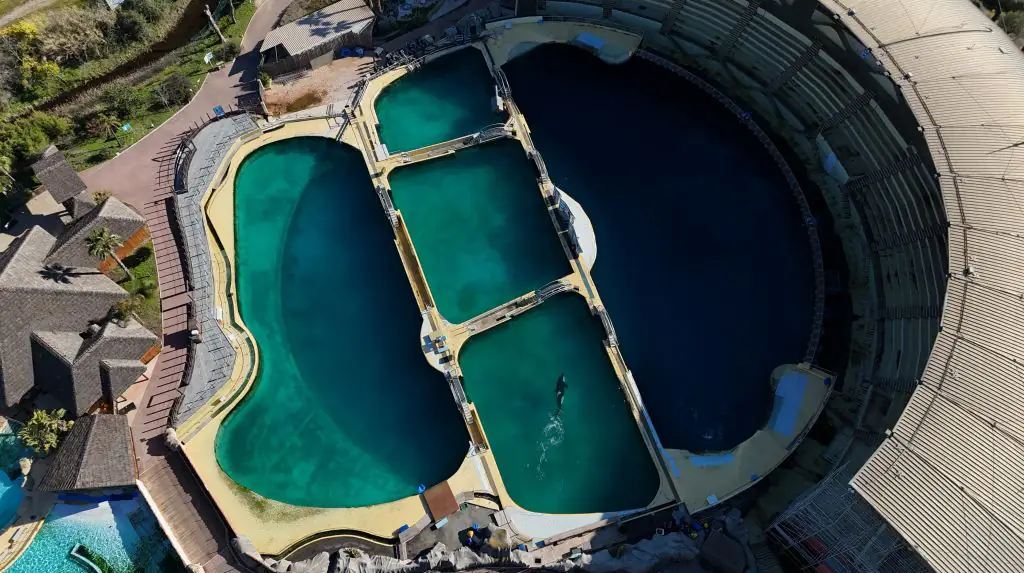
New drone footage has revealed a grim and deteriorating scene in the south of France: the country's last two captive killer whales, Wikie and her son Keijo, are still trapped inside a closed-down marine zoo, languishing in algae-filled tanks while authorities stall over their rehoming.
Animal activists are now making urgent calls to the French government to intervene, warning that the clock is ticking for the orcas’ health and safety.
Marineland Antibes, the marine park near Cannes where 23-year-old Wikie and 11-year-old Keijo have lived their entire lives, shut its doors in January following a ban on dolphin and whale shows, the New York Post reports.
But while the public left, the animals didn’t.
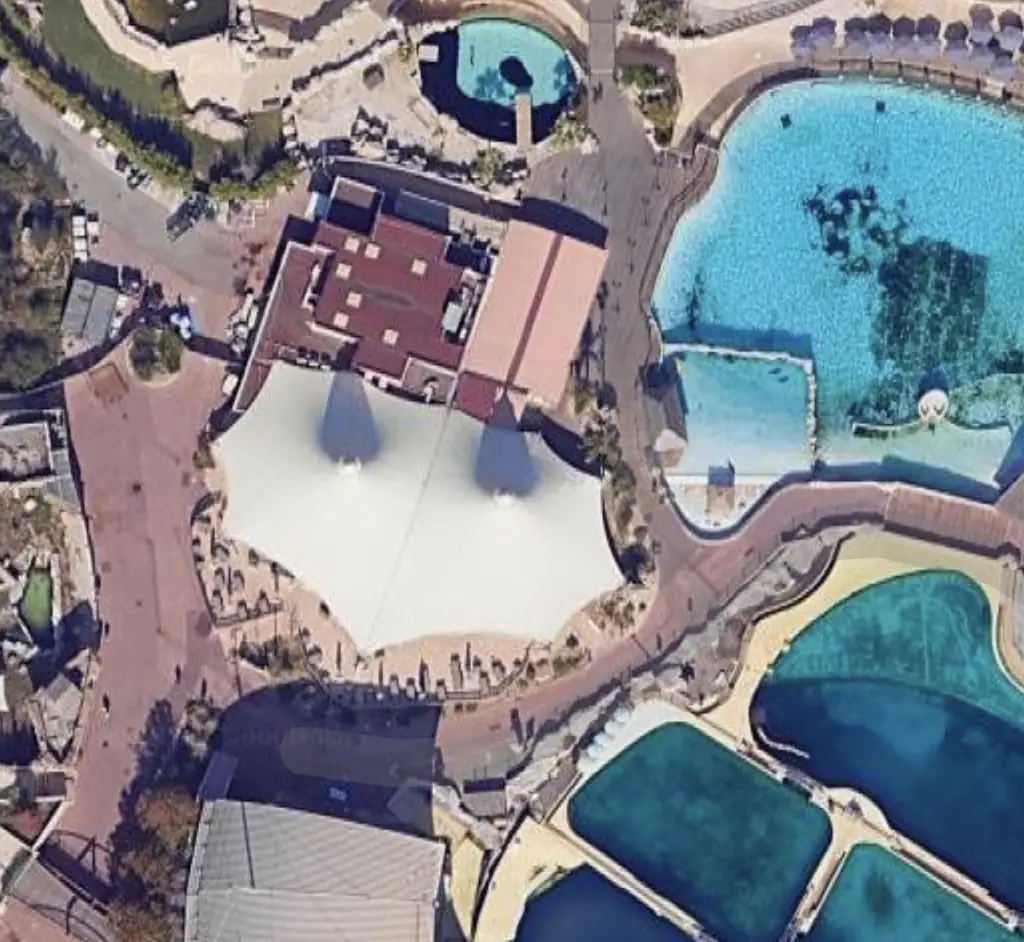
Aerial footage captured by TideBreakers on May 7 shows the orcas confined in what appears to be murky, neglected enclosures, surrounded by crumbling infrastructure. Twelve dolphins remain trapped in the same facility.
In a heartwrenching statement shared alongside the footage, TideBreakers, said: "New footage of the last two captive orcas in France stranded in a shut down marine park.
"This footage was taken on May 7, 2025 above Marineland Antibes, France. Marineland closed to visitors in January 2025, and is now abandoned.
"Tragically, it’s still home of Wikie and Keijo, the last 2 captive orcas in France. The mother and son remain trapped there, waiting for their fate in crumbling tanks.
"The abandoned park is also home to 12 dolphins that have been left to rot at the algae-infested deteriorating tanks. Marineland’s owners also own Shouka, Wikie’s sister and Keijo’s aunt, who lives at SeaWorld San Diego.
"Plans to relocate Wikie and Keijo to a sanctuary made headlines, but with no sanctuary in sight, the organizations behind the efforts have gone silent."
Comments on the post have revealed that the animals are still being fed by staff members, but footage shows the animals swimming around in algae-infested enclosures.
Despite the park's closure, Marineland is still legally responsible for the animals. And its management is now sounding the alarm, too.
“Marineland reaffirms the extreme urgency of transferring the animals to an operational destination,” the park said, per BBC News. “Wikie and Keijo must leave now” for their own welfare.
Efforts to rehome the pair have hit repeated walls. An application to move them to Japan was blocked by the French Ministry for Ecology earlier this year.
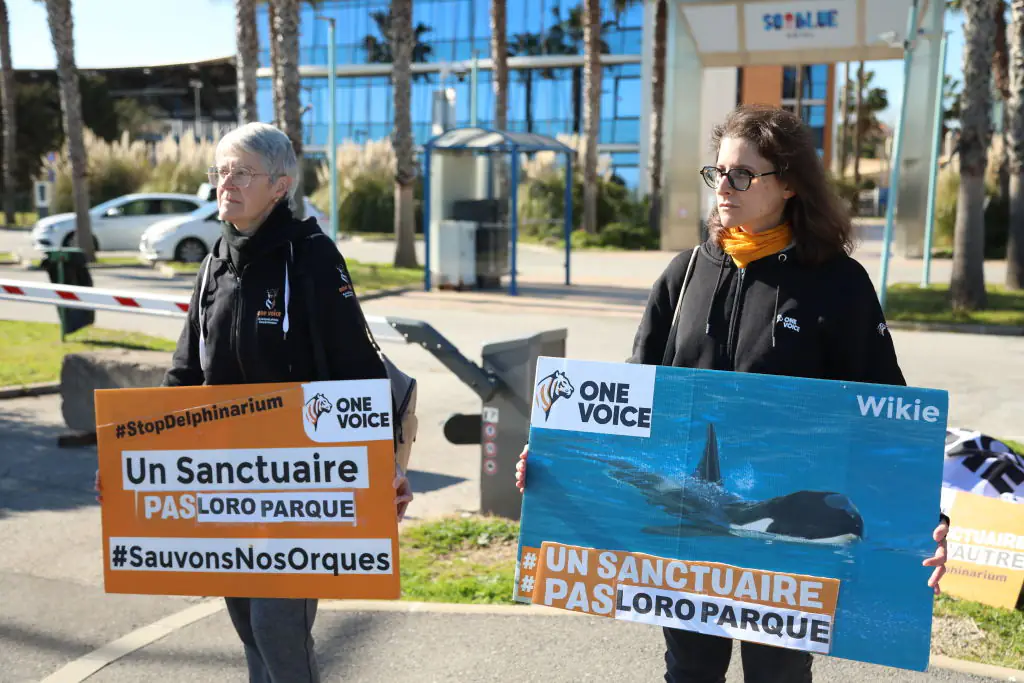
Another plan to send them to Loro Parque in Tenerife — already home to four orcas — was also halted after a Spanish scientific panel concluded the facilities did “not meet the minimum requirements in terms of surface area, volume and depth necessary to house the specimens in optimal conditions.”
Dr Jan Schmidt-Burbach of World Animal Protection told the BBC that the decision was “unexpected but rational,” adding that it “perfectly illustrates the fact that marine parks are an outdated industry with dropping acceptability” in society.
Now, animal welfare groups are urging the French government to approve a transfer to what may be the only viable remaining option: a sanctuary in Port Hilford Bay, Nova Scotia, run by the Whale Sanctuary Project (WSP).
Lori Marino, president of the WSP - which had a previous proposal rejected by the French ecology ministry - says it is the "only option left".
Lori said their team has completed environmental studies, water surveys, and secured a lease from Canada’s Department of Natural Resources.
The WSP team includes Charles Vinick and Jeff Foster, both of whom helped build the Icelandic sanctuary that housed Keiko — the orca who starred in Free Willy. Keiko was released into the wild and swam with a pod to Norway before dying of an infection in 2003.
But there’s no such hope for Wikie and Keijo. Unlike Keiko, both were born in captivity and have spent their lives under human care. Lori added that there is no chance Wikie and Keijo will be released into the wild.
Still, she argued, the sanctuary in Nova Scotia would provide far more space and care - as well as a natural environment - than any pool.
Animal advocacy groups insist the time for waiting is over, with TideBreakers warning that action must be taken quickly.
Even though French ecology minister Agnès Pannier-Runacher said back in February she was looking for a European sanctuary, no concrete site has been found. The temporary transfer to Loro Parque, which she had framed as a stopgap, has now been scrapped.
“I was shocked,” Lori Marino told BBC News about the Spanish panel’s decision to block the move. “We thought it was a fait accompli. We assumed that was where the orcas were going, it looked like a done deal.”
So far, the French ministry has not responded to the WSP’s renewed offer. At the time of writing, Pannier-Runacher has not issued any updates.
us3 min(s) read
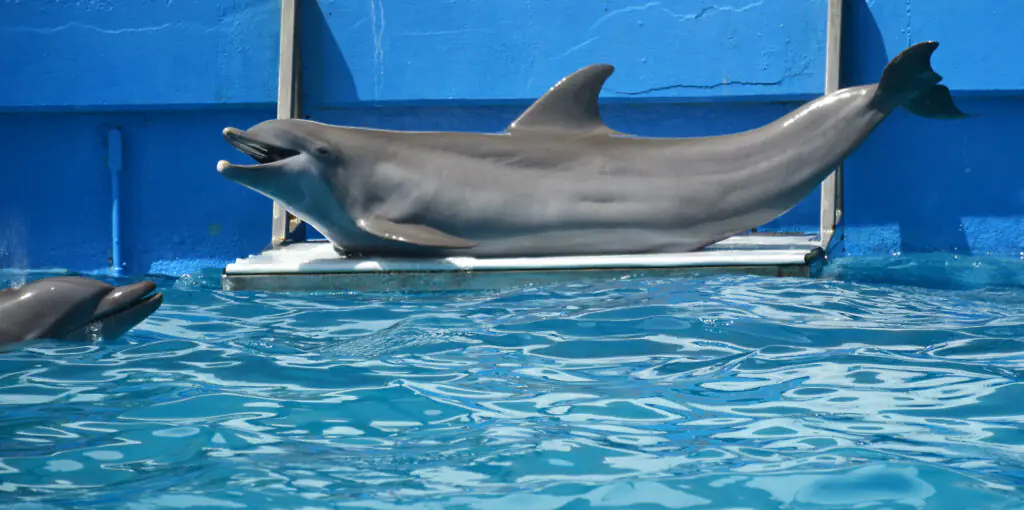
Footage has surfaced on social media showing the moment a dolphin attacked its trainer during a show at the Miami Seaquarium.
As reported by the New York Post, a marine trainer had to be taken to hospital after a dolphin by the name of Sundance "broke away from routine" during a live show and started ramming the worker.
Footage of the incident was captured by audience member and photographer Shannon Carpenter.
Carpenter later said, per the New York Post: "One trainer that was furthest away from the video either kept getting hit by the dolphin or pulled down by the dolphin."
He added: "The kids were cheering and thinking this was neat... You could tell the adults knew something was wrong."
CBS News reports that the scary incident occurred last Saturday during the park's Flipper Dolphin Show. Following Seaquarium's investigation into the show, officials learned that the trainer accidentally scratched Sundance with her hand, causing the dolphin to start ramming her.
After the trainer was able to make it out of the water, she was taken by ambulance to a local hospital, but did not suffer any serious injuries.
It happened Saturday in front of a crowd during a performance of the Flipper Dolphin Show. A cell phone video shows the trainer struggling to stay afloat as the dolphin, Sundance, dragged her underwater and then pushed her forward.
Per Local10 News Miami Seaquarium released the following statement regarding the incident: "A dolphin and trainer accidentally collided in the water on Saturday while performing a routine behavior as part of the Flipper Show.
"This was an uncomfortable interaction for both of them and the dolphin reacted by breaking away from the routine and striking the trainer.
"As a precaution, Miami-Dade County safety authorities were contacted. Our family extends to include the animals in our care, our team members and our guests. While there is no apparent serious injury, a careful watch and follow-up evaluations will ensure the best care for all."
However, PETA has slammed the park following the distressing occurrence. In a statement, the animal welfare group said that "time is up at Miami Seaquarium", and accused the park of housing "long-suffering dolphins" and employing workers who are "at risk".
"PETA urges this abusement park to end its exploitation of dolphins by getting them into sanctuaries as quickly as possible, where they’d never be used in tawdry shows again and no-one else will get hurt," PETA officials added.
Insider reports that this incident comes after Miami Seaquarium was cited for numerous animal welfare violations in a 17-page report by the United States Department of Agriculture (USDA) in June, 2021.
world4 min(s) read
Wildlife enthusiasts have finally been given an update on the tragic situation of two orcas who were "left for dead" in an abandoned marine park.
The sea creatures, who have been stuck in their enclosure in France, have now been handed a lifeline.
Last year, drone footage revealed that the country's last two captive killer whales, Wikie and her son Keijo, were still trapped in a closed-down marine zoo.
They could be seen wandering around in algae-filled tanks, as authorities delayed arrangements to put them in a new home.
The park closed its doors last January and the deteriorating orca enclosure at Marineland Antibes has proved a grim sight.
Despite the shocking conditions, the whales have survived through it all, though they are in need of clean water, social interaction and mental stimulation to survive in the long term.
While campaigners feared that the creatures would die in the park after delay after delay, it looks like there may be some light at the end of the tunnel.
Despite assurances from French president Emmanuel Macron that action would be taken to save the animals, officials struggled to find a new home.
Releasing Wilkie and Keijo into the wild was considered but written off, as they have spent their entire lives in captivity.
But now, Tenerife zoo Loro Parque has revealed that the pair may have a new home awaiting, confirming they would be happy to take the stranded orcas in.
This will save the orcas' lives if the move is given the green light by Spanish authorities.
The president of the Loro Parque Group, Wolfgang Kiessling, stated that they are happy to “rescue Wikie and Keijo and offer all available resources to ensure they do not die and can be permanently housed under conditions that guarantee their protection and welfare”.
He did reiterate that Spain's government must formally approve the transfer before any action is taken.
An official statement read: “This cannot be treated as a simple administrative procedure,
“It concerns the lives of two animals who require an immediate and permanent solution, technically viable and endorsed by the competent authorities of the countries involved.”
He made sure to highlight that this was not about profit, revealing: “We do not earn a single euro more by having six orcas instead of four.
“We are doing this out of moral, technical, and professional responsibility.
“We do it because we know how to care for these animals and because we want to prevent Wikie and Keijo from dying in France without a real alternative.”
It has been reported that France’s Minister Delegate for Ecological Transition, Mathieu Lefévre, has approved the move to Tenerife, meaning the ball is in the Spanish government's court.
Campaigners are being quick to try and prevent the deaths of the desperate orcas.
Loro Parque stated that Wilkie and Keijo are now its “top priority”, as they have invested upwards of $30million in recent years on conservation projects alone, protecting 18 species.
PETA Watch said of the French Government's decision: “This is the right call which puts the welfare of the orcas first and the option most likely to protect their well being.”
They also said that this was a great response to animal rights activists who have been “pushing for fantasy solutions like returning the orcas to the oceans or non-existent sea sanctuary.”
The charity said that this decision is the best for the orcas, as they will get expert veterinary care and long-term stability at Loro Parque.