Uncategorised4 min(s) read
uncategorised3 min(s) read
world3 min(s) read
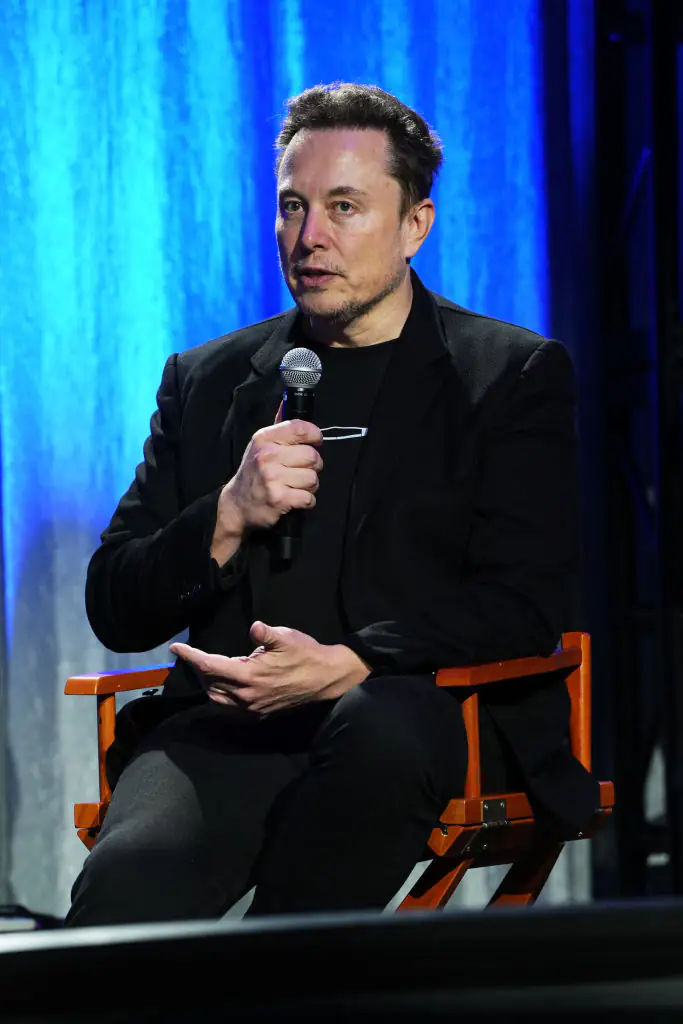
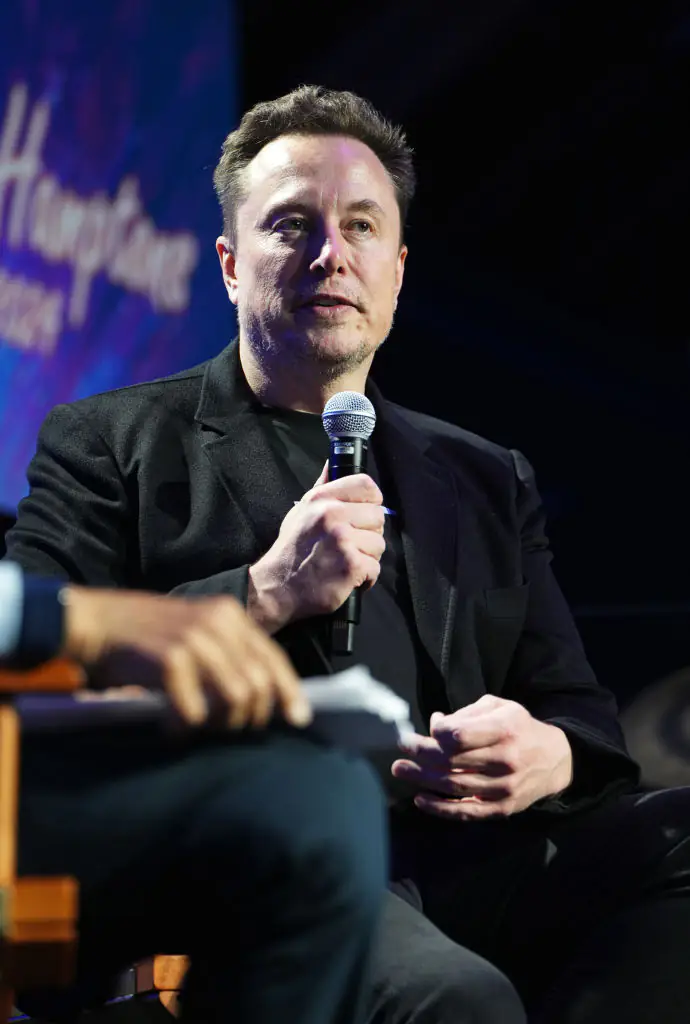
Elon Musk has just issued a startling prediction about the future of artificial intelligence (AI), suggesting that humanity could face a technological crisis unless AI infrastructure shifts off-planet.
Speaking on a recent podcast, cited by the Express, the tech mogul warned that Earth’s power systems are rapidly reaching their limits and could be unable to sustain the explosive growth of AI in the coming years.
Musk believes that the solution to this dilemma lies beyond our planet, with space offering the key to unlocking AI's full potential.
Musk has been vocal about the limitations of Earth-based power systems, claiming that they simply can’t keep up with the energy demands that will be required to fuel the development of AI.
"My prediction is that by far the cheapest place to put AI will be space in 36 months or less, maybe 30 months,” Musk stated confidently. “Less than 36 months, mark my words.”
He explained that the bottleneck for AI development is energy – specifically, the ability to generate enough power.
While many in the AI development community focus on software advancements, Musk believes that the real obstacle lies in hardware, particularly the challenge of supplying adequate electricity.
Musk further emphasized how challenging it would be to scale power generation on Earth. “All of the United States currently uses only about half a terawatt of power on average,” he said.
“Imagine trying to build enough power plants to double that. People don’t realise how hard that actually is.”
In Musk's view, Earth's energy infrastructure simply cannot support the growing demands of AI. The rapid pace of technological development requires an immense amount of power, and scaling up Earth's existing systems to meet that need would be a monumental task.
While Earth’s energy capabilities may be limited, Musk sees space as the ultimate solution. Unlike our planet, space offers near-unlimited energy resources.
According to Musk, solar panels in orbit are far more efficient than those on Earth, generating about five times as much power due to constant sunlight and the absence of atmospheric interference.
"Solar cells are already very cheap, around 25 to 30 cents a watt in China,” Musk pointed out. “Put them in space and it’s effectively ten times cheaper because you don’t need batteries."
This shift in perspective could radically change the economics of energy generation, making space the ideal place to support AI infrastructure. With the added benefit of eliminating the need for expensive battery storage, the case for space-based energy becomes even stronger.
Musk framed the entire conversation as a question of humanity's long-term survival and technological progress.
He stressed that the inability to scale energy production quickly enough on Earth could lead to a technological dead end.
“You start thinking in terms of what percentage of the sun’s power you’re harnessing,” Musk said. “Then you realise you have to go to space. You can’t scale very much on Earth.”
In one of his boldest statements, Musk predicted that the future of AI development will look drastically different in just a few short years.
“We will be launching and operating more AI in space every year than the cumulative total on Earth,” he said. Musk’s assertion suggests that the most significant advancements in AI will soon occur off-planet, forever changing the landscape of technology and innovation.
innovation3 min(s) read
The founder of an AI giant has called on companies to slow the progression of artificial intelligence as it is becoming a serious threat to humans.
Anthropic co-founder Jack Clark has issued a desperate warning that the technology has developed so rapidly that it is almost able to develop without any human input.
In a recent interview on BBC Newsnight, Clark told the host: "You want the option to be able to take your foot off the gas and put your foot on the brake.
"Right now, it's like the AI industry has a gas pedal, but it doesn't have a brake pedal."
He warned that AI needs to be controlled by government policy because it will only get more powerful and begin to have serious and potentially dangerous impacts on society.
Clark said: "The world needs to do some thinking, and we need to eventually develop some new regulations that allow us to be confident in these systems.
"Society's response was to come up with a sensible policy and regulatory framework that gave people confidence in oil and the benefits that oil could provide to the world, and meant that you didn't have to worry about the personalities of the people leading the companies."
According to the tech mogul, Anthropic's successful chatbot, Claude, is operating on code of which 80% the system wrote itself, he claims that getting to 100% computer driven is possible within two years.
Despite his concerns, Clark’s company welcomed an executive order on AI from US President Donald Trump that was rather laid back in its restrictions on the companies.
The order rules that AI companies do not have to comply with safety testing by the government. Instead, it remains voluntary.
Other leading AI companies, including OpenAI and Google, have also said they will not pause their own research and instead will continue pursuing advances in the technology.
According to Clark, he chose to speak out about the growing capability of AI to "tell the world what we're seeing inside these companies with this unusual technology".
Anthropic’s founder added: "I am worried for my kids if we as a society don't have a serious conversation about what the implications of AI's continued advances mean.
"There are potentially great benefits. There are also risks."
However, as ChatGPT-made branding proves, there is some hope left for creatives, as people with original ideas might actually have an advantage over AI.
Thankfully, Clark also said: "There are open questions about whether AI systems can be truly creative… There is not really evidence for that yet.
"At Anthropic, we're now limited more by the ability to generate good ideas than the ability to do the engineering to turn those ideas into reality."
celebrity2 min(s) read
Elon Musk has warned that a booming population is crucial not just to survive on Earth, but to colonize space as well.
The Tesla CEO has taken to Twitter to share his thoughts on the future of humanity and the planet, in a tweet responding to a Wall Street Journal article.
The article in question observes how population growth in America, which is already weak, is dropping "closer to zero" as a result of the ongoing coronavirus pandemic.
"Population collapse is potentially the greatest risk to the future of civilization," he wrote on Twitter in a bid to warn of its consequences.
However, despite Musk's surefire stance on the matter, some skeptical Twitter users took to the platform to argue that humans are already draining the planet of its natural resources.
One wrote: "Can you please explain to me why overpopulation is not a problem? The scarcity of natural resources and the global warming (caused by humans) indicate that overpopulation and our consumption is clearly the problem."
Another added: "Humans are killing life on the planet. There are too many of us for the space we have and the demands for easy and comfortable living that we now want. It's proving unsustainable."
While a third penned: "Thanks for speaking up about this Elon! Many folks seem to think overpopulation is a problem, when really it’s the opposite You’re one of the few at the top that legitimately cares about humanity’s future, on this planet & beyond PS: congrats on Tesla’s amazing earnings today!"
Indirectly responding to the tweets, Musk elaborated on his concerns in a follow-up tweet, writing: "And that's just for Earth! Mars has zero human population. We need a lot of people to become a multiplanet civilization."
This isn’t the first time Musk has spoken out about "population collapse".
The SpaceX founder responded to a tweet earlier this month that read: "Population collapse could be upon us, but we appreciate that you good sir are still making tangible efforts to stave it off," alongside a photo of Musk with his son.
The billionaire wrote back: "I'm trying to set a good example! Population collapse is a much bigger problem than people realize and that's just for Earth. Mars has a great need for people, seeing as the population is currently zero. Humans are the custodians of other life on Earth. Let us bring life to Mars!"
world3 min(s) read
A tech CEO has revealed the jobs he believes will be safe despite the rise of AI.
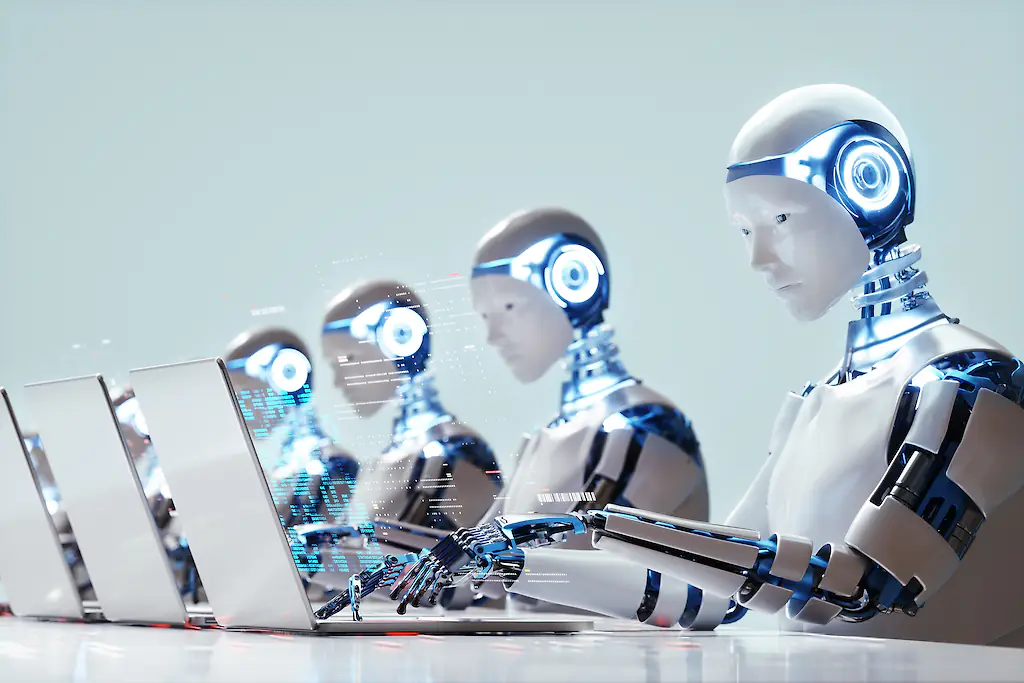
Artificial intelligence is on most people's minds at the moment, with fears growing that entire industries could soon be replaced by robots.
While there's debate over how well AI can really replicate jobs done by humans and concerns over the environmental implications, there's no doubting its here to stay and is only going to get more advanced and increasingly widely used.
Wix CEO Avishai Abrahami admitted that the rise of AI does leave him with concerns about the future of employment, but he believes some sectors will be pretty safe from its impacts.
He told Business Insider: "I'm really worried about the employment market," adding that a "massive amount" of roles will shrink as AI advances.
Abrahami predicts that around 70% of the top 20 most popular jobs in the US today will be affected over the coming five to 10 years.
He also expressed concerns that computers could soon outsmart humans - something some tech leaders believe is already happening in some ways - which was previously only seen as a "science-fiction thing".
Of the jobs he believes will be "a bit safer" from AI, Abrahami lists those that require human performance or interaction, such as those in sports on the performing arts, as "nobody cares" about watching robots running fast or competing against each other.
He added that jobs which require high-level thinking are also currently performed better by humans than AI, and artificial intelligence is also not great at creating new things, so is unlikely to invent a new science at its current level.
Manual jobs such as janitors are "probably really safe", Abrahami predicts, as it requires a lot of handwork which robots are far from able to adequately recreate.
He also believes that jobs in which humans can bring something that's "completely unexpected" will be the areas where they're safe from replacement.
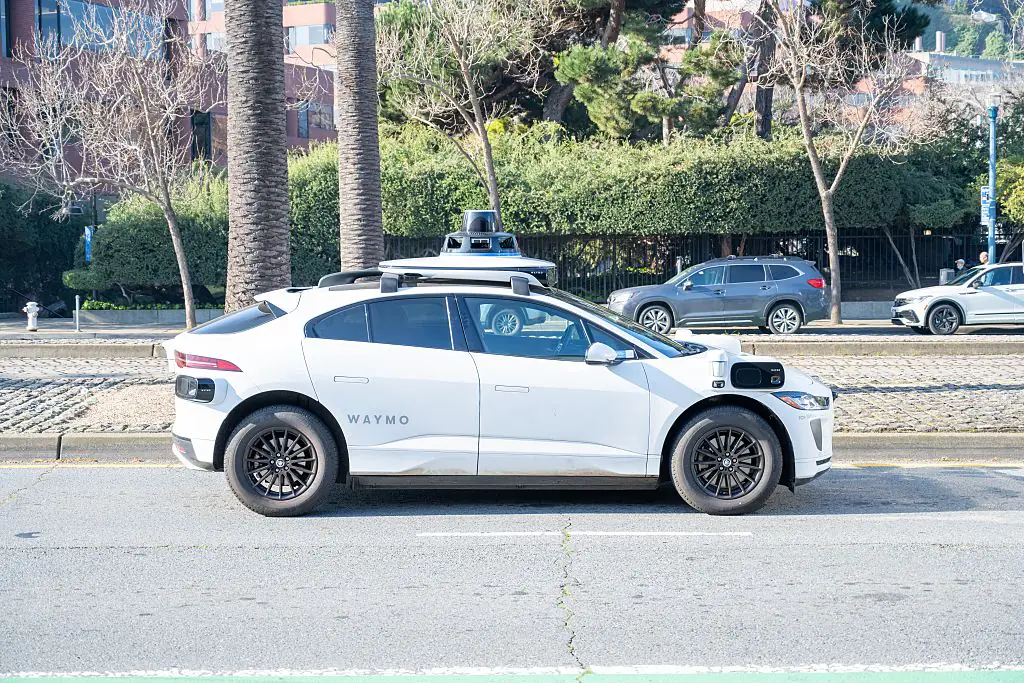
As for jobs that will likely be at risk, Abrahami believes cab drivers, including those for ride-share apps as well as truck drivers, will be at risk with the rise of self-driving car services such as Waymo and Tesla's robotaxi service.
He also believes that customer service and call center roles will also be affected, potentially among the first industries to be lost to AI.
Tech jobs such as software developers and analysts are already being reshaped by AI, with a Google Cloud report from September finding that 90% of software professionals had already adopted AI into their workflow.
It's not all bad news, however, as the rise of AI has also helped to create some jobs which did not exist before.
One example is Wix's xEngineer role, described as a "design-first engineer with deep domain expertise who uses AI as a key part of every workflow", in which a specialist's job will be "amplified" by AI.
Given it's still such early days, there will likely be more previously non-existent roles to come across different sectors for those who are able to harness AI.