


Celebrity4 min(s) read
Jennifer Aniston's Horrible Bosses 2 intimate scene was cut for being too offensive

Jennifer Aniston filmed a sex scene for Horrible Bosses 2 that was so controversial that producers pulled it from the movie entirely before it reached cinemas.
Her character, Dr Julia Harris, has sex with Charlie Day's character Dale while he is unconscious in a hospital bed. He is in a coma. She climbs on top of him and, as Aniston later put it on Conan, goes 'front ways, this way, that way, all by myself'.
The scene was shot, edited, and then scrapped. Even for a film built around terrible people doing terrible things, it crossed a line.
What Aniston said about filming it
She spoke about the scene on Conan O'Brien's show in 2014 while promoting the film. She was visibly uncomfortable talking about it, laughing nervously and stumbling over her words.
She explained that intimate scenes are normally awkward for both actors, but at least you have someone to share the discomfort with. This was different.
"Charlie Day's character is in a coma, and I exploit him whilst he was in a coma," she said. "So it was a sex scene that was sort of... it was... they removed it."
She described the actual filming as 'terrifying' because Day had to just lie there motionless while she performed the scene on top of him.
"Usually you have someone there to support, but he's just laying there in a coma. And I'm like front ways, this way, that way, all by myself."
When O'Brien joked that nobody would dare cut an intimate scene involving Jennifer Aniston, she shook her head.
"Oh, it's possible."
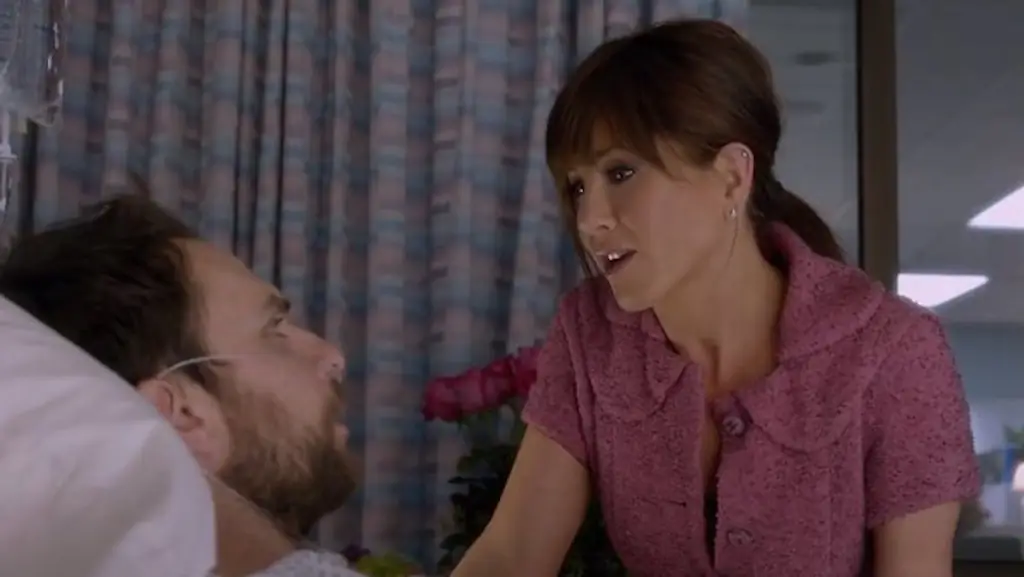
Why the scene was cut
The Horrible Bosses films are dark comedies about awful people. That is the entire point. Aniston's character sexually harasses Day's character throughout both films. She is written to be predatory, inappropriate, and completely without shame.
But there is a difference between a character who makes inappropriate comments and a character who sexually assaults an unconscious person on screen. Producers decided the coma scene landed on the wrong side of that line.
The actual sex was removed. The film still references it, though. Dale wakes up from his coma and discovers what Julia did to him while he was unconscious. The audience is told about it. They just don't have to watch it.
Aniston said she expected the footage to end up on the DVD extras. Whether it ever did is unclear. The clip has never surfaced publicly in full.
The scene reads very differently now
Horrible Bosses came out in 2011. The sequel in 2014. Both were released before the MeToo movement, before the wider public conversation about consent in entertainment shifted, and before audiences started looking more critically at scenes that played sexual assault for laughs.
In 2014, Aniston and O'Brien discussed the scene with awkward humour. She laughed about it. He joked about it. The audience laughed too.
Watched back now, the interview hits differently. She is describing a scene where her character rapes an unconscious man. The word rape was never used on the show. But that is what the scene depicted.
The fact that producers cut it before release suggests they knew at the time it was a problem. The fact that the film still references it, played as a punchline, suggests they didn't think it was that much of a problem.

Aniston's role in Horrible Bosses
Dr Julia Harris was a departure for Aniston. She had spent most of her post-Friends career in romantic comedies and lighter fare. Playing a sexually aggressive dentist who terrorises her employee was supposed to show audiences a different side of her.
It worked. The role became one of her most talked-about performances. She returned for the sequel and leaned even further into the character's worst impulses.
The rest of her career has covered a lot of ground since. She won a Screen Actors Guild Award for The Morning Show in 2020. She starred in Murder Mystery and its sequel on Netflix. She remains one of the most bankable actresses in Hollywood.
The Horrible Bosses coma scene is a footnote. But it is the kind of footnote that says a lot about what used to be considered acceptable in mainstream comedy and how quickly that window has moved.


