Over the last few years, drag culture has become more and more popular outside of the LGBTQ community - and a lot of that growth is down to RuPaul's Drag Race. The reality TV show, which pits a number of drag queens against one another in order to achieve a coveted $100,000 prize, has seen widespread success, and it's pretty much all down to Ru.
Unfortunately, the world-famous drag queen isn't always as inclusive and benevolent as he makes himself out to be on the show. In the past, a number of aspects of Drag Race had to be changed because they were considered transphobic (for instance, the pun "she-mail" was removed from the challenge announcements at the beginning of the episodes), and Ru has previously been called out by queens for not always practicing what he preaches.
Most recently, the self-professed supermodel of the world alienated a huge amount of his fans and followers when he said that transgender women should not do drag.
His comments came about in an interview with The Guardian, during which he was asked how a trans woman could be a drag queen. Ru then went on to reference Peppermint - a runner-up in last year's competition - who was out as a transwoman before she competed on the show.
"Peppermint didn’t get breast implants until after she left our show," he said, as if having breasts is the be-all and end-all of womanhood. "She was identifying as a woman, but she hadn’t really transitioned."
Ru was then asked whether he would accept a queen who had undergone gender reassignment surgery, to which he responded: "Probably not. You can identify as a woman and say you’re transitioning, but it changes once you start changing your body. It takes on a different thing; it changes the whole concept of what we’re doing."
Obviously, this was absolutely heartbreaking for many people to hear. Not only did his words imply that transwomen aren't women until they've had surgery, it also shows that he values cisgender men more than women, as he permits all of his male-identifying contestants to have cosmetic surgery.
To make matters worse, he then tried to apologize for his actions by tweeting what he believed to be the trans flag. Unfortunately, in another act of carelessness, he tweeted a green and yellow pattern, which is definitely not the recognized flag for transgender people.
He also issued a statement saying that - far from what the interview implied - he has an open mind and wants to learn from his mistakes.
"Each morning I pray to set aside everything I THINK I know, so I may have an open mind and a new experience. I understand and regret the hurt I have caused. The trans community are heroes of our shared LGBTQ movement. You are my teachers."
However, previous queens have called RuPaul out on Twitter for having said such an insensitive thing in the first place.
Hopefully, this whole incident will open Ru's - and a lot of other people's - eyes about the relationship between gender and drag, and the importance of being inclusive of transgender individuals in the LGBTQ community.
RuPaul’s Drag Race is a phenomenon. One of the biggest series on streaming services like Netflix, it features drag queens battling it out become America’s Next Drag Superstar. Following the format of America’s Next Top Model, the queens compete in a mini-challenge and a main challenge, before strutting their stuff on the runway. After this, RuPaul and his trusty sidekicks judge the quality of their performances, with the bottom two queens battling for their survival by lip-synching for their lives.
The show has featured many a hilarious incident and many a memorable queen—Derrick Barry’s drag was so good that when he made his season eight entrance many people, myself included, thought that Britney had legitimately tried her luck on the show and then there was Adore DeLano's undeniable talent but complete lack of skill in the sewing department.
[[imagecaption|| Credit: PA Images]]
Last weekend, the first RuPaul’s British DragCon was held in London. A celebration of the hit series, which made its UK debut last year, the event was bustling. Attendees had the chance to watch the queens sissy that walk on the runway, and among other activities, attend panels with queens past and present, and of course, RuPaul himself. The convention was also an opportunity for fans to meet the queens, many of whom are American, and dress up themselves.
RuPaul is pictured below opening the first British DragCon:
[[imagecaption|| Credit: PA Images]]
One of the most remarkable things about the show, however, has not been its entertainment value, but its ability to improve representation and understanding of the LGBTQ+ community. In the dressing room, many of the LGBTQ+ queens discuss their experiences growing up as part of the community and the struggles or lack thereof that they’ve faced. In season nine, Peppermint, the only trans queen to have featured, opened up about the transphobia she encountered while presenting female in Russia.
Drag Race stars have also gone on to promote increase representation and understanding elsewhere, with Courtney Act winning widespread praise in the UK for her candid explanation of gender identity on the reality TV show Big Brother.
I attended to find out more about how drag has exploded into the mainstream thanks to Drag Race, which premiered for the first time in the US in 2009, and how it has opened up what was once a relatively underground art form to people all of all ages, gender identities, and sexualities. So much so that there was even a drag storytime at the convention for children!
One of the queens I spoke to was Gothy Kendoll, who starred in the first British season of the Drag Race. She explained that the show’s movement across the pond has opened audiences up to a new type of queen.
VT: What do you think the main difference between British and American drag is?
“US drag originated from the pageant scene where it’s all about really polished and as proper as you can be. Whereas British drag came from the pantomime scene where it’s all about taking the p*ss and being as campy and as entertaining as you can be. That’s the biggest difference. I feel like with Drag Race there’s more of a crossover between the two.”
VT: Do you think British queens have anything on the American ones?
“Absolutely. I think we’re way better. Our humor is better. In American drag, there is a lot of shadiness because [people] get easily offended, whereas the British will make a joke out of everything. And I think that’s the best thing to do with drag because it’s just a laugh at the end of the day.”
VT: How has your life changed since becoming a RuPaul girl?
“So before I’d been doing drag for a year and a half, and I did it once a month. And now I get to do drag five times a week, and I get to meet really fabulous people that can help push my drag further and do the things I wanna do.”
Another queen I had the chance to speak to was Morgan McMichaels, who appeared in season two of the US show. She revealed that queens really do have the opportunity to open up their influences to audiences and explained that while RuPaul encourages contestants to possess the right amount of charisma, uniqueness, nerve, and talent, there's something else which all drag queens should aspire to.
VT: Has has being Scottish-American influenced your drag?
“Oh God yeah. My musical choices. The first three years I did drag, I only chose Scottish artists. Then I would always do British artists. I have a huge British influence. I have a podcast. It’s called Funk What Ya Heard. It’s available on Apple. I have a story behind every song that I chose. It’s an opportunity for Americans, especially, to hear music that they’ve never heard—covers that they’ve heard. British music is so cheesy, open, fun and diverse. That’s what really represents the UK for me.”
[[imagecaption|| Credit: PA Images]]
VT: Putting charisma, uniqueness, nerve, and talent to the side, what’s the main quality that you think makes a great drag queen?
“Probably how you treat people and personality. You can be the most talented person in the world, you can win Drag Race, you can be the most beautiful one, but if you have zero personality and you treat the people who you think are not of consequence or circumstance poorly... I always look at how queens treat their waiters or random people in the street. That’s how you judge character.”
However, not all queens in attendance at DragCon were RuPaul girls. The shows has created more drag content on multiple platforms, something that I learned when I spoke to one of the Sugarbaker Twins, who was there promoting her YouTube comedy series Camp WannaKiki.
VT: How has RuPaul’s Drag Race changed your life?
“It’s definitely brought the world of drag more mainstream. I think it’s just fantastic. I personally have my own show on YouTube, Camp WannaKiki, and I guess you could say that inspired me to do my own show where we [showcased] camping drag queens. RuPaul is all about the glamorous and then you get dragula, monster queens, but there was nothing for the campy, funny queens. So now there’s Camp Wannakiki.”
VT: What was it like doing drag before it was mainstream?
“You know, it was definitely different. Yeah, I mean, now it’s just more mainstream. I’m also part of Hamburger Mary’s, which is a big US drag chain. It’s a lot busier. We get a lot more straight people coming to drag shows.”
VT: Do you like the fact that it’s opened up beyond the LGBT community?
“Now you’ve got women who were born women doing drag. You’ve got drag kings, AFAB queens. It’s a more open, inclusive and safe space for everyone.”
[[imagecaption|| Credit: PA Images]]
In a world that in many ways is more divided than ever before, Drag Race is a lighthearted reminder that fun can change the world for the better. Phrases once used only in the LGBTQ+ community are now fan favorites outside it too—such as “shade”, “realness”, and, of course, the almighty “werk it”. However, there is still a lot more work to be done, with a 2017 report from Stonewall finding that one in five British LGBTQ+ people had been the victim of a hate crime.
While drag has been around for centuries, there's no doubt that its popularity is at an all-time high, and as Gothy Kendoll put it, the introduction pantomime-esque British queens to the scene, which, until now, has been dominated by American queens, is only going to win the art form even more fans.
Beauty pageants are pretty divisive. Some folk think they're just harmless good fun, while others regard them as being sexist and patronising festivals that only serve to objectify women. However, there's no denying that the big beauty pageants, such as Miss World and Miss Universe to name but two, can often be a useful platform for young women to discuss the political and social issues that they don't think get enough press attention.
For instance, this year the Miss Universe competitor for Spain is a trans woman named Angela Ponce, who is hoping to win Miss Universe 2018 and draw more attention to LGBT+ issues. The Hispanic beauty queen is the first transgender contestant in the pageant's 66-year history, and the first transgender woman to ever be crowned Miss Spain. She's currently over in Bangkok in Thailand, and some online bookmakers have declared her the odds-on front-runner for the December 17 contest.
[[imagecaption|| Credit: Getty]]
In a recent interview with Time magazine concerning her remarkable success, Ponce stated: "I’m competing because it’s what I’ve wanted to do since I was a little girl. I’m showing that trans women can be whatever they want to be: a teacher, a mother, a doctor, a politician and even Miss Universe ... I like to think that most people who don’t understand me, it’s not because they’re bad people. It’s because no one taught them about diversity. What you don’t talk about doesn’t exist—even though trans people have been here since there were people on earth."
She added: "At school, no one knew what to make of me. It was hard. But school is like that for many people: other kids got picked on for their weight or because they wore glasses. Spain is actually a leader on gender issues; we’re one of the best countries in the world in terms of female representation at the top of politics. But there’s a way to go: transgender people still don’t have a legal right to their identity until they’re 18."
Ponce also boasts a significant social media presence, with over 440,000 followers on Instagram. After winning the Miss Universe contest in Spain in June of this year, Ponce took to the image-sharing site to write: "Bringing the name and colours of Spain before the universe is my great dream. My goal is to be a spokesperson for a message of inclusion, respect and diversity not only for the LGBTQ+ community but also for the entire world."
Miss Universe rules formerly prohibited transgender women from competing in the competition. However, the regulations surrounding trans representation in the pageant were changed in 2012, after Canadian model Jenna Talackova successfully sued Miss Universe Canada organisers for initially disqualifying her on discriminatory grounds.
Personally, I'm really hopeful that Angela will manage to secure the crown for herself. What a great step forward for civil rights would a result like that be?
When RuPaul's Drag Race first hit TV screens back in 2009, it was a groundbreaking celebration of all things queer. Yet, although the show is now a cornerstone of reality TV, things weren't always like this.
Years ago, drag queens exactly like the ones on the show were regularly subject to prejudice and discrimination. Bigotry was rife and men who dressed as women were often publically humiliated, harassed, fired, jailed and even institutionalised.
With this in mind, RuPaul's Drag Race was the show that revolutionised drag by bringing it to the masses, breaking down social barriers at every twist and turn. Nowadays, drag is not only accepted but respected by millions of people.
In 2017, ninth season contestant Charlie Hides claimed that the TV series shows drag queens as "fully formed, three-dimensional people with feelings and souls" stating: "We've been humanised and that's important, that we're seen as more than just a dancing freak. We're actual people."
Knowing this makes the incident that occurred in Newcastle recently even sadder. On Tuesday, April 3, 2018, two RuPaul's Drag Race contestants were subject to homophobic abuse by two strangers in a kebab shop. When season nine queens Shea Coulee and Farrah Moan were approached by two young women, the encounter spiralled into a heated argument, which climaxed in the TV stars being told they were “faggots,” “sluts” and "walking STDs". But as you might expect, in true Drag Race style, the pair didn't take it lying down.
According to Coulee's recount of events, the situation started with the two girls asking if the drag queens - who were not dressed as women at the time - were American. When the pair replied that they were, they were allegedly told that their accents were "s***" and the situation quickly escalated with the two women beginning to shout homophobic and offensive slurs.
But the two strangers clearly didn't know what they had got themselves into. In typical drag queen fashion, Moan and Coulee responded with some cut-throat comebacks, with the former telling the abusers that they were “greasy,” before saying: “We’re touring the world being gay. What are you doing? You’re living in Newcastle with your crusty-ass eyelashes." In addition, Moan asked the girls - who shared the encounter on Snapchat - why they were “so greasy,” to which one replied: “Why are you so gay?” The queen responded: “Because I’m a motherf**king star.”
In a video posted on YouTube, Shea told the crowd at one live show that they had received some assistance from a fan named Steph who stepped in to protect them from the “hateful and basic” girls. Steph allegedly defended the queens from the hateful language before asking "do you want to go?" and "throat-punching" one of the girls.
But despite an overwhelmingly positive online reaction to the drag queen's behaviour in the video, Moan later admitted on social media that she wasn't necessarily proud of the way she had responded. On Twitter, she wrote: “so I didnt wanna bring attention to the negativity that happened to me and shea last night in Newcastle at a kebab shop but the vid is spreading. No need to apologise on behalf of the city- our show was amazing and theres homophobic tw**s all over the world. Love you guys! I didn’t maintain my classiness to well in the video… I was drunk as hell and some lil girl came up to Shea and I with her phone calling us faggots, walking stds cuz my hair was pink and I guess she was white girl wasted".
Perhaps even more disturbing than the incident itself is the piece of information that Moan revealed while discussing the incident on Twitter, claiming that she received "thousands of death threats" after appearing on RuPaul's Drag Race. Unfortunately, her story is not rare, with many other queens from other seasons experiencing similar treatment.
The incident, along with endless others, shows that although RuPaul and his contestants on the outlandish hit show have made far-reaching changes in the way drag queens are perceived, there is still a long way to go before drag queens - as well as transgender people, homosexual people and others - are free of discrimination.
Of course, looking back in history the United States has a poor track record when it comes to drag queens. In Columbus, Ohio, an 1848 law forbade a person from appearing in public “in a dress not belonging to his or her sex" and in the decades that followed, more than 40 U.S. cities created similar laws limiting the clothing people were allowed to wear in public. In fact, until as recently as 20011, a man who dressed in clothing designed for women could technically be arrested in New York for “impersonating a female”, this being the shameful remnants of the 19th-century statewide law.
So, what does the future hold for these performers? Although in an ideal world we would already be there, we all look forward to the day when discrimination like this no longer exists. After all, people doing drag need to be acknowledged loudly and proudly for exactly what they are: queens.
An ex Olympic weightlifter has been praised on social media for her take on transgender women competing in sports.
Per Indy100, Laura Mariel, who competed four times in national weightlifting competitions in the US, took to TikTok earlier this week to share her thoughts on the controversial issue.
When asked about what she thought on the subject by another TikTok user, Mariel was quick to share her two cents.
"I think a lot of people use this question as an excuse for their bigotry," she said. "A lot of people that are concerned about transgender women in sports have not given a flying f*** about me as a female athlete."
"You don't care about the inequalities in opportunities, in pay, in airtime... You don't care about the blatant misogyny that still exists within sports today," she added.
Credit: Lazyllama/Alamy
Mariel added:
"Basically, people who have not cared one bit about my wellbeing as a female athlete, and are probably the same people who have bullied me, are now concerned about my competitive opportunities as a female athlete because of transgender women."
On Twitter, a number of social media users have praised Mariel's attitude as empathetic and understanding, and have agreed with her assessment on the hot button topic.
One wrote: "To everyone saying she didn't answer the question: most people asking this question want their biases against transgender people confirmed, not corrected.
"There is no actual answer that will satisfy their curiosity because they don't actually want an answer. It's a talking point."
Meanwhile, another added: "I have long made this point. It is amazing how so many people claim to care about women’s sports when it comes to transgender athletes.
"But they never care enough to campaign for equal pay or support women’s sports by watching in greater numbers. Odd."
While a third wrote: "I'll be honest, this is outside of my usual concerns. I had no real opinion on the subject at all, but this has opened my eyes!
"Fantastically put across and I will be using everything she said in any conversations on this topic I may have in the future."
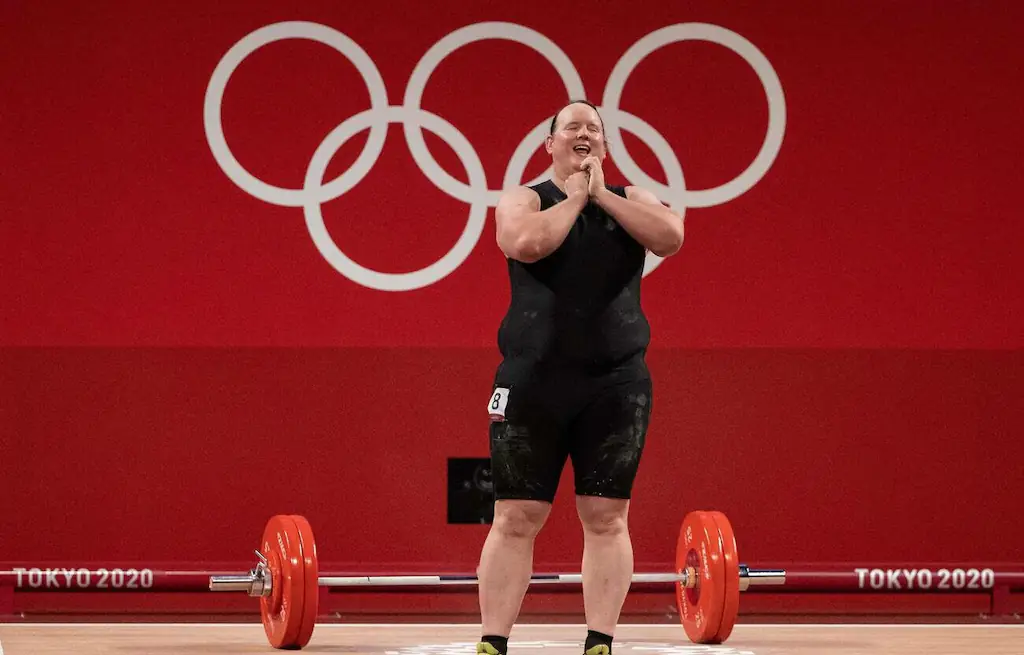
Per Reuters, the IOC confirmed that Hubbard, who was assigned as male at birth but who came out as transgender back in 2013, would be able to participate in the Tokyo Olympics in an official statement issued on Saturday, July 17.
Commenting on the decision in an official press conference, IOC chief Thomas Bach stated: "The IOC is in an inquiry phase with all different stakeholders… to review these rules and finally to come up with some guidelines.
"The rules are in place and the rules have to be applied and you cannot change the rules during an ongoing qualification system. This is what all the athletes of the world are relying on: that the rules are being applied."
As one of the biggest stars to emerge from RuPaul's Drag Race, this queen has never been shy of reinventing herself.
The RuPaul's Drag Race alum showcased her latest transformation. Credit: Taylor Hill/Getty Images
From breaking barriers on RuPaul’s Drag Race to making history on Broadway, Peppermint has spent decades carving out her space in the entertainment world. Now, she’s opening up about her latest transformation — one that has nothing to do with wigs or sequins.
Peppermint's Latest Transformation
The Season 9 Drag Race alum revealed she’s lost 100 pounds with the help of Ozempic after being diagnosed as pre-diabetic.
Speaking exclusively to Page Six at the Love Rocks NYC concert, the 45-year-old performer shared that weight has been an ongoing struggle.
Peppermint in 2017. Credit: Tara Ziemba/Getty Images
“I was able to get together with my doctor and endocrinologist, and I’m very grateful that I’m at a point now where I have access to levels of healthcare that I didn’t have before,” she said.
Though she initially tried to manage her health with diet and exercise, she admitted it “wasn’t that successful.” Turning to Ozempic was ultimately a medical decision, and the most important result? She’s no longer pre-diabetic.
“I was really worried that my life was going to change irreversibly once I crossed that threshold,” she explained. “I was hovering around that threshold for so long, and I’m happy that I’m not now.”
Peppermint was all smiles in the red carpet. Credit: Taylor Hill/Getty Images
While Peppermint says she feels like the same person, she acknowledges the practical perks: “I feel like I can walk up the steps a little easier and not be like, ‘Oh, my knee!’”
Breaking Barriers, Onstage and Off
Peppermint has spent years pushing boundaries, and not just in her personal life.
When she competed on RuPaul’s Drag Race in 2017, she made herstory as the first queen to enter the competition openly trans. At a time when trans representation in mainstream media was still rare, she sparked an important conversation about gender and drag.
“Drag can be really liberating,” she previously told Mashable. But for her, it wasn’t just about performance — it was about being seen. “It was to express myself in the only gender that worked for me.”
Peppermint is a trailblazer on and off the stage. Credit: Santiago Felipe/Getty Images
Since then, Peppermint has proven that drag was just the beginning. In 2018, she became the first trans woman to originate a lead role in a Broadway musical with Head Over Heels.
She’s also flexed her acting chops in hit shows like Pose and Schmigadoon! and was recently seen in Netflix’s Survival of the Thickest and The Traitors.
“Even people who knew me before I was ever doing drag call me Peppermint,” she said, explaining how her stage persona and personal identity have become one and the same.
Fighting for the Future
Despite her success, Peppermint knows that trans rights are under attack. She’s used her platform to advocate for her community, becoming the ACLU’s first-ever Artist Ambassador for Trans Justice.
At the Love Rocks NYC concert, she reflected on the uncertainty many trans people face regarding access to healthcare, housing, and basic rights.
Peppermint says she's lost 100lbs! Credit: Aliah Anderson/Getty Images
“It’s a rough time, certainly, feels very heavy,” she shared. “I don’t want to lose access to my healthcare or my housing, and I don’t want to be persecuted for being trans. This is who I am.”
With or without drag, Peppermint continues to be a force in entertainment, activism, and beyond. Whether on stage, on TV, or on the frontlines of advocacy, one thing is clear—she’s here to stay.