


Travel3 min(s) read
Alarming footage is caught by underwater drone dropped to bottom of the Great Blue Hole

An underwater drone captured terrifying footage after reaching the bottom of the Great Blue Hole.
The famous marine sinkhole, located about 60 miles off the coast of Belize, has long been considered one of the most feared and interesting dive spots on the planet.
From the surface, it’s a near-perfect sapphire circle, but beneath the surface lies a darker, more dangerous reality.
Over the years, explorers have sent drones, submarines, and divers into the void, uncovering everything from human remains and lost GoPros to plastic waste and lifeless zones beyond a toxic gas layer.
.jpg_jyybfC?tr=f-webp,q-70,w-1024)
YouTuber’s Mission
Most recently, YouTuber Will Mitchell attempted to reach the bottom of the 124-metre-deep hole using a weighted underwater drone rigged with a GoPro.
The mission started out smooth, with the camera capturing bright blue water, curious marine life, and the occasional shark gliding past. But that calm didn’t last.
As the drone continued its descent, a shark suddenly vanished from view - only to return with full force. It charged directly at the device, violently smashing into it and sending the footage into a chaotic spin.
“The shark just blitzed us!” Mitchell shouted in shock.
The shark eventually disappeared into the darkness, leaving behind only shaky footage and rattled nerves. Fortunately, the equipment survived - but what came next was even more disturbing.

A Lifeless Graveyard
Around 90 metres down, the camera went through a thick layer of hydrogen sulphide, a toxic gas that blocks oxygen and sunlight. Below that, everything was dead.
Above the layer, there were fish and other sea life. But under it, there was nothing - no light, no movement, just the outlines of dead creatures in a dark underwater graveyard.
Scientists say this deadly zone is also like a time capsule, with layers of untouched history.
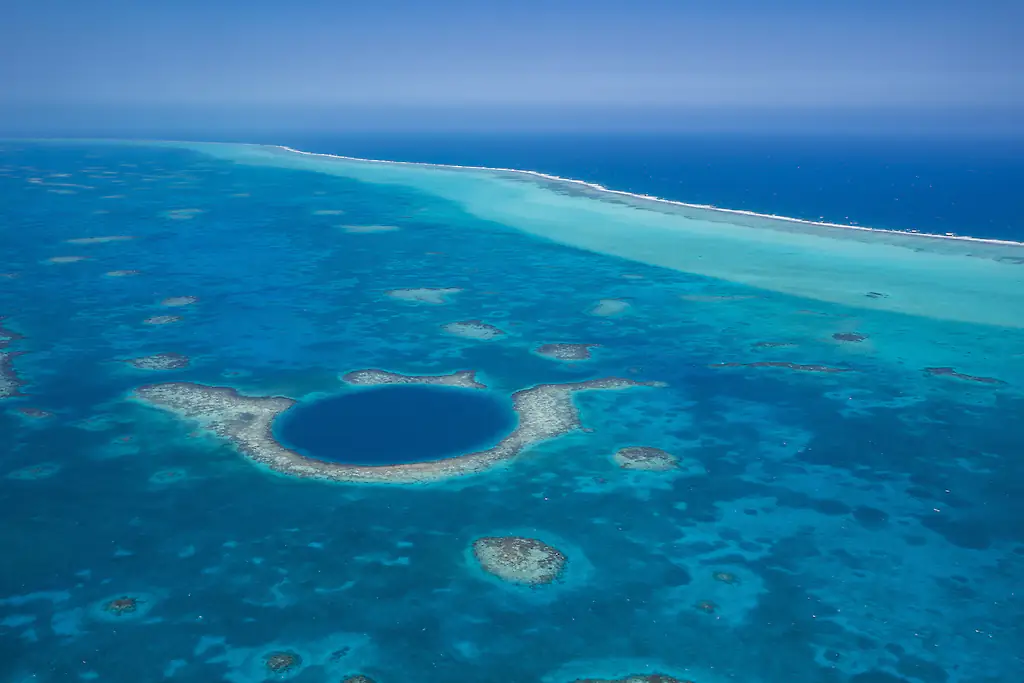
In 2022, scientists from Goethe University Frankfurt studied how the hole was formed and looked at its sediment layers, which have stayed mostly untouched because of the area’s special conditions, like layered water and a lack of oxygen.
“Inside the sediment core, they look a bit like tree rings,” said Dr. Dominik Schmitt, who led the research team.
Their findings revealed that roughly 574 storm events have hit the area in the last 5,700 years. But that number could spike dramatically in the coming decades.
Professor Eberhard Gischler warned: “Our results suggest that some 45 tropical storms and hurricanes could pass over this region in our century alone. This would far exceed the natural variability of the past millennia."