ADVERT
Health3 min(s) read
Published 18:17 07 Aug 2022 GMT
A woman has revealed that she nearly died after a "pop" in her chest during intercourse turned out to be a life-threatening medical condition.
The 45-year-old had just reached climax when she felt a sharp jolt of pain rush through her body, which prompted her and her husband to leave their home in Hattiesburg, Mississippi to go to the emergency department of their nearest hospital.
The medical staff was told the woman was in a position where she was on her back with her legs pressed against her chest. She then suddenly felt discomfort in her chest.
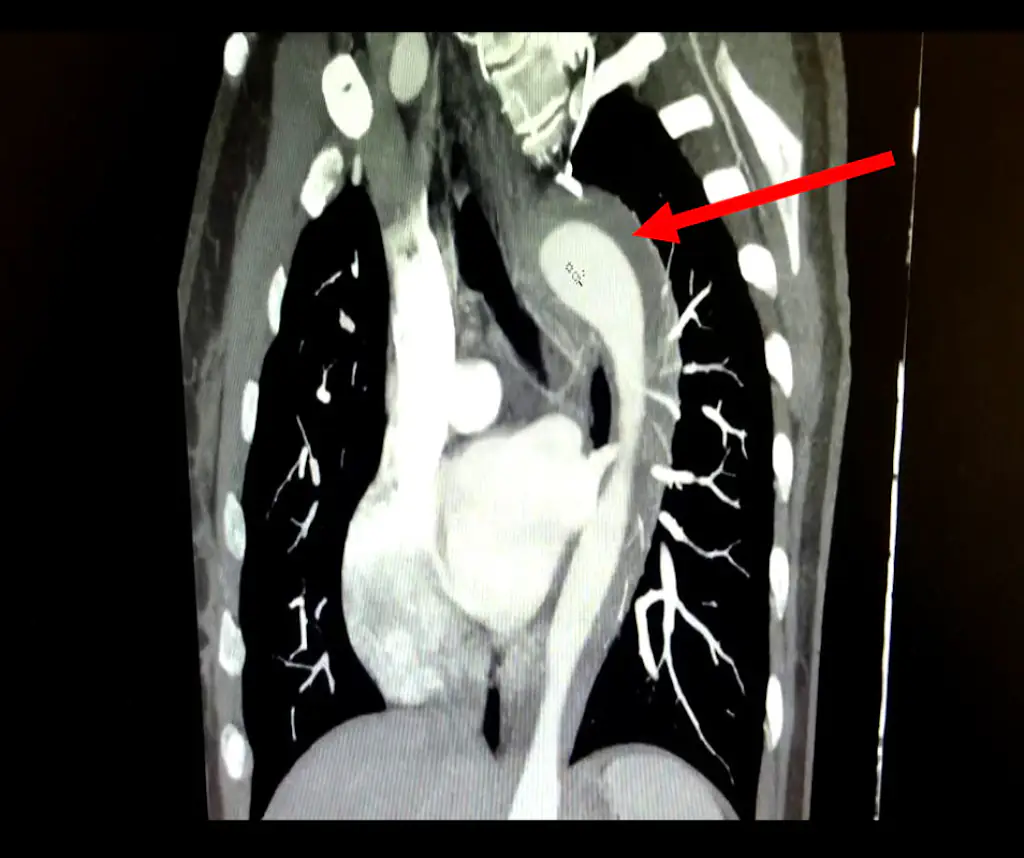
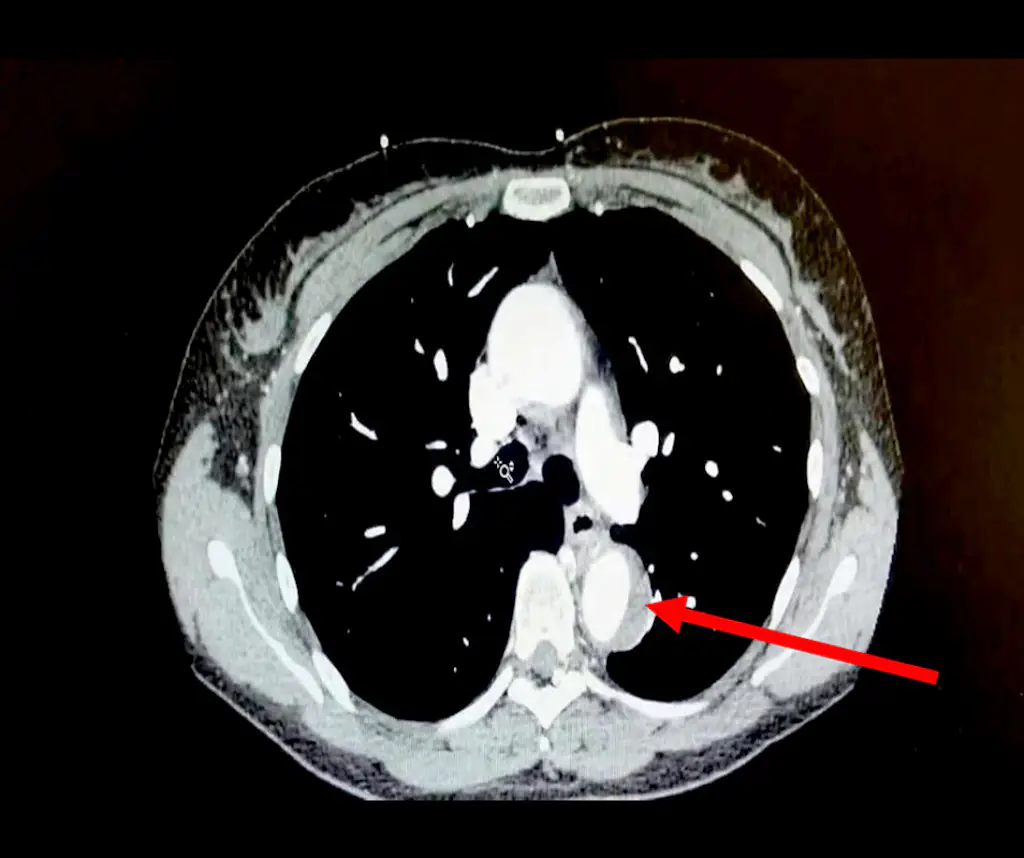
When the woman was examined at the hospital, medical staff discovered that she experienced a form of acute aortic syndrome (AAS) - a potentially life-threatening condition.
Doctors found a leak in her aorta - a large artery that carries blood through the body. The condition is very scary, as for every hour a patient has not been treated, their odds of death rise by one percent.
Doctors gave the woman morphine and fentanyl to alleviate her pain, which managed to help her become more relaxed and less affected.
The woman had a medical history of hypertension (high blood pressure) and had been prescribed medication, however, she hadn't taken it for over a year.
The events surrounding the woman’s diagnosis have now been explored by scientists in the American Journal of Case Reports, after seeing that it was brought on by sexual intercourse.
"Our case is unusual in that our patient was a woman, who represents a smaller proportion of AAS cases, and she was having consensual sexual intercourse with her husband," researchers stated in the paper.
"However, she had baseline risk factors for AAS, including untreated, uncontrolled hypertension and a history of tobacco abuse," they continued.
The article - titled 'Aortic Intramural Hematoma in a Female Patient During Sexual Intercourse' - also referenced heart attacks during sexual situations and how certain problems, such as cheating, can be a for people.
"The risk of sudden cardiac death also shows similar patterns, with an incidence reported at 0.19% in men and 0.16% in women, often noted during masturbation, sexual interaction with prostitutes, or extramarital sexual activity," researchers said.
"As previously mentioned, the risk of sudden cardiac death during sex has a correlation with adultery, which could be provoking an intensified or unforeseen emotional response that makes a person more predisposed to AAS or sudden cardiac death," they added.
Doctors believed that the woman's case was "unusual" considering her age, but they noted that her high blood pressure and history of smoking - six or seven cigarettes a day for 17 years - were common contributing factors to the condition.
health2 min(s) read
Published 17:28 05 Jan 2025 GMT
health2 min(s) read
Published 09:01 25 Apr 2026 GMT
The thought of breaking one’s penis will make men reach instinctively for their crotch, wincing with sensory empathy, so Brazilian researchers have taken it upon themselves to review which sex position is most likely to result in a trip to A&E with an injured shaft.
A study by the University of Campinas has highlighted which sexual positions may carry a higher risk of penile fracture, sometimes described colloquially as “breaking the penis”, based on patient data collected over more than a decade.
Researchers analysed 44 suspected cases, confirming 42 of them (95.4%), with patients averaging 34.5 years old and followed for several years afterward.
The injury, while uncommon, is known to cause considerable distress and can lead to complications if not treated quickly. The study notes that many patients experience a classic set of symptoms, including an audible crack, sudden loss of erection, and serious pain.
Looking at the causes, the researchers found that heterosexual intercourse was responsible for most cases (66.7%), followed by penile manipulation (14.3%) and homosexual intercourse (9.5%).
Among heterosexual encounters, “woman on top” was identified as the most frequently associated position, accounting for half of those cases. The study concludes: “Woman on top” was the potentially riskiest sexual position (50%). The next most common was “doggy style,” which made up 28.6% of cases.
The researchers suggest that certain dynamics in these positions may increase the likelihood of injury, particularly when movement is less controlled. However, they also emphasised that prompt medical treatment significantly reduces long-term complications. According to the findings: “Immediate surgical treatment warrants long-term very low morbidity.”
The study also examined outcomes after treatment. A small number of patients experienced complications such as urethral injury (14.3%) or erectile dysfunction (4.8%), but overall, long-term issues like pain, deformity, or urinary problems were rare.
In the introduction, the researchers noted that penile fracture is “a relatively uncommon clinical condition” that can cause embarrassment, sometimes delaying patients from seeking help. This delay, they warned, “can lead to an impairment of sexual and voiding functions.”
health3 min(s) read
Published 15:59 22 Mar 2025 GMT
A 46-year-old woman has opened up about the subtle symptoms she ignored before being hit with a life-threatening heart attack.
Nikki, a TikToker who goes by the handle @martyandnikki, suffered a heart attack in February, despite what she described as "no previous medical conditions" in a video shared on the social media platform.
At first, she thought the strange signs she was experiencing were nothing serious.
It started with a dull pain in her left shoulder, something she assumed was from “sleeping on it wrong” or possibly due to perimenopause. She also had bouts of nausea and chest tightness, but the symptoms came and went. “I thought I was just experiencing indigestion,” she explained.
But while dining out one day, the situation escalated fast. Nikki described feeling “pain radiating” down her arm and said her “chest felt like it was being squeezed as tight as you could squeeze it,” all while feeling intensely sick.
It was then she realized she was having a full-blown heart attack.
In an update video posted on March 8, Nikki recalled her trip to the hospital.
Her EKG results were “a showstopper” and her troponin - which is a protein released when the heart muscle is damaged - was "through the roof”, she said.
Doctors found no signs of blockages, plaque, or clots. Instead, she was treated for a “spasm” with nitroglycerin or “nitro” - a drug used to widen arteries and improve blood flow.
“All labs - cholesterol, lipoprotein, homocysteine, calcium score - they were all normal,” Nikki added. “Echo[cardiogram] (ultrasound of the heart) minorly abnormal - possible broken heart syndrome. Two angio[gram]s (analyzing blood vessels) both good - ‘no damage.’”
Five weeks later, the woman is still navigating her recovery. She admitted to staying “pretty symptomatic for the first few weeks home with some chest pain and some tachycardia (increased heart rate)".
She’s also had “several trips back” to the emergency room, noting that “all” of her EKGs have remained “abnormal” since the incident. Still, she shared that her troponin levels have “come back down to normal".
Frustrated by a lack of clear answers, Nikki took to the comments on her TikTok page and came across a TED Talk from a doctor based in Texas discussing lesser-known heart conditions.
She decided to make an appointment. That decision may have saved her life as the doctor diagnosed her with Prinzmetal - also known as coronary vasospasm.
According to the Cleveland Clinic, “Prinzmetal angina is also called variant angina or vasospastic angina,” and its symptoms include "chest pain episodes that happen during the night when you’re at rest," even when tests show no signs of coronary artery disease.
“[The doctor] explained that I'm still having symptoms because I am not being treated properly for it,” Nikki said. “She took me off two meds that I never even needed in the first place. Added in one that's gonna be necessary for prevention and gave me a really solid plan with Nitro which I will now have to keep on me every minute for the rest of my life.”
The doctor believes Nikki’s heart attack was triggered by “a perfect storm of a recent traumatic event, perimenopause, and a recent illness and it was kind of all at once".
While there doesn’t appear to be a strong genetic factor, the severity of the spasm suggests Nikki may be “more susceptible to future events or future heart attacks.” The nitro, she said, will act as a “rescue med”.
Since starting the new treatment plan, Nikki said she’s gone “two days” without chest pain and feels “better than [she’s] felt in the last month".
“There’s still a lot to do,” she said, “but this is a giant step in a really good direction.”
health3 min(s) read
Published 11:42 16 Oct 2024 GMT
relationships2 min(s) read
Published 15:52 07 Aug 2024 GMT
A new study has revealed why women who don't have enough sex are purportedly more likely to "die early."
A recent study involving 2,267 participants in the US found that women who have sex less than once a week may have a higher likelihood of dying early compared to those who engage in sexual activity more frequently.
Researchers analyzed data from a national health survey that included 14,542 participants, although not all provided details about their sex lives.
Among the more than 2,000 people who did, 94.4% reported having intercourse at least once a month, while 38.4% stated they had sex more than once a week.
The study's authors, whose research was published in the Journal of Psychosexual Health last month, explained, "Sexual activity is important for overall cardiovascular health, possibly due to a reduction in heart rate variability and increased blood flow."
"Using findings from our study, we can infer that sexual activity, broadly defined, may ameliorate the loss of function that can occur with age and the progression of disease," the researchers noted.
Previous studies have indicated that the average adult in the US has sex 54 times a year, roughly equivalent to once a week. For this study, the 2,267 participants, aged 29-50, were divided into two groups: those who have sex more than once a week and those who have sex less frequently.
The study discovered that women with a lower sexual drive were 1.7 times more likely to die from any cause by the end of 2015 compared to their more sexually active counterparts. Additionally, a pattern emerged: the less sex a woman had, the higher her mortality risk.
While the study did not find the same correlation in men, it revealed that sexual activity had a "modifying relationship" on depression in both sexes.
Participants suffering from depression were approximately three times more likely to die during the follow-up period if they did not engage in frequent sex.
"Individuals with depression but high sexual frequency don't feel the harmful effects of depression as much," Dr. Srikanta Banerjee, the study's lead author, told DailyMail.com.
"Depression leads to increased mortality due to health outcomes. So perhaps sex is more effective because of the severity of how depression impacts females," Dr. Banerjee explained.
However, the researcher noted that "there are multiple theories" regarding the study's findings.
"For instance, sex releases endorphins that may prevent severe health outcomes," he added.