Uncategorised2 min(s) read
uk5 min(s) read
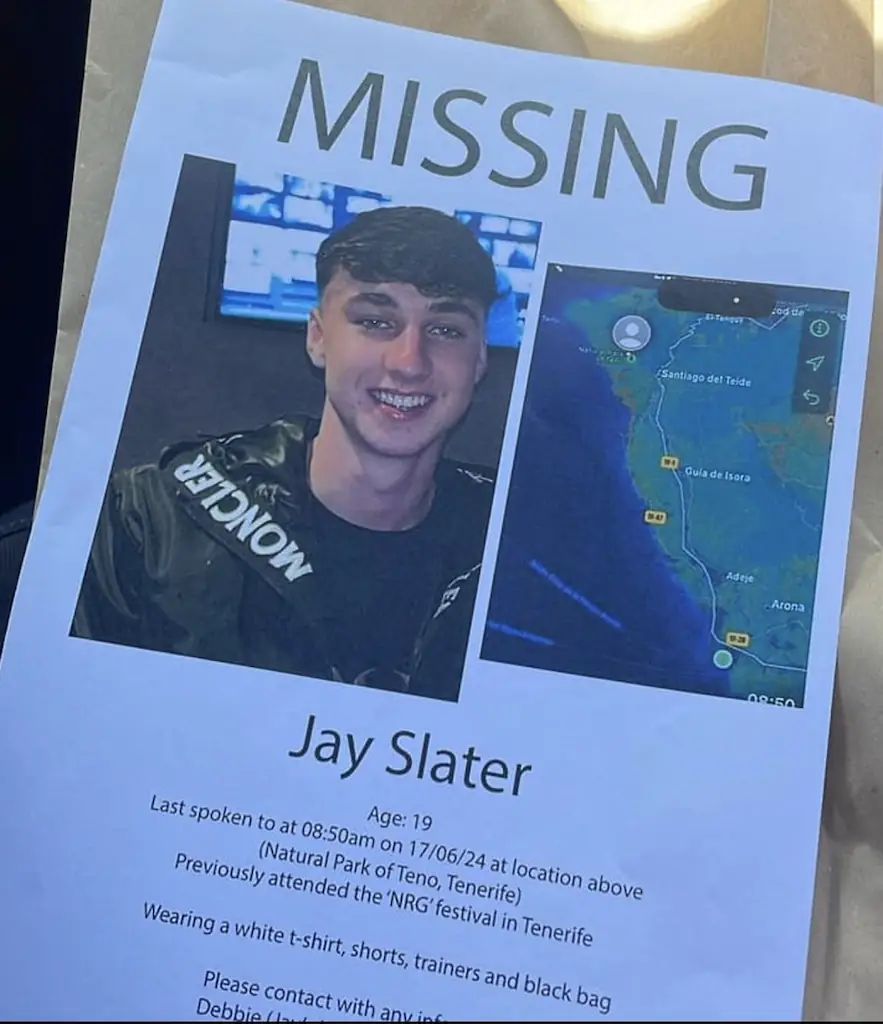
As the search continues for Jay Slater, another missing British tourist has been found trapped in a gorge.
Local residents alerted officers about the welfare of 51-year-old David Larkin from Scotland, who had gone walking in the Los Carrizales neighborhood near Masca, per the Mirror.
This area is where search and rescue teams have been conducting a week-long hunt for Jay.
The officers diverted their efforts and located the man in the Asomada Gorge.
A spokesperson for the local police, employed by the Buenavista del Norte town hall - which includes the village of Masca, near Jay's last-known location - stated: "Officers acting alongside a Civil Protection mountain rescue team have helped rescue a Scottish hiker aged 51 in the Asomada Gorge in the Los Carrizales neighborhood.
"Local residents saw how the hiker went into an area of difficult access which was not suitable for transit early in the morning and had yet to return to his starting point several hours later.
"They alerted officers who were at that moment involved in the search for young Jay Slater. He was found tired and disoriented by the officers and the rescue team who helped him out of the gorge."
The spokesperson expressed gratitude to the local residents for their vigilance, acknowledging that the hiker likely would not have been able to leave the gorge without assistance.
"We want to thank the local residents who alerted us to this situation because the difficulty of the terrain and lack of phone cover in the area meant this hiker would not have been able to get out alone and without the help he received," the spokesperson added.
Despite reports that he Larkin was found "tired and disoriented", the 51-year-old contests this.
"I can tell you now; I wasn't tired and I wasn't disoriented, and I didn't need rescuing," he said, via the Daily Mail.
"I think there was a lot lost in translation when they saw me and I explained to them I had water, I was wearing layers, I had my rucksack with food, and I'm an experienced hiker."
He continued: "I went into the canyon and saw the helicopters. I thought they were looking for the lad, but I didn't think they would end up picking me up. I think they want to show how good they are, but I certainly didn't need saving. I feel so sorry for the boy's family and hope he's found soon."
Larkin went on: "The mountain rescue people took my picture and then dropped me off. I'm very grateful, but I didn't need help, and to be honest, it extended my day.
"I did go in through a difficult path, and the trail isn't that well marked, but I managed. When they came towards me, I explained I was okay."
He continued: "It should have been a two-hour trail. I left just after lunch but didn't get back until nearly 7:00PM because they took me the long way. I'm slow, and I hike for solitude, but I was fine. I take my time, and they ended up rushing me at a pace I found uncomfortable."
He concluded: "I had all the equipment, and I think the language barrier was an issue. Then the penny dropped that they were looking for the missing boy. I don't want to appear ungrateful, and I thanked them for their concern, but I was fine."
The search for Jay is ongoing after more than a week since he was last seen.
The search involves local firefighters and the Tenerife Civil Defence scouring the National Park of Teno in the northwest of the island, where Jay’s phone last pinged.
In the early hours of Monday, June 17, Jay left an afterparty at 5:00AM and headed to Masca - a rural village 19 miles away from the NRG venue - with two British men.
At around 7:30AM, he shared a Snapchat image that showed him at a farmhouse Airbnb.
Between the hours of 8:00AM and 9:00AM, he spoke to a local woman about bus times. Jay also called friend Lucy Mae Law to tell her that he was lost, thirsty, and that his phone battery was critically low.
The teenager also said he was going to attempt to walk back to their shared accommodation - a journey that would take roughly 10 hours.
After their phone call, Jay's phone battery died, with his last tracked location being in the Rural de Teno Park, a popular hiking area.
travel3 min(s) read
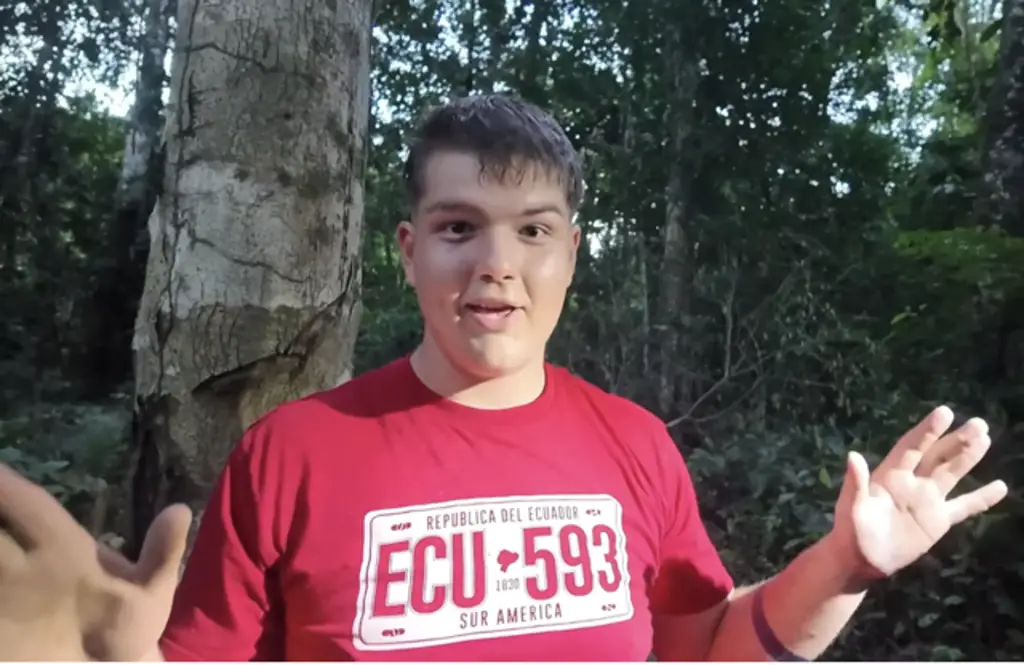
When a 23-year-old traveler left his home to live in an extremely remote part of the Amazon rainforest, he met the love of his life, but their relationship was far from smooth sailing - and one impulsive decision meant he had to stay away from pregnant women.
Although his father was Amazonian, Justin Alvo grew up in the US, but when he reached his twenties, he decided to return to his father’s homeland, as he always felt “something was missing” in his life.
Before moving to America in search of a better life and meeting Justin’s mother in a Chinese restaurant, his father grew up in a remote part of the eastern Ecuadorian Amazon called Tres de Noviembre. It was so isolated that he did not see a radio until he was 14 and still cannot be sure exactly how old he is, as the community did not track birthdays.
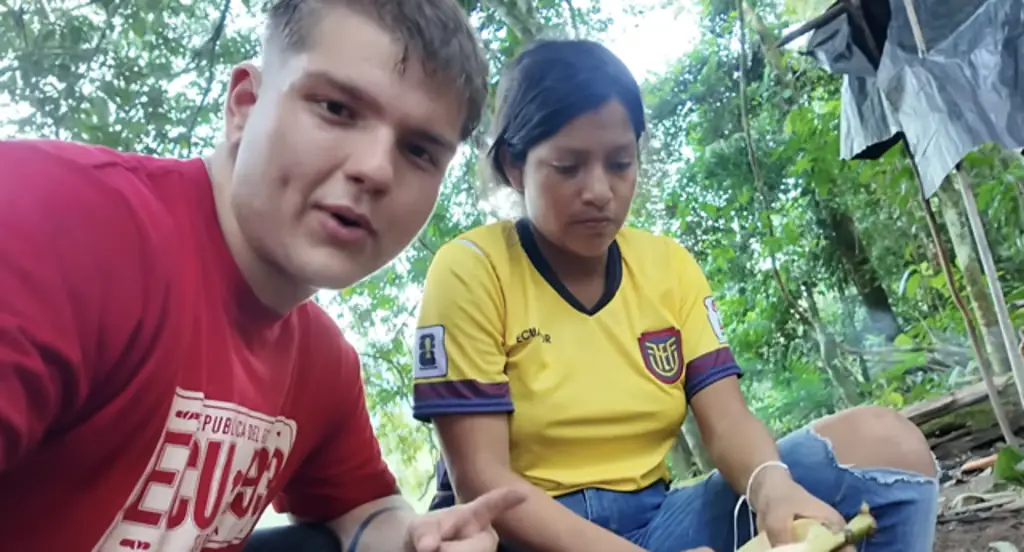
When Justin decided to visit where his father was raised to document the culture on his YouTube channel, he unexpectedly met the woman who would soon become his wife.
Maria was working as a chef at an Amazonian restaurant when she met Justin and agreed to be part of his documentaries about the Shuar people.
Justin told UNILAD: "I basically said, 'Hey, I like you a lot, you're really cute, and I want to make documentaries and videos about the Shuar people.' She said 'yes, let's do it.'"
However, keeping in touch with her was difficult as Maria has one of those “$20 phones that barely works,” which she only used to call family members in emergencies.
Recalling their first date, Justin said: "I genuinely thought I might get kidnapped; we were meeting in the middle of nowhere."
Despite his Amazonian heritage, Justin described tribal life as “an alien world.”
Thankfully, the tribe was quick to educate him on which insects to avoid, which snakes could kill him, and other crucial survival tips.
However, on one fateful day, Justin decided to ignore the locals' advice for the sake of filmmaking and got close to a deadly boa that slithered past. He was strictly warned not to approach the snake but couldn’t resist the opportunity.
He said: "They told me, 'whatever you do, don't go near that thing,' but I love animals, so of course I caught it and started showing everyone."
As Shuar people view boas as spiritual animals, after he had touched the snake he was seen as having bad energy, so was banned from being near any pregnant women in the community.
The amateur filmmaker was forced to be “cleansed” as the community feared he might pass on bad energy.
Since he was cleansed, Justin has become well integrated into the isolated community and is now happily married to Maria, with whom he welcomed a child at the start of the year.
us1 min(s) read
A 27-year-old American man was reportedly shot dead with arrows by a tribe on a remote Indian island as soon as he set foot on their home.
John Allen Chau paid local fisherman to take him to North Sentinel Island, which is home to the Sentinelese, an indigenous group who refuse contact with the outside world.
The US citizen allegedly went hoping he could encourage the endangered tribe to convert to Christianity, but instead was met with a flurry of arrows when he arrived to the island, which is off-bounds to visitors.
[[twitterwidget||https://twitter.com/22CVR_reborn/status/983838011141042176]]
His dead body was seen by fishermen on the island, which is located in India's remote Andaman and Nicobar chain.
A senior police officer confirmed to Andaman Sheekha that a murder case had been registered against unknown members of the Sentinelese tribe.
However, because contact with the tribe is forbidden, Chau's killers allegedly cannot be prosecuted for taking his life.
In addition, police have reportedly stated that seven fishermen have been arrested for illegally ferrying the missionary to the island.
Jatin Narwal, Superintendent of Police at Port Blair, told TNM that Chau was last seen alive on November 16. He added that he believed the traveler's main aim was to meet the tribe.
[[twitterwidget||https://twitter.com/DailyMirror/status/1065240277311504385]]
"He lived in Alabama, US. He is some kind of paramedic. He was on a misplaced adventure in prohibited area to meet uncontacted persons," he said. "People thought he is a missionary because he had mentioned his position on god and that he was a believer on social media or somewhere online. But in a strict sense, he was not a missionary. He was an adventurer. His intention was to meet the aborigines."
A source talking to the AFP also gave more information on the 27-year-old's death, stating that the tribe put a piece of rope around Chau's neck and dragged him away, after hitting him with the arrows.
"He tried to reach the Sentinel island on November 14 but could not make it," they claimed. "Two days later he went well prepared. He left the dinghy midway and took a canoe all by himself to the island. He was attacked by arrows but he continued walking. The fishermen saw the tribals tying a rope around his neck and dragging his body. They were scared and fled but returned next morning to find his body on the seashore."
In a statement addressing the murder, Survival International - which has long been campaigning to protect the indigenous tribes living in the Andamans - named the incident a "tragedy" and stressed the Sentinelese's tribe's vulnerability, with concerns to disease.
[[twitterwidget||https://twitter.com/Ahmedshabbir20/status/1065217128804974594]]
"This tragedy should never have been allowed to happen," the group's international director, Stephen Corry, said. "The Indian authorities should have been enforcing the protection of the Sentinelese and their island for the safety of both the tribe, and outsiders. Instead, a few months ago the authorities lifted one of the restrictions that had been protecting the Sentinelese tribe’s island from foreign tourists, which sent exactly the wrong message, and may have contributed to this terrible event."
He continued: "It’s not impossible that the Sentinelese have just been infected by deadly pathogens to which they have no immunity, with the potential to wipe out the entire tribe. The Sentinelese have shown again and again that they want to be left alone, and their wishes should be respected."
world politics3 min(s) read
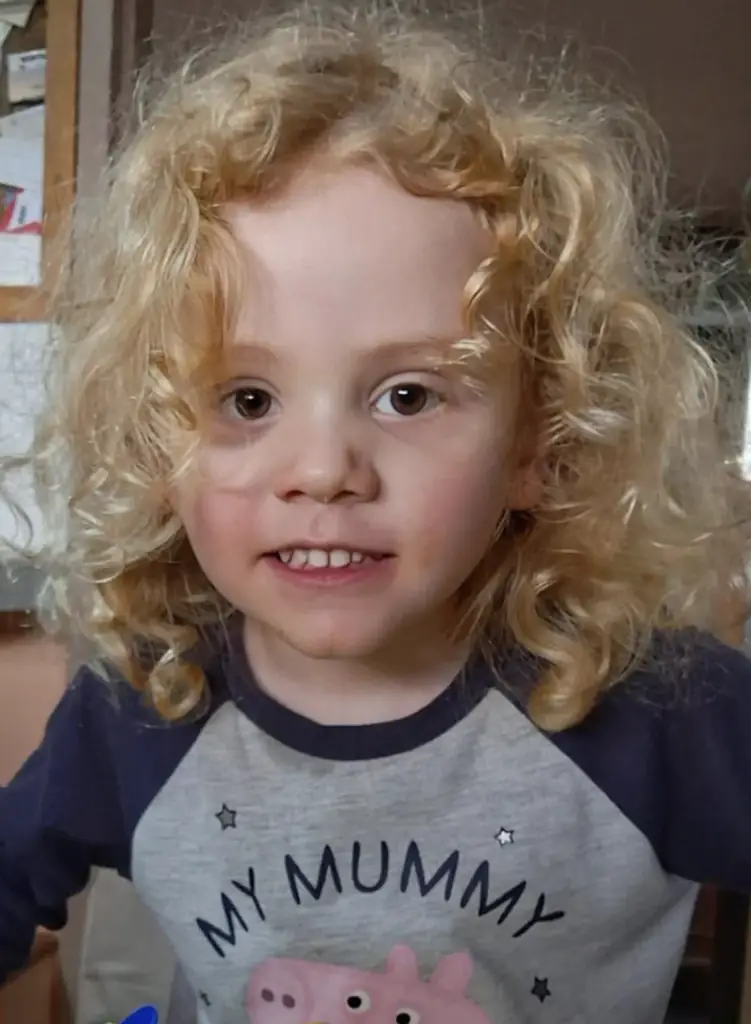
The family of four-year-old August “Gus” Lamont are holding on to hope that he is still alive, even as police scale back what has become one of the most intensive search operations in South Australia’s recent history.
Gus vanished from his family’s sprawling sheep station about 40 kilometers south of Yunta on September 27. He was last seen playing in a dirt mound near his grandparents’ homestead around 5:00PM, before disappearing without a trace just 30 minutes later, the Daily Mail reports.
Since then, the search for the boy (described by loved ones as “a shy but adventurous child”) has captured the attention and heartbreak of the entire country.
Among those who joined the massive search effort was Jason O’Connell, a former State Emergency Service (SES) member who, alongside his partner Jen, covered more than 1,200 kilometers scouring the surrounding desert.
O’Connell said the couple took turns searching through the night, hoping that if Gus was sheltering from the scorching heat during the day, he might move under cover of darkness.
“Jen and I were the only ones searching nights, apart from Monday night when the father joined us,” O’Connell shared online. “We’d head home when the main search crews arrived through the day.”
Despite their efforts, which included sweeping the terrain with high-powered lights and watching for signs of wildlife activity, O’Connell admitted they found “nothing.”
“I personally am very doubtful he is on the property,” he said, adding that even a single footprint discovered early in the search now appears uncertain.
Police, emergency services, and the Australian Defence Force all took part in the multi-day operation. Teams used infrared drones, dogs, ATVs, and specialist divers to check nearby tanks and dams, yet the search yielded no definitive leads.
Superintendent Mark Syrus of the Yorke Mid North division told reporters the situation had become increasingly grim. “A four-year-old doesn’t disappear into thin air; he has to be somewhere,” Syrus said, according to PEOPLE. “Hopefully he’s hanging in there alive … but it’s a long time to be out in the elements.”
Authorities noted that while Gus was an energetic walker, he had never previously wandered off the property. The remote homestead, more than 25 kilometers from the nearest highway, made the likelihood of abduction “highly improbable.”
After nearly a week of searching under punishing Outback conditions, police officially ended the active rescue operation on Friday, The Sun details.
Assistant Commissioner Ian Parrott said investigators had found “no tangible pieces of evidence; no footprints, no clothing, no hat.”
“We’ve all been hoping for a miracle,” Parrott said. “But that miracle has not eventuated.”
The investigation has now been handed to South Australia Police’s Missing Persons Section, which typically manages long-term disappearance cases.
Still, Gus’s family refuse to give up. On Saturday, community group Leave A Light On Inc. urged residents across South Australia to switch on their porch lights in solidarity, a symbolic gesture so Gus could “find his way home," per 7 News.
The disappearance of August Lamont has left the small Yunta community shaken but united. Volunteers, neighbors, and total strangers have continued to rally around the family, offering support and prayers as the investigation continues.
Even as search crews leave the property and the desert returns to its eerie quiet, one thing remains constant: Gus’s family are not ready to believe the worst. Their message is simple: until there is proof otherwise, hope is not lost.
world politics1 min(s) read
Last week, reports emerged that 26-year-old John Allen Chau was killed, when the American visited the tribespeople of the remote North Sentinel Island in an attempt to convert them to Christianity, ignoring numerous warnings of the tribe's hostility to outsiders.
Chau's final letter to his family, According to the Washington Post, read, "You guys might think I'm crazy in all of this but I think it's worthwhile to declare Jesus to these people ... God, I don't want to die."
In the aftermath of his death, Indian police (the nearest authorities to the Andaman and Nicobar Islands), disclosed that the difficult relationship with the Sentinelese and any visitors means that it may be impossible to recover Chau's body from the island.
[[instagramwidget||https://www.instagram.com/p/BpL62ErCQcB/]]
Now, it has been revealed that prior to his expedition, Chau had an intense obsession with the secluded people. Remco Snoeij met John in 2016, when he sought to learn how to scuba dive on the nearby Havelock Island. Even back then, he showed an interest in the North Sentinelese tribe.
“He shared a keep interest in researching and knowing more about them,” Mr Snoeij told The Washington Post.
The pair went on dive excursions together, where Mr Snoeij reportedly told him about fisherman who had reached the island in 2006, only to be killed by islanders - as well as rumours that the Japanese military had buried gold there during the second world war. “It must have struck a cord,” he said.
[[instagramwidget||https://www.instagram.com/p/BqdFDOKnqgQ/]]
Back in 2016, Chau joined the All Nations missionary group, whose international executive leader is Mary Ho. She spoke to the paper about Chau, who she described as having a "radical call" to discover "unreached groups", and claimed he had planned to live there for years to learn their language.
“You could see that every decision he has made, every step he has taken since then was driven by his desire to be among the North Sentinelese people,” Ms. Ho said.
That same year, Chau told another friend, John Ramsey, that he was avoiding becoming romantically involved with anyone before his trip to the island. “He knew of the dangers of this place,” John said. “He didn’t want any hearts to get broken should something go wrong.
"He was very much aware of what he was doing. He also knew it wasn’t exactly legal.”
It was on November 14, that he first headed to the island, paying fisherman to take him by boat. His diary claims he saw men armed with bows and arrows that night, and yelled to them "My name is John, I love you and Jesus loves you".
The following day he returned, at which point the tribe fired arrows at him, one of which - according to reports - even pierced his bible. Then, on November 16, he made his final trip. He asked fishermen to drop him off on the island, where he was killed by arrows; his body dragged and buried in the sand.
“He lost his mind, definitely,” Mr Snoeij said. “But ask any adventurer. You have to lose your mind a little bit, otherwise you don’t do it.”