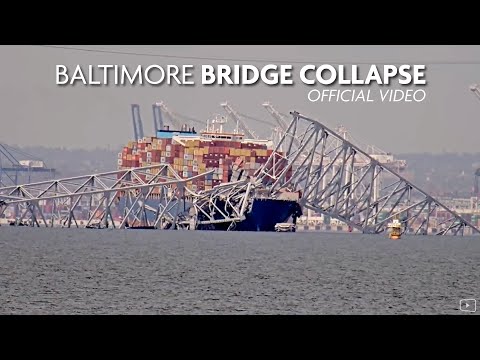
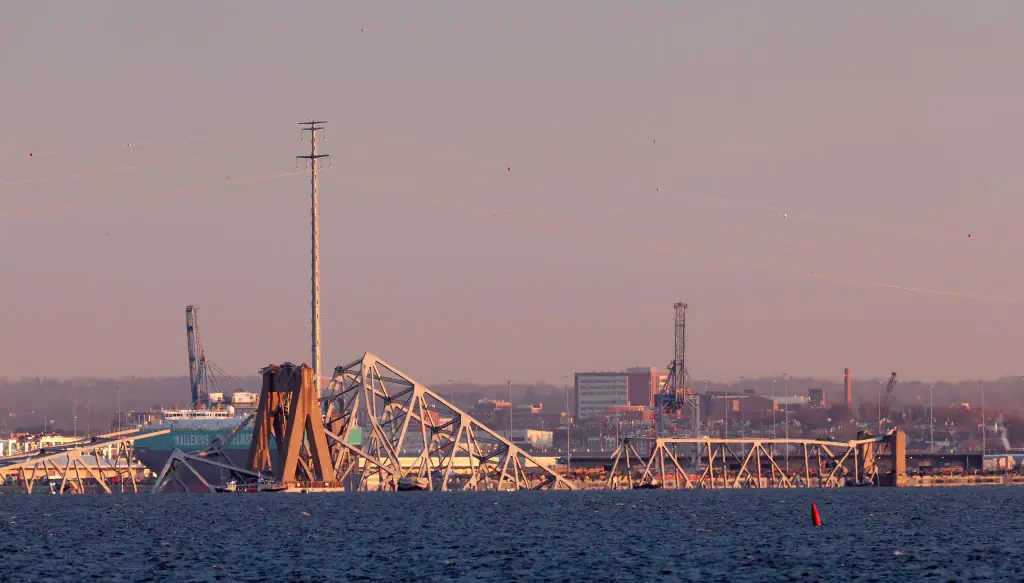
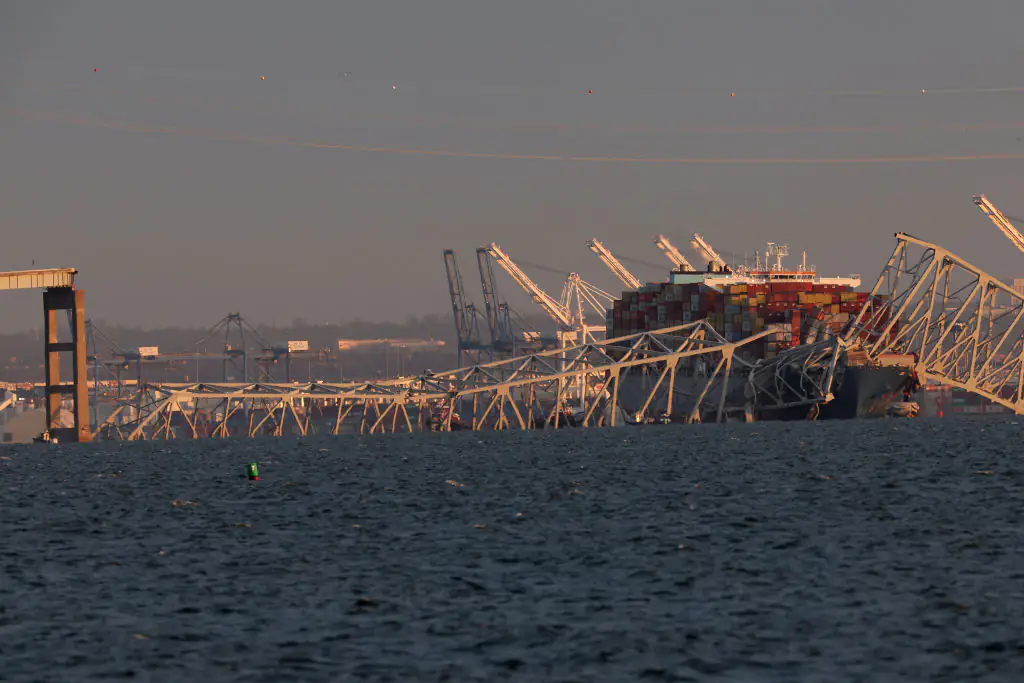
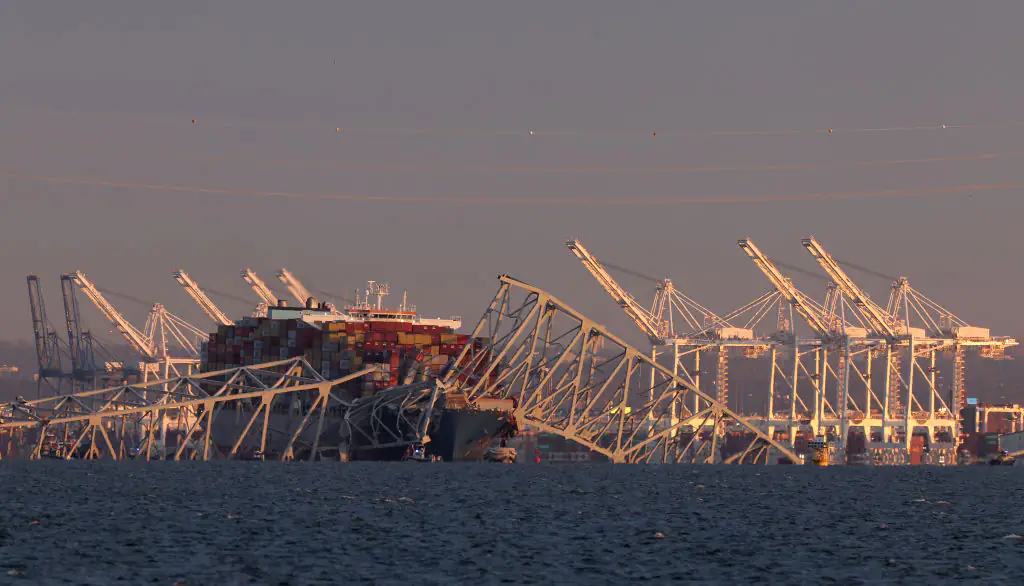
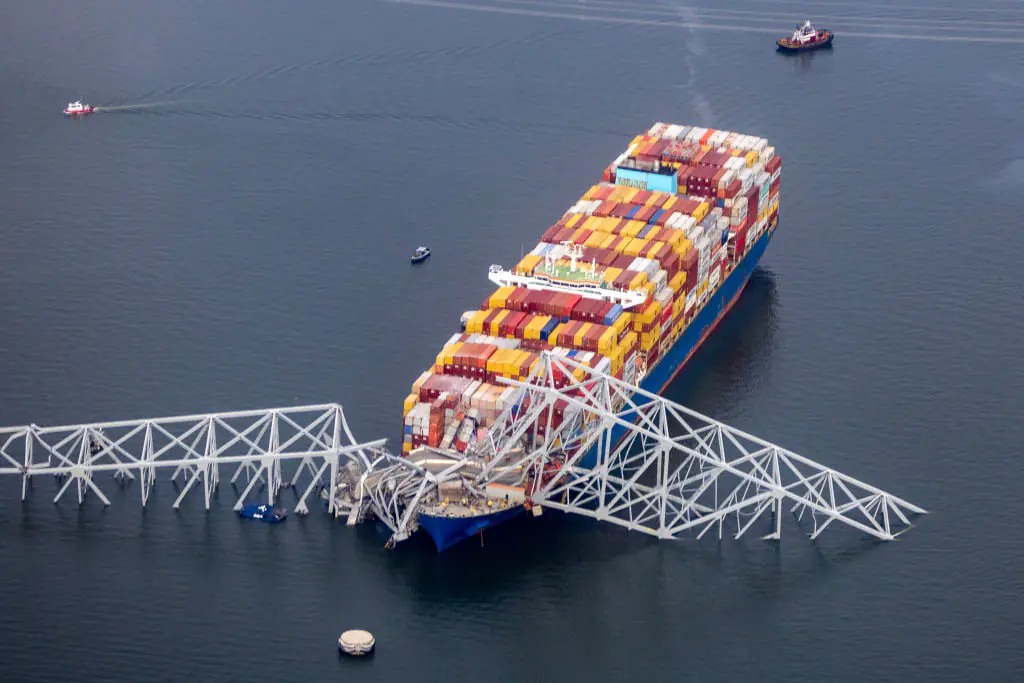
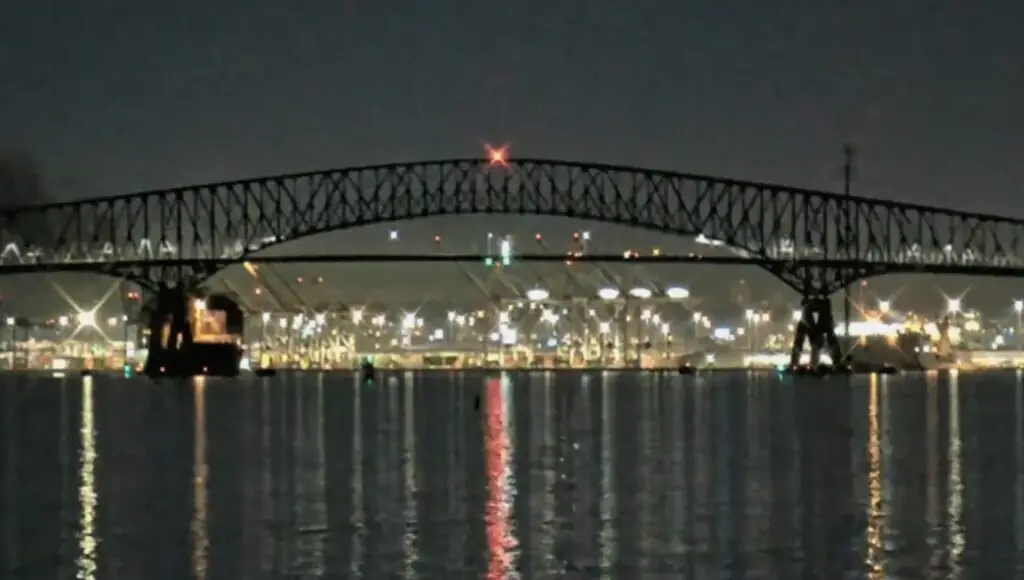
The Francis Scott Key Bridge - in Baltimore, Maryland - snapped and collapsed after a 948ft container ship crashed into it in the early hours of Tuesday (March 26). The collapse sent several vehicles into the water.
Footage shared on X appeared to show the ship striking one of the bridge's central supports, which caused much of the 1.6-mile bridge to give way as a number of vehicles fell into the river below.
Videos showing the moment the ship collided with the bridge have been circulating on social media:
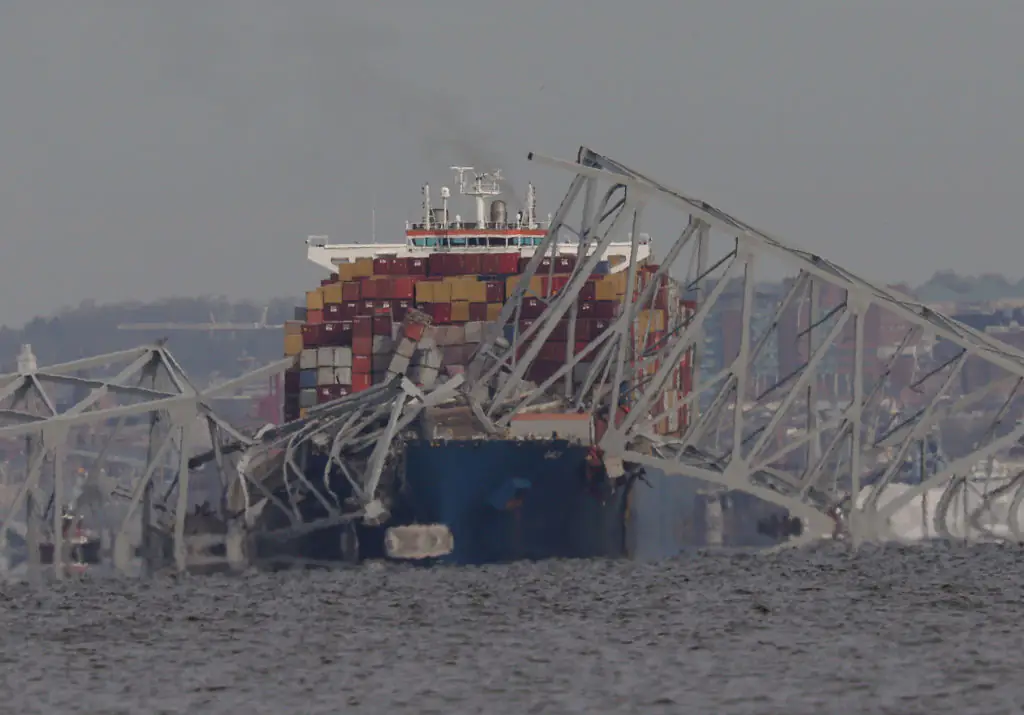
The vessel apparently caught fire as a section of the Francis Scott Key Bridge appeared to collapse over it, which sent thick, black smoke into the air.
At the time of writing, two people have been rescued. One of the victims is “severely” injured and the other is in critical condition, according to authorities who set up a press conference over the ordeal.
The Baltimore City Fire Department has issued an update regarding the recent bridge collapse in the city. Credit: Rob Carr / Getty
At the time of the collapse, the temperature in the water was about 47 degrees Fahrenheit, per a buoy that collects data for the National Oceanic and Atmospheric Administration.
Shortly after the collapse, the Baltimore Fire Department said it was searching for at least seven people believed to be in the water.
The department went on to add that up to 20 people and a number of vehicles had fallen into the Patapsco River, a situation it deemed to be a “mass casualty event”.
The Francis Scott Key Bridge - in Baltimore, Maryland - snapped and collapsed after a 948ft container ship crashed into it in the early hours of Tuesday (March 26). Credit: Rob Carr / Getty
"We are in the midst of managing a mass casualty multi-agency incident here. Unfortunately, we understand that there are up to 20 individuals who may be in the Patapsco river as well as multiple vehicles," Kevin Cartwright of the Baltimore Fire Department told CNN.
Cartwright also stated that the department is working with the US Coast Guard, adding that a team of divers are in the river to carry out the search and rescue operations.
Up to 20 people and a number of vehicles have fallen into the Patapsco River, a situation the Baltimore City Fire Department deemed to be a “mass casualty event”. Credit: Rob Carr / Getty
"This happened at 01:30AM with limited visibility so we are working aggressively, considering the environmental temperatures as well as the water temperatures to try and rescue and perhaps recover individuals," Cartwright said. "It feels like at least about 30 degrees (-1°C) where I am. It could be slightly lower than that. And I'm sure that the water temperature is even colder... And that can pose a concern and risk for our divers."
Cartwright confirmed the teams were working "methodically and safely" to make sure "everyone operating here on the scene is safe and that we're able to make progress without causing adverse harm to anyone else."
The major bridge in Baltimore, Maryland, collapsed into a river after a 948ft container ship crashed into it early on Tuesday (March 26). As a result of the crash, several vehicles plunged into the river, and search teams have been deployed to rescue people from the water.
Check out footage of the crash:
As the story continues to develop, many are left wondering how many casualties have been reported and what updates there are to the search and rescue efforts.
Here's what we know so far...
What exactly happened?
At 1:27AM local time, a Singapore-flagged container ship called the Dali collided into one of the Francis Scott Key Bridge's pylons, causing almost the entire structure to plunge into the Patapsco River. The incident is believed to be entirely accidental and not an instance of terrorism, according to authorities, CBS News reports.
The major bridge in Baltimore, Maryland, collapsed into a river after a 948ft container ship crashed into it early on Tuesday (March 26). Credit: Tasos Katopodis / Getty
Why was the crash declared a "mass casualty" event?
Kevin Cartwright of the Baltimore Fire Department described the ordeal as a "mass casualty" event in an interview with CNN.
"We are in the midst of managing a mass casualty multi agency incident here. Unfortunately, we understand that there are up to 20 individuals who may be in the Patapsco river as well as multiple vehicles," he said.
Cartwright confirmed teams were working "methodically and safely" to make sure "everyone operating here on the scene is safe and that we're able to make progress without causing adverse harm to anyone else."
According to authorities, several vehicles fell into the river as a result of the crash. As many as 20 people could be in the water. Two people have been pulled from the river, with one seriously injured. Seven people are reportedly still missing. The missing individuals are thought to be construction workers. Sonar has detected the presence of submerged vehicles.
Kevin Cartwright of the Baltimore Fire Department described the ordeal as a "mass casualty" event in an interview with CNN. Credit: Kena Betancur / Getty
What do we know about the Dali?
The vessel was heading to Colombo, Sri Lanka, at the time of the accident.
There were 22 crew members on board (including two pilots) all of whom are safe and uninjured, according to the ship's manager, Synergy Marine Group.
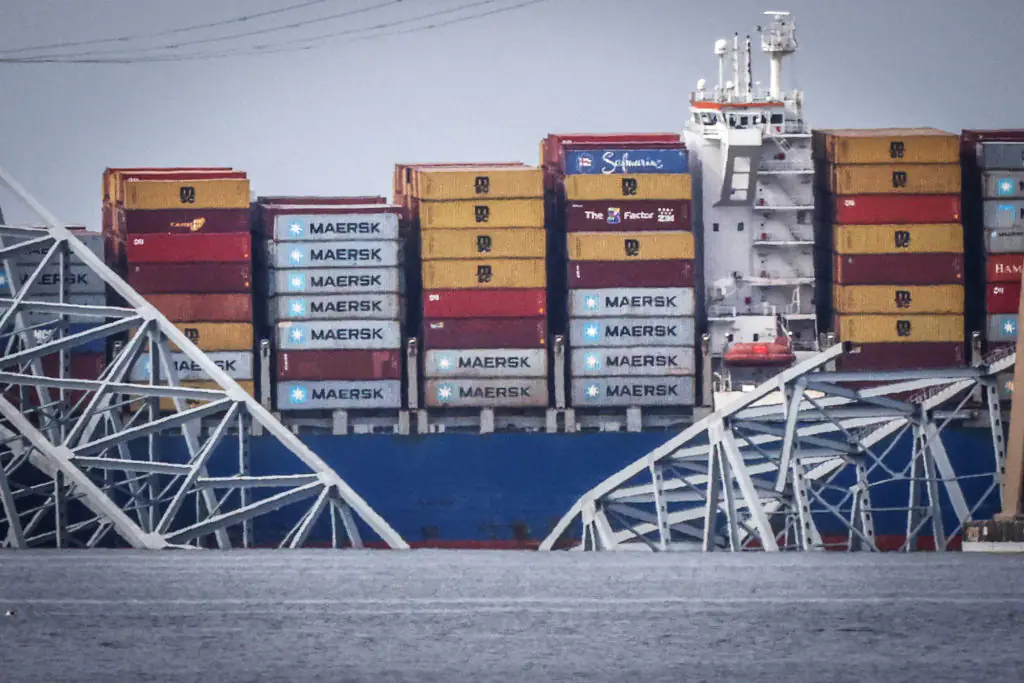
Grace Ocean Pte Ltd is the registered owner of the ship. The vessel is 948 feet long and was holding stacks of containers. It can contain up to 10,000 twenty-foot equivalent unit, or TEU, a measure of cargo capacity. At the time of the accident, it was carrying 4,679 TEU.
There were 22 crew members on board (including two pilots) all of whom are safe and uninjured, according to the ship's manager, Synergy Marine Group. Credit: Kevin Dietsch / Getty
What do we know about the Francis Scott Key Bridge?
The bridge at the center of this story was one of three ways to cross the Baltimore Harbor and saw around 31,000 vehicles cross it a day - that's a staggering 11.3 million vehicles a year.
Opening in 1977, the now-destroyed structure had four lanes and sat 185 feet above the Patapsco River.
Francis Scott Key wrote 'The Star-Spangled Banner' aboard a British ship sailing the Patapsco River during the War of 1812. These days, a red, white, and blue buoy marks the spot where the ship (HMS Tonnant) was anchored at the time.
The ship in question is Singapore-flagged ship the Dali. It was heading to Colombo, Sri Lanka, at the time of the accident.
Surveillance footage shows the moment a large section of the Francis Scott Key Bridge collapsed, sending several vehicles into the water.
Check out the dramatic footage:
A rescue team deployed to the scene is searching for at least seven people in the river after the large vessel crashed into the bridge, causing it to collapse and send people as well as vehicles into the water, Baltimore City Fire Department Chief James Wallace confirmed at a news conference Tuesday morning, per CNN.
Two people have already been rescued from the Patapsco River, Wallace said. One of them was reportedly uninjured and the other was rushed to a local trauma center in “very serious condition,” he said.
The incident was soon declared a “mass casualty” event.
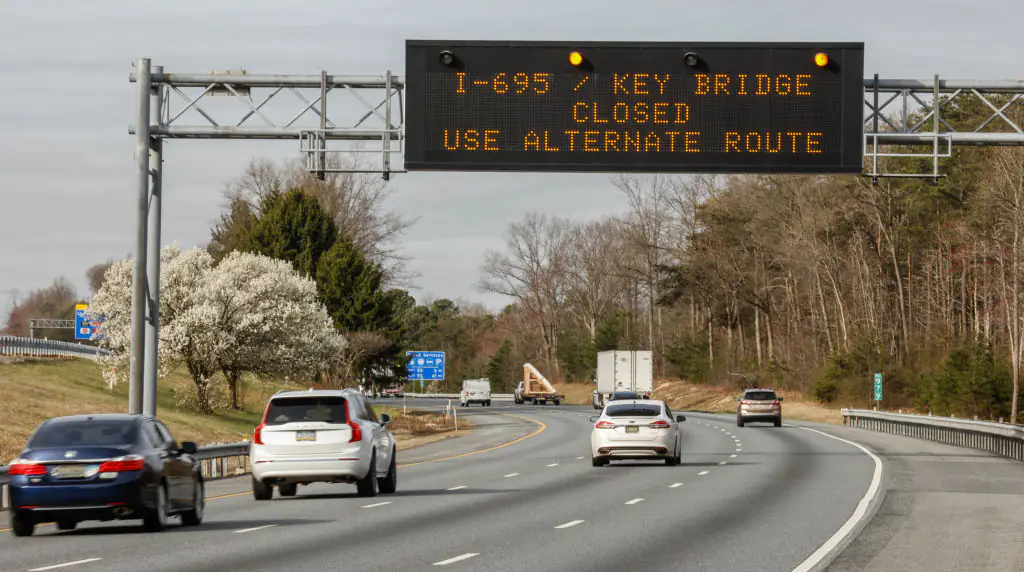
A traffic warning sign is displayed on Route 95 after a cargo ship collided with the Francis Scott Key Bridge, causing it to collapse. Credit: Kena Betancur / Getty
"We are in the midst of managing a mass casualty multi agency incident here. Unfortunately, we understand that there are up to 20 individuals who may be in the Patapsco river as well as multiple vehicles," Kevin Cartwright of the Baltimore Fire Department told CNN.
Cartwright also stated that the department is working with the US Coast Guard, adding that a team of divers are in the river to carry out the search and rescue operations.
Early on Tuesday (March 26), a bridge in Baltimore, Maryland, collapsed into the Patapsco River after being hit by a container ship. Credit: Kevin Dietsch / Getty
"This happened at 01:30AM with limited visibility so we are working aggressively, considering the environmental temperatures as well as the water temperatures to try and rescue and perhaps recover individuals," Cartwright said.
"It feels like at least about 30 degrees (-1°C) where I am. It could be slightly lower than that. And I'm sure that the water temperature is even colder... And that can pose a concern and risk for our divers."
Cartwright confirmed the teams were working "methodically and safely" to make sure "everyone operating here on the scene is safe and that we're able to make progress without causing adverse harm to anyone else."
A number of vehicles are said to have fallen into the river, including one the size of a tractor-trailer. Credit: Rob Carr / Getty
Baltimore Mayor Brandon Scott referred to the ordeal as an "unspeakable tragedy" in an interview with CNN.
“There were individuals working on the bridge at the time. There are cars in the water – our fire department has confirmed that as they lead this search-and-rescue mission through sonar. That is where our focus is – it’s about those souls, those people we’re trying to find and get out of this water,” Scott said.
Baltimore is grappling with a potential "mass casualty" incident after a ship collided with the Francis Scott Key Bridge on early Tuesday.
The collision led to the collapse of the iconic bridge and is believed to have sent as many as 20 individuals plunging into the frigid waters below, according to a fire official speaking to CNN. Footage has since been uploaded to social media showing the moment the impact occurred:
Dive teams and search and rescue units are currently engaged in efforts to locate and assist individuals in the Patapsco River.
Reports indicate that multiple vehicles, including a tractor-trailer, may have plummeted into the water following the bridge collapse, as stated by Kevin Cartwright, director of communications for the Baltimore City Fire Department.
Initial reports indicate that the ship, traveling outbound from Baltimore, struck a bridge column around 1:30AM ET, prompting a swift emergency response from local agencies.
Footage showed the moment the ship collided with the bridge. Credit: StreamTimeLive
Cartwright described the situation as a "dire emergency," emphasizing the primary focus on rescuing and recovering those affected by the incident.
The presence of cargo or retainers hanging from the bridge has further complicated rescue efforts, rendering conditions unsafe for emergency responders. All traffic has been diverted, with the Maryland Transportation Authority taking necessary precautions.
Baltimore Mayor Brandon Scott, responding to the unfolding crisis, conveyed his immediate involvement, stating he was en route to the scene. "Emergency personnel are on scene, and efforts are underway," Mayor Scott confirmed in a social media update.
Video footage capturing the collision vividly portrays the ship's impact on the bridge's support column, triggering a rapid collapse of sections into the river below. Plumes of smoke and fire billowed into the air as the bridge succumbed to the force of the collision, with remnants engulfed in flames.
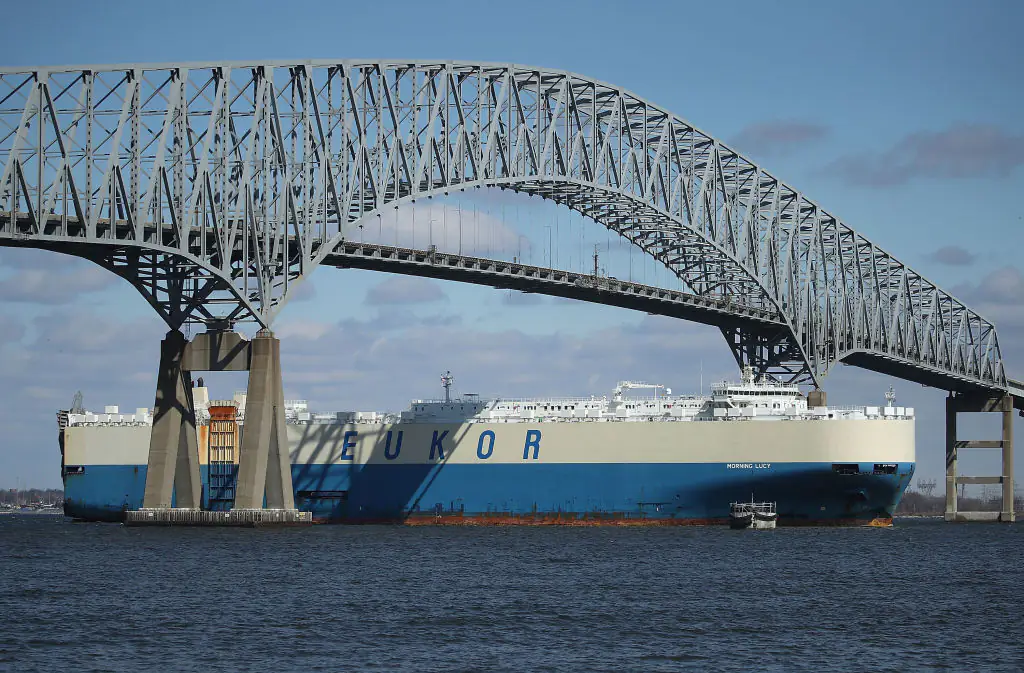
The Francis Scott Key Bridge in 2018. Credit: Mark Wilson / Getty
The Francis Scott Key Bridge, spanning 1.6 miles over the Patapsco River, serves as a crucial artery within Baltimore's transportation network, forming a vital link of Interstate-695, also known as the Baltimore Beltway.
The bridge's historical significance, named after Francis Scott Key, ties back to the War of 1812 when Key famously penned the lyrics to the "Star Spangled Banner" following his observation of the bombardment of Fort McHenry.
The second victim of the catastrophic Baltimore Bridge crash has been named.
The Francis Scott Key Bridge - in Baltimore, Maryland - collapsed after a 948ft container ship crashed into it in the early hours of Tuesday (March 26). The collapse sent several vehicles as well as construction workers into the water.
The ship struck one of the bridge's central supports, which caused much of the 1.6-mile bridge to give way as a number of vehicles fell into the river below.
The vessel caught fire as a section of the Francis Scott Key Bridge appeared to collapse over it, which sent thick, black smoke into the air.
Credit: The Washington Post / Getty
Two people were rescued, with one said to be “severely” injured and the other in critical condition, according to authorities who set up a press conference over the ordeal.
Construction workers had been working to fix potholes on the bridge for Brawner Builders. Six of the workers are missing and presumed dead following the catastrophic bridge collapse. No bodies have been found as of yet.
Earlier, one of the missing construction workers was named as 49-year-old Miguel Luna from El Salvador.
According to the Guatemalan consulate, two of the men were from Guatemala. One of the men was in his 20s, another in his 30s, and another worker was a 40-year-old father of three from El Salvador. The six missing men were immigrants to the United States, from Latino backgrounds.
Luna's wife, Maria del Carmen Castellon, has since spoken to Spanish-language outlet Telemundo 4. She said: "They only tell us that we have to wait, that for now, they can't give us information," earlier in the day.
Credit: Tasos Katopodis / Getty
"[We feel] devastated, devastated because our heart is broken because we don't know if they've rescued them yet. We're just waiting to hear any news."
Now, a second missing construction worker has been named, per Sky News.
Maynard Sandoval fell into the water following the crash. He is a 37-year-old father of two.
Jeffrey Pritzker, the executive vice president of Brawner Builders, said the team had been working on the middle section of the bridge when it was struck by the vessel, NBC News reports.
Credit: Kena Betancur / Getty
One of the workers managed to survive the ordeal.
Early on Tuesday (March 26), a call came over the Maryland Transportation Authority's first responder radio. A ship had lost its ability to steer and authorities were tasked with stopping traffic.
It took no more than a couple of minutes for officials to stop traffic on the bridge.
Officials are now focusing on finding the bodies of the six construction workers still missing after the collision.
Early on Wednesday (March 27), a team of divers went into the river and began its search for bodies.
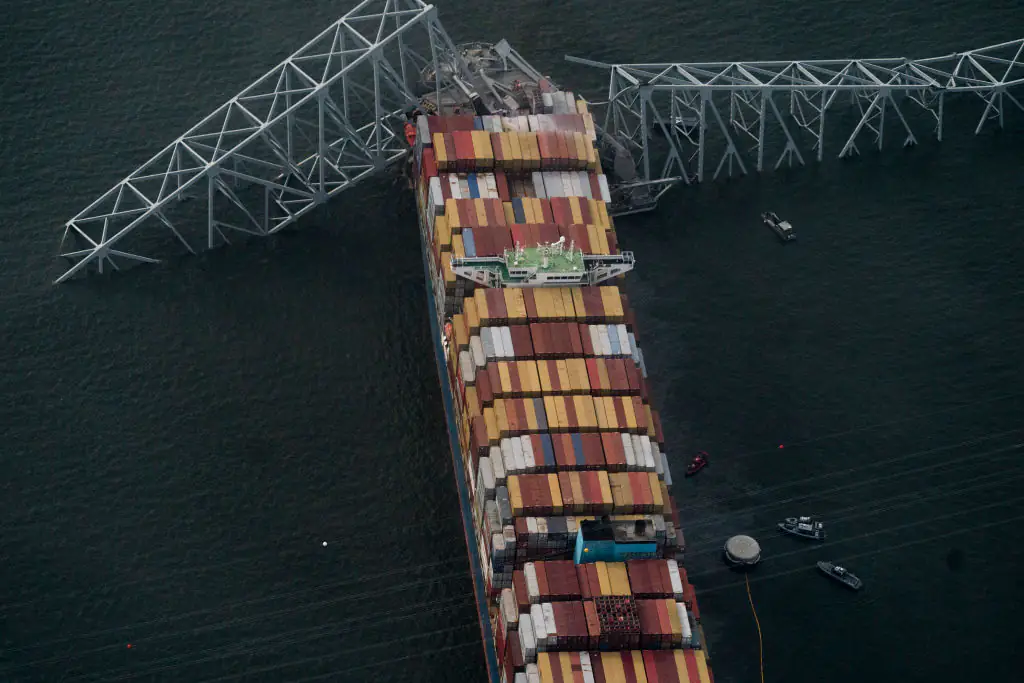
The vessel involved in the collision, identified as the Dali, struck a pillar of the bridge approximately 30 minutes after embarking on its 27-day voyage to Sri Lanka while laden with cargo. The impact took place around 1:30AM on Tuesday morning.
The aftermath of where a container ship crashed into the Francis Scott Key Bridge in Baltimore. Credit: The Washington Post / Getty
The metal truss-style bridge at the center of this story was one of three ways to cross the Baltimore Harbor and saw around 31,000 vehicles cross it a day - that's a staggering 11.3 million vehicles a year.
Opening in 1977, the now-destroyed structure had four lanes and sat 185 feet above the Patapsco River. It spanned 1.6 miles (2.6 km).
What makes Tuesday's tragedy so startling is the speed at which the bridge collapsed after impact. Video footage shows the bridge crumbling into the freezing waters below. Now, experts have opened up about how and why the bridge's collapse unfolded this way.
People are questioning why the bridge collapsed as fast as it did. Credit: Tasos Katopodis / Getty
Per The Independent, it is currently too soon in the investigation to understand exactly what happened, as we await more details to be released.
However, Ben Schafer - a structural engineering professor at Johns Hopkins University - told WTOP that he believes most bridges would collapse following the impact of a modern cargo ship.
"Fifty years into its design life and with its foundation, I don’t think there’s many bridges that are going to survive container ship head-on to one of its major supports directly as we saw this morning," Schafer said.
Schafer then commented on the bridge's design, saying: "It’s a sound bridge design and had been used in other locations [...] there’s no indications of problems with it over time."
Credit: Kevin Dietsch / Getty
These comments were echoed by Transportation Security Pete Buttigieg, who said on Tuesday that he is unaware of "a bridge that has been constructed to withstand a direct impact from a vessel this size".
Many experts have also noted that, despite the Francis Scott Key Bridge's modern design (constructed throughout the 1970s), cargo ships have continued to get bigger and bigger over the last 50 years.
And sadly, collisions like the one on Tuesday are becoming somewhat common.
In fact, Toby Mottram from the University of Warwick, revealed that there have been a total of 35 significant bridge collapses occurred following collisions with marine vessels from 1960 to 2015. As a result, bridges that are built today are constructed with such collisions in mind - with engineers developing a range of safety solutions to help protect modern structures.
Robert Benaim, a bridge designer and fellow of the Royal Academy of Engineering, told The Independent that these solutions come in many different forms. "These protections are either in the form of structural protections like ‘sacrificial dolphins’, which are made of steel and embedded in the seabed to stop or divert a ship," Benaim said.
"They can also be in the form of artificial islands; these are for very large ships and mean the ship will never reach the bridge pier itself."
Credit: Kena Betancur / Getty
Although experts and the public alike would expect the Francis Scott Key Bridge to have been built with some form of protection from collision, Lee Cunningham - a reader in structural engineering at the University of Manchester - echoes the sentiments of the other experts and says that these protections can only achieve so much.
"A vessel’s mass and velocity are key factors in the level of impact force generated and there is an economic and practical limit to what level of impact force can be designed for," Cunningham said. "Similarly, the direction of impact is also an important factor and design assumptions for this would likely be based on the position of the dedicated navigation channel."
Mottram agreed, adding: "It’s conceivable that the piers weren’t designed to withstand the magnitude of today’s ship impacts, as vessels like the ‘Dali’ weren’t navigating the Port of Baltimore during that era.
"Despite meeting regulatory design and safety standards of the 1970s, the Baltimore Key Bridge may not have been equipped to handle the scale of ship movements seen today."
Many experts say that the 1970s bridge was just not built to handle the impact of a modern cargo ship. Credit: Rob Carr / Getty
Moving forward from Tuesday's tragedy, Schafer says there are definitely lessons to be learned.
"I do think if we’re going to have lessons learned, it’s going to be around that kind of port maintenance and the way we handle getting the ships in and out when it’s going through critical infrastructure like this," the professor said.
Our thoughts continue to go out to anybody impacted by this tragedy.