ADVERT
Entertainment News3 min(s) read
Published 11:37 21 Apr 2023 GMT
A complaint has been filed against the Netflix documentary series African Queens: Queen Cleopatra, as Cleopatra is depicted as a Black African woman.
Cleopatra has long been the subject of many documentaries as she is often referred to as one of the most famous rulers of Egypt and is noted as the last Pharaoh.
Netflix recently released a trailer for their upcoming documentary series African Queens: Queen Cleopatra, narrated by Jada Pinkett Smith who is also credited as an executive producer.
British actress Adele James has been cast in the iconic role, but this has been met with a mixed reaction from those who have seen the trailer, including outrage from some Egyptians.
Watch the trailer below:James, who is mixed race, has since uploaded screenshots of racial abuse she has received to her Twitter account, whilst commenting: "If you don't like the casting, don't watch the show."
As reported by BBC News, a lawyer from Egypt has filed a complaint against Netflix, accusing them of violating media laws and attempting to "erase the Egyptian identity".
Pinkett Smith said: "We don't often get to see or hear stories about black queens, and that was really important for me, as well as for my daughter, and just for my community to be able to know those stories because there are tons of them!"
Following the release of the trailer, Netflix was forced to turn off comments after it received heavy backlash from Egyptians who were outraged at the casting choice.
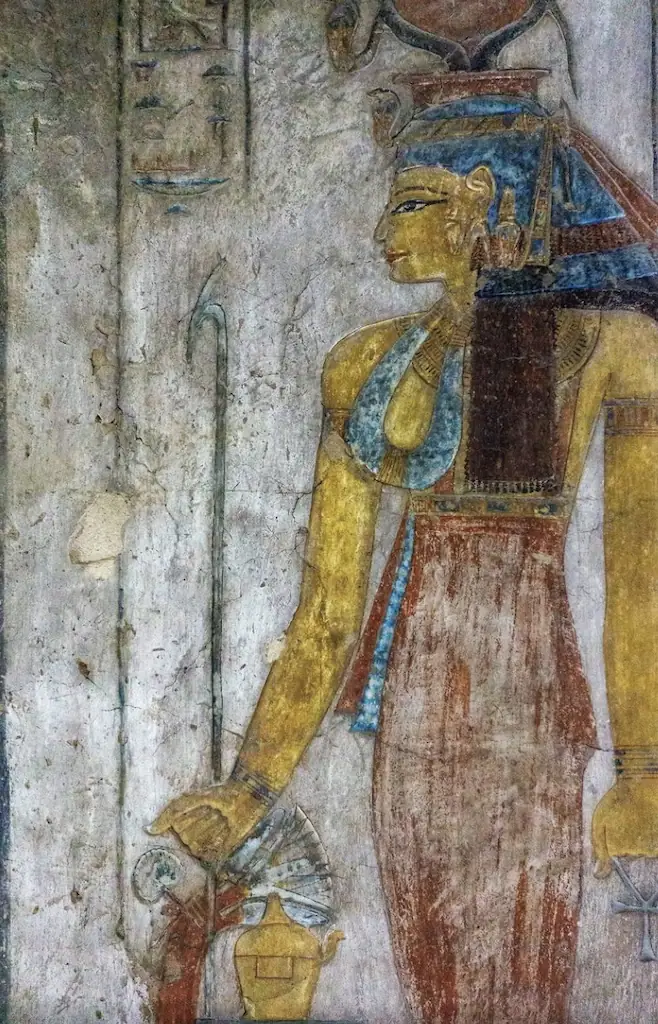
Cleopatra's heritage is highly debated, though it is known that she was born in the Egyptian city of Alexandria in 69 BC and came from a Greek-speaking dynasty with Macedonian lineage.
As per the Smithsonian, Cleopatra VII ruled Egypt for 21 years, but her ascendance to power is also a fascinating part of her story.
Cleopatra and her brother Ptolemy XIII assumed command of the country, but a rift began to form between the two and soon Ptolemy sought to control Egypt as his own.
Around the same time as the siblings were feuding, Julius Caeser was marching through what is now known as Italy in an attempt to cut off his political rival Pompey.
Following a battle that Caeser won, Pompey fled to Egypt to seek the aid of Ptolemy, but he was instead murdered and decapitated.
Caeser ventured to Egypt where he found himself on house arrest, but soon sided with Cleopatra and the pair established an army to overthrow Ptolemy and see Cleopatra as the Queen of Egypt.
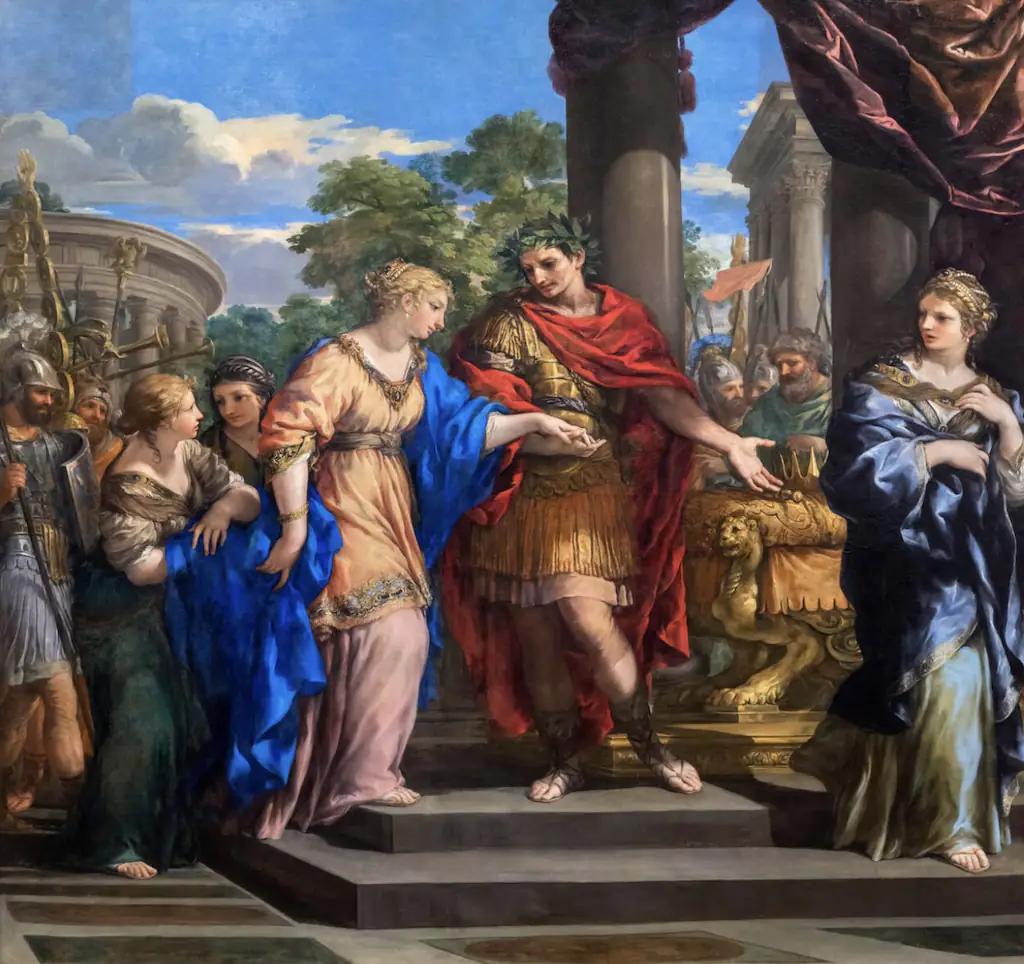
With Caeser as the dictator of Rome (not the Emperor), and Cleopatra sitting on the throne of Egypt, the pair struck up a relationship that created a very powerful alliance.
Both were dedicated to their empires and this would mean they saw less and less of each other, and things began to unravel for the pair.
Caeser was famously assassinated by Brutus and other members of the Senate which sparked a civil war that saw Octavian (later Augustus) defeating Mark Anthony and claiming Egypt as his own, per History.com.
There is widespread debate about Cleopatra's death, but it is believed that she died by suicide.
entertainment news3 min(s) read
Published 17:49 13 May 2023 GMT
Adele James, the actress who depicts Cleopatra in Netflix's latest show about the Egyptian queen, has responded to the "fundamentally racist" backlash she has received over the role.
The show has caused controversy after opting to depict Cleopatra as Black, something that many Egyptians have taken issue with, including one lawyer who even took legal action.
As reported by BBC News, the lawyer from Egypt has filed a complaint against Netflix, accusing them of violating media laws and attempting to "erase the Egyptian identity".
After the trailer for the show dropped, Netflix was forced to turn off comments after receiving heavy backlash for the casting choices.
Watch the trailer below:But whatever your thoughts on Cleopatra's heritage, targeting a person with racist abuse is always unacceptable - but James has been subjected to exactly that.
During an appearance on Steph's Packed Lunch - a Channel 4 show in the UK - the 27-year-old actress described some of the abuse that she had received as a result of her taking on the role.
"It would be naïve of me to say that I didn’t expect anything at all, but I didn’t expect the scale of it," James confessed.
"And I think it’s distressing for anybody to receive any level of abuse, let alone the scale and the nature of what I’ve received, which is fundamentally racist, all of it," she added.
James believes that people are focussing on the wrong aspect of the documentary series, as she stated: "Yes, we don’t know where her mother was from or her paternal grandmother, but also the show is about so much more than the question mark over her race.
"If you watch it is a very small part of the conversation really, this is about the fullness of who this woman was and she was a human being and she shouldn’t be reduced to her race any more than I should or anybody should."
Cleopatra's heritage has always been the subject of debate, but it is widely believed that she was born in the Egyptian city of Alexandria in 69 BC and came from a Greek-speaking dynasty with Macedonian lineage.
As per the Smithsonian, Cleopatra VII ruled Egypt for 21 years where she had a tight relationship with the Roman dictator Julius Caeser.
John Patridge, who plays Caeser in the documentary, said: "I don’t hear anybody saying that Julius Caesar is a homosexual from Manchester. We’re just actors at the end of the day, and sometimes our morality gets called into play, we’re jobbing actors."
Speaking on The Wayne Ayers Podcast, James furthered her comments: "Blackwashing isn’t a thing, is it?"
She continued: "I find it sad that people are either so self-loathing or so threatened by Blackness that they feel the need to do that, to separate Egypt from the rest of the continent."
Jada Pinkett Smith, who narrates the documentary and is also credited as an executive producer, said: "We don't often get to see or hear stories about Black queens, and that was really important for me, as well as for my daughter, and just for my community to be able to know those stories because there are tons of them!"
African Queens: Queen Cleopatra is available to watch on Netflix now.
celebrity1 min(s) read
Published 16:28 12 Oct 2020 GMT
Wonder Woman actor Gal Gadot has been slammed online after news broke that she landed the role of Cleopatra in an upcoming historical film.
The feature is set to be a period biographical drama penned by Laeta Kalogridis, and will see Gadot once again work with Wonder Woman director, Patty Jenkins, who is due to direct.
Gadot reportedly came up with the idea for the film, per Deadline, who also reports that the deal closed this weekend after Gadot took part in a number of Zoom pitches, where she was accompanied by producers of the upcoming film.
However, the actor quickly faced backlash for the casting choice online.
[[instagramwidget||https://www.instagram.com/p/CF7s9dZBxnM/]]
Taking to social media yesterday (11 October), Gadot expressed her excitement for the project, writing: "I love embarking on new journeys,I love the excitement of new projects, the thrill of bringing new stories to life. Cleopatra is a story I wanted to tell for a very long time. Can’t be more grateful about this A team!! [sic]"
[[twitterwidget||https://twitter.com/GalGadot/status/1315336942058450947]]
Cleopatra was an Egyptian queen, who was the daughter of Ptolemy and an ancestor of the leader of Alexander the Great’s army.
Although she resided in Egypt, scholars have often identified her as someone of Greek ancestry, with debate regarding her ties to Persian and Syrian ancestry too.
Gadot is an Israeli actress, which sparked debate online following the casting news.
"It’s a shame you aren’t advocating for African actresses who would better fit the part. Please do better," wrote one Twitter user, while another corroborated: "Cleopatra was an Egyptian woman with greek ancestry. Gal Gadot is Israeli. Please just try a lil harder [sic]."
[[twitterwidget||https://twitter.com/evergreenvvitch/status/1315338566558384129]]
"The casting of Gal Gadot is just another stroke in the long history of white-washing and the legacy of colonial Egyptology that strives to sever all connections between Egyptians (widely defined) and the history of their land," added a third.
[[twitterwidget||https://twitter.com/zarqawiyyah/status/1315393680916832257]]
film & tv8 min(s) read
Published 17:39 01 Feb 2021 GMT
There has been a historic lack of representation of people of color in the film industry. Deadline reports that of the 1,200 top films from 2007 to 2018, just 27 featured leading or co-leading characters from underrepresented racial and ethnic groups.
However, while the industry clearly has a long way to go, one show that is breaking the mould is Netflix's historical drama Bridgerton, which has been praised for its diverse cast, even amongst the actors themselves.
"With color-conscious casting, I get to exist as a Black person in the world," Regé-Jean Page, its breakout lead, told Entertainment Weekly. "It doesn’t mean I'm a slave. It doesn't mean we have to focus on trauma. It just means we get to focus on Black joy and humanity."
If you haven't seen it yet, watch the trailer for Bridgerton below:Not only this, but there is arguably historical reasoning behind the show's decision to cast a Black queen, with recent historians noting that Queen Charlotte, wife of George III, was actually Black.
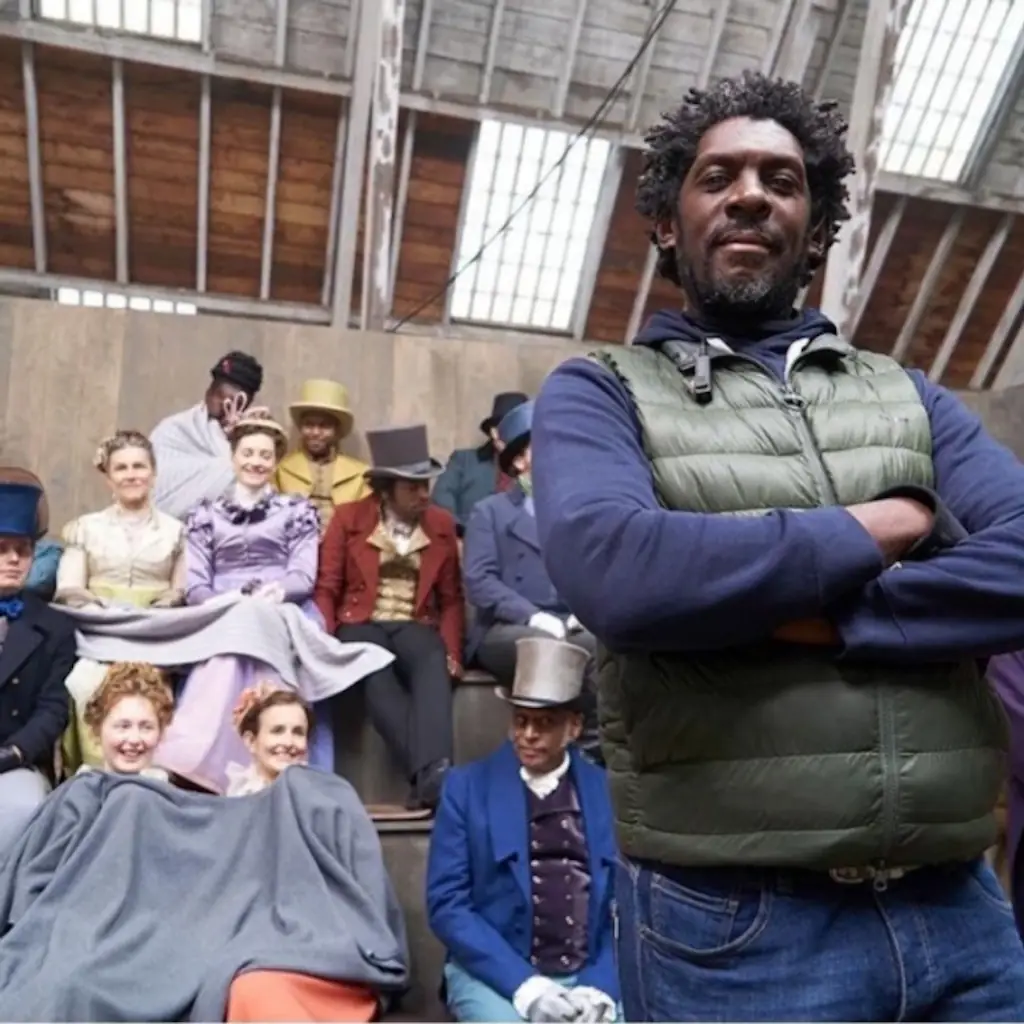
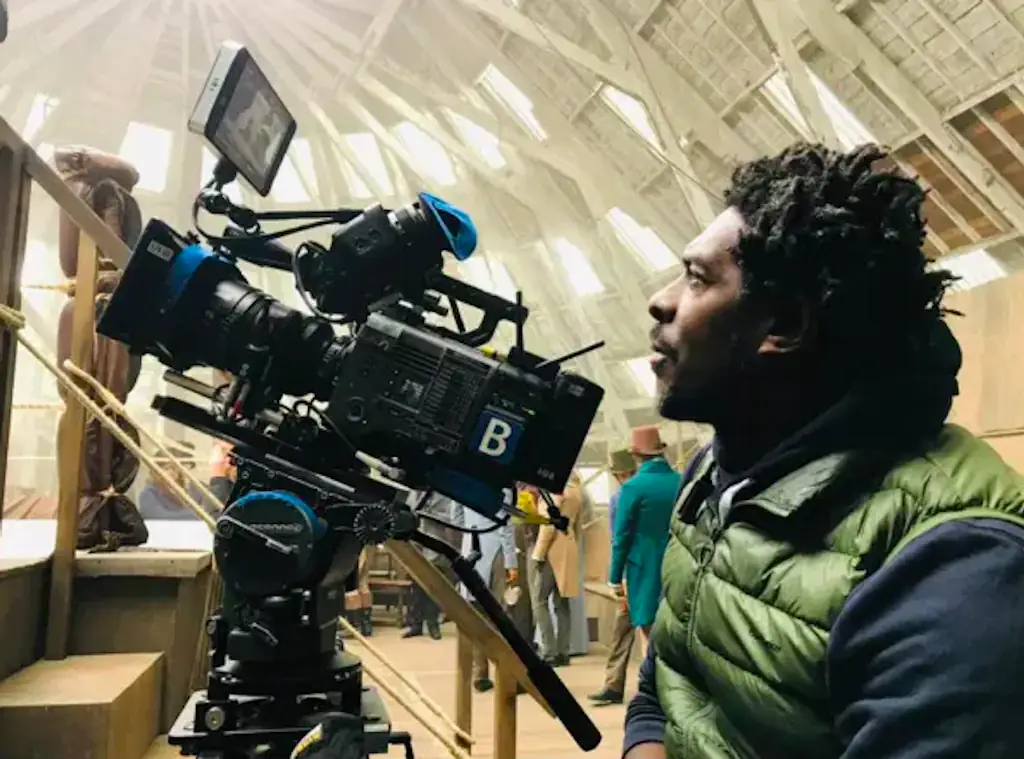
VT recently spoke to the show's assistant crowd director, Saloum N'Jie, whose film credits include the likes of World War Z, to gain an insight into how the series is a step forward for Black representation.
"Myself as a crowd assistant director, I have been in the industry for a long time, and Louise Rashman [who is also Black], she was the crowd second AD, so she was responsible for getting all the lovely extras. [We had] Black people in costume [and] in makeup and we had some sparks behind the camera who were black, so it was just as diverse behind the camera as it was in the front."
Do you think the show will pave the way for other period dramas to adopt similarly diverse casts?"That's a good question. I'd love to say yes. In an ideal world, that would be great because Black people have been around for centuries. We were involved in the Victorian age, in the Edwardian age and the Elizabethian age, and it would be great if we had more shows that highlighted that.
"We had one review [of Bridgerton] which said that it's the Black Downton Abbey, which it's not, but it would be great to have Black casts in period pieces.
"I also believe that Bridgerton has set a bar, and other networks and writers shouldn't be afraid to follow suit and cast Black actors in period dramas."
What do you think the biggest challenge is when it comes to casting more Black actors in leading roles? Is it the result of Eurocentric storylines?"It's the storylines. But as I've said before, [Black people] are in every aspect of history. So that shouldn't be a reflection of the casting, but I think that's what been happening right now, we have these other shows which are so typically Black narrative - council estate dramas, best friends, drug dealers. Now, we have a show like Bridgerton and people are like 'Wow'. But hopefully, [Bridgerton] will open up more casting opportunities for Black actors to do something different."
Historically, there has been a chronic lack of representation of people of color on screen in the film and television industry, but has this been the case behind the screen too?"I have been one of the only Black assistant directors for the past ten years. If you were to go into any studio, even right now, and you looked behind the camera, you're lucky if you see more than Black five crew members. You'd be very lucky if you see that, and things have to change.
"I was the only Black guy on the set for a long time, but that didn't stop me. I had to overcome obstacles; I had to overcome racial issues, but it never stopped me from pursuing my goal, which is where I am now.
"There are more Black people in front of the camera than there is behind the camera, but times are changing for people like me and Louise Rashman. Those are the faces that will help bring other Black crew members [onboard] and give them jobs, but they have to be hired.
"We have to look around the room. We have to [go to the] people who are hiring. If they could read everybody's CV, that would help."
And on that note, do you think that this is changing?"Again, I'm used to seeing the same faces that I saw before. So has it improved? Not really. It's improving. On my last job, Avenue 5, I saw a Black female who was in the camera department, that I never saw before. So I am seeing a difference, but there needs to be more."
The issue of race is only brought up once in Bridgerton; when the Duke is told that his position would not exist had the king not fallen in love with a black woman. Do you think that this was a missed opportunity to have an important discussion or was it simply not necessary?"No, I don't. I believe that what you saw is what you got. It's a beautifully cast, beautifully acted, and beautifully shot [series]. From what I've gathered from friends and family and what I've read on the internet, it was just a breath of fresh air to see Black and white people together - nobility, good clothes, good food, and good friends - dancing really nice waltzes together. That, for me, is what I love about it."
Your film credits include World War Z, which has a predominantly white cast. How did working on Bridgerton compare to this movie?"World War Z is really white. Again, I was the only Black AD on that. How does it compare? It is a massive Hollywood film. It is the biggest film I've ever worked on. It was just huge. Compared to Bridgerton, which is small.
"But you go forward all these years, and now we are having Black leads, talking the good Queen's English, Black people being behind the camera, so from that perspective, from my job on World War Z to Bridgerton, is a big leap for Black crew members being the camera.
"I want to direct films like World War Z. I just hope that we can have more people of color behind the camera and in front of the camera on those epic films."
There's going to be a second season of Bridgerton. Do you think that the subject of race will be tackled differently or will it be more of the same?"That's a good question. I can't answer that. I think it's in pre-production. I haven't had a call yet, and crews change. I hope it will be just as diverse behind the camera as it is in front of the camera. That would be a good look."
"Keep your dreams alive. Keep trying. One thing that I used to do is go online, go on the studio's website, see what films are in production, see who the line producer is, who the first AD is, who is hiring, [and] send your CV in. Make the phone call.
"Not to sound like a preacher, but don't be afraid to fail. I've failed so many times, and with each failure, I learned a lesson and I just kept on going. And for people of color, write your own stories too.
"Send the email off, look on studio websites - Warner Brothers, Pinewood, Shepperton, all these production companies. Look at your favorite film. Where was it made? If it was made in Great Britain, find the number, find the email, and make the contact."
N'Jie's words are a testament to the fact that Bridgerton is a welcome step forward for Black representation, but they are also a reflection of how much more work needs to be done to give people of color equal opportunities both behind and in front of the camera.
celebrity2 min(s) read
Published 00:15 20 Mar 2019 GMT
Hollywood has a long, ugly history of 'whitewashing,' in which white actors donned grotesque makeup to play characters of different races and ethnicities. These portrayals were often mired in offensive racial stereotypes, plus snatched jobs away from qualified actors of color. As the entertainment industry strives to embrace diversity in the 21st century, actors have come under renewed scrutiny. Is it okay for a cisgender woman to play a transgender man? How about an able-bodied actor portraying a disabled person? Or a Chinese woman playing a white historical figure?
On Tuesday, Gemma Chan, who acted in Crazy Rich Asians and Captain Marvel, has responded to a backlash over her role in the 2018 film Mary Queen of Scots. Chan, who is of Chinese ancestry, played Bess of Hardwick, a notable white countess in Elizabethan English society. "I'm all for inclusive casting, but Gemma Chan as Bess of Hardwick is probably pushing the limits of my suspension of disbelief," wrote one critic on Twitter.
[[twitterwidget||https://twitter.com/AndrewPaulWood/status/1018059482364985346]]
In an interview with Allure, Chan said her heritage is fully Chinese but her racial identity is "compound. I feel British, and European, and English, and Chinese, and Asian." When asked about the controversy over her portrayal of Bess of Hardwick, she replied, "Why are actors of color, who have fewer opportunities anyway, only allowed to play their own race? And sometimes they’re not even allowed to play their own race."
"In the past, the role would be given to a white actor who would tape up their eyes and do the role in yellowface," she continued. "John Wayne played Genghis Khan. If John Wayne can play Genghis Khan, I can play Bess of Hardwick." Chan added, "I feel like [the Broadway play] Hamilton opened minds a lot. We have a black man playing George Washington. They describe it as ‘America then, told by America now.’ And I think our art should reflect life now."
[[instagramwidget||https://www.instagram.com/p/BvMTvwTFpX2/]]
Chan goes on to describe an example of whitewashing history, which she discovered while working on a documentary about the Chinese Labour Corps. "I studied the First World War three times at school," she recounted. "And I never heard that there were 140,000 Chinese in the Allied effort. We would not have won the war without them."
A massive mural was built to commemorate that war, but the section dedicated to the Chinese was reportedly painted over after American military forces joined the conflict. "They left one kneeling Chinese figure, which you can still see," Chan recalled. "If people understood that, my parents [might not] have been told, ‘Go home, go back to where you came from’ multiple times. If we portray a pure white past, people start to believe that’s how it was, and that’s not how it was."
To Chan, playing a white historical figure in Mary Queen Scots is a victory for visibility regarding Asian-American actors in cinema.
film & tv2 min(s) read
Published 09:30 06 Jul 2019 GMT
When it was announced that a live-action remake of The Little Mermaid was underway and that Halle Bailey, a black actress and singer, had landed the starring role as Ariel - fans were totally and utterly divided. In fact, the day the announcement was made, the hashtag '#NotMyAriel' start trending within hours.
While many applauded Disney for taking it upon themselves to produce a modern and more inclusive retelling of a classic tale, others were decidedly resentful about the casting choice.
I mean, how could a formerly animated and purely fictional character with red hair and pale skin possibly be played by an African American actress, the critics argued.
If you're a fan of live-action Disney movies, you'll be aware that The Lion King will be released later this month. Here's another look at the trailer for the highly anticipated remake:
[[jwplayerwidget||https://content.jwplatform.com/videos/qSwzI0Dc-Q0L14jDU.mp4||qSwzI0Dc]]
In fact, so enraged were the naysayers by news of the 19-year-old's starring role in the upcoming Disney flick that they even started using 'mermaid science' to back up their flimsy arguments.
Yes, you read right: 'mermaid science', because apparently, that's a thing.
[[twitterwidget||https://twitter.com/mippy/status/1146724157352239104]]
"Mermaids live in ocean," one Twitter user argued based on their evidently well-researched understanding of 'mermaid science'. "Underwater = limited sunlight. Limited sunlight = less melanin. Less melanin = lighter skin color. Because they live underwater, which has no access to light beyond a certain depth, Ariel and every other mermaid in existence would be albino."
First off, if we're basing our argument on the 'correct' skin colour of merpeople on how much sunlight they're exposed to, are we really going to ignore the fact that mermaids are often depicted sunbathing on rocks practically naked?
Of course, everyone has a right to express their own opinions on the direction that filmmakers take and whether or not it will do the movie justice.
But just don't be disingenuous about it. If you don't want Ariel to be depicted as a dark-skinned character, then be honest about why that is rather than using the kind of science that clearly has no relevance in a world of fantasy and mythical beings.
Also, if fans of the original movie are so outraged about Disney veering away from the animated version purely because they've cast a darker actress to play the role, then they should be equally upset about how much of a departure the 1990 film was from Hans Christian Andersen's original telling of the story - as gory and disturbing as it is.
In one part of Andersen's tale, Ariel agrees to have her tail mutilated to such an extent that her legs feel like she's "treading upon knife blades so sharp that blood must flow". Want that in your Disney movie? No? Then shush.
Ultimately, The Little Mermaid is a movie about a young demihuman who falls in love and is compelled to make big sacrifices - race really has no part to play in the story.