


Entertainment News2 min(s) read
Resurfaced interview with Donald Trump's mother shows how 'exactly alike' the pair were - viewers minds are blown

A recently unearthed video clip of Mary Anne MacLeod Trump, the late mother of President Donald Trump, has sparked renewed conversation online, mainly centered on how strikingly alike mother and son look.
The short video reportedly shows Mary Anne Trump discussing her life in Scotland and her son Donald Trump, speaking in a casual setting to an interviewer.
Although the clip lacks high definition, viewers have pointed out features such as her facial structure, hairstyle, and mannerisms that echo those of Donald Trump in his youth.
Donald Trump and his mother are clearly cut from the same cloth
Many social media users who saw the clip reacted exactly as you'd expect. Comments flooded in: some calling Mary Anne the “spitting image” of her son, others marveling that certain profile shots could almost pass for Donald in a filter.
"They’re EXACTLY alike.." the person who posted the video wrote.
A further person added: "Same facial expressions and mouth movements, head movements. Very much like his momma. I love it! She had such a beautiful impact on young Donald."
"I see so many similarities in their mannerisms and speech!" another comment read.
Someone else added: "President Trump has her eyes. Without question, that is his mother."
Trump family likeness has long been noted
Observers have long pointed out the Trump family’s strong hereditary traits, especially between Donald Trump and his mother.
In past interviews and memoirs, friends and acquaintances occasionally described Mary Anne as quiet but resolute, with sharp features not unlike those seen in Donald’s younger photos.
Why do people react so strongly to seeing parent-child resemblance?
Psychologists say that when we see strong physical similarities, it triggers deep-rooted ideas of familial identity, genetics, and even legacy, according to the British Psychological Society.
In the case of public figures, the resemblance can feel symbolic: a way to humanize a larger-than-life person, or to see continuity across generations.
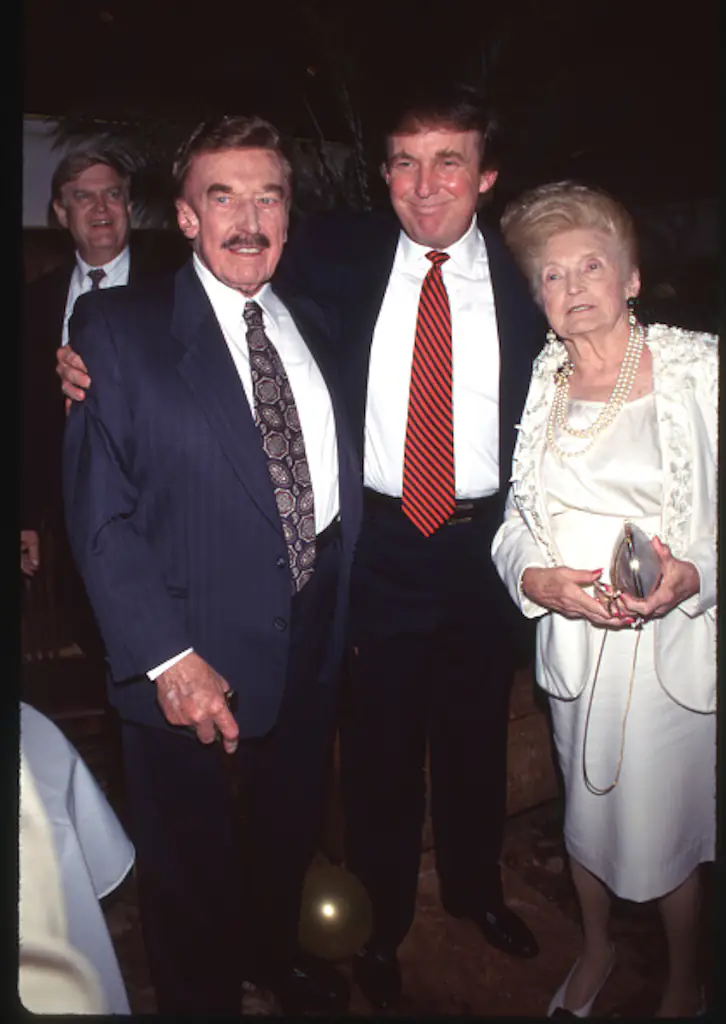
In this instance, people are drawn not just to the facial traits but to perceived echoes in expression, gestures, and presence.
That’s what makes a moving clip (even low quality) feel more powerful than a still photograph.
As the video circulates, it serves as a reminder of how we link heritage, memory, and identity through visual media.
Even a few seconds of motion can reawaken curiosity, nostalgia, and debate.