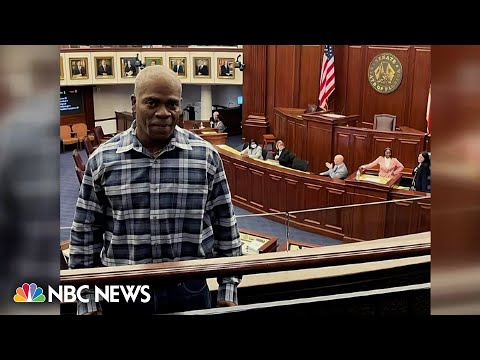
A man who was freed after being wrongfully imprisoned for 16 years has been shot dead by a police officer after he was pulled over.
Leonard Allen Cure, 53, met a tragic end on Monday as events took a turn during a routine traffic stop along Interstate 95 near the Georgia-Florida line, according to Sky News.
Cure's life had taken a detour back in 2003 when he was sentenced to life in prison for the armed robbery of a drug store in Florida.
His prior convictions for robbery and other offenses compounded his situation. However, he was granted his freedom in April 2020 when a judge ruled that solid alibis in his case had been disregarded, and there was an absence of physical evidence or strong witness testimony connecting him to the crime scene.
The Georgia Bureau of Investigation (GBI) disclosed that the fatal incident unfolded at approximately 7:30AM on Monday.
Cure had complied with the deputy's commands after being pulled over but things took a turn for the worse after he was informed that he was under arrest.
The situation escalated as the deputy deployed a taser, which was followed by an altercation. Subsequently, the deputy used the taser again, coupled with a baton. As Cure still failed to comply, the deputy resorted to using his firearm.
Emergency services arrived promptly and provided medical attention to Cure, but regrettably, he succumbed to his injuries.
The details surrounding why he was initially pulled over have not yet been released.
Advocacy and legal groups have rallied around this deeply troubling case, with The Innocence Project of Florida having represented Cure during his exoneration process.
Cure was shot dead after being pulled over. Credit: Dusan Ilic/Getty
Seth Miller, the executive director of the organization, expressed his sympathy for the Cure family, stating: "I can only imagine what it's like to know your son is innocent and watch him be sentenced to life in prison, to be exonerated and... then be told that once he's been freed, he's been shot dead."
Earlier this year, Cure, who resided in a suburb of Atlanta, was awarded $817,000 in compensation for the years he unjustly spent behind bars.
Broward State Attorney Harold F. Pryor, who described Cure as "smart, funny, and kind," emphasized: "No amount of money will get those years back for Mr. Cure or give him peace, but it is a small gesture that recognizes Mr. Cure was wronged and that we, in the State of Florida and in the justice system, will help him and compensate him."
Pryor added that Cure had visited prosecutors at their office after his release and had even participated in training to ensure fair and thorough practices in the legal system.
Arielle Demby Berger, an assistant state attorney in Broward, shared her sentiments about Cure's aspirations, saying: "Lenny has shared with me that his dream was one day to work in a cubicle instead of doing manual labor. Now, Lenny can go to college and surpass his dreams."
The GBI has launched an independent investigation into the fatal shooting.
Over Friday (June 12), the US was rocked by the death of 27-year-old Rayshard Brooks, who was killed after being shot by police officers in Atlanta while attempting to flee an arrest.
Per an official press release from the Georgia Bureau of Investigation, APD officers Garrett Rolfe and Devin Bronsan were responding to a complaint that Brooks has fallen asleep in his vehicle in a Wendy's drive-thru, "causing other customers to drive around the vehicle."
It is then reported that after Brooks failed a field sobriety test, the officers "attempted to place the male subject into custody". However, Brooks resisted and attempted to flee. A struggle between the three individuals then ensued.
Bodycam footage of Brooks' arrest can be seen below (Warning - some people will find the video distressing):
The GBI states that, during the struggle, "Brooks obtained one of the officer's Tasers and began to flee from the scene.
"Officers pursued Brooks on foot and during the chase, Brooks turned and pointed the Taser at the officer. The officer fired his weapon, striking Brooks."
Brooks' death sparked a fresh wave of protests in the city and across the US, with many stating that his killing was an injustice.
[[imagecaption|| Credit: PA Images]]
However, Burke County Sheriff Alfonzo Williams - who has taught thousands of police officers about the use of force over his career spanning decades in Georgia - has spoken out about the incident, calling it a "justified shooting".
Williams' full interview with CNN can be seen below:
"We saw in the video that Brooks is engaged in a fight with the officers
"They were on the ground and we know that when we’re on the ground we have a very high likelihood of being hurt or killed. This is not the place we want to be. This is not a wrestling match.
"Brooks is able to take a nonlethal weapon, a Taser, away from one of the officers, and he flees.
"They give chase. He’s committed two felonies to obstruction of an officer counts and he needs to be held accountable. So they were perfectly justified in running behind Brooks to capture him. Brooks turned back to the officers and fired the Taser."
Williams then explained the effects a taser has on the body, and stated that he believes the shooting was "justified". He added:
"If an officer is hit with that Taser, all of his muscles will be locked up, and he’ll have the inability to move and to respond, and yet he is still responsible for every weapon on his belt.
"If that officer is hit he still has the firearm on his side and the likelihood of him being stomped in the head or having his firearm taken was a probability and he did what he needed to do.
"This was a completely justified shooting."
The County Sheriff then added that he is disappointed that officer Garrett Rolfe was fired and not supported by the community, and said that his "political" firing sends the wrong message to "black youths".
Williams said: "It’s political. It’s senseless and we’re sending the wrong message to our black youth.
"We’re telling them that it’s OK to run from the police, take a weapon from the police, they can fight with the police, they can point a weapon at police and expect nothing to happen."
On Sunday, an autopsy listed Brooks' cause of death as gunshot wounds to the back and the manner of death has been listed as homicide.
The report adds that Brooks died from organ damage and blood loss from the two gunshot wounds, CNN reports.
Over the weekend it was revealed that one APD officer had been fired and another has been reassigned following the shooting.
The fired officer under investigation has been identified as Garrett Rolfe, who had been with the Atlanta Police Department since 2013, WSB-TV of Atlanta reports. The Daily Mail states that Rolfe is the officer that opened fire and fatally shot Brooks.
A police spokesperson has also identified the second officer as Devin Bronsan, who has since been placed on administrative duty. The Associated Press states that Bronsan has been with the department since 2018.
CNN reports that the Fulton County District Attorney has criticized the officers' handling of Brooks' fatal shooting and said that a decision on whether to bring charges should come around Wednesday.
"[Brooks] did not seem to present any kind of threat to anyone, and so the fact that it would escalate to his death just seems unreasonable," DA Paul Howard told CNN's Fredricka Whitfield on Sunday. He added:
"It just seems like this is not the kind of conversation and incident that should have led to someone's death."
[[imagecaption|| Credit: PA Images]]
Brooks' death has resulted in fresh outbreaks of protests and violence in the Atlanta area.
On Saturday night, the Wendy's restaurant where the shooting took place was torched by protesters.
Footage of the engulfed Wendy's can be seen below:
Rayshard Brooks' sister-in-law, Crystal Brooks, was one of those gathered outside the Wendy's restaurant on Saturday night. She told local news crews:
"He wasn’t causing anyone any harm. The police went up to the car and even though the car was parked they pulled him out of the car and started tussling with him."
Per Fox News, L. Chris Stewart, the attorney for Brooks' family, has said that the officer who shot the 27-year-old should be charged for "an unjustified use of deadly force, which equals murder". Stewart added:
"You can’t have it both ways in law enforcement. You can’t say a Taser is a nonlethal weapon [...] but when an African American grabs it and runs with it, now it’s some kind of deadly, lethal weapon that calls for you to unload on somebody."
On Saturday, Atlanta police chief Erika Shields handed in her resignation as a result of the incident, BBC News reports.
[[imagecaption|| Credit: PA Images]]
Sheild's resignation was announced by Atlanta mayor Keisha Lance Bottoms.
Bottoms said in a statement:
"Because of her desire that Atlanta be a model of what meaningful reform should look like across this country, Chief Shields has offered to immediately step aside as police chief so that the city may move forward with urgency and rebuilding the trust so desperately needed throughout our communities."
Shields was appointed the Atlanta police chief in December of 2016. Prior to this, she had served a long career in the force.
Interim Corrections Chief Rodney Bryant will be serving as interim police chief until a permanent replacement is appointed.
A man who was freed from prison in 2021 after more than three decades has now been ordered to return in order to continue serving his life sentence.
On September 5, 1990, Crosley Green was found guilty and sentenced to death for the first-degree murder of Charles "Chip" Flynn, who was fatally shot in Mims, Florida the year prior.
According to Green's legal team, however, there is no clear evidence that connects their client - now aged 65 - to the homicide. In addition to this, prosecution witnesses have withdrawn their testimonies since Green was convicted.
Per CNN, the Florida man's guilty verdict was overturned by a federal court in Orlando in 2018 and three years later, he was allowed to leave prison on conditional release.
The state of Florida appealed this decision and won last year - as such, Green's conviction and life sentence were reinstated.
Green was arrested for the 1989 murder of Charles "Chip" Flynn, who was fatally shot. Credit: Brevard County Sheriff's Office
Amid the successful appeal, US District Judge Roy Dalton ruled this week that Green must turn himself in by April 17 to complete his life sentence.
The 65-year-old has been afforded few options including clemency or parole, his attorneys say.
"We are in strategy mode right now, with respect to parole and clemency," Green’s lawyer, Jeane Thomas, told CNN on Thursday. "There is a commission within the state of Florida that considers both options. In the case of parole, they make a decision. In the case of clemency, they make a recommendation to the governor."
Thomas explained to the outlet the clemency is different to exoneration. Clemency refers to the decision by a judge that a convict has served sufficient time in prison and has earned the right to be released.
For the last couple of years, Green has been employed at a machine grafting facility, attended church and spent time with his grandchildren. He has continued to wear his ankle monitor and has been "a model citizen," Thomas says.
"For 15 years now, we have believed wholeheartedly, 100 percent in the innocence of our client," Thomas said. "As lawyers, we have to believe that the justice system will get it right. We’re going to keep fighting. This is a grave injustice. And we just believe that eventually we will get it right."
Green was found guilty in connection with the murder of 21-year-old Charles Flynn. He was sentenced to death initially, then in 2009 resentenced to life in prison.
He will keep fighting to clear his name, saying in a statement through his legal team: "If it wasn’t for the Lord, I’d be down and out right now. I have so much faith and trust and belief, it’s hard for me to let my guard down."
A Georgia man who spent 23 years behind bars for a 1998 murder has finally been exonerated and freed.
Devonia Inman, now 43, was serving a life without parole sentence for a 1998 robbery and murder of a Taco Bell manager in southern Georgia. However, according to his advocates, the Georgia Innocence Project, DNA evidence linked another person to the crime.
The Georgia Innocence Project states that no physical evidence tied Inman to the case, and three of the four witnesses in his trial later recounted their testimonies saying they had been pressured or coerced by police.
During the 1998 murder, the manager of a Taco Bell restaurant in Adel, Georgia, was robbed and shot dead in the parking lot of the establishment. The killer took $1,700 and the victim's car - which was later found abandoned nearby by police, with a handmade ski mask inside.
Per the New York Post, further DNA testing later concluded that Hercules Brown, a convicted killer, was the rightful suspect in the case.
Brown's DNA was found on the ski mask inside the victim's car. The judge in the retrial also concluded last month that prosecutors had originally withheld evidence connecting Hercules Brown to the crime, according to the Georgia Innocence Project.
As Inman spent two years awaiting trial, Brown went one to kill two other people. He is currently in prison for those crimes.
Inman was finally set free after 23 years after the local DA reportedly dismissed all charges, with state officials opting not to appeal the ruling. He walked free from the Augusta State Medical Prison on Monday.
Following his freedom, Inman said: "It took a really long time to fix, even though it was so clear I wasn't guilty."
"I'm glad I get to finally go home, and I'm grateful to everyone who helped make that possible," he added.
In a statement to the Georgia Innocence Project, Inman's legal team from Troutman Pepper said: "We are elated to see Devonia and his family finally obtain the justice that so many have fought for so long to secure."
"We are privileged to have played a part in his long-overdue exoneration, and to work at a firm committed to critically important pro bono matters like this," the lawyers added.
Due to the fact that Georgia is one of 13 states that does not currently have a statutory compensation law to assist those wrongfully convicted, the GIP has set up a fundraiser to help Inman and his family. As of this writing, over $12,000 has been raised.
A Florida man convicted of killing five people, including his wife and two young children, shared a final message before he was executed by lethal injection on Tuesday evening.
Credit: ABC7 Chicago / X.
Michael Bernard Bell, 54, was pronounced dead at 6:25PM at Florida State Prison in Raiford, according to a statement from Governor Ron DeSantis’ office. Bell was sentenced to death for a 1993 double murder, and was later convicted of three additional homicides from 1989, The Guardian reports.
Witnesses said Bell appeared alert as he entered the execution chamber and was strapped to a gurney. Bell closed his eyes shortly after the injection began and was unresponsive within minutes. Medical personnel confirmed his death 10 minutes later.
Just before the drugs were administered, he reportedly said: “Thank you for not letting me spend the rest of my life in prison,” according to the prison’s team warden, via AP. It was unclear to whom the remark was directed.
According to state officials, Bell declined all visitors except for a spiritual adviser on the day of his execution. His final meal, consumed that morning, included home fries, an omelet, bacon, and orange juice.
Bell was initially sentenced to death in 1995 for the fatal shootings of Jimmy West and Tamecka Smith outside a bar in Orlando.
Prosecutors said Bell believed the vehicle parked outside the lounge belonged to the man who had shot his brother earlier that year. Armed with an AK-47 and accompanied by two others, Bell waited for the vehicle’s occupants to return before opening fire.
West died at the scene, Smith died en route to the hospital, and a third woman survived, ABC News detailed. Bell also fired at bystanders before fleeing. He was arrested in 1994.
Sam Scholes / Getty Images.
While awaiting trial, Bell was also linked to an earlier triple homicide in 1989. In that case, prosecutors said he murdered his estranged wife during a domestic dispute.
Court records state he beat her with a machete and crowbar before strangling her. He then used the machete to kill their children, aged five and seven, per Metro.
The U.S. Supreme Court denied Bell’s final appeal on Tuesday morning, hours before the execution. His legal team had requested a stay, citing concerns over new witness-related evidence. Florida’s Supreme Court had already ruled against the motion last week, stating the evidence against Bell remained overwhelming.
Bell is the 26th person executed in the United States in 2025, surpassing the national total for 2024. His execution marks the eighth carried out in Florida this year; the most of any state so far.
Featured image credit: Sam Scholes / Getty Images.
Trigger warning: This article contains graphic details.
A convicted murderer who was executed yesterday remained defiant in his stance before he was put to death.
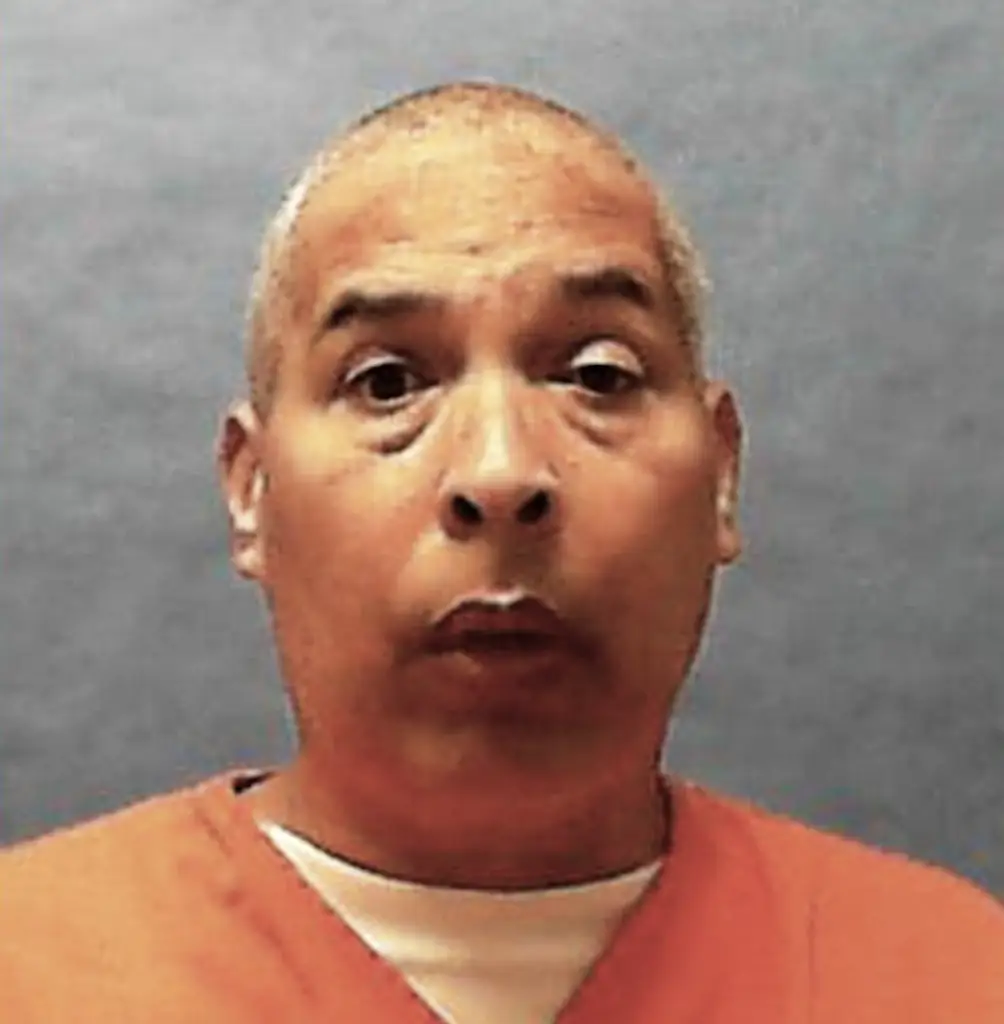
Duane Eugene Owen was arrested after he fatally stabbed a Delray Beach babysitter and beat a single Boca Raton mom to death approximately 40 years ago.
The first incident saw Karen Slattery brutally raped and bludgeoned to death with a hammer while she was babysitting the two daughters of the Helm family. When the parents got home just after midnight, they noticed that their house was dark and quiet, which was unusual so they started looking around the rooms for Slattery.
They were shocked to see a pool of blood on the floor with a hammer laying next to it in the living room.
Duane Eugene Owen mugshot. Credit: Florida State Prison
They then entered the master bedroom where they discovered the teenager's body which had been violated and stabbed a total of 18 times.
Slattery was only 14 at the time.
Law & Crime reported that Owen confessed to the teen’s murder and even detailed his plan in an audio transcript.
The 62-year-old told detectives that he broke into the home through the bedroom window earlier in the night and spotted Slattery braiding the young girls’ hair. He then decided to leave, have a few drinks, then go back to attack her.
Upon returning to the home, he grabbed a hammer that he had found in the bedroom closet, attacked the babysitter while she was watching TV before confessing that he "dragged" her upstairs and "just raped her."
Then just five days later, a similar incident saw Georgianna Worden brutally attacked inside her home in Florida.
Just like Slattery, Worden was killed and then sexually assaulted. The 38-year-old's children found her dead body the next morning while they were getting ready for school.
Owen was arrested and detained after DNA evidence linked him to the case. The killer confessed to both murders and was placed on trial in 1985 for Slattery's murder and then in 1986 for Worden's.
Both juries found the man guilty and he was sentenced to death.
The Palm Beach Post reported that Ron DeSantis initially delayed Owens' death sentence so he could be examined by three psychiatrists.
However, on June 15, the execution went ahead and the 62-year-old died at approximately 6:14 PM via a lethal injection at Florida State Prison in Raiford.
Owens appeared to lack remorse until the very end. When asked if he had any last words minutes before his lethal injection, he reportedly said "no" - seemingly in an act of defiance.
Though he did leave a final statement with authorities shortly after he woke up on his final day.
Insisting that he would "live on", he claimed in his final statement, per Palm Beach Post: "I have transcended space and time, I have see the visions of the Crow. My energy and particles will transform ad infinitum, I will live on. I am Tula. 13."
Owens had been on death row for 38 years before he was executed.