


US4 min(s) read
8 safest states to be in if WW3 begins as Trump sends chilling 'big one is coming' warning to Iran

As concerns grow over rising diplomatic tensions between the Middle East and the United States, some analysts have suggested that certain parts of the U.S. could be less vulnerable than others if a large-scale conflict were to break out.
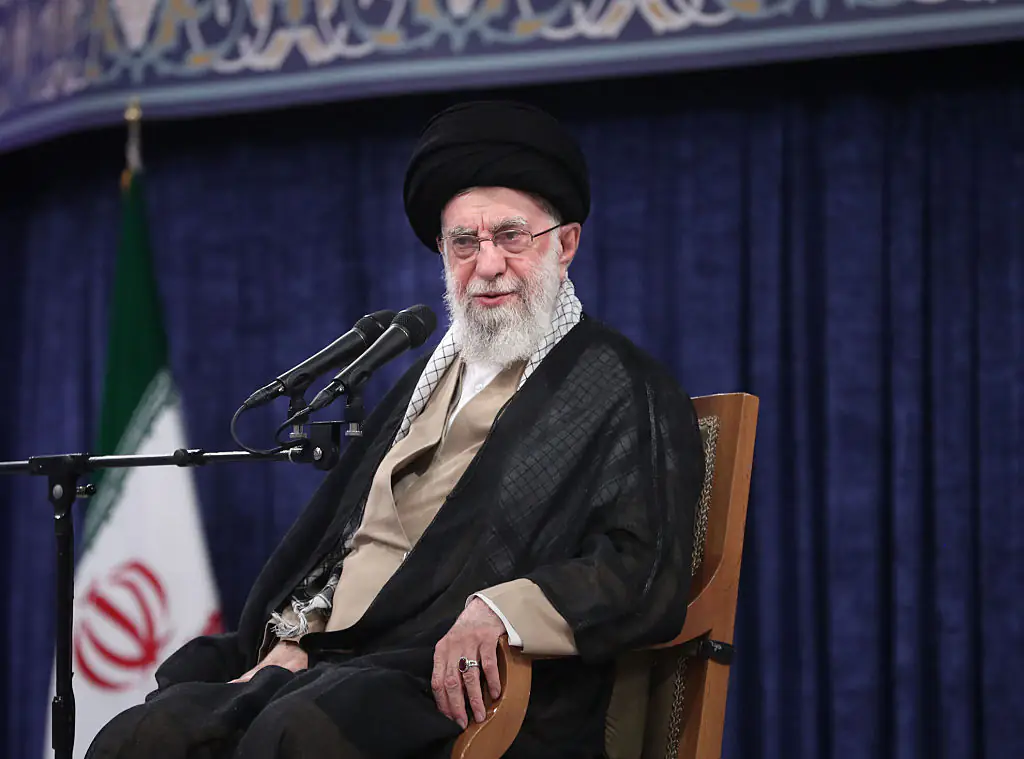
Over the weekend, the U.S. and Israel launched coordinated airstrikes on Iran in a campaign named “Operation Epic Fury.” According to Sky News, several major Iranian cities were hit, including Tehran, Isfahan, Tabriz, Kermanshah, and Qom. The residence of Iran’s Supreme Leader, Ali Khamenei, was also struck, and he was killed in the attack after more than three decades in power.
With nuclear shelters looking increasingly like a shrewd investment from those with political foresight, architectural know-how, and a penchant for atom-powered doomsday forecasting, it may come as a surprise that people’s safety is less likely to be solely contingent on their access to underground facilities, and more on their geographical location.
Understandably, fears have been mounting that Iran could retaliate, despite warnings from Donald Trump. Some experts have speculated that any response might focus on U.S. nuclear missile silo sites.
The U.S. is believed to possess around 2,000 nuclear warheads, with many reportedly stationed in northern and midwestern states such as Montana, North Dakota, and Nebraska, and additional sites in Wyoming and Colorado.
Where are the safest states?
If missile silo regions were targeted, states located farther from those installations could face comparatively lower radiation exposure. Citing analysis reported by Newsweek, areas along much of the East Coast and parts of the South and Midwest are considered among the “safest” in terms of projected fallout exposure.
These include Maine, New Hampshire, Vermont, Massachusetts, Rhode Island, Connecticut, New York, New Jersey, Pennsylvania, Delaware, Maryland, the District of Columbia, Virginia, West Virginia, North Carolina, South Carolina, Georgia, Florida, Alabama, Mississippi, Tennessee, Kentucky, Ohio, Indiana, and Michigan. States such as Washington, Utah, New Mexico, and Illinois are also viewed as relatively less exposed.
These assessments are based on modeling of potential nuclear fallout and the estimated radiation dose residents might receive if key missile sites were attacked. A fallout projection map produced by The Brown Institute for Media Innovation at Columbia University illustrates how radiation could spread across the country in such a scenario.
States near silo fields, including Montana, Wyoming, Colorado, Nebraska, South Dakota, North Dakota, Iowa, and Minnesota, could face radiation levels ranging from 1 Gray (Gy) up to 84 Gy. For context, exposure to around 8 Gy is typically lethal. (A Gray is the standard international unit used to measure absorbed ionizing radiation.) By contrast, the states labeled as safer might experience projected exposure between 0.001 Gy and 0.5 Gy, with those levels not considered hazardous.
Explaining its methodology, Newsweek said the projections are based on “the average radiation exposure risk calculated for each latitude and longitude point,” estimating cumulative radiation doses over four days following a strike.
Previously, Scientific American warned of the devastating consequences of a direct nuclear attack on U.S. silo fields, stating in 2023 that a coordinated strike on sites in Colorado, Wyoming, Nebraska, Montana, and North Dakota “would annihilate all life in the surrounding regions and contaminate fertile agricultural land for years.”
Iran's large-scale retaliation
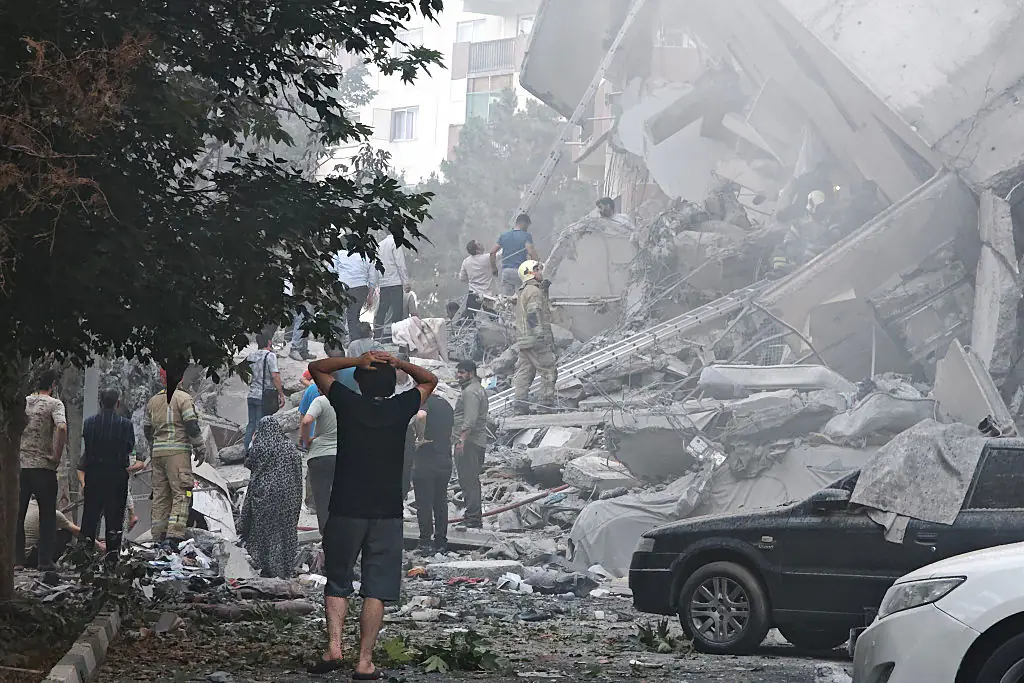
So far, Iran has reportedly launched retaliatory strikes against Israel, Jordan, Saudi Arabia, Kuwait, Bahrain, the United Arab Emirates, and Oman.
According to BBC News, at least nine people were killed in a missile strike on Beit Shemesh on Sunday. The Pentagon also confirmed that four U.S. service personnel were killed in action.
Meanwhile, officials in the UAE reported three fatalities and multiple injuries, while Kuwait’s defense ministry said ballistic missiles targeting the Ali Al-Salem Air Base were intercepted by air defenses.
The Independent reported that Doha also faced multiple attacks over the weekend, with Qatar’s foreign ministry stating that it reserves the right to respond.
The U.S. is reportedly bracing itself for further attacks on its facilities based in the Middle East, with Iran vowing to continue its retort.