


US3 min(s) read
AI issues chilling warning about Iran conflict after being asked what will happen next after airstrikes

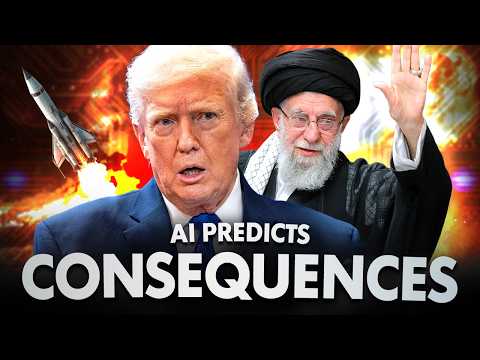
AI has issued a chilling prediction about the ongoing conflict between the U.S and Iran, with a touted war gaining traction amid dramatic escalation in the Middle East.
The widely shared claim centers on an AI-generated assessment that placed the chances of a US attack on Iran at “around 65% in the next few weeks,” warning that the probability could fall if diplomatic talks made progress or spike if Iran hardened its position.
Although any peace treaty seems unlikely at present, with Iran’s Secretary of the Supreme National Security Council, Ali Larijani, declaring there will be “no negotiation” with the U.S. in a heated post on X.
What has AI predicted?
The forecast argues that stalled negotiations over nuclear enrichment and visible military buildups were pushing the situation toward confrontation. It referenced tensions surrounding the 2015 nuclear agreement, formally known as the Joint Comprehensive Plan of Action, and described disagreements over enrichment limits, sanctions relief, and the dismantling of nuclear facilities.
According to ChatGPT, the U.S position was described as demanding “zero enrichment on Iranian soil,” while Iran was said to be signaling a willingness to return to earlier enrichment caps but refusing broader concessions.
The AI-fashioned commentary also highlighted military positioning, stating that the deployment of carrier strike groups, submarines, and fighter aircraft was “not just messaging; that’s preparation.”
It warned that Iranian drills in the Strait of Hormuz and threats of retaliation suggested both sides were preparing for escalation. The analysis predicted that if strikes occurred, “US bases in the region become targets” and oil markets would “spike fast,” increasing the global economic stakes.
What has happened in Iran so far?
These claims have surfaced alongside the US airstrikes that targeted a compound housing Iran’s Supreme Leader, Ali Khamenei, killing him and several senior Iranian officials.
In remarks posted on Truth Social, US President Donald Trump reportedly acknowledged American casualties, stating, “Sadly, there will likely be more before it ends. That’s the way it is. [There will] likely be more but we’ll do everything possible where that won’t be the case.”
Historically, high-profile assassinations of senior leaders have carried considerable escalation risks, often prompting retaliatory measures and regional instability.
At the same time, the “65%” probability cited in the AI prediction raises broader questions about the role of artificial intelligence in forecasting geopolitical crises. While AI systems can process large volumes of public information and model possible escalation pathways, they do not have access to classified intelligence or private diplomatic channels.
AI concluded with “Neither side benefits from full-scale war, but limited strikes to ‘restore leverage’ look increasingly plausible if talks stall. The danger isn’t just whether the US hits — it’s whether retaliation pulls the region into something much bigger. Right now, the risk of miscalculation feels uncomfortably high.”
Whether the AI forecast proves prescient or speculative, the episode highlights the precariousness of the current situation between the U.S. and Iran, and the degree to which technological analysis is now intertwined with public perceptions of war risk.