


US4 min(s) read
Don Lemon speaks out after being arrested by federal agents overnight for covering anti-ICE church protest
.webp_QQJmGo?tr=cr-345.0.1535.1190,f-webp,q-70,w-100)
Don Lemon, the well-known former CNN anchor, was released on Friday following his arrest in connection with an anti-ICE protest he covered on January 18.
The arrest was a result of his involvement in reporting on a demonstration at a church in St. Paul, Minnesota, per PEOPLE.
Don Lemon's Court Appearance and Release
Lemon, 59, made an emotional appearance in court on January 30, where he blew a kiss to his husband, Tim Malone, as he entered the courtroom.
Malone, 41, was present in the gallery as Lemon appeared for his court proceedings.
After the arraignment, Lemon was seen leaving the Edward R. Roybal Federal Building in Los Angeles hand-in-hand with Malone. Supporters were vocal in their support, with one person shouting, “We got your back, Don. We’re proud of you, Don.”
The Arrest and Charges Against Don Lemon
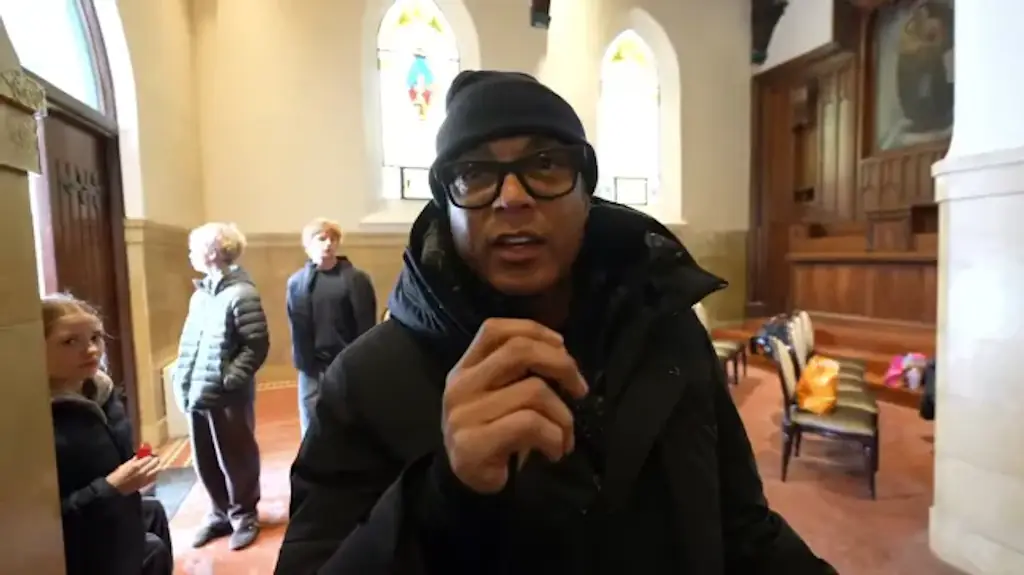
Lemon’s arrest is tied to a protest that took place on January 18 at a church in St. Paul, Minnesota. During the protest, demonstrators disrupted a religious service in opposition to immigration enforcement, chanting “ICE out.”
The government accused Lemon of violating federal laws that protect the right to participate in religious services without disruption. However, Lemon’s attorney, Abbe Lowell, maintained that Lemon was merely fulfilling his role as a journalist covering the protest.
According to Lowell, "Lemon was taken into custody by federal agents last night in Los Angeles, where he was covering the Grammy Awards."
The FBI and U.S. Department of Homeland Security confirmed the arrest, with the FBI stating: "The HSI [Homeland Security] & FBI arrested Mr. Lemon last night in Beverly Hills at approximately midnight based on a federal warrant issued in another district."
Lemon faces charges under the U.S. criminal code related to conspiracy against religious freedom and interfering with religious rights at a place of worship.
The charges stem from his alleged involvement in what prosecutors describe as a “takeover-style attack” at the church.
Legal Developments and the Case Against Lemon
Under the terms of his personal recognizance bond, Lemon is free to travel, although he must seek approval for international travel.
He must also refrain from contacting any victims or witnesses involved in the case. His next court date is set for Monday, February 9, at 10AM local time in Minneapolis, at the U.S. District Court for the District of Minnesota.
Marilyn Bednarski, one of Lemon's attorneys, informed the court on January 30 that Lemon intends to plead not guilty and is “committed to fighting this case.”
A History of Legal Struggles Over Anti-ICE Protest Coverage
The arrest of Don Lemon is part of a broader legal effort by the government to crack down on those involved in the anti-ICE protests.
Initially, the Justice Department sought charges against eight individuals, including Lemon.
However, Minnesota Chief District Judge Patrick Schiltz ruled that there was insufficient evidence to proceed with charges against Lemon and others, allowing only three of the original charges to move forward.
Despite this, prosecutors later secured grand jury indictments for nine people related to the incident.
The unsealed indictment added Lemon to a list of people charged, including independent journalist Georgia Fort and Black Lives Matter leader Trahern Jeen Crews.
Court documents indicate that Lemon and Fort were livestreaming the protest as demonstrators entered the church, disrupted the service, and engaged in loud chanting and whistle-blowing. Prosecutors claim this disruption was “traumatizing to church members.”
Don Lemon's Response to the Arrest
Despite facing charges, Don Lemon remained defiant. After his court appearance, Lemon spoke with reporters outside the federal courthouse in Los Angeles.
“I have spent my entire career covering the news. I will not stop now,” he stated. “I will not stop ever.”
He went on to emphasize his commitment to the First Amendment, saying: “Last night, the DOJ sent a team of federal agents to arrest me in the middle of the night for something that I have been doing for the last 30 years, and that is covering the news.
"The First Amendment of the Constitution protects me and countless other journalists who do what I do. I stand with all of them, and I will not be silent. I look forward to my day in court.”