


US3 min(s) read
Donald Trump details his plan to completely cancel income tax for American citizens
.webp_SmgFsc?tr=cr-292.0.1244.952,f-webp,q-70,w-100)
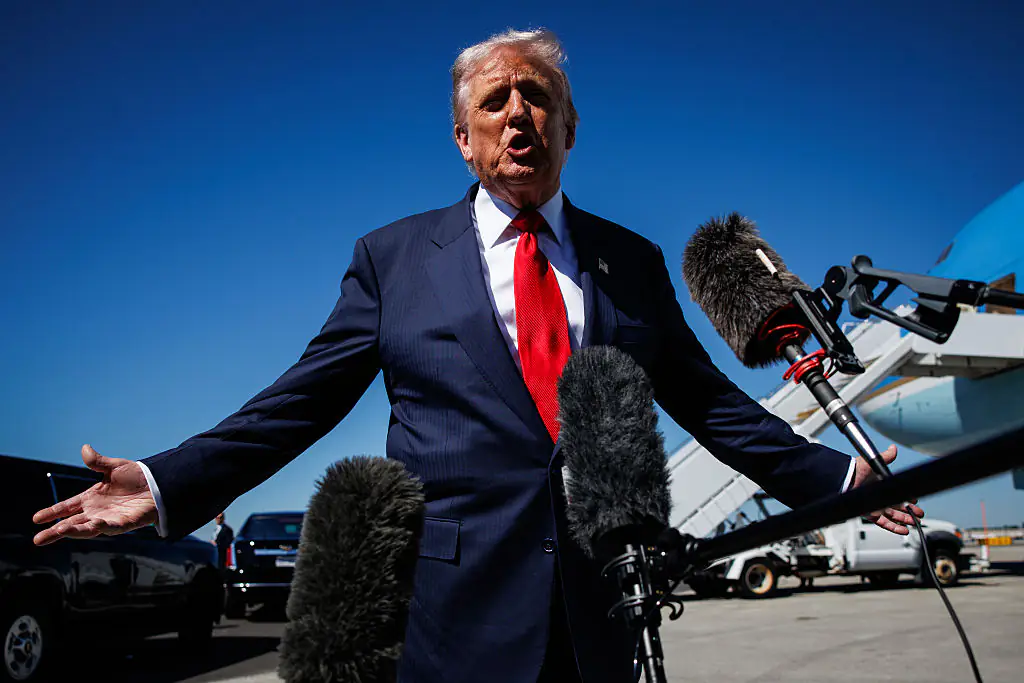
President Donald Trump suggested Americans may soon no longer have to pay federal income tax, claiming that revenue from tariffs has grown so large that the U.S. government may be able to drop the income tax altogether. Per CBS News, he made the comments following a cabinet meeting, telling reporters “at some point in the not too distant future you won’t even have income tax to pay.”
He added that the government’s intake from tariffs is now “so great… so enormous.” According to Trump: “Whether you get rid of it or just keep it around for fun or have it really low, much lower than it is now, but you won't be paying income tax.”
If enacted, eliminating income tax entirely would be the most far‑reaching overhaul of the U.S. tax system in more than a century. This is the clearest public embrace yet of converting tariff revenues into a substitute for taxes on individual incomes.
What Trump proposes and why
Trump has long advocated shifting from taxing citizens to taxing foreign goods and imports. Earlier this year he told supporters that the U.S. should stop “taxing our citizens to enrich foreign nations” and instead “tariff and tax foreign nations to enrich our citizens.”
That plan included pushing aggressive tariffs on imports and using the resulting revenue to fund government and tax cuts.
With tariffs rising, Trump told those at the cabinet meeting that tariff income would soon make income tax unnecessary. “At some point in the not too distant future you won’t even have income tax to pay,” he said - a statement he reiterated after previously floating similar plans for lower personal tax thresholds.
Why experts say the math does not add up
Despite Trump’s confidence, independent analysis shows tariffs currently contribute only a small fraction of U.S. federal revenue. Data from the Treasury Department for the most recent fiscal year puts individual income taxes at more than half of total revenue, while customs duties (tariffs) accounted for only a few percent.
Experts have argued that replacing income tax with tariffs is neither plausible mathematically nor economically. “It’s not possible. It’s not feasible mathematically or economically,” said Brandon DeBot, senior attorney adviser and policy director at New York University's Tax Law Center via ABC News.
A separate analysis suggests that even dramatically raising tariffs would likely shrink the import base, reducing revenues - shrinking supply and prompting trade retaliation could erode any gains.
What would need to happen for this to work
To succeed, Trump’s proposal would require major changes to U.S. tax and spending laws - meaning Congress would have to agree to abolish the income tax. It would also need tariff revenue far beyond what is currently realistic.
Given how heavily the U.S. government depends on income and corporate taxes for funding, replacing them with import duties would require either extremely high tariffs or massive increases in imports - both unlikely under economic and political pressures.
Until and unless those changes occur, abandoning the income tax remains hypothetical.