


US7 min(s) read
Legal experts reveal who could be held responsible for deadly Learjet crash and what victims’ families can do next

Legal experts have revealed who could be held responsible for the deadly Learjet 60 crash that killed nine people.
The Bahamas-bound private aircraft, which departed from Austin-Bergstrom International Airport in Texas, plunged from an altitude of approximately 35,000ft before crashing into the ground and erupting into flames near Greenacres on Sunday (November 1).
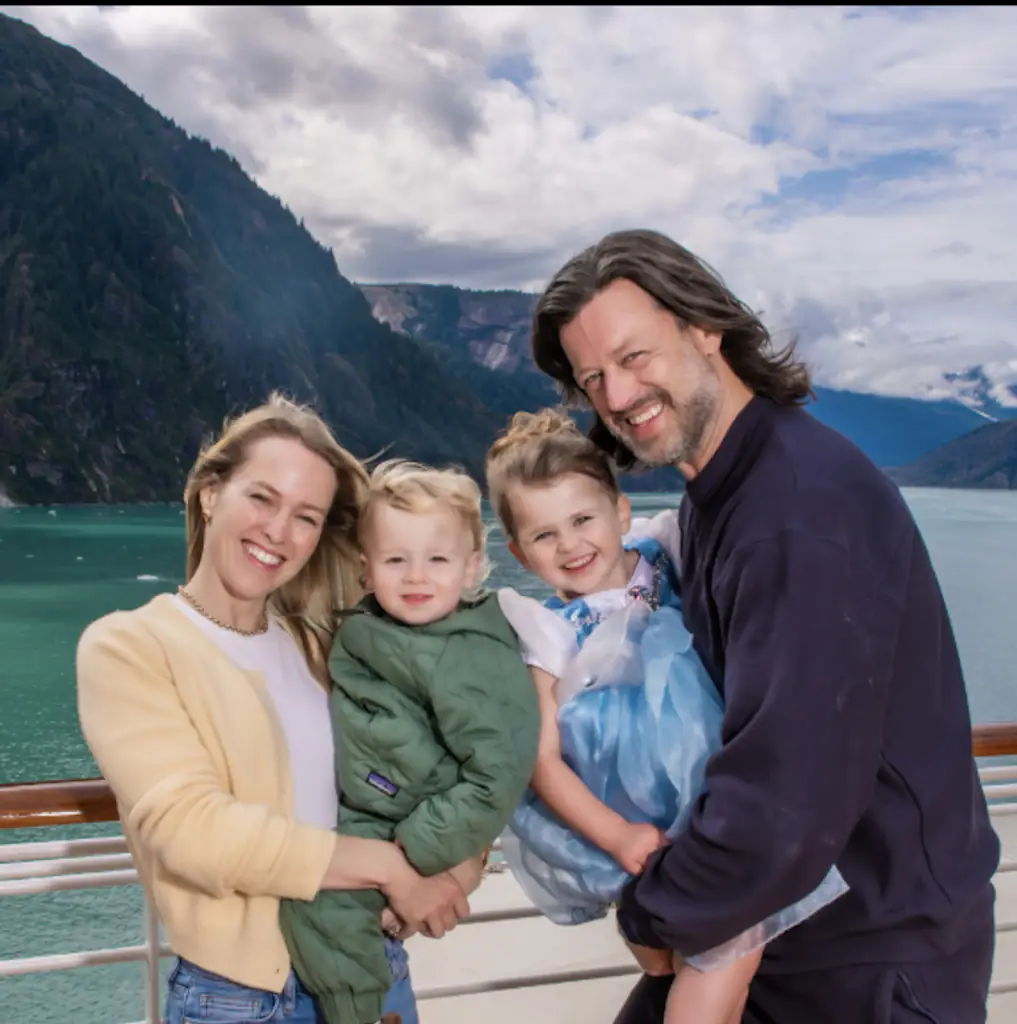
Among those killed were tech CEO Adam Robinson, 44, his wife Helen Sharp, their four-year-old daughter Emma, and their two-year-old son Charlie.
The family was traveling with their nanny, Anita Maria Apellido Cetina, and two close friends, Rachael Reed and Charmi Fehr.
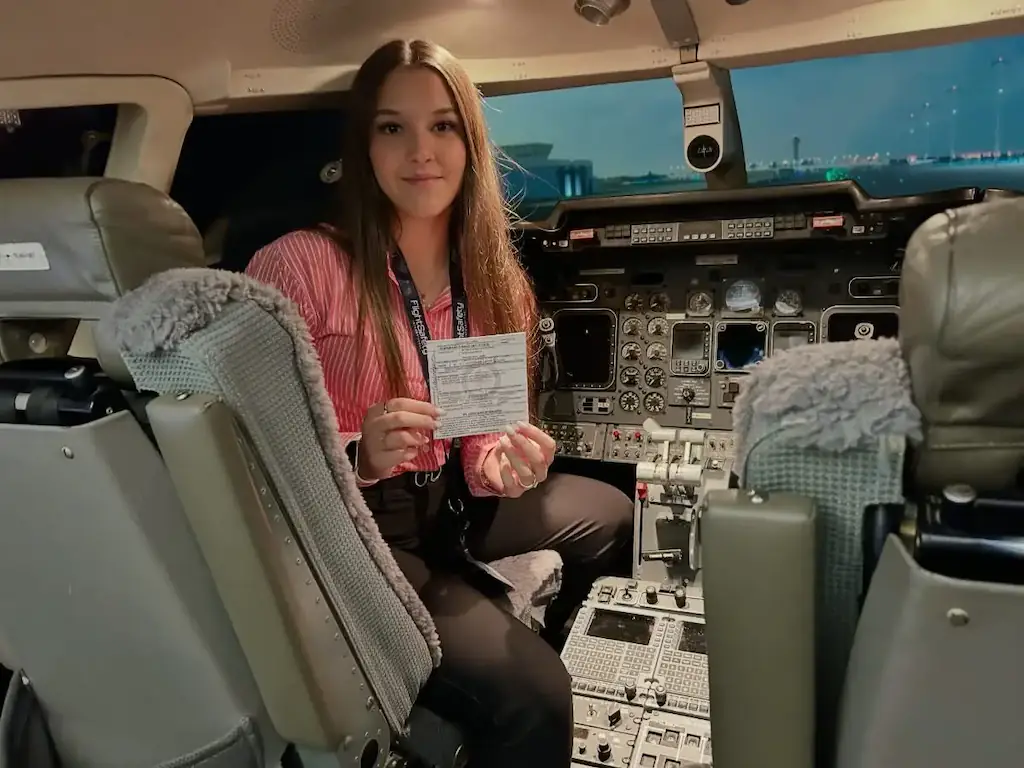
The aircraft's captain, 55-year-old Jeff Gregory, and 20-year-old co-pilot Nathalia Gadelha Filgueiras also tragically died.
As federal investigators work to determine what caused the aircraft to lose control, aviation attorneys have explained which parties could be held responsible and how families can pursue compensation.
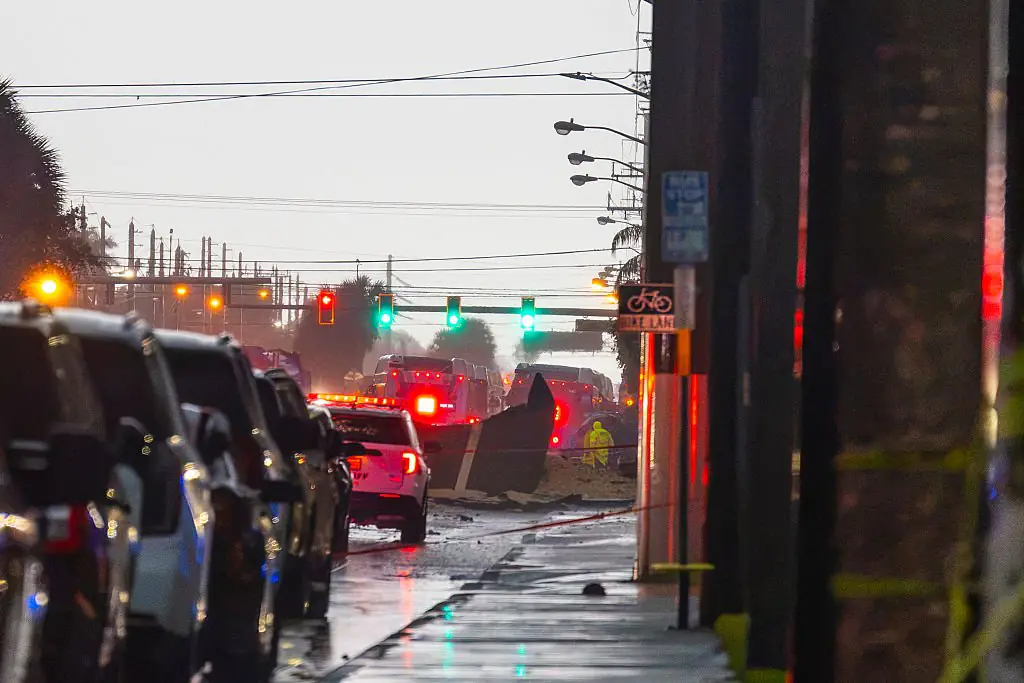
Harrowing final moments before Learjet crashed in Florida
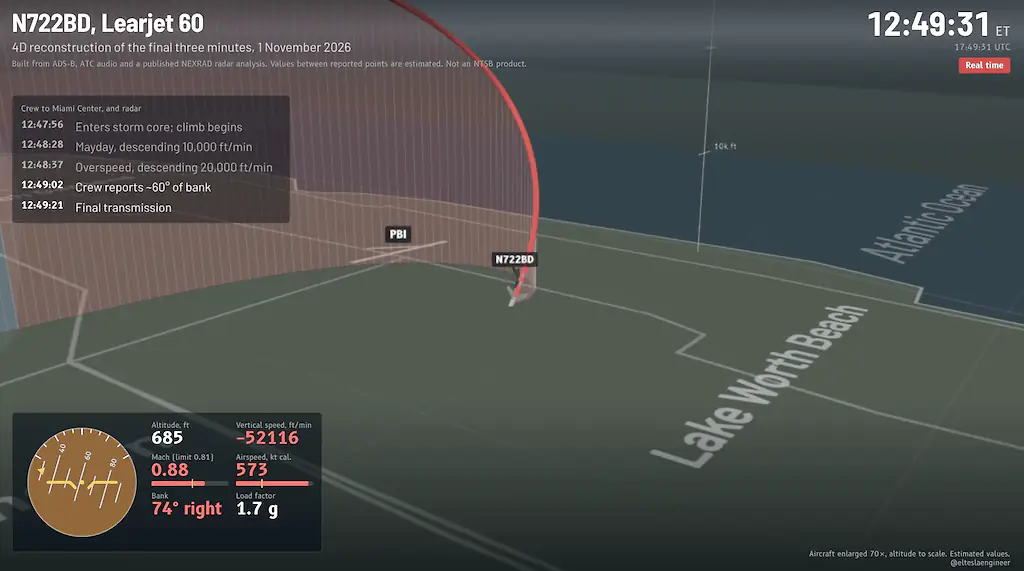
In the air traffic control radio call captured by LiveATC.net, moments before that crash, Filgueiras reported that ice was accumulating on the jet, with an outside air temperature of -47 degrees Celsius.
"We’re descending 8000 feet, mayday, mayday, 10,000 feet per minute," she can be heard screaming into an air traffic controller.
Moments later, the situation deteriorated further as the jet entered what the crew described as an overspeed condition.
"Declaring emergency… descending 20,000 feet per minute… we’re going to crash into the ground," she said.
"We are banking 60 degrees, we are going to die, holy f*** we’re out of time."
Gregory can be heard reciting the Lord’s Prayer in the background as the plane plummeted.
Who could be held legally responsible for the Learjet crash?
Speaking exclusively to VT.co, Mark Lopez-Trigo and Joshua Padron, trial attorneys at Padron & Lopez-Trigo in Coral Gables, explained that determining legal responsibility will depend heavily on the findings of the ongoing investigation.
The lawyers currently represent the family of one of the five people killed when an Amazon cargo jet operated by 21 Air overran a runway at Miami International Airport on September 6.
They drew on their experience with aviation litigation and said that responsibility for a fatal plane crash can extend beyond the pilots or the airline operating the flight.
"That depends on the findings, but aviation claims often reach several companies because ownership, operations, and maintenance are frequently split.
"Reports identify the registered owner as LR60271 LLC and the operator as Aurora Aviation, doing business as Upper Jet," they said.
"Decisions such as crew pairing, company training and operating culture, maintenance duties and protocols, and in-flight decisions can answer a lot of questions as to who is ultimately liable for the in-air failures," they added.
What legal options do the families have?
Lopez-Trigo and Padron explained that the families may be entitled to pursue wrongful death claims, although determining which laws apply could be complicated by the aircraft's journey across multiple jurisdictions.
"The remedies available to the families of the victims will depend on several factors. Which law applies is not simple here.
"The flight left Texas for the Bahamas and crashed in Florida, with companies in other states involved," they said.
Under Florida law, eligible surviving relatives and the deceased victims' estates may be able to recover certain financial damages.
"Certain relatives can also recover for lost companionship and mental pain and suffering. Eligibility depends closely on the relationship and on the age of the person who died," they shared.
The lawyers also highlighted two particularly complex issues arising from the tragedy.
The first concerns the deaths of Robinson, his wife, and their two children, which could create additional legal questions over inheritance and who qualifies to bring claims on behalf of each family member.
"Two groups face special questions. When a whole family dies, the law must sort out who qualifies as a survivor and how each estate passes," they explained.
The second concerns the families of the two pilots, who "may also face workers' compensation limits on claims against an employer, though claims against other parties could remain".
How long will this take, and what happens legally in the meantime?
The attorneys warned that the investigation into the crash could take years, but emphasized that families do not necessarily have to wait for an official finding before considering legal action.
"Expect a preliminary NTSB report in about a month and a final cause finding in roughly one to two years. Families do not have to wait for final reports to pursue legal action. Using Amazon Air’s recent crash in Miami as an example, the preliminary report came 25 days after the crash, and families have filed suit while the investigation continues," they said.
"Legal deadlines keep running regardless of the NTSB. Florida wrongful death claims generally must be filed within two years, and other applicable deadlines may be different."
This means families may need to begin gathering evidence and exploring their legal options well before investigators establish the probable cause of the crash.
Lopez-Trigo and Padron also explained that an NTSB investigation and a civil lawsuit serve different purposes and follow separate legal processes.
While the NTSB focuses on confirming what happened and preventing similar tragedies, a wrongful death lawsuit seeks to determine legal liability and whether compensation is owed.
"By federal law, the board's report on an accident generally cannot be used as evidence in a damages suit. So the case must be proved with independent experts and evidence. That makes early preservation critical," they explained.
NTSB reveals crucial evidence recovered miles from crash site
The attorneys' comments come as federal investigators have uncovered potentially significant evidence suggesting the Learjet began breaking apart before hitting the ground.
On Tuesday (November 3), NTSB member Tom Chapman revealed that most of the aircraft's left elevator was located in three separate pieces, scattered between 1.3 miles and 3.8 miles from the impact site, near West Palm Beach.
"What that means exactly, in terms of what caused the aircraft to lose control, or whether the loss of this piece was a result of the forces on the aircraft, we don’t know yet," Chapman said at a news conference, per The Guardian.
He said that without the elevator intact, the pilot would not have been able to pull the aircraft out of its nosedive.
"At those speeds I don’t know that it would’ve been effective even if it had still been attached to the aircraft, but knowing that it was lost is a very important piece of evidence in terms of pointing us toward other things to investigate," he added.
The cause of the plane crash is still being investigated.