


US4 min(s) read
'Coffin corner' phenomenon explained as experts warn it could have caused horror Learjet crash

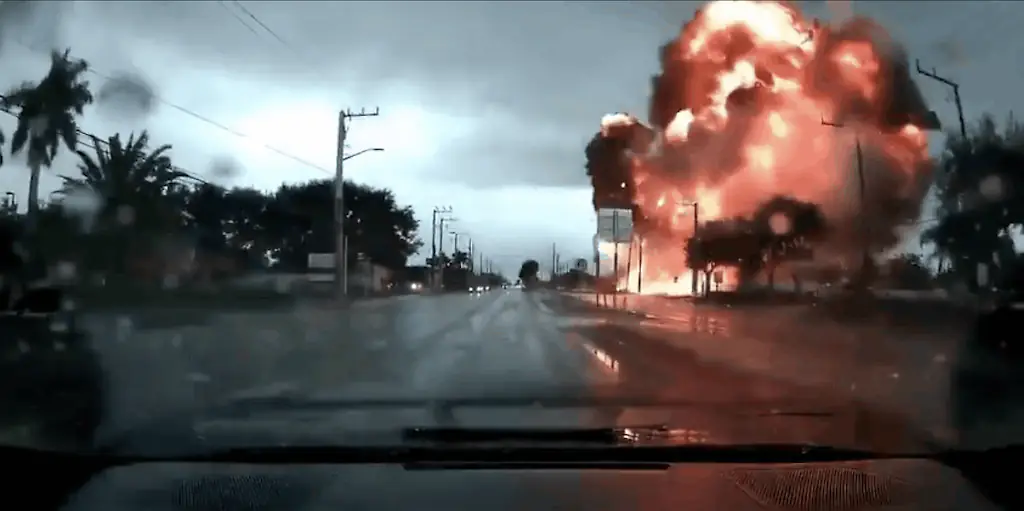
A lethal aviation phenomenon known as 'coffin corner' has been touted as a possible factor in the Florida Learjet crash that claimed the lives of all nine people on board.
The private jet plunged from the sky before crashing near West Palm Beach on Sunday, November 1, leaving two crew members and seven passengers dead, including a family traveling together and their friends.
The victims were identified as businessman Adam Robinson, his wife Helen, their two children, two family friends and a nanny, along with both the aircraft's captain, 55-year-old Jeff Gregory, and 20-year-old co-pilot, Nathalia Gadelha Filgueiras, who also died.
Filgueiras' stepfather told the New York Post that she had messaged her boyfriend shortly before the crash, warning him: "I've got turbulence, I've got ice."
National Transportation Safety Board (NTSB) member Tom Chapman confirmed on Tuesday that reports of ice and turbulence were "certainly a factor" investigators were examining.
According to the Palm Beach Post, several experts who have examined radar and flight data believe the Learjet may have encountered a powerful thunderstorm before it went down, with meteorologist Matthew Cappucci telling the publication that storm clouds had risen by 15,000ft in just 20 minutes, reaching a height of 48,300ft around the time of the crash.
'Coffin corner' explained
Former pilot Martin Varsavsky has also offered a possible explanation, suggesting the aircraft could have encountered a phenomenon known as 'coffin corner' while attempting to climb above two storm systems.
The term describes a particularly dangerous situation that can occur when an aircraft is flying at high altitude, where, as a plane climbs, the gap between its minimum safe flying speed and maximum operating speed becomes increasingly narrow. At a certain altitude, these limits can become so close together that pilots have very little room for maneuver.
If the aircraft flies too slowly, it risks entering a stall, but if it travels too quickly, it can exceed its operating limits and potentially experience serious aerodynamic or structural problems, potentially like the ones seen during the Learjet crash.
This leaves pilots with an extremely small speed range in which to keep the aircraft safely under control, with Varsavsky suggesting the Learjet may have been trying to climb above two storm cells when it encountered these conditions.
In a post on X, he wrote: "The radars clearly showed those cells; in light jets, the rule is to deviate with a good margin, not to fly through them - this could be an error by the woman who was piloting.
"What storms do by changing the outside temperature is that airplanes can no longer stay aloft at the same speed. It's called the coffin corner. Or they become very difficult to keep under control."
His comments remain a theory rather than an established explanation for the crash, with investigators yet to determine exactly what happened during the aircraft's final moments.
Ice is also being investigated as possible cause

Another possible factor being examined is the effect of ice accumulating on the aircraft, with pilot and Jettly CEO Justin Crabbe previously explaining to LADbible how ice forming on an aircraft's wings can significantly change its flying characteristics.
He said it "changes the shape of the wings, reduces lift, increases drag, and can make the aircraft much more difficult to control."
Crabbe also warned that turbulence could compound the difficulties faced by pilots, potentially making an already challenging situation more dangerous.
The Learjet crew had reportedly communicated concerns about light clear icing and moderate turbulence before the emergency unfolded.
However, the presence of ice does not automatically mean it caused the crash. Investigators will need to establish whether it affected the aircraft's performance and whether other weather conditions played a role.
For now, the precise cause of the disaster remains unknown. The NTSB is continuing to examine the aircraft's flight data, weather conditions, communications, and wreckage before reaching any conclusions.