


US4 min(s) read
Man asked AI if White House Correspondents' Dinner shooting was staged and got very surprising response

A man turned to AI for answers after the shocking shooting at the White House Correspondents' Dinner on Saturday, and the response he received is now going viral.
The incident, which unfolded last weekend, saw armed suspect Cole Tomas Allen break through security after shots were fired, prompting a swift evacuation of President Donald Trump and other officials.
However, as the clip’s narrator pointed out: “Trump himself wasn't exactly in a rush,” a detail that has already fueled debate online.
AI addresses claims that the shooting was staged
With the suspect now in custody, attention quickly shifted to what actually happened, and whether it could have been prevented. But as with many high-profile political incidents, a wave of conspiracy theories followed almost immediately.
“Half the internet is screaming that this whole thing was staged,” the creator said, referencing claims that moments like this tend to boost Trump’s popularity. As such, the man decided to ask AI directly: Was the shooting staged?
“Honestly, the staged theory is extremely unlikely,” the AI replied, before laying out a detailed explanation. It pointed to the suspect’s alleged actions — including “a multi-day train ride… checked into the Hilton the day before, brought a shotgun, a handgun, and knives,” and even sending “a manifesto to his family roughly 10 minutes beforehand.”
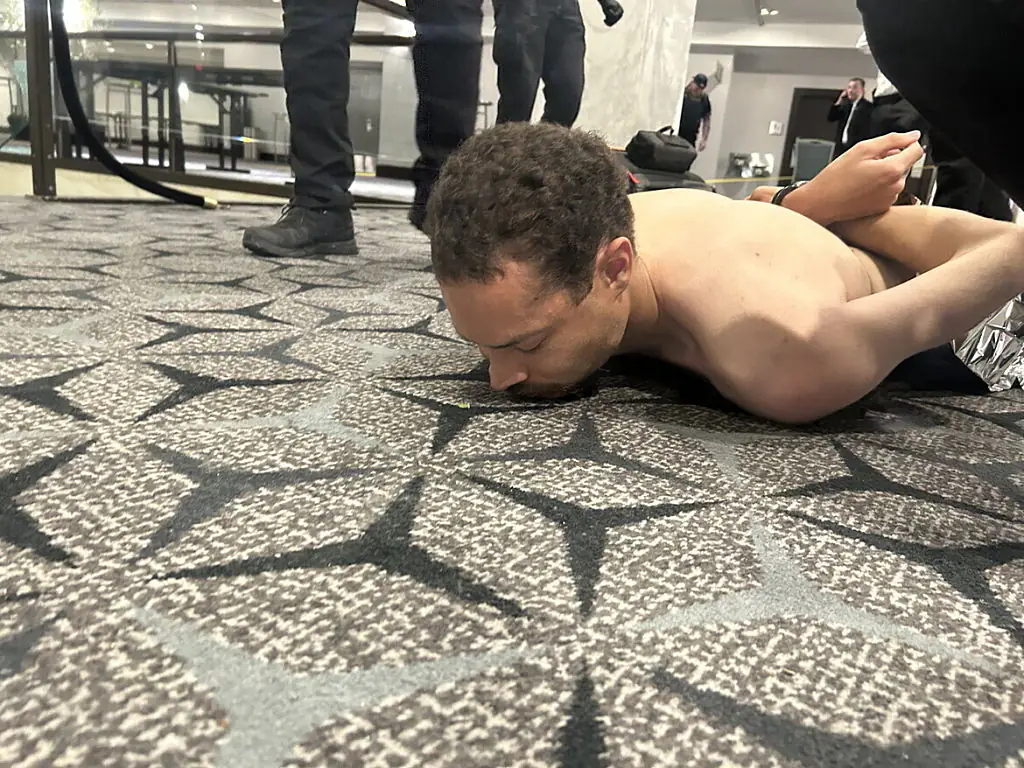
It also highlighted the scale of the response, noting that “his own brother called the cops, the FBI raided his home… he's facing federal charges and is in custody.”
According to the AI, pulling off a staged event of this magnitude would be nearly impossible without leaks. “Staging something at this scale with this many independent witnesses and law enforcement agencies would require a conspiracy so large it would have leaked instantly,” it explained.
The AI suggested it’s less about evidence and more about the current political climate. “Skepticism is more about the political environment than the evidence,” it said, pointing to growing distrust on both sides of the political spectrum.
It added that past events, including earlier assassination attempts, have conditioned people to question everything. “After the Butler assassination attempt in 2024, staged became an instant online meme… that pattern just gets recycled.”
AI dismisses Trump's criticisms of venue and points to wider issue of country-wide violence
The man also asked whether Trump’s claim that the attack wouldn’t have happened if a proposed White House ballroom had been built held any weight.
“No, I don't buy it. And frankly, it's a pretty cynical pivot,” it said, explaining that the dinner is traditionally held at a hotel venue and wouldn’t automatically move to the White House. It added that the argument essentially boils down to the idea that “if we held all big events inside a fortress, no one could attack them,” calling it “technically true” but not particularly meaningful.
The AI went even further, suggesting that using the incident to push the ballroom project was “opportunism, not analysis.”
Beyond the specifics of the event, the conversation turned to a bigger issue: the rise of political violence in the United States: “Yes, it's gotten worse. And the data isn't really ambiguous,” it said, citing research showing “roughly three times more political violence since 2016 than in the previous 25 years combined.”

It described the trend as “not a normal pattern,” pointing to a series of recent high-profile attacks and warning that “nothing currently in motion suggests it reverses soon.”
As for the root causes, the AI pointed to deepening division, explaining that “polarization has metastasized into actual dehumanization,” with more people viewing political opponents as “downright evil.”
It also highlighted the role of social media, noting that “most modern attackers are unaffiliated lone actors who marinated online rather than in organizations.”
When asked what could actually fix the issue, the AI admitted there’s no simple solution.
“There's no clean fix,” it said, but suggested several steps — including political leaders consistently condemning violence on their own side, better threat detection, and stronger action against online radicalization.
Perhaps most importantly, it emphasized the need for a shift in rhetoric: “People have to stop describing political opponents as evil, subhuman, or existential threats.
“Until the dehumanization rhetoric drops,” it warned, “everything else is patching like a leaking dam.”
The exchange has since sparked widespread discussion online, with many surprised by how direct, nuanced, and potentially accurate the AI’s responses were.