


US3 min(s) read
Nostradamus 'predicted Iran war' and what comes next is worrying

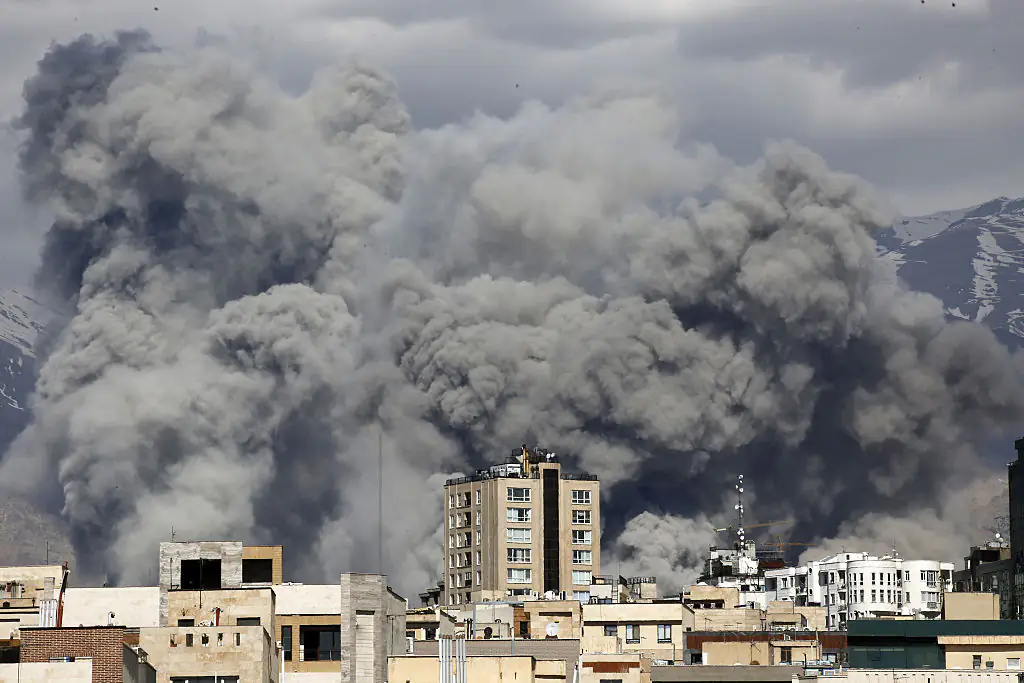
Nostradamus, a 16th-century mystic, has made headlines again, almost 500 years after his death, as he is said to have predicted the current Iran war and hinted that something even more terrifying could follow, according to a theory shared by YouTuber Donovan Dread.
The French physician has been credited with predicting Iranian Supreme Leader Ayatollah Ali Khamenei's assassination, as well as the prospective fight over the Strait of Hormuz.
What has Nostradamus foretold already?
In a recent video, Dread examines quatrains from Nostradamus’ book Les Prophéties, a collection of cryptic four-line poems that some believe foretold events like the rise of dictators and major disasters, while skeptics argue the wording is so vague it can be twisted to fit almost any narrative.
Dread claims that several of these passages seem to allude directly to Iran and today’s military tensions, and that they may also point to a far broader global conflict.
Dread focuses on one particular verse that he argues is particularly revealing. The quatrain contains references to old geographic names linked to modern Iran and reads: “The great Saturn tiger of Hercania, gift presented to those of the ocean. A fleet chief will set out from Carmania. One who will take land at the Tyran Fosia.”
He explains that Hyrcania — spelled “Hercania” in some versions — was an ancient region by the Caspian Sea in what is now northern Iran, while Carmania referred to an area along Iran’s southern coastline.
“These are words that mean nothing to a casual reader,” he says in the video. “But to anyone who knows ancient geography, every single word in this verse is a signpost pointing directly to Iran.”
How did Nostradamus predict the U.S.-Iran war would unfold?
Towards the end of the video, Dread discusses that other quatrains hint that the fighting may not stay confined to the Middle East. He claims that Nostradamus “describes naval battles in the Persian Gulf where ships are melted and destroyed. He also describes economic collapse triggered by the disruption of trade routes. He describes a conflict that spreads from the Middle East into Europe itself.”
Dread also believes the texts portray a war that spirals out of control through blunders and tit-for-tat escalation rather than careful planning: “A regional war that becomes a world war not through grand strategy but through miscalculation, retaliation, and the cascading failures of diplomacy.”

At the same time, he acknowledges the long-running controversy around all such interpretations. “The entire field of Nostradamus interpretation is built on ambiguity,” he says, admitting that the verses are inherently open to debate.
Yet he insists the parallels are hard to ignore. “Coincidence is a comforting explanation. It's clean. It's rational. It lets us sleep at night. Nostradamus warned us about Iran. The real question isn't whether we should have listened. The real question is what else he warned us about that we're still ignoring.”