


US4 min(s) read
Terrifying animation recreates Florida Learjet's final moments both inside and outside aircraft while offering theory about what happened

A chilling animation has recreated the final moments of the Learjet 60 that crashed in Florida, showing what may have happened both inside and outside the aircraft before all nine people on board were killed.
The Bahamas-bound private jet plunged from an altitude of approximately 35,000 ft before crashing into the ground and erupting into flames near Greenacres on Sunday (November 1).
The aircraft had departed Austin, Texas, and was heading to North Eleuthera when the crew encountered turbulent weather and reported ice accumulating on the plane.
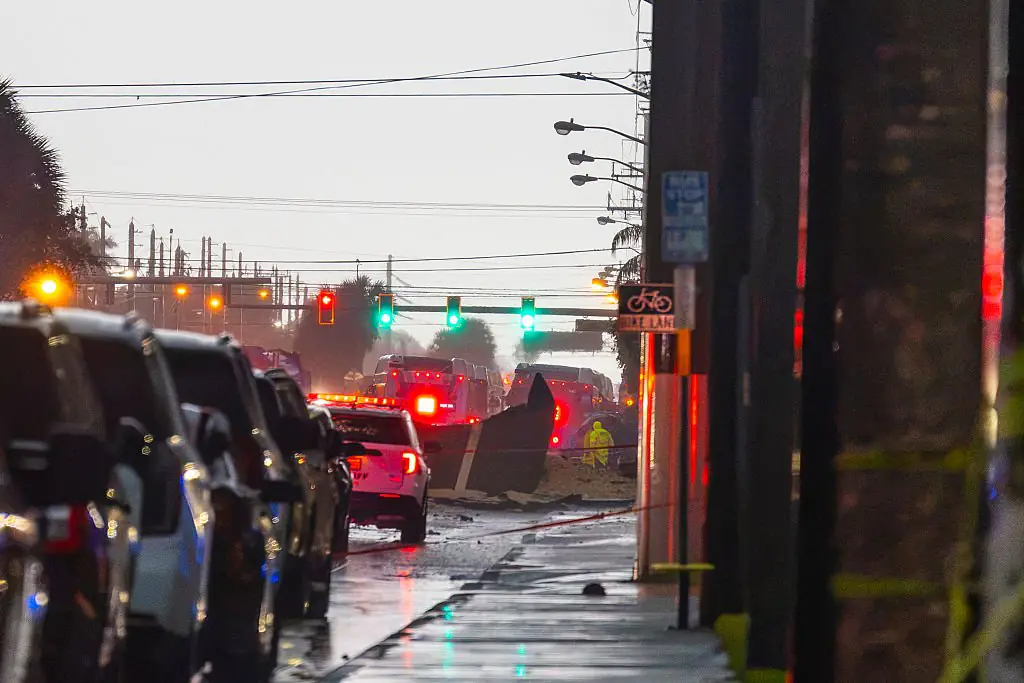
Animation recreates Learjet's terrifying final moments
A detailed animation released by YouTube channel AiTelly on November 3 attempts to reconstruct the aircraft's final 76 seconds and explores a possible explanation for the catastrophic descent.
According to AiTelly, the plane was flying at approximately 35,000 feet near Naples, Florida, when its crew reported icing conditions and moderate turbulence.
The pilots then requested permission to climb to 37,000 feet in search of smoother conditions, which air traffic control approved.
But moments later, the jet reportedly entered an extreme overspeed condition and began descending rapidly.
Audio recordings captured the increasingly desperate communications between the pilot and air traffic controllers.
"Mayday, mayday!" co-pilot Nathalia Gadelha Filgueiras exclaimed. "We're descending 10,000 ft per minute."
As the aircraft continued losing altitude, the pilot reported an overspeed condition and a descent rate of approximately 20,000 feet per minute.
"We're going to crash into the ground!" she warned.

Animation suggests Learjet's horizontal stabilizer may have detached
One of the theories explored by the YouTube channel is that the Learjet may have lost its horizontal stabilizer, a small, wing-like component that sits on the tail of the aircraft and maintains balance.
Attached to the stabilizer are movable control surfaces called elevators, which help pilots raise or lower the aircraft's nose.
A damaged or malfunctioning horizontal stabilizer can affect the plane's ability to maintain controlled flight.
The animation suggests that the Learjet may have lost its horizontal stabilizer during the flight, and that this contributed to its steep, nose-down descent.
However, AiTelly acknowledged that the available dashcam footage of the crash was too blurry to confirm whether the entire stabilizer had detached before the crash.
The reconstruction also estimated that the aircraft may have reached approximately 691 miles per hour during its descent.
Per the animation, the plane weighed around 19,000 lbs and was carrying approximately 2,900 lbs of remaining fuel.
At such extreme speeds, an aircraft can experience aerodynamic forces beyond its structural limits, resulting in damage or the separation of components.
However, these are estimates presented in the animation and not confirmed findings from the NTSB crash investigation, which is still in the early stages.
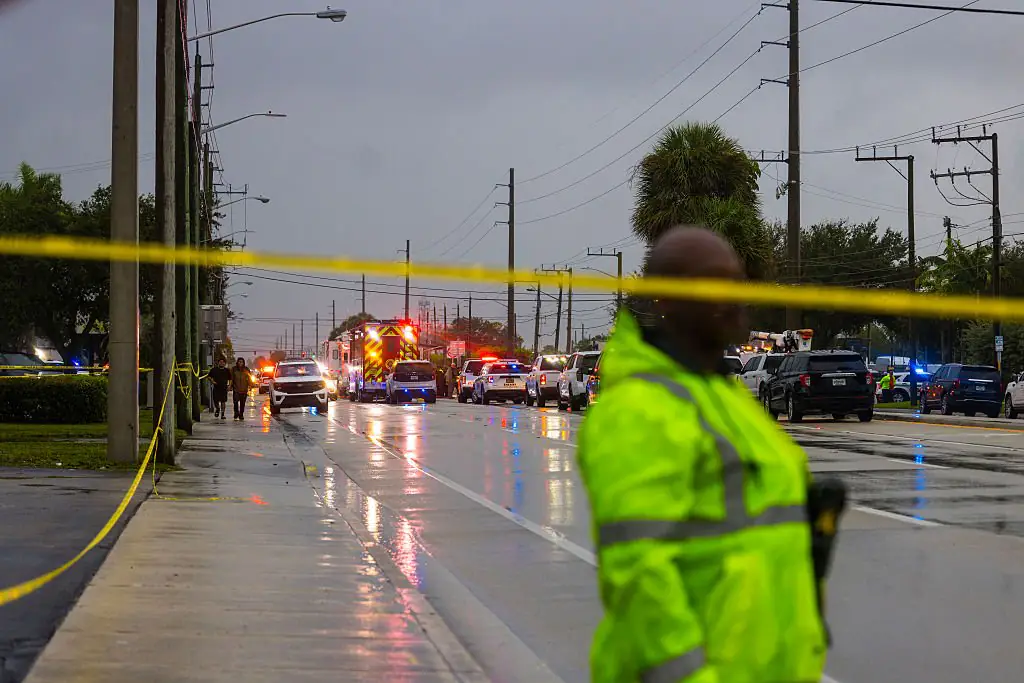
Investigators discover crucial aircraft wreckage nearly four miles from the crash site
On Tuesday (November 3), NTSB member Tom Chapman revealed that investigators had recovered important pieces of the Learjet's tail several miles from where it crashed.
Most of the aircraft's left elevator was found in three separate pieces, scattered between 1.3 miles and 3.8 miles from the impact site, near West Palm Beach.
"What that means exactly, in terms of what caused the aircraft to lose control, or whether the loss of this piece was a result of the forces on the aircraft, we don’t know yet," Chapman said at a news conference, per The Guardian.
He said that without the elevator intact, the pilot would not have been able to pull the aircraft out of its nosedive.
"At those speeds I don’t know that it would’ve been effective even if it had still been attached to the aircraft, but knowing that it was lost is a very important piece of evidence in terms of pointing us toward other things to investigate," he added.
All nine people aboard the aircraft were killed, including Tech CEO Adam Robinson, 44, his wife Helen Sharp, their four-year-old daughter Emma, and their two-year-old son Charlie.
The family was traveling with their nanny, Anita Maria Apellido Cetina, and two close friends, Rachael Reed and Charmi Fehr.
The crew consisted of 55-year-old captain Jeff Gregory and Filgueiras.