


US4 min(s) read
Nathalia Filgueiras' last text before Florida Learjet crash revealed

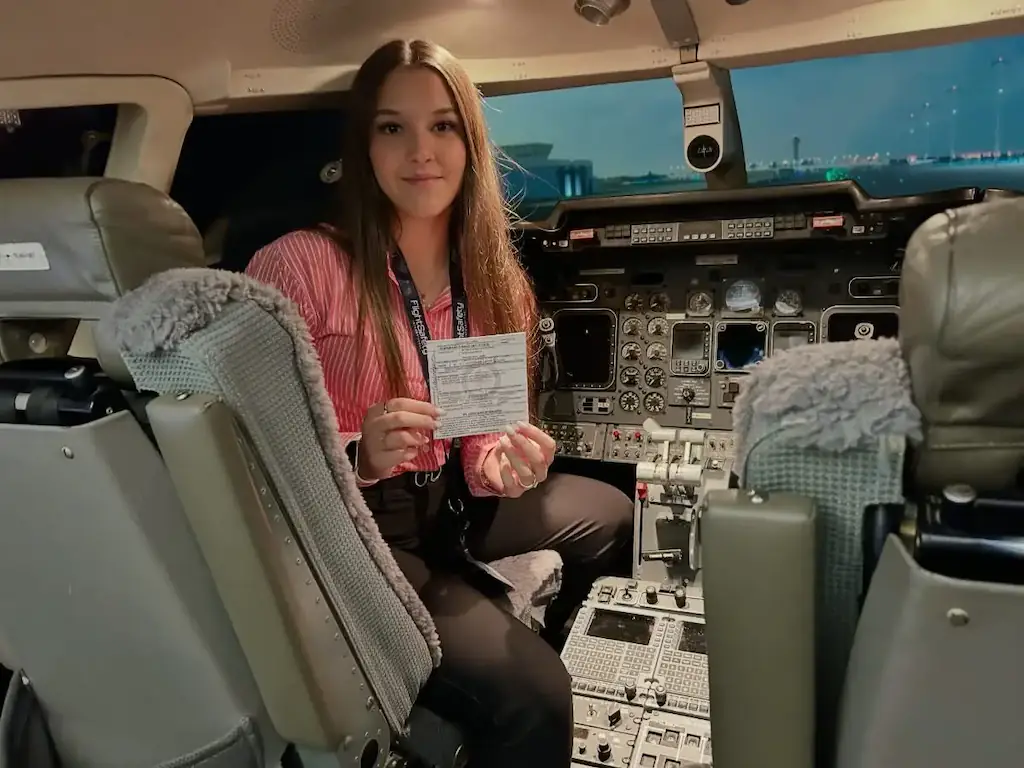
The co-pilot of the Learjet 60 that crashed in Palm Beach County on Sunday has been identified as 20-year-old Nathalia Gadelha Filgueiras, a young commercial pilot who texted her boyfriend about the conditions she was flying through just 10 minutes before the aircraft slammed into the ground.
Her message, according to her stepfather Thiago, read: "I've got turbulence, I've got ice."
Those were among the last words she ever sent.
All nine people on board were killed when the Learjet nosedived into a mobile home park in Greenacres, Florida, shortly after 1 PM ET on Sunday.
Who Nathalia Filgueiras was
She got her pilot's license at 17, while she was still in high school. She used to joke about it. She could fly a plane before she could legally drive a car.
Her mother, Camilla, told the New York Post that Filgueiras had been working as a commercial pilot for nine months before the crash.
Despite being just 20 years old, her stepfather said she had already logged 1,300 hours of flying experience, a number that would be considered substantial for someone nearly a decade older.
She is currently the only one of the nine victims to have been publicly identified. The aircraft carried two crew members and seven passengers. The identities of the other eight have not been released.
The text she sent
Her stepfather Thiago confirmed that roughly 10 minutes before the crash, Filgueiras sent a text message to her boyfriend describing the conditions the flight was encountering.
'I've got turbulence, I've got ice.'
That matches what the cockpit audio, released separately via air traffic control recordings on LiveATC, also captured.
In the minutes before the crash, the crew reported to Miami air traffic control that they were 'managing the ice' and dealing with 'moderate' turbulence.
They requested clearance for 'better rides', a standard pilot term for smoother air at a different altitude.
Less than 10 minutes later, the crew declared a mayday.
The pilot reported the aircraft was in an 'overspeed condition' and descending at 20,000 feet per minute.
The final transmission was: "Holy f***, we're out of time."
Then: "We're going to crash into the ground, 722 Bravo Delta."
Thirty-five seconds separated the first mayday call from silence.
What caused the crash
The investigation is in its early stages, but both Filgueiras' text and the cockpit audio point to severe icing as a likely factor.
Icing occurs when supercooled water droplets freeze on contact with an aircraft's surfaces. On smaller jets like the Learjet 60, severe icing can degrade lift, increase drag, disrupt flight controls, and in the worst cases cause a complete loss of control within seconds.
The crew's progression from calmly 'managing' the ice to an unrecoverable nosedive happened in a timeframe that is consistent with a rapid icing event overwhelming the aircraft's de-icing systems.
Dashcam footage from Military Trail, credited to Aki Kuusisto, captured the moment of impact.
The jet hit the ground nose-first and produced a fireball that filled the camera's entire field of view. A crater was left in the road.
At least one mobile home was destroyed.
A burst water pipe flooded the impact site. Approximately 600 residents were evacuated from the surrounding area.
US Transportation Secretary Sean Duffy confirmed all nine on board were killed. No one on the ground died. The FAA and the NTSB are both investigating.
A 20-year-old in the right seat
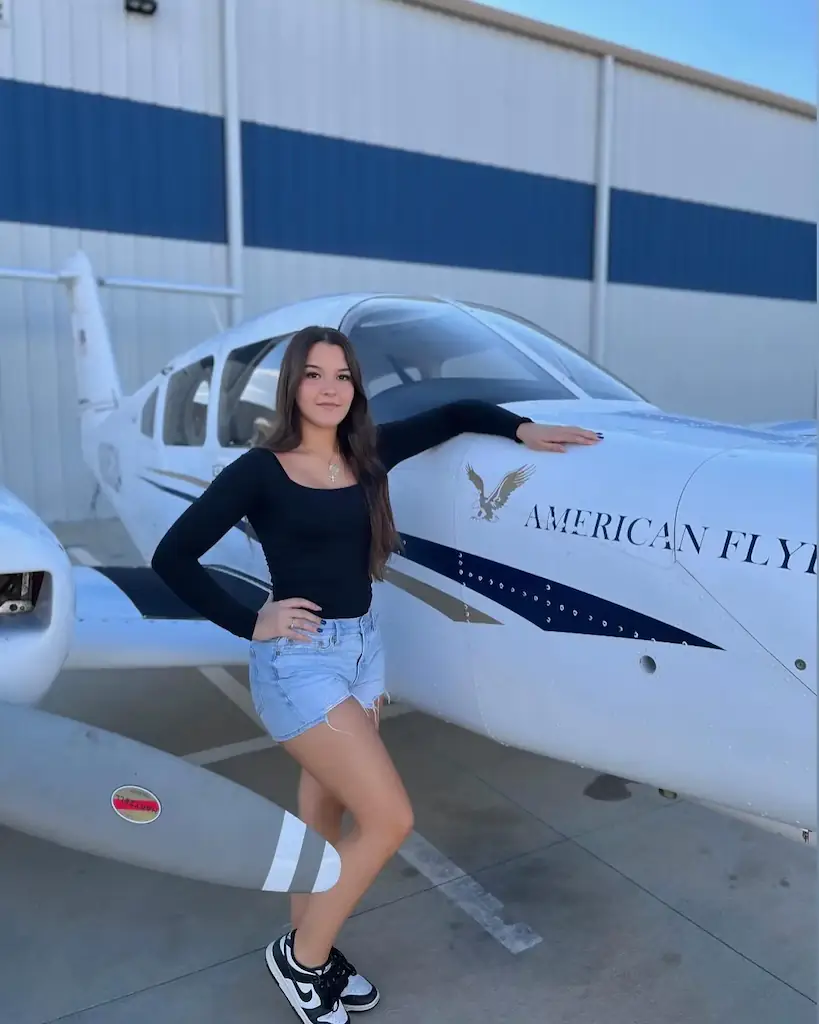
Filgueiras was 20.
She had been flying professionally for less than a year. She had 1,300 hours.
She was sitting in the co-pilot's seat of a chartered business jet on a flight from Austin, Texas, to the Bahamas on a Sunday afternoon.
She texted her boyfriend about the weather the way any 20-year-old might text about their day.
Except her day was at the controls of a Learjet at altitude, and the weather she was texting about was the thing that may have brought the aircraft down.
Her family has not said whether they knew about the severity of the conditions before the crash, or whether the text about turbulence and ice seemed routine at the time.
For a pilot with 1,300 hours, icing and turbulence are not unusual.
They are part of the job - but what happened after that text was not.