


US2 min(s) read
Trump government announces huge change to death penalty rules - including firing squad as method of execution
.jpg_I4Ebof?tr=cr-0.338.2730.3068,f-webp,q-70,w-100)
The Justice Department announced on Friday it is expanding federal execution methods to include firing squads, marking a significant shift in how the United States carries out capital punishment.
Acting Attorney General Todd Blanche directed the Bureau of Prisons to expand death penalty protocols to include pentobarbital injections and firing squads as part of broader actions to strengthen the federal death penalty.
The department also recommended adding electrocution and gas asphyxiation as approved methods, citing difficulties in obtaining the drugs needed for lethal injection.
The directive reinstates the lethal injection protocol used during Trump's first term, which relies on pentobarbital.
Blanche also instructed the Bureau of Prisons to examine relocating or expanding federal death row, or constructing an additional execution facility to accommodate the new methods.
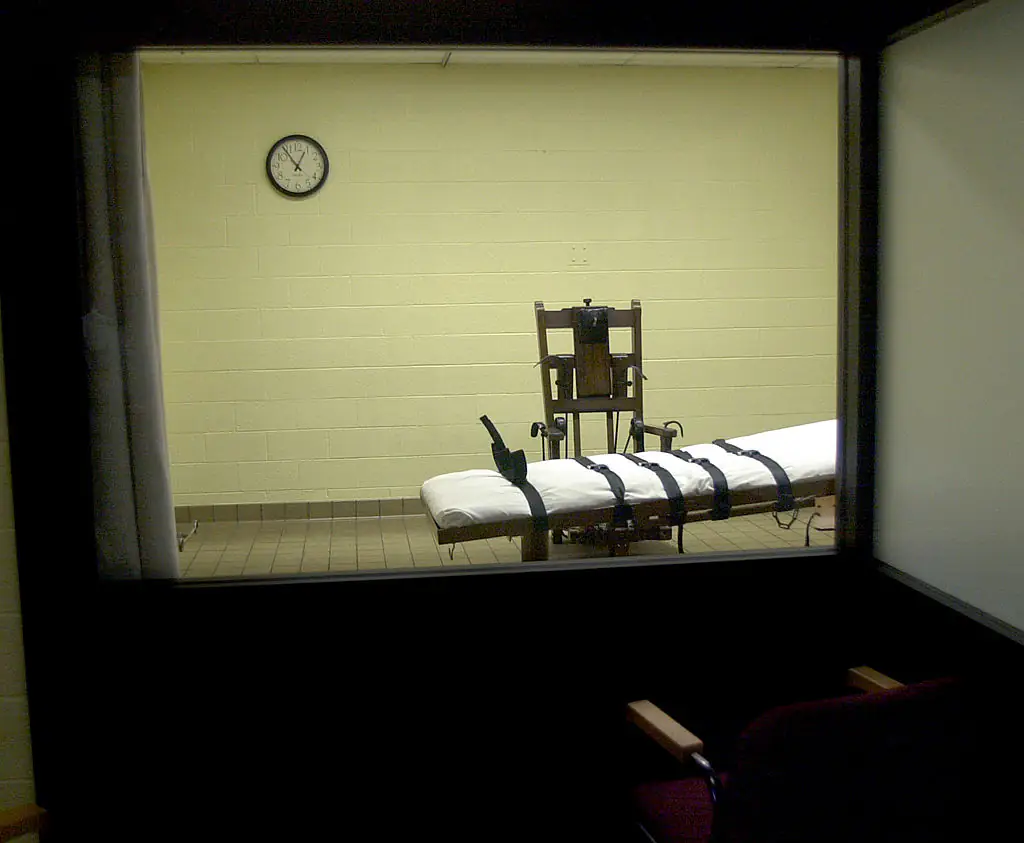
The announcement follows the administration's decision to rescind the Biden-era moratorium on federal executions.
The Justice Department has authorized seeking death sentences against 44 defendants, with Blanche personally approving nine cases so far, including three MS-13 members accused of murdering a federal witness.
The move fulfills a campaign promise from Trump's second term.
During his first term, which ended in 2021, he resumed federal executions after a 20-year gap, overseeing 13 lethal injections in his final months in office.
Between 1963 and 2020, only three federal prisoners had been executed, including Oklahoma City bomber Timothy McVeigh.
Pharmaceutical companies have increasingly refused to supply drugs used in executions, prompting several states to turn to alternative methods in recent years.
Alabama pioneered the use of nitrogen gas asphyxiation in 2024, a method now being considered at the federal level.
Blanche defended the expansion as necessary to carry out lawful sentences and deliver justice to victims' families.
.jpg_OwIBxT?tr=cr-0.0.2121.1414,f-webp,q-70,w-1024)
Critics, including anti-death penalty advocates and families of those previously executed by firing squad, have condemned the move and signaled likely legal challenges.
The last firing squad execution in the United States was carried out in Utah in 2010, when Ronnie Lee Gardner was put to death.
The new protocols are expected to take effect in the coming weeks, though the timeline for any execution using a method other than lethal injection remains unclear.