


US5 min(s) read
US Navy SEAL who killed Osama Bin Laden reveals chilling code-word to be used only after the terror leader was killed
.jpg_I4Ebof?tr=cr-0.338.2730.3068,f-webp,q-70,w-100)
The former US Navy SEAL who fired the shots that killed Osama bin Laden has been reflecting on the historic raid on its 15th anniversary, including the chilling single code word the team had been instructed to radio in once the al-Qaeda leader was confirmed dead.
Robert O'Neill, now 50, was a member of SEAL Team Six's Red Squadron when, on the night of May 2, 2011, he and a small group of operators stormed a high-walled compound in Abbottabad, Pakistan, and brought a near-decade-long manhunt to an end.
He has spoken publicly about the mission multiple times since identifying himself as the shooter in 2014, giving an interview to the New York Post to mark the milestone this week.
Inside the mission to kill Osama Bin Laden
Operation Neptune Spear, as it was officially known, saw around two dozen SEALs flown into Pakistan in stealth Black Hawk helicopters.
The mission was so closely held that the Pakistani government wasn't told it was happening on its own soil.
Things didn't go to plan from the off.
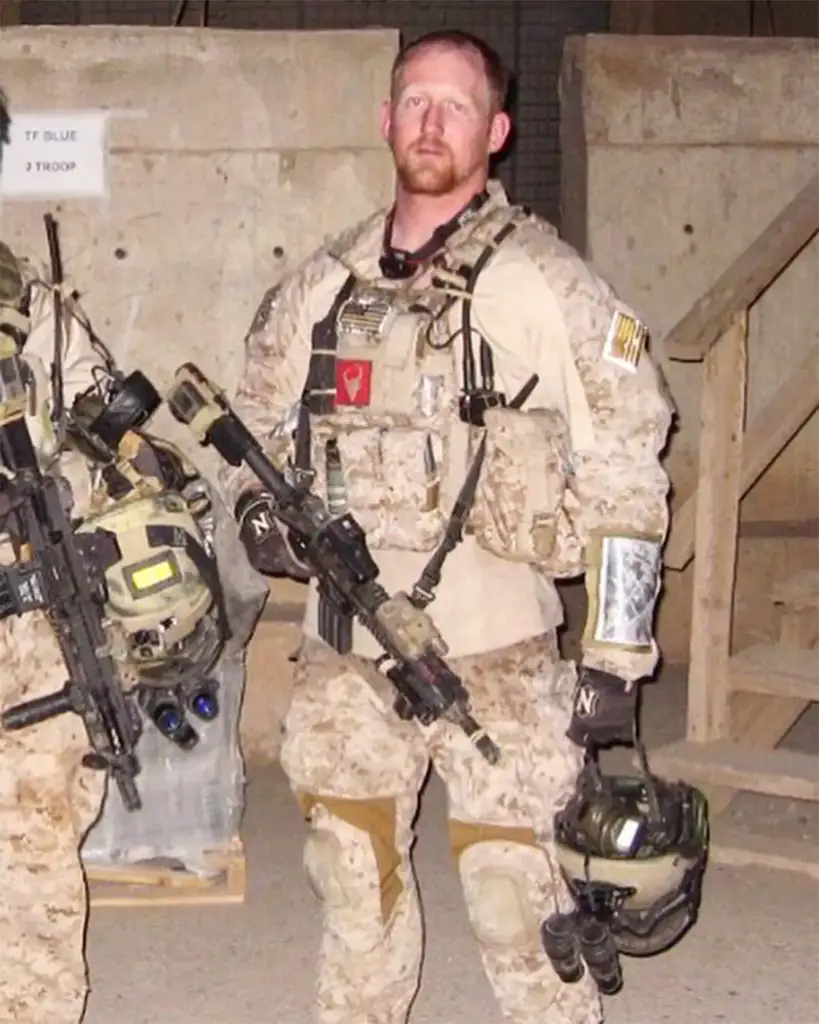
One of the helicopters crash-landed on arrival, and the SEALs had to clear the compound floor by floor.
By the time O'Neill and a fellow SEAL reached the third-floor landing, they could see figures moving behind a curtain.
Concerned the people on the other side might be wearing suicide vests, the two men opted against waiting for backup and pushed forward.
"I can remember thinking, 'We're going to blow up now, and I'm just tired of thinking about it. Go," O'Neill told Cowboy State Daily in 2025.
The 'point man' tackled two women he believed were wearing suicide vests, an act O'Neill has repeatedly said should have earned a Medal of Honor.
'He jumped on a grenade that didn't go off,' O'Neill said.
That left O'Neill alone in the doorway of an adjoining room, face-to-face with the man whose photo he'd seen tens of thousands of times.
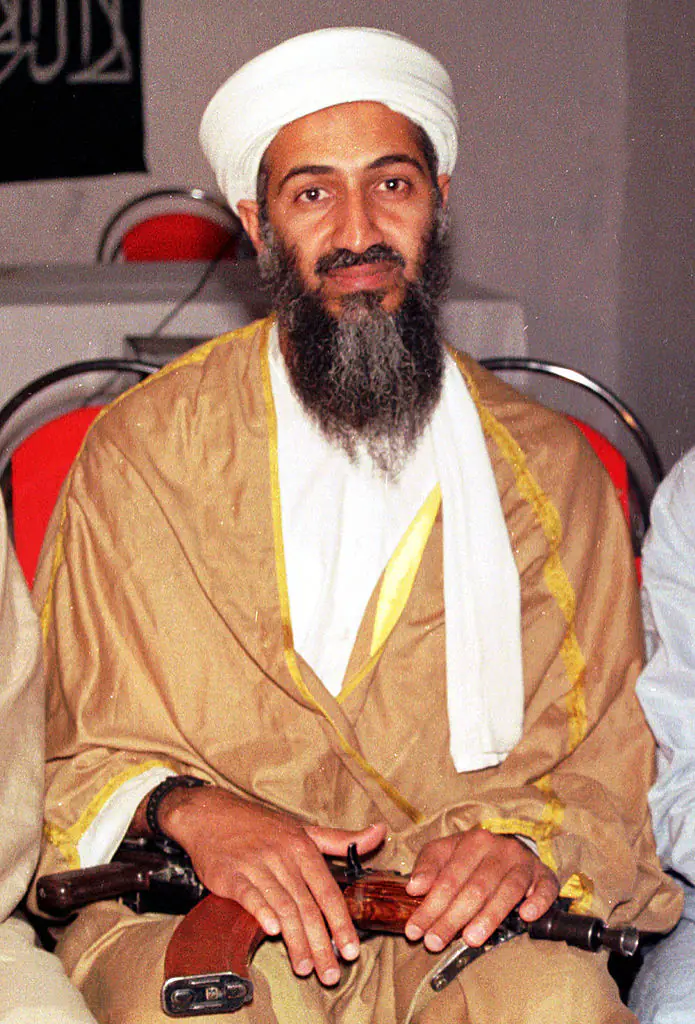
The moment that defined the US Navy SEAL mission
O'Neill has described the encounter more than once over the years.
"Osama bin Laden stood near the entrance at the foot of the bed, taller and thinner than I'd expected, his beard shorter and hair whiter,' he wrote in his memoir The Operator.
"He had a woman in front of him, his hands on her shoulders.'
"In less than a second, I aimed above the woman's right shoulder and pulled the trigger twice. Bin Laden's head split open, and he dropped.
"I put another bullet in his head."
It's worth noting that O'Neill's version of events is one of several.
Fellow operator Matt Bissonnette, who wrote the book No Easy Day under a pseudonym, has claimed bin Laden had already been mortally wounded by the point man's shots from the stairwell before O'Neill ever entered the room.
Other accounts, including one published by The Intercept, suggest bin Laden was 'bleeding out on the floor, possibly already dead' when O'Neill walked in and fired the additional rounds.
The US government has, to this day, neither officially confirmed nor denied O'Neill's account.
Retired Admiral William McRaven, who oversaw the raid, told CNN in 2020 that O'Neill was 'the SEAL that, in fact, shot bin Laden.'
_(cropped).jpg_Of7Lsg?tr=f-webp,q-70,w-1024)
The code word that meant mission success
To the outside world, the operation was known as Operation Neptune Spear.
But to the team on the ground and the small group watching the live feed in the White House Situation Room, bin Laden himself had a different name entirely.
He was 'Geronimo.'
The choice of name has been criticised in the years since, particularly by Native American groups who objected to the use of the Apache leader's name as the call sign for one of the most wanted terrorists in modern history.
But on the night, it was the agreed signal.
Once bin Laden's death was confirmed, the SEAL team leader transmitted what would become one of the most-quoted radio calls in modern military history: "For God and country, Geronimo, Geronimo, Geronimo."
After Admiral McRaven prompted for confirmation, the follow-up came: "Geronimo EKIA."
EKIA stands for 'enemy killed in action.'
Watching back at the White House, then-President Barack Obama is reported to have responded with three words of his own: "We got him."
15 years later
O'Neill, who served for more than 16 years and earned more than 50 commendations including two Silver Stars, has spent the past decade telling the story publicly, in interviews, in his bestselling memoir, and on the speaking circuit.
His decision to identify himself in 2014 was controversial within the SEAL community, where the unwritten rule is to never seek public credit for an operation.
But O'Neill has stood by it, telling CBS News at the time: "I think it's a difficult secret to keep.
"Everyone was proud. I think it was apparent that we had done it."
Some of his fellow SEALs disagree, both on the credit-seeking and on the details of his account.
The full picture of who fired the killing shot may never be officially confirmed.
What isn't in dispute is the outcome. Fifteen years on from the raid, bin Laden's death remains one of the most consequential moments of the post-9/11 era.
And it was a single radio call, repeated three times, that confirmed it.